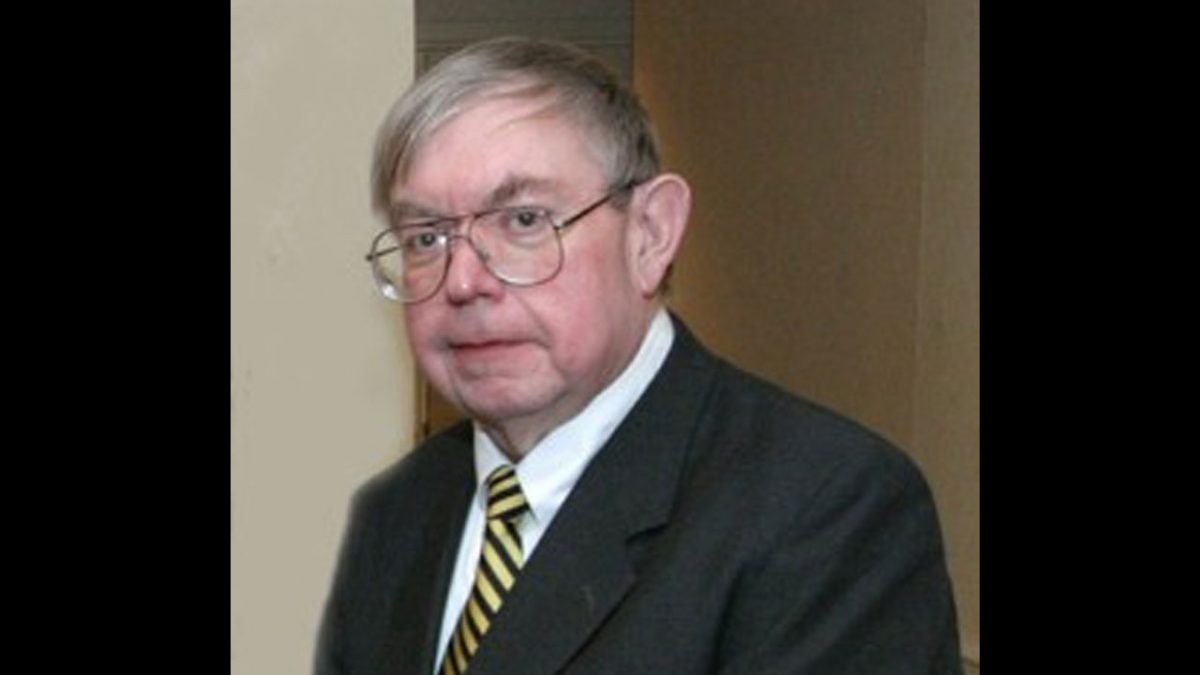
Karel Combrinck: Ras en beskawing

‘n Stelling dat meeste, indien nie alle nie, menslike ondernemings deur die eeue heen in mislukkings geëindig het, sal seker sommiges na die pen laat gryp met beskuldings van “negatief” of “pessimisties” of selfs “rassisties”. (Alles waarmee die konformerende elite nie saamstem nie is outomaties “rassisties”.) Tog het feite die manier om hardnekkig te wil terugveg teen ideologieë en dogmas van allerlei aard.

Kom ons noem kortliks enkele gevalle van reusagtige mislukkings: Die ryk van Aleksander, die Persiese ryk, die epiese tog van Hannibal oor die Alpe in ‘n poging om die rug van Romeinse heerskappy te gaan knak, maar wat uitgeloop het op die sloping van sy glorieryke stad Kartago, die ondergang van die einste Romeinse Ryk en die Bisantynse ryk, die monumentale ramp van die Kruistogte, die selfverterende Franse Rewolusie, die rampspoedige Napoleontiese avontuur wat hom in Rusland te pletter geloop het, die Wêreldoorlog van 1914-18 met die Bolsjewistiese Rewolusie as gevolg, die Wêreldoorlog van 1938-1945, met inbegrip van die rampspoedige Duitse veldtog in Rusland.

Die Egiptiese beskawing, miskien die grootste van almal, het in 332 v.C. na ‘n bestaan van bykans drieduisend jaar met die verowering deur Aleksander tot ‘n val gekom. Die laaste “Farao”, Cleopatra Philopator (69-30 v.C.) was, soos ons weet, geen Egiptenaar nie, maar wel ‘n Griek.

Wat van die Geallieerde inval in Normandië in Junie 1944? Hieroor sal daar uiteenlopende menings wees, na gelang van die oogpunt waaruit dit beoordeel word. Uit die oogpunt van die Angel-Saksiese wêreldling en die Amerikaanse globale geldempaaier was dit natuurlik ‘n groot sukses. Uit die oogpunt van die nasiestaat en die voortbestaan van die wit ras en die wit beskawing was dit moontlik die grootste ramp van almal.

En wat het oorgebly van die Britse Ryk na die soort van beheerde inploffing wat daar plaasgevind het? Binne die leeftyd van baie van ons hier was Brittanje nog ‘n magtige wêreldryk. Baie van ons onthou nog die “winds of change”-toespraak van Harold Macmillan in die parlement in Kaapstad op 3 Februarie 1960 waarin hy by implikasie die einde van die ryk aangekondig het. Vandag het die empaaier weggekrimp tot ‘n benoude eilandjie, oorbevolk deur Indiërs, Pakistani’s en Nigeriërs met ‘n buitensporige bank- en finansiële sektor, so op die patroon van ‘n Hong Kong of ‘n Singapoer — rykdom wat in ‘n paar hande gekonsentreer is en wat die oorblyfsel is van die roofbou wat hulle in die voormalige kolonies beoefen het. Soos Marcus Antonius in sy begrafnisrede vir Julius Caesar gesê het :

Are all your conquests, glories, triumphs, spoils,
Shrunk to this little measure (Shakespeare, Julius Caesar Bedryf I Ton. 8)

En les bes, wat het van ons geword ? Driehonderd-en-vyftig jaar van opoffering, toewyding, swaarkry, veg, vasbyt, opbou, beplan, vertrou, alles, alles tevergeefs? Maar daaroor is al genoeg gesê.

Die vraag ontstaan: watter soort ramp staar die Westerse beskawing volgende in die gesig en is dit ‘n katastrofe waarvan ons ooit weer sal kan herstel?

Twee scenario’s doen hulle voor :

Die eerste moontlike katastrofe wat die mensdom kan tref, is dié van ‘n massale uitdelging deur vuur en swawel, om dit so te noem. Ons het onlangs hierdie bedreiging naelskraap vrygespring toe die halfbesete Hillary Clinton in die Amerikaanse presidentsverkiesing die onderspit gedelf het. Die gewapende konflik met Rusland waarheen sy op pad was, sou outomaties ook op ‘n konfrontasie met Sjina uitloop en so ‘n konfrontasie sou eenvoudig ‘n kernoorlog en die uitwissing van die menslike ras en trouens van bykans alle lewe op aarde beteken.

Maar daar is ook ander maniere om die beskawing te vernietig en uiteindelik die vernietiging van die mens self te bewerkstellig.

In sy mylpaalgedig uit 1925, The Hollow Men, skryf T. S. Eliot:

This is the way the world ends
Not with a bang but a whimper.

Dit is dus duidelik dat Eliot meer as een wyse oorweeg het waarop die wêreld tot ‘n einde kan kom. Dit is ook duidelik dat hy ‘n gewelddadige en vernietigende konfrontasie (bang) as een so ‘n moontlikheid oorweeg het, maar dat hy tot die gevolgtrekking geraak het dat die wêreld eerder in die teendeel hiervan, nl. ‘n kreuntjie (whimper) tot sy einde sal kom.

Wat beteken die kreuntjie dus presies? Dis nie altyd maklik om presiese betekenisse aan die uitinge van digters te heg nie, maar uit Eliot se werke in die algemeen, asook die titel van die gedig, wil dit blyk dat hy ‘n soort geestelike en morele verval in gedagte kon gehad het, dws ‘n beskawing wat sy ankers byster geraak het en van sy waardes en sy natuurlike aard vervreem geraak het en dus van binne uitgehol is.

Sonder om dus betekenisse aan Eliott te wil toedig, wat hy self miskien nie in gedagte gehad het nie, of net deels in gedagte gehad het, word aan die hand gedoen dat in die tydvak waarin ons leef, die kwessie van verlies van kulturele identiteit moontlik die hoofsaaklike bedreiging geword het van ons beskawing en uiteindelik van die mensdom self, wat dus ten slotte gedoem is tot uitwissing in die vorm van ‘n magtelose kreun.

Hoe kan die skouspel van honderdduisende ” vlugtelinge” vanuit die derde wêreld wat Europa oorstroom, wat op sypaadjies woon, die landskap besmeer en besoedel met vullis en rommel, in swembaddens ontlas en wat wit vrouens en meisies verkrag en molesteer anders beskryf word as ‘n kreun van die Westerse beskawing of wat daarvan oorgebly het?

En wie praat van verlies aan kulturele identiteit, praat noodwendig ook van verlies aan rasse-identiteit.

In sy artikel van 10 Desember op Praag haal Leon Lemmer soos volg aan uit ‘n werk oor multikulturalisme van twee Amerikaanse akademici, David O Sacks en Peter A Thiel :

“Multiculturalism filled the vacuum created by the elimination of the West” (963). “Multiculturalism amounts to nothing less than a war on Western civilization and, beyond it, a war on the very idea of civilization.”

In nog ‘n artikel van Leon Lemmer, (Samuel Huntington oor die botsing van beskawings van 5 Nov. 2016) verskyn die volgende aanhaling :

” …if the purpose of education is to impart knowledge, then its purpose is to impart Western civilization. “

Met hierdie sienswyses is ons dit natuurlik roerend eens. Maar wat die Amerikaanse professore nie durf sê nie, is dat ons Westerse beskawing en die blanke ras eintlik twee woorde is vir dieselfde ding. Daarom moet dit vir enige regdenkende mens duidelik wees dat ‘n aanval teen die een ‘n aanslag teen die ander is. Wie die Westerse kultuur wil beveilig, moet hom noodwendig vir die voortbestaan van die blanke ras ook beywer. In stede hiervan beleef ons dekades reeds ‘n vernietigende tweeledige aanval teen beide die wit ras en die Westerse kultuur.

Kyk gerus maar weer na die foto by die Praagberig Olifant in die wiskunde-klaskamer van 9 Desember. Watter hoop op voortbestaan kan daar wees vir ‘n samelewing soos daar uitgebeeld? Watter soort samelewing en watter soort beskawing kan op so ‘n manier voortduur? Anders gestel, is voortbestaan van so ‘n aard hoegenaamd die moeite werd?

Na elke kolossale fiasko in die geskiedenis probeer mense om redes daarvoor te soek en om maniere te vind om ‘n herhaling van dieselfde soort katastrofe te voorkom. Meesal word dan net weer nuwe foute gemaak waaruit die daaropvolgende ramp dan op sy beurt ontstaan.

Na die Tweede Wêreldoorlog het die Westerse samelewings, onderhewig aan hewige propaganda, die feit, of die mite, verkondig dat die oorlog hoofsaaklik die gevolg was van rasse-onverdraagsamheid. Duidelik was rasse-oorwegings nie die oorsaak van die Tweede Wêreldoorlog nie, hoewel sulke oorwegings met verloop van die oorlog wel prominensie verkry het. Feit is egter dat propaganda die wêreld juis dít wysgemaak het: Rasseverskille veroorsaak konflikte en selfs wêreldoorloë. En vandaar dus die volgende mite in die proses van ideologiese breinspoeling: Rasseverskille bestaan nie.

So dit is dan die verhaal van die modepolitiek: rassespanning gee aanleiding tot oorloë. Daar is ‘n soort konsensus om te fokus op hierdie een element van potensiële internasionale struweling ten koste van ander oorsake wat ons letterlik aan die keel gryp. In die proses word ons beskawing wat heel duidelik eng verbonde is aan ons ras, vreugdevol opgeoffer.

In die vernietigingsproses van ons beskawing is daar die snelle manier van ‘n gewelddadige konfrontasie en daar is die langsamer metode van rassevermenging en dus van rasse-uitwissing.

Die groot meerderheid van die linkse wêreld, wat die afgelope dekades die kern uitmaak van die moderne modepolitiek, verkies die langsamer proses.

Nog ‘n gedig kom hier in gedagte:

Fire and ice ( Robert Frost 1920)

Some say the world will end in fire ,
Some say in ice.
From what I’ve tasted of desire
I hold with those who favor fire.
But if it were to perish twice ,
I think I know enough of hate
To say that for destruction ice
Is also great
And would suffice .

Die program van rassevermenging en dus van rasse-uitwissing is in groot mate gebore uit haat vir die wit ras, waaraan die wit ras ras natuurlik self lustig meedoen. Om ons voortbestaan as beskawing onherroeplik te vernietig, is daar dus ‘n kernoorlog of daar is rassevermenging. Daar is vuur of daar is ys. Maar die een is so dodelik soos die ander.

Is daar ten slotte ‘n positiewe noot waarop ‘n mens ‘n stuk soos hierdie kan afsluit? Nouliks. Gaan die verkiesing van mnr Trump tot Amerikaanse President, asook die opkoms van behoudende en volksgerigte elemente in Europa die wiel ver genoeg laat draai om die vernietiging van die blanke beskawing te stuit? Ons kan maar net bly hoop.

Media skep nog ‘n rassestorm rondom Houtbaai en Vanessa Hartley

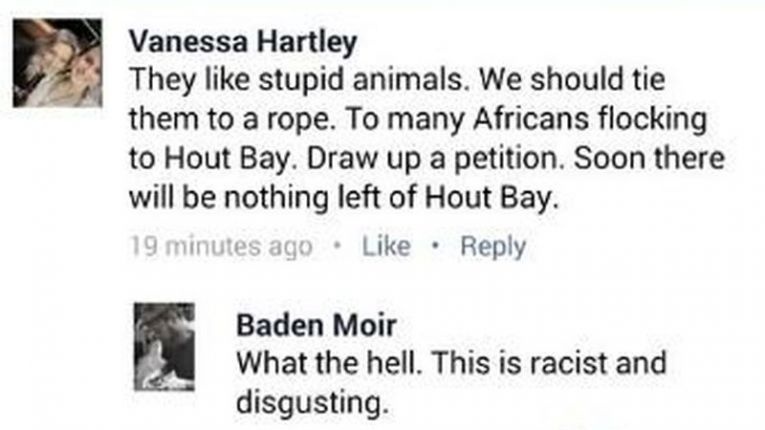
Die Suid-Afrikaanse hoofstroommedia wat in navolging van die liberale Amerikaanse media ‘n obsessie oor ras en rassisme onderhou, se jongste slagoffer is Vanessa Hartley, ‘n inwoner van Houtbaai naby Kaapstad wat ‘n rassistiese uitlating op haar Facebook sou gemaak het. Sy het naamlik gekla dat daar te veel swart plakkers (“Africans”) op Houtbaai toesak.

Die ANC in die Wes-Kaap het intussen besluit om ‘n klag van rassisme by die SA Menseregtekommissie aanhangig te maak. In ‘n verklaring sê die ANC:

“Vanessa Hartely, ‘n inwoner van Houtbaai, het ‘n aanstootlike Facebook-plasing geskryf waarin sy sê: ‘Hulle is soos dom diere. Ons behoort ‘n tou aan hulle vas te maak. Te veel Afrikane sak op Houtbaai toe. Stel ‘n petisie op. Binnekort sal daar niks van Houtbaai oor wees nie’.

“As die ANC in die Wes-Kaap verseg ons om te aanvaar dat dié provinsie tragies aan die boosheid van rassisme verbonde moet wees dat die broederskap wat die mosaïek van die provinsie behoort te wees nooit verwesenlik kan word nie. Ons verwerp Vanessa Hartley se rassistiese geteem as beide ‘n verwronge siening van waaroor die land gaan en sekerlik nie verteenwoordigend van die meerderheid mense in die provinsie nie. Rassistiese sal nie die laaste woord inkry nie.

“Ons versoek dat die Suid-Afrikaanse Menseregtekommissie die maksimum straf- en korrektiewe maatsreëls binne hul domein sal toepas ten eidne te verseker dat dié tipe gedrag verwerp en agtergelaat word,” lui die verklaring.

Tans verskyn daar allerlei bestekopnames in die media oor die lys “rassestorms” van die jaar. Dr. Dan Roodt voer vanoggend ‘n onderhoud hieroor met die TV-kanaal ENCA by die eTV-ateljee wat later uitgesaai sal word.

“My standpunt is dat Suid-Afrika sonder rassestorms kan klaarkom,” sê hy.

Leon Lemmer: Oswald Spengler oor die Amerikaners en die blankedom

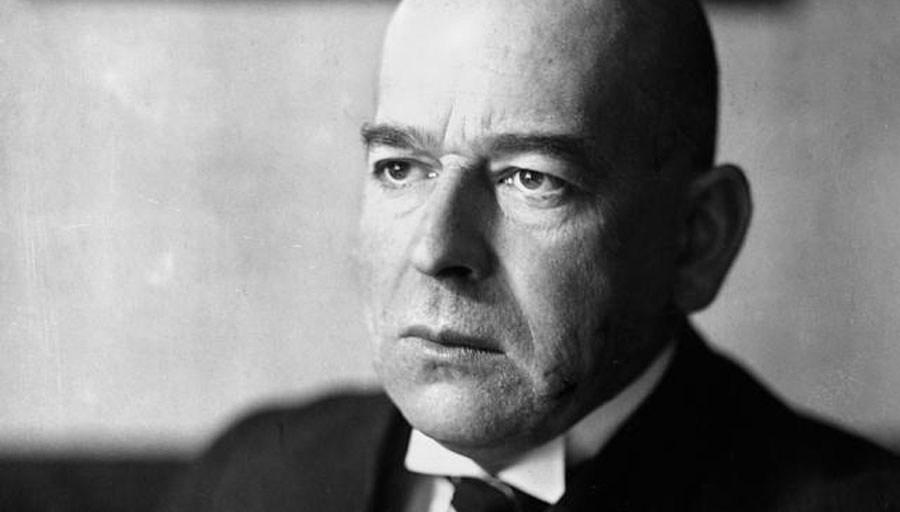
Oswald Spengler (1880-1936) was ‘n Duitse historikus wat veral bekendheid verwerf het vanweë sy boek wat in Engels bekend staan as The decline of the West, volume 1: Form and actuality, 1918, volume 2, Perspectives of world history, 1922 (London: Allen & Unwin, 1926, 1928). ‘n Latere boek van hom, wat glad nie so bekend is nie, is in 1933 in Duits gepubliseer en daarna in Engels as The hour of decision (London: Allen & Unwin, 1934). In hierdie rubriek beperk ek my aandag tot hierdie werk.

Selfs in Charles Francis Atkinson se vertaling kom Spengler se ritmies-wiegende skryfstyl na vore sodat sy werke steeds met genot gelees kan word. Wat deurgaans in gedagte gehou moet word, is dat Spengler hierdie teks voltooi het toe die opkoms van Adolf Hitler en Nasionale Sosialisme pas begin het. Waarom hierdie boek relatief onbekend is, is seker omdat Spengler ‘n (nasionalisties-Duitse)* perspektief op ander lande soos Amerika, Brittanje, Frankryk en selfs Duitsland bied wat nie altyd vleiend is nie. Die boek is deur die Nazi’s verbied. Ek gebruik die elektroniese weergawe in die Timeless Wisdom Collection (2016; Amazon Kindle $1,13) wat Spengler se genoemde twee werke bevat, asook nog een van sy hoofwerke, Prussianism and socialism (1919), wat gebaseer is op aantekeninge wat nie in sy hoofwerk neerslag gevind het nie. Om teen betaling van skaars ‘n dollar met ‘n groot gees soos Spengler as ‘t ware te kan wandel, is sekerlik ‘n winskoop.

[* “Germany is the key country” (23781). “It is of Germany that I am speaking here. Germany … whose existence is, in the most alarming sense of the word, at stake” (23806). Daarmee loop hy op ‘n merkwaardige manier die Tweede Wêreldoorlog vooruit. Later skryf Spengler van “the greatest of all dangers, the coloured menace … it will require every bit of ‘race’ that is still available among white nations to deal with it. Germany, of all countries, is not an island … It is but a small spot in a great, fermenting world, though undoubtedly a spot in a decisive position. But it alone has Prussianism as a fact within itself. With this treasure of exemplary Being it may become the ‘educator’ of the ‘white’ world, and perhaps its saviour” (26314). “What is needed is not a pure race, but a strong one, which has a nation within it” (26509). Die teenoorgestelde is tans besig om te gebeur. Angela Merkel word klaarblyklik deur ‘n oormaat van historiese skuldgevoelens gedryf wanneer sy miljoene immigrante uit die Derde Wêreld in Duitsland toelaat. Duitsland kan mettertyd die sleutel blyk te wees van die ondergang van die blanke beskawing in Europa; die teenoorgestelde van waarop Spengler gehoop het.]

“It is the task of the historical expert (in the true sense) to understand the facts of his time and through them to envisage, interpret, and delineate the future” (23701). Dit is wat Spengler inderdaad doen wanneer hy skryf: “The national revolution of 1933 was a mighty phenomenon” (23709). “There are already signs, in the dictatorial tendencies of our time, of this Caesarism, which is destined to assume the unlimited mastery over the ruins of historical tradition” (14272). Hy kom met hierdie raak voorspelling: “We stand, it may be, close before a second world war” (23773). Maar Spengler is nie altyd beskeie nie: “I see further than others” (23756). “I write not for a few months ahead or for next year, but for the future” (23765).

“All … nations of the world have inherited a character from their past” (23748). Sy fokus is op die blankes wêreldwyd: “To see the immensity of the danger which looms over this mass of peoples” (23790). Traditioneel was “the world powers … without exception European powers” (24114). “Today the form of the world is being remoulded from its foundations … The age is mighty, but all the more diminutive are the people in it” (23987). Die tydsgees “detests every kind of greatness, everything that towers, rules, is superior; and construction means for it only the pulling-down of all the products of civilization, of the State, of society, to the level of little people, above which its pitiful emotionalism cannot soar to understand” (23932). “The primeval barbarism … is awake again” (23995).

Oor die Britte skryf Spengler profeties: “The island England … has never quite regarded herself as part of Europe” (24083) en “England gained her wealth by battles and not by bookkeeping and speculation” (24330). Hy skryf van “France, whose capital is in process of becoming a historic sight, like Vienna and Florence, and like Athens in Roman times” (24711). Klemens Metternich (1773-1859) word soos volg aangehaal: “My private belief is that the old Europe is at the beginning of its end … The new Europe … is still in the state of becoming; between end and beginning there will be chaos” (24106). Maar ek beperk my aandag in hierdie rubriek aanvanklik tot wat hy oor die Amerikaners en Amerika skryf. Om Amerikaansheid te verwoord, is sekerlik nie maklik nie, maar Spengler slaag in uitnemende mate daarin.

“Is the United States a power with a future? … dollars must not be taken to represent the spiritual strength and depth of the people to whom they belong; neither must sport be confused with race-soundness nor business intelligence with spirit and mind. What is ‘hundred per cent Americanism’? A mass existence standardized to a low average level, a primitive pose, or a promise for the future? All we know is that so far there is neither a real nation nor a real State … The American does not talk of State or Mother Country like the Englishman, but of ‘this country’. Actually what it amounts to is a boundless field and a population of trappers, drifting from town to town in the dollar-hunt, unscrupulous and dissolute; for the law is only for those who are not cunning or powerful enough to ignore it” (24610).

“Life is organized exclusively from the economic side and consequently lacks depth, all the more because it contains nothing of that element of historic tragedy, of great destiny, that has widened and chastened the soul of Western peoples through the centuries. Their religion, originally a strict form of Puritanism, has become a sort of obligatory entertainment, and the War was a novel sport. And there is the same dictatorship there as in Russia (it does not matter that it is imposed by society instead of a party), affecting everything – flirtation and church-going, shoes and lipstick, dances and novels á la mode, thought, food, and recreation – that in the Western world is left to the option of individuals. There is one standardized type of American, and, above all, American woman, in body, clothes, and mind” (24617).

“There is an almost Russian form of State socialism or State capitalism, represented by the mass of trusts, which, like the Russian economic administrations, systematically standardize and control every detail of production and marketing. These are the real lords of the land in both cases. It is the Faustian [ie Western] will-to-power, but translated from organic growth to soulless mechanization. Dollar-imperialism, which pervades the whole of [the] America[s] down to Santiago and Buenos Aires and seeks to undermine and eliminate West-European (and, above all, English) trade, entirely analogous in its control of economic trends by political power to Bolshevik imperialism. The Bolshevik motto: ‘Asia for Asiatics’, too, corresponds in principle to the present-day conception of the Monroe Doctrine* for Latin America – namely, all America for the economic power of the United States. This is the ultimate meaning of the founding of ‘independent’ republics like Cuba and Panama, of the intervention in Nicaragua and the overthrow by the might of the dollar of unaccommodating presidents right down to the extreme South” (24630).

[* “The Americas for Americans.” Die Monroe-leerstelling: “Declaration by US president James Monroe [1758-1831, president 1817-1825] in 1823 that the USA would not tolerate any European nation trying to establish a colony in the Americas, and that any attempt to do so would be regarded as a threat to US peace and security. At the same time, several European countries were proposing to intervene in former Spanish and Portuguese colonies in Latin and South America, and Russia was attempting to extend its Alaskan territories into Oregon country. In return for the cessation of such European ambitions, the USA would not intervene in European affairs” (Collins World Encyclopedia, 2003, p 622). In sy hoedanigheid as die Amerikaanse ambassadeur in Parys het Monroe in 1803 die aankoop van die Franse Louisiana-kolonie vir $15 miljoen suksesvol onderhandel. Hierdie Louisiana-kolonie het uit die volgende agt hedendaagse Amerikaanse state bestaan: Louisiana, Arkansas, Oklahoma, Missouri, Iowa, Nebraska, Suid- en Noord-Dakota. Alaska, die grootste VSA-staat, is in 1867 vir $7,2 miljoen van Rusland gekoop. Die aankoop van al hierdie state is in ooreenstemming met die Monroe-leerstelling, wat ook deels verklaar waarom Amerika aanvanklik huiwerig was om by die twee wêreldoorloë betrokke te raak.]

“The United States has … become a leading element in international politics … Is the ‘Yankee’* equal to this difficult task? Does he stand for an indestructible kind of life or is he only a fashion in physical, mental, and moral clothing? And, moreover, how many inhabitants of the country are there who inwardly do not belong to this ruling Anglo-Saxon type? Quite apart from the Negroes, the immigrants during the twenty years before the [First World] War included – with only a small portion of Germans, English, and Scandinavians – no less than fifteen million Poles, Russians, Czechs, Balkan Slavs, Eastern Jews, Greeks, inhabitants of Asia Minor, Spaniards, and Italians. The greater part of these have not been incorporated in Americanism, but form an alien, foreign-thinking, and very prolific proletariat” (24645). Sedert die jare sestig word voorkeur aan immigrante uit die Derde Wêreld, insluitende Moslems, gegee wat uiteraard nog moeiliker, indien ooit, in die tradisionele Anglo-Saksiese sin veramerikaans. [* Yankee is die tradisionele naam vir die Amerikaanse Noorderlinge en Dixie vir die Suiderlinge.]

“In the ‘Land of Liberty’ there is only the resolve of free men to help themselves – the revolver in the hip-pocket is an American invention – but this form of defence is as freely available for those in possession as for the rest. Only a short time ago the farmers in Iowa besieged a few towns and threatened them with starvation if they did not buy their products at a decent price. Not many years since, anyone using the word ‘revolution’ in connection with this country would have been called an idiot. Today such ideas are quite in order. What will the masses of the unemployed do – I repeat, the majority are not ‘hundred per cent Americans’ – when their sources of relief are exhausted and there is no State support because there is no organized State with exact and honest statistics and control of those in want? Will they fall back on their fists and their common economic interests with the underworld? And will the intellectually primitive upper class, obsessed as it is by the thought of money, reveal all at once, in face of this danger, dormant moral forces that will lead to the real construction of a State and to spiritual preparedness to sacrifice possessions and blood to it, instead of regarding war as a means of gaining wealth as hitherto? Or will the special economic interests of individual areas still pull the most weight and, as once before in 1861, lead to the disintegration of the country into separate states?(24659).

Spengler se weersin in geldgierigheid kan onder meer biografies verklaar word. Hy het jare lank danksy ‘n klein erfporsie in beskeie omstandighede en met groot toewyding navorsing gedoen en boeke geskryf. Telkens het hy professorate wat hom aangebied is geweier omdat hy sy roeping wou vervul: om ‘n filosofie van die geskiedenis daar te stel wat nie bloot versigtig-vertolkend te werk gaan nie maar so getrou moontlik die toekoms probeer voorspel. Hy het die Amerikaanse samelewing as geestelik vlak beskou, dat hulle bv nie tragedie ken nie, omdat hulle nie in dieselfde mate as die Europeërs ‘n eeue oue tradisie van geakkumuleerde ervaring en kulturele dieptegang het nie.

Daar is eienskappe in die Amerikaanse samelewing wat bewonderingswaardig is. Die VSA het egter ook kenmerke wat ‘n mens negatief en selfs sinies kan stem. Wat onder meer nodig is, is om tussen die Amerikaanse regering en Amerikaners te onderskei. Daar is Amerikaanse individue wat die sout van die aarde is. Toegepas op die nuwe Suid-Afrika moet duidelik tussen die ANC-regering en Suid-Afrikaners, veral die blankes en by uitstek die Afrikaners, onderskei word. Byvoorbeeld, wanneer gesê word Suid-Afrika het sus of so gesê of gestem in die Verenigde Nasies, weerspieël dit dikwels nie die gesonde mening van Afrikaners nie. Wat veel eerder telkens bevestig word, is dat die Suid-Afrikaanse blankes, insluitende die Afrikaners, sedert 1994 onverdiend onder ondoeltreffende vreemde oorheersing gebuk gaan en dat Afrikaners hulle vir verandering/transformasie moet beywer pleks van gedwee in onderdanigheid te berus.

Vir Spengler het dit nie net om die Amerikaners gegaan nie, maar eerder om die blankedom. Daarom moet ek in aansluiting by die derde paragraaf hier bo verder hierop uitbrei. Hy begin die eerste en inleidende deel van sy boek, The hour of decision, met hierdie akkurate toekomsvisie: “Is there today a man among the White races who has eyes to see what is going on around him on the face of the globe? To see the immensity of the danger which looms over this mass of peoples?” (23790). Daar volg hierdie steeds aktuele waarheid: “Not a statesman, not a party, hardly even a political thinker is today in a safe enough position to speak the truth” (23971). Deesdae neem dit dikwels die vorm van politieke korrektheid aan. Ek kies vervolgens hoofsaaklik aanhalings waarin steeds aktuele betekenis ingelees kan word.

Die tweede deel van die boek handel oor “World powers and world wars.” “Peace … is the continuation of war with different means” (24189). Dink aan bv die ras- en kultuuroorlog wat wêreldwyd teen die blankes gevoer word. “Die nasie” in die 1789-sin van die woord word ‘n wensbeeld genoem (24225). Spengler se siening van gelykheid is naatloos toepasbaar op die nuwe Suid-Afrika: “Equality” beteken “substitution of quantity for the detested quality, and of number for the coveted talent” (24242). “What matters numbers? It only tyrannized over the past century, which bowed the knee to quantity. A man means a great deal as opposed to a mass of slavish souls, pacifists and world-improvers” (24511). Politieke “representatives … have no intention whatever of ‘serving the people’; they intend to make the people serve them” (24242). “The white world is governed primarily by idiots – if it is governed at all, which one is entitled to doubt” (25957). Die volgende is toepasbaar op die ANC: “The substitution of party for State” (24439).

Die derde deel van die boek het as onderwerp “The white world-revolution.” Naas die dreigende wêreldoorlog is daar “the far more dangerous second part of this revolution … the whites in general are under attack by the collective mass of the ‘coloured’ population of the earth, which is slowly becoming conscious of its community” (24785). “The hatred … is piling up among all the coloured populations of the world against the whole white civilization” (25236). “Nothing is a better welder than hate” (25489). “Mob-rule” word as “the worst thing of all” genoem (24820). Met watter soort meningsvormers (dink aan bv die anti-tradisie-dogmas van Max du Preez) het ons deesdae te make? “It is no longer the thrifty deep wisdom of old peasant families, which remains true as long as the stock to which it belongs endures, but the mere intelligence of the day, of the daily papers, ephemeral literature, and national assemblies, the bloodless intellect whose criticism gnaws away everything that is left standing of the genuine – that is, the naturally grown – Culture” (24868).

Spengler keer terug na die kwessie van gelykheid. Hierdie keer is hy meer uitgesproke. “Society rests upon the inequality of men. That is a natural fact … ‘Equal rights’ are contrary to nature, are an indication of the departure from type of ageing societies, are the beginning of their irrevocable decline. It is a piece of intellectual stupidity to want to substitute something else for the social structure that has grown up through the centuries and is fortified by tradition” (24922).

Ons word deesdae alewig aan menswaardigheid herinner, maar so iets moet met eerbare substansie verdien word. “Everything that we call duty, the basis of all genuine rights, the original substance of every sort of dignity, may be traced back to honour” (24893). In talle beroepe is daar mense wat eer verdien. “Those who have it not, those who ‘see no point in’ maintaining the decencies vis-à-vis themselves as well as others, are ‘vulgar.’ This is the opposite of nobility, according to the code of every true society … all instinct for superior living and feeling has been lost and the public manners of all ‘classes’ and ‘parties’ are equally debased” (24900). Dit is wat ek voorheen die brutalisering van die samelewing genoem het.

“A mushy desire for revenge for some bad luck that has spoilt their lives, the absence of any instinct of honour and duty, and an unlimited thirst for money without work and for rights without responsibilities bring them together. It is from this befogged milieu that the heroes of the moment of all popular movements and Radical parties arise. Here the word ‘Liberty’ takes on the bloody significance that it has in the declining ages. What is meant is: liberation from all the bonds of civilization, from every kind of form and custom, from all the people whose mode of life they feel in their dull fury to be superior. Pride and quietly borne poverty, silent fulfilment of duty, renunciation for the sake of a task or conviction, greatness in enduring one’s fate, loyalty, honour, responsibility, achievement: all this is a constant reproach to the ‘humiliated and insulted.’ For, once more be it said, the opposite of noble is not poor, but vulgar” (24937). “The place of class was to be taken by that which has no class” (25146).

“The ideal of class war is, as we all know, an overthrow. Not the construction of anything new, but the destruction of what exists. It is an aim without a future. It is the will-to-nothing” (25480). “The work-shy rabble were in power, and not the working class” (25223). Dit is ‘n “fool’s paradise of all the poor and wretched, who more and more came to be identified with ‘the worker'” (25464). Dit gaan om “happiness of the many, which consists in happily doing nothing … and perpetual peace in which to enjoy it, free from the anxiety and responsibility; but also, and primarily, with typical revolutionary bad taste, the opprtunity of gloating over the unhappiness of the few, of the once mighty, the wise, the aristocratic, and the rich” (25489).

“Hardly a party now dares to suggest that it represents any other section of the nation but the ‘worker.’ Whether from cowardice or from hope of successes at the poll, they treat him almost without exception as a privileged class. In all countries they have succeeded in demoralizing him, turning him into a most exacting, discontented, and therefore unhappy creature,* putting him in the melting-pot with the rabble of the streets to produce a like-minded unit, a ‘class,’ to breed from him the type of the proletarian in spirit – which by the mere fact of its existence guarantees revolutionary success, which despises industriousness and achievement as a betrayal of the ‘cause,’ and whose highest ambition it is to become a leader of the masses and pillar of the Revolution” (25580). “Thus the ‘worker,’ who according to the Marxian doctrine is the only one who works, has become … the one who works the least” (25655). “‘The worker’ has become a pensioner of society and of the nation” (25707). “There is work for which only a few men of superior rank are competent, and other work which is valuable only in terms of duration and volume. Whichever it is, one is born to it. That is fate. It cannot be altered either by Rationalist or by sentimental-romantic equality-talk” (25748). [* Deesdae ‘n slagoffer, benadeelde, gemarginaliseerde, agtergestelde, ens, genoem.]

“The bad manners of all parliaments, the general tendency to connive at a rather shady business transaction if it promises to bring in money without work, jazz and Negro dances as the spiritual outlet in all circles of society, women painted like prostitutes, the efforts of writers to win popularity by ridiculing in their novels and plays the correctness of well-bred people, and the bad taste shown even by the nobility and old princely families in throwing off every kind of social restraint and time-honoured custom: all of these go to prove that it is now the vulgar mob that gives the tone” (24961). Wat hulle doen is “unchaining the hatred that burns to destroy, the envy of everything that is not available to all, that is prominent and must be pulled down. Not only tradition and custom, but every kind of refinement – beauty, grace, taste in dress, easy good manners, elegance of speech, control of one’s limbs, education and self-discipline – irritate the vulgar soul till its blood boils. A finely formed face, the light and dainty step of a slim foot on the pavement, are contradictions of democracy … even the delight in a well-kept garden of flowers and rare fruits are things to be burnt, smashed, or stamped out. [High] Culture, because of its superiority, is the enemy. Its creations cannot be understood or unwardly assimilated; because they are not available for all they must be annihilated” (24967).

“It occurs to no one to educate the masses to the level of true culture … the structure of society is to be levelled down to the standard of the populace. General equality is to reign, everything is to be equally vulgar … Superiority, manners, taste, and every description of inward rank are crimes. Ethical, religious, national ideas, marriage for the sake of children,* the family, State authority: all these are old-fashioned and reactionary”(24974). “In all such times there is a priest-rabble which drags the dignity and faith of the church through the mud of party politics, allies itself with the revolutionary forces, and, by senstimental talk about loving one’s neighbour and helping the poor, eggs on the underworld to set about destroying the social order – that order with which the church is irrevocably and fatally bound up” (25344). [* Dit moet nie verbaas nie as die NG Kerk by monde van ontbybelde teoloë soos André Bartlett en Chris Jones eerdaags verskoning vra omdat Moedernatuur so harteloos is deur nie selfdegeslag-huweliksmaats met selfverwekte kinders te seën nie. “Ontbybelde” omdat hulle beter as die Bybel weet.]

Volgens Spengler word “a ripe Culture” aan eiendom gekenmerk. “Let it for once be said outright, though it is a slap in the face for the vulgarity of the age: property is not a vice, but a gift, and a gift such as few possess. For it, too, is the product of long training through generations of distinction” (24990). “I am speaking of property-owning in so far as it implies the tradition of a Culture. It signifies inward superiority, it marks a distinction from whole classes of people” (25006). Watter mense ly aan eiendom- en rykdomjaloesie? “The Marxists, who declare the possesion of any sort of wealth to be criminal and immoral and war upon everything that has this superiority in things of high culture and any who surpass others in the ability to acquire, maintain, and worthily use property, and that from envy of such ability, which they themselves completely lack” (25039). “Marxism is indeed a religion, not in the sense of its founder, but in that which his revolutionary following has imparted to it. Like any church it has its saints, apostles, martyrs, fathers, bible and mission. Like any church it has dogmas, heresy-tribunals, an orthodoxy and a scholasticism, and above all, a popular moral – or rather two, for believers and unbelievers” (25395). “Property means above all responsibility, care and work” (25063). “The desire for other people’s property … was developed into a world outlook and produced appropriate politics from below” (25070). “From this time onward it has been ‘modern’ and superior to see the world from below” (25284), deesdae “voetsoolvlak” genoem. Hieroor skryf Spengler: “To regard the world from below is mean” (25418).

Die laaste deel van die boek handel oor: “The coloured world-revolution.” Die Westerse beskawing word deur twee revolusies bedreig. “The one comes from below, the other from without: class war and race war. The one now lies to a large extent behind us, although its decisive blows – in the Anglo-American zone, for instance – are probably still to come” (26322). “The other first became definite in the [First] World War, and it is rapidly acquiring direction and form … both will fight side by side, possibly as allies: it will be the severest crisis through which the white peoples will have to pass in common – whether united or not – if they intend to have any future” (26322). Hy voorsien klaarblyklik die chaos van bv die Amerikaanse burgerregtebeweging van die jare vyftig en sestig.

Die nie-wittes se revolusie het tydens die Eerste Wêreldoorlog begin toe sommige van hulle as soldate eerstehands ervaar het hoe Westerlinge oorlog voer en gesien het dat blankes nie onoorwinlik is nie. “It was not Germany that lost the World War; the West lost it when it lost the respect of the coloured races” (26399). Die Russies-Japannese Oorlog (1904-1905) “destroyed the aureole of invincibility which surrounded Europe” (26377). “For centuries it was possible to make a systematic defense … [for example] the Roman Empire was an enclosed area with frontiers that could be guarded. The position of the present Imperium of the white nations, which embraces the whole globe and includes the coloured races, is far more difficult. White humanity has scattered itself to all quarters in its ungovernable urge to infinite distance over both Americas, South Africa, Australia and innumerable strategic points between. The Yellow-Brown-Black-Red menace lurks within the field of the white power” (26367).

Die Eerste Wêreldoorlog “was a defeat of the white races, and the Peace of 1918 was the first great triumph of the coloured world: symbolized by the fact that today it is allowed to have a say in the disputes of the white states among themselves in the Geneva League of Nations which is nothing but a miserable symbol of shameful things. That Germans abroad should be ill-treated by coloured people at the orders of English and French was not a surprisingly novel procedure. This method began in the Liberal Revolution of the eighteenth century: in 1775 the English enrolled men of Indian race to attack, burn, and scalp the American republicans, and it should not be forgotten how the Jacobins [the republicans of the French Revolution] mobilized the Negroes of Haiti for the ‘Rights of Man'” (26392).

“The hare may perhaps deceive the fox, but human beings can not deceive each other. The coloured man sees through the white man when he talks about ‘humanity’ and everlasting peace. He scents the other’s unfitness and lack of will to defend himself … We cannot permit ourselves to be tired. Danger is knocking at the door. The coloured race are not pacifists. They do not cling to a life whose length is its sole value. They take up the sword when we lay it down.* Once they feared the white man; now they despise him … they … look down upon the whites as on a thing of yesterday” (26618). [* Is dit nie presies wat in 1990 in Suid-Afrika gebeur het nie?]

Leon Lemmer: Hinton Rowan Helper se strewe na ‘n nasiestaat

Uitvinders is mense wat dinge skep wat nie bestaan het nie. Ontdekkers is mense wat dinge opspoor en ervaar wat voorheen nie in eie geledere bekend was nie. Sowel die uitvinders as die ontdekkers was hoofsaaklik blankes. In hierdie rubriek beperk ek die aandag tot ontdekkers van geografiese gebiede, hoewel ruimteliggame deesdae ook verken word.

Die Skot David Livingstone (1813-1873) het veral die Zambezi-rivier en Oos-Afrika verken en die oorsprong van die Nylrivier probeer vasstel (Tim Jeal, Livingstone, Yale University Press, 2013, 456p; Amazon Kindle $16,82). Die Wallieser Henry Morton Stanley (John Rowlands, 1841-1904) het ‘n meer veeleisende taak aangepak deur die loop van die Kongo-rivier en sy omgewing in Sentraal-Afrika te verken. Sy manhaftigheid is werklik indrukwekkend (Tim Jeal, Stanley: The impossible life of Africa’s greatest explorer, London: Faber and Faber, 2008, 570p; Amazon Kindle $11,39). Die volgende waarneming van Stanley kan in verband met die FW de Klerk-strategie van 1990/4 gebring word: “Once Africans had made overt threats of violence, they would treat as weakness any subsequent attempts to placate them” (p 172).

Dit is seker veral ontdekkingsreise in Afrika wat Suid-Afrikaners interesseer maar daar was baie ander, soos die buitengewone ervarings van die Engelsman Samuel Hearne (1745-1792) in Noord-Kanada op soek na onder meer ‘n noordwestelike skeepsdeurgang vanaf die Atlantiese na die Stille Oseaan (Ken McGoogan, Ancient Mariner: The Arctic adventures of Samuel Hearne (Carrol & Graf, 2003, 336p). Vanweë minder pakys het hierdie deurgang eers in die huidige eeu bruikbaar geword.

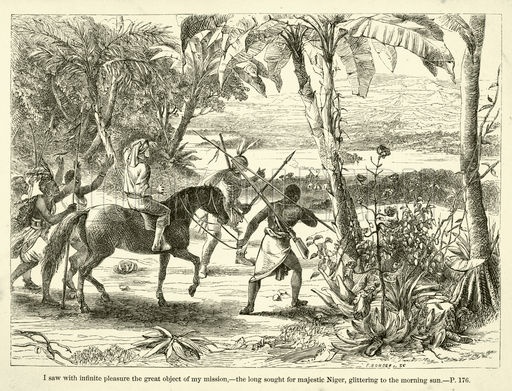
Maar ek wil oor Afrika-ontdekkers (eintlik -verkenners) skryf. Van die interessantste tekste en daarby waarheidsgetrou is die Skot Mungo Park (1771-1805) se verslae oor sy ekspedisies in die omgewing van die Nigerrivier in Wes-Afrika (Travels in the interior districts of Africa, Ware: Wordsworth, 2002, 390p; Amazon Kindle $1,13). Een van sy waarnemings was: “Loss of time is an object of no great importance in the eyes of a Negro. If he has anything of consequence to perform, it is a matter of indifference to him whether he does it to-day or to-morrow, or a month or two hence; so long as he can spend the present moment with any degree of comfort he gives himself very little concern about the future” (p 298). In Helper se 1868-boek (bron hier onder) is daar hierdie aanhaling: “Regardless of the past as reckless of the future, the present alone influences their actions” (Kindle 2738).

Oor sy swart vriend Karfa skryf Park: “Observing the improved state of our manufactures [die artikels wat Park uit Engeland saamgebring het],* and our manifest superiority in the arts of civilised life, he would sometimes appear pensive, and exclaim with an involuntary sigh … ‘Black men are nothing.’ At other times he would ask me, with great seriousness, what could possibly have induced me, who was no trader, to think of exploring so miserable a country as Africa? He meant by this, to signify that, after what I must have witnessed in my own country, nothing in Africa could, in his opinion, deserve a moment’s attention. I have preserved these little traits of character in this worthy Negro, not only from regard to the man, but also because they appear to me to demonstrate that he possessed a mind above his condition; and to such of my readers as love to contemplate human nature in all its varieties, and to trace progress from rudeness to refinement, I hope the account I have given of this poor African will not be unacceptable” (333-334). [* “All the articles of value which the Moors and the people of Jinnie bring to Sego, are made by us. If you speak of a good gun, who made it? – the white people” (371).]

Dit is verstaanbaar dat Park oor sy verblyf in Afrika geskryf het: “I … felt a painful longing for the manifold blessings of civilised society” (300). Maar hy het tereg teen veralgemening gewaarsku. In die konteks van raspolitiek word veralgemening deesdae stereotipering genoem. Maar stereotipering geskied nie oorsaakloos nie. Daar is seker ten minste ‘n element van waarheid in. Daar is seker ook ‘n mate van nawerking van die verlede in die hede. Lesers moet maar self besluit in hoeverre die inligting in die aanhalings steeds geldig is. Daar moet egter in gedagte gehou word dat meer as twee eeue sedert Park se dood verloop het. Maar groot kulturele verskille tussen blankes en swartes bestaan sekerlik steeds.

Daar is ‘n boek waarin die menings van talle Afrika-ontdekkingsreisigers byeengebring is: Hinton Rowan Helper (1829-1909) se The negroes in Negroland; The negroes in America; and, Negroes generally; also, The several races of white men (New York: GW Carleton, 1868, 255p; Amazon Kindle $1,13). Met Negroland word Afrika bedoel. Helper het ook twee ander boeke oor hierdie onderwerp gepubliseer: The impending crisis of the South: How to meet it (1857, 106p; Amazon Kindle $11,34) en Nojoque: A question for a continent (1867, 484p; Amazon Kindle $10,25). Daar is ook ‘n omvattende boek oor Helper beskikbaar: David Brown, Southern outcast: Hinton Rowan Helper and the impending crisis of the South (LSU Press, 2006, 333p; Amazon Kindle $18,23).

Helper was ‘n Amerikaanse Suiderling wat eerder om ekonomiese as morele redes teen slawerny gekant was. Hy het gedink dat as blanke werkers gebruik word die Suidelike state vinniger sou industrialiseer en ontwikkel en hulle agterstand teen die Noordelike state kon inhaal. Hy wou hê dat die swart slawe vrygestel en gerepatrieer word. Sy oogmerk vir Amerika was ‘n nasiestaat vir blankes: “The ultimate whitening up of all the Southern States” (1868-boek, Kindle 4419). Op daardie stadium was daar 30 miljoen blankes in Amerika teenoor 4 miljoen swartes. In die Suidelike state was Helper ‘n uitgeworpene omdat die meeste slawe-eienaars teen die vrystelling van die slawe gekant was omdat hulle swartes as goedkoop arbeiders wou behou. Daar is ook gemeen dat Helper as ondersteuner van Abraham Lincoln die Noorde teen die Suide gehelp het. Helper is verwerp deur pro-swart gesindes en diegene wat die slawe wou vrystel weens sy onsimpatieke, rassistiese houding jeens swartes.

Ek beperk my aandag tot Helper se 1868-boek, waarin ook inligting uit sy twee ander genoemde boeke aangehaal of herhaal word. Ek wou veral kennis neem van wat Afrika-ontdekkingsreisigers geskryf het. Baie van die destydse gebruike van swartes is grusaam, wat die teks onaangename leesstof maak. Daar is ook baie uitlatings wat aan Penny Sparrow herinner. Ek gaan egter nie opmerkings herhaal wat deesdae as rassisties geëtiketteer (kon) word nie. Al die outeurs is sekerlik nie so waarheidsgetrou soos Park nie. Tog kristalliseer daar ‘n redelike mate van konsensus.

Een van die dinge wat opval, is dat daar destyds gemeen is dat die getal swartes in Afrika besig was om te verminder, bv weens siektes en natuurrampe soos droogte. Die enigste plek waar die swartes glo meer geword het, was as die slawe van blankes in die Amerikas (2595). Dit blyk ook dat slawerny in Afrika bestaan het lank voordat met die transatlantiese slawehandel begin is en slawerny voortgeduur het lank nadat slawerny in die Westerse wêreld afgeskaf is. “The intercourse which the natives have had with white men does not seem to have much ameliorated their condition” (692). In Afrika is na bewering tradisioneel net sowat ‘n kwart van die swart bevolking nie deur hulle medeswartes verslaaf nie (541, 560, 1745). “Slavery in Africa as a national institution … seems to have existed always” (655).

“The most horrible topic connected with slavery is slave-hunting; and this is earned on, not only for the purpose of supplying the foreign market, but, in a far more extensive degree, for supplying the wants of domestic slavery” (590). “The liability to fall into a condition of servitude is not so frightful in Africa as it is where there is a higher appreciation of personal liberty; nor does the same odium attach to the term slave as is attached to it among civilized men. The African sees very little difference between the authority exercised over him by one whom he acknowledges as his master and the petty tyranny which is exercised by most African chiefs over their subjects; and so long as he is worked moderately, and treated kindly, he has but little cause for dissatisfaction, and not infrequently by his own choice places himself in this condition” (570).

Reeds in 1868 het Helper tereg verwys na “the gross error of inferring or supposing that color is the only differences – and that a very trivial difference – between the whites and the blacks” (70). In 2016 moet ons steeds aanhoor dat velkleur die enigste rede is waarom blankes rassesegregasie of apartheid toegepas het. Verskille in wêreld- en lewensbeskouing, in lewenswyse, oftewel kulturele verskille, word geïgnoreer. ‘n Sendeling moes die volgende redenasie aanhoor: “Me go to church, and you no pay me” (2213). “All missionaries praise the African for his strict observance of the Sabbath. He would have three hundred and sixty-five Sabbaths in the year, if possible, and he would as scrupulously observe them all” (2223).

“Gratitude with the African is not even a sense of prospective favor. He looks upon a benefit as the weakness of his benefactor and his own strength; consequently he will not recognize even the hand that feeds him” (1297). Swartes het ‘n “long list of wants without stint or shame” (1315). “Whatsoever is seen is surely demanded … The love of acquiring property stifles every sense of shame; and no compunction is felt in asking for the cloak from off the back” (1325). “True to his natural instincts, the king commenced begging, and being much struck with my Highland costume, he demanded it as a proof of friendship” (1344). “They never make a present without expecting to receive three times as much in return” (1335). “The more they receive the more they desire, but in return they will do nothing” (2156). “When they can no longer ask, they begin to borrow, with the firm resolution of never repaying; and, what is worst of all, when they make a present, they hold it a deadly offence not to receive at least double the value in return” (1362). “It often came about that our house was like a shop where there are customers in abundance, except that in our case they were customers who wished to have everything for nothing” (1371).

“Africa from the earliest ages has been the most conspicuous theatre of crime and of wrong; where social life has lost the traces of primitive simplicity, without rising to order, principle, or refinement; where fraud and violence are formed into national systems, and man trembles at the sight of his fellow-man” (1407). “Everything that comes in their way, which they cannot appropriate on the spot to their own use, is destroyed, that it may not be of advantage to others” (1438). “Their destructiveness is prominent; a slave never breaks a thing without an instinctive laugh of pleasure” (2291).

Meer as een outeur gebruik die voorbeelde van ‘n perd en ‘n donkie om die beduidende verskille tussen etniese groepe aan te dui; dat hulle nie saam in dieselfde tuig kan trek nie. “It is the grand error of equalizing that which is unequal” (2632). Dit herinner aan wat in Deuteronomium 22:10 staan: “Jy mag nie ‘n bees en ‘n donkie saam voor ‘n ploeg inspan nie” (3643). William Mungen het in 1867 gesê: “As soon as they admit that the races are of different origins they can no longer claim that all races are equal, any more than they can claim that the horse and the ass are equal” (3136). John Quincy Adams (1767-1848) het in 1843 geskryf: “It is only as immortal beings that all mankind can, in a sense, be said to be born equal” (2917). Senator Thurman van Ohio het in 1868 gesê: “Of all the delusions I have ever known, the idea of political equality between the black and white races seems to me the greatest … It is impossible that the race to which we belong can submit to negro domination; it is impossible that … the negro can compete with the white man in the business, much less the politics, of the country” (3057). Hiermee het ek reeds met die kommentaar van Amerikaners oor swartes in Amerika begin.

Soos uit die boektitel blyk, haal Helper ook outeurs aan wat oor Amerikaanse swartes geskryf het. Sowel Thomas Jefferson (1743-1826) as Abraham Lincoln (1809-1865) het gelyke saambestaan met swartes verwerp en verkies dat bevryde slawe gerepatrieer word. Soos Jefferson dit in 1824 gestel het: “Send the whole of that population from among us, and establish them, under our patronage and protection, as a separate, free, and independant people, in some country and climate friendly to human life and happiness” (2898). Lincoln het in 1858 gesê: “I do not understand the Declaration of Independence [1776] to mean that all men are created equal in all respects. Certainly the negro is not our equal in color – perhaps not in many other respects … I did not at any time say I was in favor of negro suffrage … I am not in favor of negro citizenship … I am not, and never have been, in favor of making voters or jurors of negroes, nor of qualifying them to hold office, nor to intermarry with whites … there is a physical difference between the black and white races, which I believe will forever forbid the two races living together on terms of social and political equality” (2935).

Montgomery Blair het in 1863 gesê: “An election would be a mockery in a community wherein there could be no other than black and white parties. In such communities, reason and experience show that one or the other race must be the dominent race, and that democracy is impossible” (2989). “The instinct of self-preservation … revolts at hybridism” (3006).

SS Cox het geskryf: “The white and black races thrive best apart; that a commingling of these races is a detriment to both; that it does not elevate the black, and it only depresses the white; that the history of this continent, especially in Hispano-America, shows that stable, civil order and government are impossible with such a population … It is an absurdity to say that two races, so dissimilar as black and white, of different origin, of unequal capacity, can succeed in the same society when placed in competition” (3092). Een van Fisher se raswette lui: “He may not lay a finger on one of those three wonderful boxes, the ballot-box, the jury-box, and the cartridge-box, which contain the instruments and weapons by which freemen defend their rights. They are for the white race only” (3256).

Samuel T Glover het in 1860 geskryf: “If you legislate to give the Africans place, position, and employment which would otherwise belong to white men, you depreciate white men – you invidiously stigmatize their race” (3529). Richard Grant White het in 1865 geskryf: “I believe that the greatness or abjectness of every people is due primarily, if not solely, to one cause – race” (3879). Theodore Parker het hierdie pluimpie vir blankes gegun: “The Caucassian differs from all other races; he is humane, he is civilized, and progresses” (3916).

In 1867 skryf Helper van ‘n verskynsel wat aan die nuwe Suid-Afrika kan herinner: “The negroes here … have hitherto been afforded opportunities, for both an education and for an easy and comfortable livelihood, far superior to the opportunities which were generally enjoyed by the poorer classes of white people … this cruel and flagitious discrimination in favor of the blacks as against the whites” (4042). “The poor whites were thus crowded away from the many desirable employments and places to which they alone should have been heartily welcomed” (4059).

Die volgende aanhaling herinner aan die U-draai wat die Nasionale Party van 1990 af gemaak het: Na die Amerikaanse Burgeroorlog (1861-1865) het die Republikeinse Party “Lucifer-like fallen from the white heights of Republicanism into the black depths of Radicalism” (4202). In daardie na-oorlogse situasie word van die Amerikaanse blankes verwag om hulle bekke te hou en gedwee alles te aanvaar wat na hulle kant toe kom. Max du Preez gee deesdae soortgelyke raad aan Suid-Afrikaanse blankes. “Endure the wrong, and pass the whole matter by in silence, and without action, rather than subject themselves to the insult, expense, and loss of time which they well knew they would be but too likely to incur by making complaint” (4227).

Helper skryf: “We insist upon it that it is pre-eminently our duty to be just and kind to our own race, and that the poor and distressed of the white race are those who, here, there, and everywhere, have the highest claims upon us, whether for service, for food, for clothing, for education, or for whatever other thing” (4336). Is dit voorstelbaar dat ‘n gedrukte Afrikaanse hoofstroomkoerant ‘n pleidooi ten bate van arm blankes sou lewer of selfs maar net hulle toestand in ‘n hoofartikel sou belig? Ek dink nie so nie. Dit sou nie polities korrek wees nie.

Ras en rewolusie geniet voorrang hoor Kovsie Stabilis

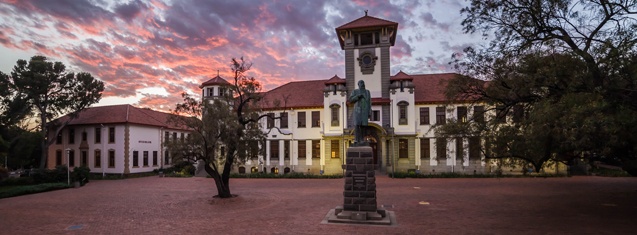
Die Kovsie Stabilis-groep, hoofsaaklik wit, oorweeg dit om ‘n aansoek by die hoogeregshof in te dien om die Universiteit van die Vrystaat te dwing om klasse op dié universiteit onverpoosd te laat voorgtaan, maar die “verkeerde” ras van die groep is vir swartes klaarblyklik die enigste oorweging om dit te beveg.

Kovsies Stabilis wil hulle beywer vir die stille meerderheid en studente wat wil studeer op die Kovsie-kampus sê die groep wat besorgde ouers, personeel, alumni en belanghebbendes insluit.

Maar swart studente wat glo hoop om hul studies te voltooi wil hulself nie vereenselwig met die groep nie en is gekant teen hul oproep.

Volgens die swart “leergierige” studente op kampus is hierdie groep, wat op Facebook begin het as ‘n stem vir diegene wat teen die huidige onluste op die UV-kampus gekant is, “net besig om verder konflik aan te vuur”.

Kovsie Stabilis het vandeesweek gedreig met regstappe teen die UV om te verseker dat studente hul akademiese jaar voltooi. Hulle wil ook geld terugeis vir diegene wat nie sal kan nie.

Stabilis is die leuse van Grey Kollege, ‘n voorste Vrystaatse skool. Dit is nie bekend of die groep se lede van Grey is nie.

‘n Trustfonds is intussen gestig om die koste van die aansoek te befonds.

Die swartes, wat ook glo ook “hoop dat klasse hervat”, sê egter die Kovsie Stabilis-lede moet hulself in die betogers se skoene plaas om tot ‘n vergelyk te kom, eerder as om “heeltemal teen” die oproeriges te wees.

Kennelik is dit ‘n aandrang dat die onsinnige eise van die onlusmakers op iets anders as rewolusionêre koors berus.

Net 5% van ­Suid-Afrika se studente hou die land se kampusse gyselaar, volgens dr. Dianne Parker, ­adjunk­-direkteur-generaal vir ­universiteite in die ­departement van hoër ­onderwys en opleiding.

Sy het nie in haar toespraak voor lede van die Nasionale ­Vergadering (NV) en ­Nasionale Raad van Provinsies (NRP) se komitees oor hoër ­onderwys genoem dat hulle almal ook swart is nie, alhoewel sy hulle “barbaars” genoem het.

Om die oproeriges nie te na te kom nie, het Parker dit ‘n “aanklag” teen die owerhede genoem, alhoewel sowat 20 verskillende swart oproerige groepe hulself al net by die Universiteit van die Witwatersrand aangemeld het, almal met verskillende eise.

Dit skep ‘n konsultasie-nagmerrie, benewens die feit dat nie een van die groepe ‘n samehangende standpunt nog kon formuleer nie, maar eerder daarin belangstel om ‘n onderhoud met Radio702 toe te staan om sodoende belangrik te kan voel.

Die doelwit van die oproeriges is om die akademiese jaar tot stilstand te dwing, en die land te destabiliseer in die hoop dat hulle polities daarby kan baat.

Leon Lemmer: Die beredeneerde regsheid van Samuel Francis

Die Amerikaner en trotse Suiderling, Samuel Francis (1947-2005), was ‘n historikus en joernalis wat met sy regse en ander geskrifte nasionale aansien verwerf het. Wanneer ‘n mens sy tekste lees, tref die diepte en oortuigingskrag daarvan jou dadelik. Hy het nie gewildheid gesoek nie en soms met sy onbesproke rasionaliteit sy vlakker en meer opportunistiese geesgenote teleurgestel, bv deur met redenasies aan te toon dat ‘n tuisland van Amerikaanse blankes nie realisties haalbaar is nie. Hieroor skryf ek volgende keer.

In regse geledere is daar groot ondersteuning vir Francis se standpunt dat rasse ingevolge persoonlikheid, gedrag en ook intelligensie verskil. Vandaar die tradisionele Amerikaanse beleid van rassesegregasie. Maar hy het blankes nie beter as ander rasse geag nie; bloot dat blankes anders is, bv dat wittes omstandighede skep waarin hulle (en ander rasse) meer tuis voel as die omstandighede wat deur die leefwyse van nie-wit rasse daargestel word; vandaar die uittog van nie-wittes uit hulle woonbuurte en hulle intog in tradisioneel blanke gebiede. “Non-whites may indeed create a different civilization of their own, but it will not be the same as the one we as whites created and live in, and most of us (or even most non-whites today) would not want to live in it” (Francis, bron hier onder, Kindle 2162).

Daar is ‘n omvattende versameling van Francis se geskrifte beskikbaar: Shots fired: Sam Francis on America’s culture war (FGF Books, 2006, 361p; Amazon Kindle $11,39). In hierdie rubriek bepaal ek my egter by sy politiek soos weerspieël in sy Essential writings on race (New Century Foundation, 2007, 119p; Amazon Kindle $5,64), met ‘n inleiding deur Jared Taylor.

Met verwysing na die Bybel verklaar Francis prontuit: “Neither ‘slavery’ nor ‘racism’ as an institution is a sin” (116). Albei is immers eeue lank algemeen as normaal in ontwikkelde of beskaafde samelewings aanvaar. Dieselfde geld rassediskriminasie of “apartheid and colonialism” (123). Laasgenoemde twee bestaan nie meer in Suid-Afrika nie, maar rassediskriminasie is sekerlik nog met ons, maar hierdie keer word dit met oorgawe in die naam van regstelling, transformasie, of watter eufemisme ook al, ten koste van blankes bedryf.

In die na-koloniale era “we see the transfer of power in almost every dimension of public and private life. Thus far, the transfer is more cultural than it is political or economic” (161). Francis verwys hier na Westerse lande. In die meeste voormalige kolonies is die eens blanke politieke mag aan nie-wittes afgestaan. “In South Africa, the transfer has already been completed” (154).

Vir Francis gaan dit uiteraard hoofsaaklik oor Amerikaanse toestande. Oor kulturele magsoordrag aldaar skryf hy:

“The Martin Luther King [public] holiday [introduced] in 1983 was the first and most important instance of the trend but by no means the last; indeed, it can be argued that the King holiday was merely the legitimizing agent of the attacks on other symbols that have occurred since. Attacks on the display of the Confederate battle flag and on other Confederate and Southern white symbols are now commonplace,* but the Alamo in San Antonio is another traditional white symbol that is also under attack – by Hispanics. The Custer battlefield in Montana now celebrates the Indian victory, although what is historically memorable about the battle of the Little Big Horn is not the victory of several thousand Indians over a small American cavalry detachment but rather the defeat of whites at the hands of non-whites” (161). [* “Attacks on the Confederacy really are: the opening salvo in an assault on everything that is distinctively European” (1478).]

Die swartes wil nie hê dat die vlag wat die Suidelike state in die Amerikaanse Burgeroorlog (1861-1865) gebruik het in die openbaar vertoon word nie omdat dit glo aan die era van slawerny herinner. “Only with the advent of the ‘civil rights’ era [1960s] and of mandated racial equality have the Confederate flag and all other symbols associated with the Confederacy been singled out for attack, and of course the reason is that these flags and symbols are the emblems of a government and culture that was based on slavery and racial inequality. In an age in which the egalitarian imperative is absolute and ‘racism’ is virtually a religious taboo, continuing to honor and display these symbols in public – especially by state and local governments – constitutes an outright act of resistance to the dominant egalitarian orthodoxies” (1492). “It is now open season on all things Confederate” (1558). “The rejection of the Southern and American past was implicit in signs carried by black anti-flag demonstrators last winter [1999-2000] that read, ‘Your Heritage Is Our Slavery'” (1571). Wat die swartes verlang of eis is “the total extirpation of those parts of the Southern past they find ‘offensive’ (ie anything that does not glorify blacks) and the rewriting of the past to magnify and glorify the achievements of their own race” (1577).

In Suid-Afrika matig nie-wittes en hulle blanke meelopers hulle die reg aan om ‘n verbod op die openbare vertoon van die vorige Suid-Afrikaanse vlag by bv sportbyeenkomste te plaas omdat dit glo aan apartheid herinner, asof die era van apartheid net sleg was. Daar is egter geen verbod op lof vir die afgryslike barbaarsheid en misdadigheid wat bv ANC/UDF- en PAC-terrorisme gekenmerk het nie. Ter verduideliking van wat hier bo staan: By Alamo is 180 blankes in 1836 deur Hispaniste gedood in die stryd om Texas se onafhanklikheid van Meksiko te verkry. Nie-wittes se oorwinning oor blankes by Alamo en by Custer mag gevier word maar nie blankes se oorwinnings oor Hispaniste en Indiane nie. Nie-wittes het in hierdie sin die kultuurstryd gewen. Die rede hiervoor is dat Hispaniste en Indiane, soos swartes en Asiate, etniese minderheidsgroepe in Amerika is en op grond daarvan as benadeeldes, as slagoffers van blanke boosheid, beskou word. Insgelyks mag die Voortrekkers se oorwinning by Bloedrivier eintlik nie meer gevier of selfs herdenk word nie omdat dit glo in nie-wit geledere aanstoot sal gee. Ook in die nuwe Suid-Afrika is die veralgemenende persepsie gevestig dat nie-wittes en veral swartes goed en blankes en veral Afrikaners sleg is. Op hierdie manier dring nie-wittes in Amerika en veral swartes in Suid-Afrika hulle wensbeeld van die geskiedenis aan die blankes op.

“The holidays, public anniversaries, flags, songs, statues, museums, symbols, and heroes that a people shares are fundamental to its identity and its existence as a people. What we are witnessing on the official level of public culture in the attacks on these traditional symbols and their displacement by the symbols of other races is the effective abolition of one people and the gradual creation of another” (168). Dit is aan hierdie soort kultuurmoord wat Max du Preez meedoen as hy skryf dat Cecil Rhodes se standbeeld maar gerus verwyder kan word want hy het nooit van Rhodes gehou nie. Du Preez het nie die visie om te besef dat dit in ‘n reeksaksie teen standbeelde van blankes sou ontaard nie. Insgelyk het Wim de Villiers van die verwydering van die laaste oorblyfsel van wat eens die Verwoerd-gebou was ‘n openbare spektakel gemaak om die ANC en Open Stellenbosch ter wille te wees. Mense soos Du Preez en De Villiers, met hulle Hugenote-vanne en anders as Francis, het nie die insig om te besef dat kultuurmoord die aanloop tot die uitwissing van die blankedom kan wees nie.

“Western movies now routinely define the whites as the villians and the Indians and Mexicans – or, even more fantastically, blacks – as the heroes or martyrs … It is routine also to display almost all criminals – rapists, murderers, robbers – as whites, though the statistical truth, of course is that violent crime in the United States is largely the work of non-whites” (175) al is hulle demografies die minderheid. Francis verwys na Mel Gibson se Lethal Weapon-reeks. “The second installment … depicted white South Africans – today’s Hollywood version of Nazis, no doubt – as masterminding drug smuggling into the United States” (181). Wanneer ek sodanige misleidende uitbeelding aanskou, dink ek: As rolprente en televisieprogramme en -advertensies die werklikheid weerspieël, het lande soos Amerika en Suid-Afrika glad nie ‘n ernstige misdaadprobleem nie.

“While the explicit racial hatred of whites expressed in black-directed films is well known, an increasingly common theme in mainstream television and film is that of the dangers represented by hordes of violent and vicious white supremacists, skinheads, neo-Nazis, paleo-Nazis, and racist terrorists who seem to lurk in every city, behind every storefront, in every small town throughout the country, everywhere, all the time. Recently [1994], in the ABC-TV production of the eight-hour film of Stephan King’s The Stand, a tale of the final struggle at the end of the world between supernatural forces of good and evil, the personification of goodness and of God was an elderly black woman, while the devil was portrayed as a blue-eyed, blond-haired white man, whose evil followers waved the Confederate flag. Even at the end of the world, it seems, Hollywood cannot rid us of white racism” (181).

“Today anti-white themes … provide the background and the context of popular entertainment” (195). “This is a calculated tactic aimed at seizing cultural legitimacy and cultural hegemony and ultimately coercive political power on behalf of non-whites at the expense of whites … It offers a conspirational interpretation of history in which whites are systematically demonized as the enemies of the black race, and a myth of black racial solidarity and supremacy. ‘Afro-racism’ is the ideological and political apparatus by which an explicit race war is prepared against the white race and its civilization, not as part of ‘rage’ nor as a response to ‘injustice’ and ‘neglect’ but, like any war, as part of a concerted strategy to acquire power” (201).

Francis haal die volgende groot waarheid op: “Of course non-whites are by no means the only peddlers of anti-white racism. One of the most remarkable features of our interesting times is the degree to which whites themselves help dig their own racial and civilizational grave” (208). Die nuwe Suid-Afrika is ‘n skandalige toonbeeld hiervan. Verlooptes redeneer dikwels “that race is merely a social invention rather than a fact of nature and argues for the abolition of the concept of race as applied to whites. Racial identity is forbidden for whites but not for non-whites (or at least blacks)” (208), wat op dubbele standaarde neerkom. “Of course the explicit goal is to destroy white civilization by doing away with the symbols and institutions of the collective consciousness that defines the race and is the foundation of the culture” (215).

“We know from the population projections by die US Census Bureau last year [1993] that by the middle of the next century [ie 2050] the present white majority of the United States will have dwindled to a minority in its own country, and given that fact and the increasing legitimization of anti-white racism in the United States, the situation in this country for whites is not going to get any better, to say the least. Of course, the revolution could not have succeeded or gone as far as it has without the active assistance of whites” (250).

Bill Clinton is een van die wittes wat die anti-wit-revolusie in woord en daad aanhelp. Omdat die meerderheid Amerikaners teen 2050 na verwagting nie-wit gaan wees, het Clinton blankes gewaarsku om goed vir nie-wittes te wees anders gaan hulle vorentoe bars. Sy naïewe veronderstelling is dat as blankes bv swartes op die hande dra en hulle oorvergoed, hulle dieselfde teenoor blankes sou doen as hulle politieke beheer kry. Dit is egter dwaas om te veronderstel dat daar wederkerigheid gaan wees. In Suid-Afrika het die nie-wittes en veral die swartes tydens apartheid steen en been oor rassediskriminasie gekla omdat dit oneties en ‘n euwel is. Desnieteenstaande is rassediskriminasie nie in die nuwe Suid-Afrika verbied nie en word dit met oorgawe toegepas, maar hierdie keer ten koste van blankes. Tydens apartheid het nie-blankes geëis dat politiek uit sport gehou moet word. In die nuwe Suid-Afrika is politieke inmenging in sport meer as ooit tevore aan die orde van die dag. Die “apartheidsregering” het tuislande aan etniese groepe gegun maar die ANC-regime gun nie ‘n tuisland aan blankes of Afrikaners nie. Blankes word deur swartes uitgesonder vir verguising en nie vir verering vir alles wat hulle tot stand gebring het nie. Ek kan steeds nie die onoortrefbare dwaasheid glo dat toegelaat is dat alles wat sedert 1652 plaaslik opgebou is grootliks onverdiend in die skoot en beheer van die swartes beland het en dat daar geen greintjie (amptelike) dankbaarheid of selfs blote erkentlikheid uit daardie oord jeens blankes is nie.

Volgens Francis is “the pervasive venom of universalism” (256) die onderliggende euwel. “In the universalist world-view, there is neither history nor race nor even species, neither specific cultures nor particular peoples nor meaningful boundaries. Therefore there are no concrete duties to race, nation, community, family, friend, or neighbor and indeed no distinctions to be drawn between neighbor and stranger, friend and foe, mine and thine, us and them. In the happyland of universalism, we owe as much to the children of Somalia – indeed more – than we do to the hapless citizens of Los Angeles … Even to invoke ‘our’ identity, our interests, our aspirations is to invite accusations of all the ‘isms’ and ‘phobias’ that are deployed to prevent further discussions and to paralyze the formation or the retention of a common consciousness that might at some point swell up into actual resistance to our dispossession (263).

Max du Preez is een van diegene wat van ander mense (eerder as homself) verwag om die onderskeid tussen “ons” en “hulle” uit te wis. Daar is ook Wim de Villiers met sy globale benadering waarvolgens die Universiteit Stellenbosch eerder ‘n Afrika- en wêrelduniversiteit moet wees as een wat aan die groepbelange (soos die tradisies, geskiedenis, kultuur en taal) van Afrikaners reg laat geskied. Francis huldig die teenoorgestelde standpunt:

“What we as whites must do is reassert our identity and our solidarity, and we must do so in explicitly racial terms through the articulation of a racial consciousness as whites” (283).

“The reassertion of our solidarity must be expressed in racial terms for two major reasons. In the first place, the attack upon us defines itself in racial terms and seeks through the delegitimization of race for whites and the legitimization of race for non-whites the dispersion and destruction of the foundation of our solidarity, while at the same time consolidating non-white cohesivemess against whites” (283). “Secondly, we need to assert a specifically racial identity because race is real … I do not suggest that race as a biological reality is by itself sufficient to explain the civilization of European man – if race were sufficient, there would be no problem – but race is necessary for it, and it is likely that biological science in the near future will show even more clearly how necessary racial, biological, and genetic explanations are to understanding social and historical events more fully” (290).

“The civilization that we as whites created in Europe and America could not have developed apart from the genetic endowments of the creating people, nor is there any reason to believe that the civilization can be successfully transmitted to a different people.* If the people or race who created and sustained the civilization of the West should die, then the civilization also will die. A mere cultural consciousness, then, that emphasizes only social and cultural factors as the roots of our civilization is not enough, because a merely cultural consciousness will not by itself conserve the race and people that were necessary for the creation of the culture and who remain necessary for its survival. We need not only to understand the role of race in creating our civilization but also to incorporate that understanding in our defense of our civilization. Until we do so, we can expect only to keep on losing the war we are in” (296).

[* Dink aan hoe woongebiede, skole, universiteite en wat ook al wat blankes opgebou het vir nie-wittes en veral swartes onaanvaarbaar is en opsluit verander/getransformeer moet word om eerder vir hulle as vir blankes te pas.]

Francis kom tot die gevolgtrekking “whites do not act cohesively or think of themselves as a unit, that whites have no racial consciousness … In the United States today, whites exist objectively but do not exist subjectively, and that is in my view the fundamental racial problem they face, the basic reason they (I should say ‘we’) are losing the racial war against us … the spineless abnegation of their own country and culture that is at the root of white male paranoia offers proof of the absence of a subjective existence” (310). “As long as whites continue to avoid and deny their own racial identity, at a time when almost every other racial and ethnic category is rediscovering and asserting its own, whites will have no chance to resist their dispossession and their eventual possible physical destruction” (317).

Blankes wêreldwyd het myns insiens meer om op trots te wees as waaroor hulle skaam hoef te wees. Hulle moet hulle nie laat breinspoel deur nie-wittes wat hulle kritiseer met eensydige voorstellings waarvolgens blankes net sleg is en dat hulle skuldig daaroor moet voel nie. Ek was voorheen (soms) geneig om eerder kultuur- as rasverskille te beklemtoon, maar Francis maak ‘n oortuigende saak daarvoor uit dat blankes in hulle eie belang rasbewus moet word en dat hulle hulle nie moet laat intimideer deur bv swartes wat rasbewustheid by blankes as “rassisme” etiketteer nie. Rasbewustheid kom in groot mate by swartes voor en behoort as teenvoeter ook algemeen by blankes aangetref te word.

Na aanleiding van die invalle van “barbare” in die Romeinse Ryk verwys Francis na “the Roman poet Juvenal’s [60-140 nC] famous line that ‘the Orontes [the main river of ancient Syria] empties its garbage into the Tiber” (942), die rivier by Rome in Italië. Gebeur iets soortgelyks dalk tans in veral Duitsland weens die instroming van immigrante uit die Midde-Ooste en van elders in die Derde Wêreld?

“The perversion of our strengths into weaknesses is exploited against us and our rivals seek victory through our back doors. European Man can survive today only if he begins to recognize that victory through honorable combat is not enough; he must also be prepared to meet the challenges on the level of cultural combat, and the only way he can do so is through recovery of his racial heritage, the roots of who we are and where we come from as a people” (949).

“Jared Taylor noted … ‘There is increasing evidence that personality traits … are under genetic control’ … we now know and are increasingly learning about the role of genetic forces (and therefore race) in shaping personality (and therefore culture)” (962). “Europeans have shown a tendency to neglect their own racial interests and … they find developing their own racial consciousness … difficult. As Jared Taylor noted … every other race tends to think in terms of its own race and group, and ‘Only whites pretend that pluralism and displacement are good things and that measures necessary to ensure group survival may be immoral.’ We tend to think that way because we are naturally prone to transcend subjective and particular interests and to idealize what is objective and universal” (989).

Sedert die jare sestig gee die Amerikaanse regering, anders as voorheen, voorkeur aan immigrante uit die Derde Wêreld; dermate dat deesdae beweer word “America is a ‘nation’ defined by no particular racial or ethnic identity” (1150). Ben Wattenberg het hierdie nuwe realiteit soos volg geformuleer: “America is the ‘first universal nation'” (1150). Bill Clinton noem dit “an embrace of our common humanity” (1164). Hierdie selfverklaarde Amerikaanse etniese en kulturele identiteitloosheid hinder hom nie. Francis skryf: “The idea that America is or has been a universal nation, that it defines itself through the proposition that ‘all men are created equal’,* is a myth. Indeed, it is something less than a myth, it is a mere propaganda line invoked to justify not only mass immigration and the coming racial revolution but also the erosion of nationality itself in globalist free trade and a One World political architecture. It also justifies the total reconstruction and re-definition of the United States as a multi-racial, multi-cultural, and transnational swamp” (1185). Later vra Francis: “If they are born or created equal, do they remain equal?” (1198). [* Die tweede sin van die Amerikaans Onafhanklikheidsverklaring (1776) lui: “We hold these truths to be self-evident, that all men are created equal …” Francis noem dit “one of the most arcane – and one of the most dangerous – sentences ever written, one of the major blunders of American history” (1205).]

‘n Grondwetkenner word soos volg aangehaal: “Black freedom and equality were, and are, a revolutionary change in the original constitutional system” (1232). Francis skryf: “We are not and never were a ‘universal nation’ … defined by the equality clause of the Declaration” (1329). “A universal nation is … a total rejection of the American past and the national identity as we have always known it. Racial universalism is not simply an adjustment or a ‘reform,’ let alone a continuation of the proper direction of American history, but a revolutionary reconstruction of the American identity” (1336). “Without the common blood that made us a nation in the first place, there will be no American nation” (1383). In Amerika neem die ras- en kulturele revolusie sulke afmetings aan dat daar van die “new America” gepraat word (1798, 2121), wat uiteraard aan die frase “nuwe Suid-Afrika” herinner. Bill Clinton verwelkom die nuwe Amerika en noem hierdie proses “the third great revolution in America” (2114).

“There are three general reasons why a revival of white racial consciousness and identity is needed. In the first place … race deeply affects and shapes cultural life” (2190). “What kind of society and how much civilization a people creates is now clearly known to be related to what kind of race they are, and the decline or disappearance of the white race can be anticipated to impoverish what remains of Western civilization” (2197). “Second, regardless of the role of biologically based racial differences in accounting for behavioral and cultural differences, whites, like any race, should wish to survive and flourish simply for their own sake … whatever their merits or flaws. Even the minimal rationale for racial survival is denied to whites today because of the constant demonization of whites that non-whites and whites themselves heap on them and because of the blindness of whites … to their own racial identity. And third, white racial consciousness is necessary simply as a means of self-protection. White racial identity is an integral component of the historic identity of America as a culture and a nation. The emergence of an explicit racial consciousness among non-whites in a country that remains (so far) majority white and in which whites have constituted the culturally defining and dominant race creates tensions that are already obvious and threaten to become far more dangerous and destabilizing in the future” (2203). Voorheen “white supremacy was able to exist at all only because whites possessed a powerful racial consciousness, and non-whites did not. Today, that situation is reversed – with ominous implications for the dwindling white population” (2250).

Deesdae klink die BLM-frase, “Black Lives Matter,” dikwels op. Plaaslik is ons grusame ervaring dat baie blankes jaarliks in ons stede en dorpe en op ons plase vermoor word, dikwels deur swartes. Het dit nie tyd geword dat ons die BLIK-frase, “Blanke Lewens Is Kosbaar,” tot vervelens toe ophaal nie? Ons weet dit is die waarheid. Waarom word dit nie gesê nie? Dit is myns insiens hoogs onwaarskynlik dat ‘n Afrikaanse koerant weens die sug na politieke korrektheid hom in ‘n hoofartikel positief oor BLIK sou uitlaat. As Max du Preez net lof vir swart bewussyn het, word ruimte graag daaraan afgestaan; selfs aan sy verregaande bewering: “swart landgenote sedert 1994 méér as ons moes aanpas en toegee” (Netwerk24, 13 September). Vir blankes sal Du Preez nie ‘n lansie breek nie. Ewewig is nie in sy aard nie.

Die lengte van hierdie rubriek is sodanig dat ek een van die belangrikste sake wat Francis beredeneer, die moontlikheid van ‘n tuisland vir blankes, nie kon insluit nie. Ek hoop om hierdie kwessie volgende naweek in my rubriek aan die orde te stel.

Leon Lemmer: Gregory Hood se regse perspektief op die Amerikaanse droom

Die afgelope tyd is daar op Praag verskeie kere oor die Alt Right of New Right berig. Dié verskynsel kom al hoe meer in veral Amerika, Brittanje en Europa voor, onder meer as reaksie teen die instroming van immigrante uit die Derde Wêreld. In Amerika het politieke regsheid ‘n verdere hupstoot gekry toe Donald Trump ‘n kandidaat vir die presidentskap geword het. Ook: “Obama’s first [and second] term has been a bonanza for white racial awareness … whites are becoming increasingly impatient with liberal excuses for black dysfunction” (Gregory Hood, bron hier onder, Kindle 1355). Daar vind ‘n “increasing radicalization of American conservatives” plaas (1366). Hierdie regsheid word as ‘n alternatief voorgestel of as nuut aangebied ten einde dit van historiese regsheid, bv dié van die Nazi’s, te onderskei, asook van die soort konserwatisme wat die Amerikaanse Republikeinse Party (die “Grand Old Party” of GOP) kenmerk, bv:

“Insofar as there is an intellectual justification for conservatism, it accepts the American founding as part of a gradual progression towards egalitarianism” (1231).

Die GOP is feitlik uitsluitlik op die steun van blanke kiesers aangewese maar daar is baie faksies sodat die GOP eintlik ‘n “breë kerk” of sambreelparty is. “American conservatives lack a core coherent ideology to motivate them and somehow, at the same time, they deny the concrete realities of race, place, religion, and real nationhood in the name of an abstract proposition nation” (1241). Die afsplintering in die GOP vind na regs plaas, bv die Tea Party, omdat gemeen word dat die GOP in baie opsigte nie duidelik genoeg van die linkser Demokratiese Party onderskei kan word nie. “The idea of championing a restricted franchise, nullifying laws [ Civil Rights Acts, Voting Rights Act], or recognizing identity based on ethnicity and culture is obviously unthinkable. After all, conservatives believe it’s their system” (1268). “The premises of the Left (democracy, equality, anti-racism) aren’t systematically challenged” (1287). “Ultimately, both sides in mainstream American politics are united in defining the country as a cultureless and raceless entity” (741). In Suid-Afrika is daar ‘n soortgelyke eendersheid by die twee grootste politieke partye want daar is eerder ‘n graad- as ‘n aardverskil tussen die ANC en die DA.

Die Amerikaanse alternatiewe of nuwe regses het tydskrifte en webwerwe en uitstekende skrywers soos Samuel Francis, Jared Taylor, Greg Johnson en Kevin MacDonald wat hulle boodskap uitdra. Enersyds is Amerika die oorsprong van baie van die euwels wat na Suid-Afrika oorgewaai het, soos regstellende aksie en swart ekonomiese bemagtiging. Andersyds ontluik daar al hoe meer Amerikaanse denkers wat goeie insig openbaar en aan blankes klokhelder kommunikeer wat besig is om te gebeur en wat hulle daaromtrent behoort te doen. Ek wil vandag die naam van Gregory Hood (gebore in 1980) by die pasgenoemde lysie van vier name voeg en doen dit na aanleiding van sy eerste boek, Waking up from the American dream (San Francisco: Counter-Currents Publishing, 2016, 145p; Amazon Kindle $5,69).

Hood is oortuig dat regs reg is en formuleer sy standpunt in taal wat ‘n wonderlike seggingskrag het. Let vervolgens deurgaans op vir ooreenkomste tussen die huidige Amerika en die nuwe Suid-Afrika. “Perhaps the closest parallel to the American situation is the timely example of South Africa” (551). “Once you go black, your country doesn’t come back” (1532). Die afgelope twee dekades kon waargeneem word hoe Suid-Afrika omgedop en heel moontlik vir altyd haas onherkenbaar opgedonder word. Die outeur blyk goed bekend met ons plaaslike omstandighede te wees. “Most conservatives considered Mandela a terrorist” (2023).

Nie-verloopte Afrikaners kan hulle nie met die nuwe Suid-Afrika vereenselwig nie. Insgelyks dink Hood dat Amerikaanse blankes vreemdelinge in hulle vaderland geword het. “I’ve always loved my country … it … isn’t mine anymore” (152). Dit is om ‘t ewe of die Demokratiese Party of die Republikeinse Party aan die bewind is omdat die land in elk geval nie volgens die wense van die meerderheid blanke kiesers regeer word nie. Byvoorbeeld, “repeated studies show that voters are unwilling to support social welfare programs if they are perceived as supporting foreign groups” (1079). “The vote is an all but meaningless privilege, for, even if votes are counted, elections lead to results exactly opposed to what voters say they supported” (2166). In Suid-Afrika is die grondwetlike opset sodanig dat die blanke stem in die uiterste mate gemarginaliseer is en gevolglik ignoreerbaar min invloed uitoefen.

Die outeur verskaf ‘n outobiografiese inleiding, wat met hierdie aanhaling begin: “My father … had it better. He had his people. They had their standards. They had pride” (121). Hood noem homself “a White Nationalist” (144) wat dit onmoontlik vind om ‘n nuwe identiteit gegrond in “social justice” te ontwikkel (152). “After all, what better phrase can be used to justify White Nationalism than ‘for ourselves and our posterity’?” (594). Hy skryf:

“The great imperative of our time is for the white European population within the United States to secure its existence by creating a homeland independent of the present American system” (144). “I want a normal job and a normal life in a homeland for my people ” (163). “American life can still be prosperous, orderly, and enjoyable, but there’s something deeply wrong and sick beneath the surface” (171). “Today, the entire national and international power structure, political system, and moral code is built around suppressing white identity and European Identitarian politics” (163). “While ideologically, words like hierarchy or greatness are closer to the essence of the North American New Right, the word identity is the most relevant” (524).

In die Amerikaanse samelewing is daar dinge waaroor Hood verontwaardig is.

“That our media celebrates people who can’t decide what sex – or even species – they are.* That the smartest people in our society frantically promote an ideology that dredges up the worst within us – weakness, decadence, and an ironic condescension towards past accomplishments. That our entire society seems to be built upon deliberately destroying everything we inherited … Were men always judged not by what they did, but whether they were ‘racist’? … I felt something deeply important had been stolen from me” (180). [* “The latest frontier is the rebellion against gender identification, as progressives who refuse to say they are men or women seek to trump Nature, the ultimate Fascist” (2186).]

“At a certain point, the story of America – and the story of humanity – stopped being about the warriors, the pioneers, and the creators. Instead, it became a story about the victims, the people who built nothing but now had a right to the things other people had made. Our morality demanded it. The nation and the world we lived in had been created, and now all that was left was to point out inequalities and distribute resources accordingly” (196). Dit gaan om “the destruction of ideals, the promotion of ‘equality’, the abolition of ‘racism’ or ‘hierarchy'” (205). In Suid-Afrika het die groot geeste wat in die voor-De Klerk-era in beheer van die land was en diesulkes wat die leiding in die samelewing geneem het plek vir mikrogeeste gemaak. Só word ‘n land nie verbeter nie.

Soos in die nuwe Suid-Afrika waar verpligte indoktrinasiekursusse aan meer as een universiteit ingestel is, noem Hood die Amerikaanse universiteit “an ideological training camp … There was nothing, literally nothing, which could not be deconstructed … Statues on campus had to be torn down or buildings renamed” (205). “American higher education is just a very expensive exercise in ideological misdirection” (213). Ook in Amerika word die blanke studente deur nie-wittes verswelg. Volgens Hood is daar nie sprake dat almal gelyk en eenders kan wees nie. “All men are not created equal” (285). Amerikaanse blankes “have more in common with our racial kinsmen in England, Germany, the Netherlands, and the other nations of the Occident than with our non-white ‘fellow Americans’. Our Republic is no longer a melting pot, but a trash can. America today is simply enforced mediocrity” (293). Hood verwys na “this failed experiment we call the United States” (1366). Nie-wittes “really aren’t like us – and, absent a white majority, the cultural norms and institutions Americans take for granted simply wil not exist” (231). In Suid-Afrika neem dit die vorm aan van die transformasie van skole, universiteite en eintlik die hele samelewing met ‘n prominente neiging tot vernietiging.

Dinge soos hierdie het in Hood se gemoed veranderings veroorsaak. “I awakened to my racial identity. I understood that everything I valued – and everything worth preserving in a declining world – was ultimately dependent on the European-American population” (231). Met “emotional blackmail” word gepoog om blankes te ontmoedig om standpunt in te neem. “All that is best is systematically sacrificed in the service of what is worst” (293). Hy wil ‘n nuwe naam vir blanke Amerikaners hê. “We are not ‘Americans’ … We are Europeans, whites who have conquered the North American wilderness and are prepared to claim our birthright of a nation where we are free to be ourselves … We want a homeland – and we mean to have it. That which was best about America is still ours. But we don’t need this failed experiment anymore. We can be something better” (301). “We need the courage to break with pleasant illusions. Our nation is of blood, not of paper. We need to wake up to our own dispossession, and the forces that made it possible. And we need to create a homeland in order to take back our own souls from a culture that has become a poison” (310). “If white advocates are to triumph, we have to become the popular opposition to the ruling system” (1432).

Die tweede hoofstuk handel oor die Amerikaanse droom wat oorspronklik behels het dat geleenthede aan almal gebied behoort te word (340). Aan die begin van die Amerikaanse geskiedenis is daar in hierdie opsig egter net aan blanke Amerikaners gedink. Soos Jared Taylor dit stel: “The Founding Fathers took for granted that ‘only people of European stock could maintain a society in which they would wish to live'” (661). “The United States of America was built by and for the white race” (1304). Hierdie samelewing het egter ontaard in bv “multiculturalism, anti-racism, and diversity” (319). Daarom word van die Amerikaanse droom gesê: “You have to be asleep to believe it” (340).

Let op hoe dinge skeefgetrek word. “George Washington no longer has a holiday in the country he bequeathed – that honor is reserved for Martin Luther King, Jr. The Father of His Country is remembered as a slave-owner, if at all, by non-European Americans” (481). Met verwysing na Barack Obama skryf Hood: “The presidency is now an affirmative action job” (567). “We have the challenge of breaking away the core population from the state they created” (567). Soos vir Afrikanertuislanders is daar vir Amerikaanse geesgenote ‘n uitdaging: “The primary strategic challenge … is breaking European Americans’ emotional attachment to the state” (602). “We have to tell them that equality is the path to a meaningless life” (575).

Hood wil uit die kokon van die huidige Amerika ontsnap, “the current embarrassment we call a country” (1038). “It is precisely those who contribute least to the country who are most actively rewarded. Therefore, why sacrifice for those who hate you?” (602). Wat word ‘n Amerikaanse skoolkind geleer? “He is being taught that white people are uniquely evil, that he is the recipient of unearned ‘privilege’ because he was born, and that to be a moral person, he has to turn his back on his ancestors” (1543). “European Americans need to fight for identity. They need to fight for a homeland. They need to fight for their very existence and survival” (610). “The American Dream is over – and it has to be replaced with the waking vision of the White Republic” (628).

In ‘n latere hoofstuk skryf Hood (en dit herinner my aan die nuwe Suid-Afrika): “The state is most responsive to those constituencies that offer the least to the national community. Slowly democracy transforms into kakistocracy – rule by the worst. A welfare-dependent minority that votes as part of a bloc is an important part of a politician’s winning coalition … those who receive the most from the state seem to be those who contribute the least to the common good” (701). “‘Equality’ is being taken to its logical conclusion – and all you can ever hope for is serving the people who hate you … you are a slave, and the people who hate you rule you” (1635). “Whites … subsidize people who hate them” (2362). “Instead of an economy that subsidizes the worst in people, we could have had something which promotes the best” (999).

Na die Tweede Wêreldoorlog, tydens die Koue Oorlog met die Sowjetunie, maak Amerika “racial egalitarianism a strategic necessity and established it as an American moral principle” (951). Dit gee in die jare sestig aanleiding tot die Amerikaanse swartes se burgerregtebeweging, gevolg deur ander minderheidsregtebewegings. “Ironically, it is the United States that has emerged as the great champion of cultural Marxism even as post-Cold War Russia moves in a more conservative direction, raising the question for the American Right whether they [the Americans] actually lost the Cold War” (951). In Sirië “the United States is committed to preventing the rise of a truly European Europe” omdat hy kant ten gunste van die Moslems in Kosovo gekies het. Die Amerikaanse bevelvoerder, Wesley Clark, het gesê: “There is no place in modern Europe for ethnically pure states. That’s a 19th-century idea and we are trying to transition into the 21st century, and we are going to do it with multi-ethnic states” (960). Die keuse wat Amerika aan Europa gestel het is “being either a soulless museum or a conquered province of the Dar al-Islam” (969).

“Race is superior to any other foundational principle, including religion, ideology, or economics, as the basis of a society. A sophisticated understanding of race is in and of itself sufficient to ensure the survival and perpetuation of a society … At the most basic level, the physical existence of the people has to be guaranteed … Economic recession, military occupation, disease, and political repression can pass with time – all are temporary if the folk remains intact” (1038). Vir die “white advocacy movement” (1661) “the overall strategic objective of political activity is to make race the defining difference between various political, cultural, and social groups, as a precursor to the formation of an ethnostate, the great dream of the White Republic” (1680). Selfs die uiters linkse Noam Chomsky erken: “Race is in fact a human characteristic – there’s no reason why it should be a negative characteristic” (2107). “We know that people are mentally healthier in ethnically homogeneous societies. We know diversity destroys social trust” (1050). “In multiracial societies, you don’t vote in accordance with your economic interests and social interests, you vote in accordance with race and religion” (1079). “It doesn’t matter if black unemployment is skyrocketing and their communities are devastated – they vote black. It doesn’t matter if Nevada has the worst economy in the country – they vote Hispanic” (1532). Hood begeer: “Our people first – Eigen Volk Eerst as the Vlaams Belang says” (1145).

Selde het ek ‘n oortuigender pleidooi gelees as Hood se hoofstuk: “A White Nationalist memo to white male Republicans.” Ek wens die teks kon in sy geheel op Praag herpubliseer word. Ek stip vervolgens enkele waarhede aan wat Hood daarin en in ander hoofstukke opper.

● “A successful black President will restructure the entire country along anti-white lines” (1343). “Take a good, hard look at those Obama victory rallies. They are celebrating your dispossession, your displacement from the country your ancestors built … Even the President of the United States said: ‘Voting is the best revenge’. Revenge for what? … It’s revenge for ‘racism’ … It’s vengeance against the America that once was … Obama is President … and was re-elected because, not in spite of the fact that he despises everything America was” (1509).

● “As a white American, you are a second-class citizen in jobs, education, and government benefits” (1616). “The end of responsibility is really the end of citizenship. Back when America was a real country, citizenship was a duty owed to the larger society” (2156). “Today, citizenship is a burden, offering punishment and censure rather than full participation in political life. The founding stock of the country is actively discriminated against in jobs, education, and financial aid, and is utterly cut off from meaningful political participation in many of the nation’s largest cities on account of our race. Meanwhile, immigrants and their advocates protest that they are ‘second-class citizens’ when in actuality they are not citizens at all. As recipients of free medical care, tax exemptions, state-sponsored ethnic solidarity, and a vast system of patronage and welfare set up for their benefit, those who are not part of the political community are more assiduously courted than actual Americans” (2166).

● “American nationalism is far more appealing to European Americans than White Nationalism. ‘Whiteness’ is a foreign idea* to many whites” (2487), asof hulle geen “legitimate group interests” het nie. “In contrast, other groups (including Jews) do have legitimate group interests” (2529). “But we are now in a position where whites are being forcibly enrolled in what is a state church with no salvation. To be white is to be racist, full stop … many whites … will simply stop calling themselves white and suddenly rediscover whatever miniscule non-white heritage they have. Many Hispanics who would have been considered ‘white’ in years past now aggressively demand their membership as part of an ‘oppressed’ group, and other ‘minorities’ are eager to follow suit. Even Asians say they’re oppressed now. But there still need to be some white men left to pay the bills” (2487).

Wat opval is dat wanneer nie-wittes groepverwantskap (bv ras) ophaal ter eie bevoordeling dit by voorkeur “solidariteit” genoem word. Wanneer wittes dieselfde doen, dikwels bloot ter selfverdediging en om die behoud van hulle groep (soos Hood doen), word dit as “rassisme” geëtiketteer. Daarteenoor word blatante rassediskriminasie deesdae eufemisties “regstelling” of “transformasie” genoem.

[* Anders as by swartes beroep wittes hulle tradisioneel nie op hulle blankheid nie en deesdae slegs ter beskerming van hulle belange, insluitende hulle voortbestaan. Dit kan daarop dui dat wittes (van nature) nie rassisties is nie, dat hulle om historiese of ander redes stille vertroue in die aard van hulle etnisiteit het. In die praktyk word dikwels die teenoorgestelde beweer, dus dat wittes van nature rassisties is en swartes nie rassisties is of kan wees nie.]

In regse geledere is daar glo (feitlik) noodwendig verdeeldheid. “White Nationalists are … incredibly divided when it comes to political action – the price of being independent thinkers against the egalitarian ideology of the regime” (1343). Dit is ‘n (twyfelagtige) argument wat dikwels ter verduideliking en selfs as regverdiging van regse verdeeldheid gebruik word.

In iedere Amerikaanse verkiesing is vuurwapenbesit ‘n omstrede kwessie. “The current debate has been refreshingly frank about the use of firearms by whites to defend against non-white crime. The Left simply charges that whites have a duty to die as a form of penance for past sins against egalitarianism” (2156). “The entire network of human rights, constitutional guarantees, and all the rest are a way for the state to criminalize attempts at self-protection” (2215). Wat reeds gebeur is “robbers suing homeowners for attacking them” (2215).

Die laaste hoofstuk handel oor Donald Trump en is geskryf voordat hy as die Republikeinse Party se presidentskandidaat benoem is. Sedert Trump met sy presidentsverkiesingsveldtog begin het “things will never be the same for the American Right” (105). “Trump has undoubtedly fueled the rise of the Alt Right … It’s not that Trump is ‘pro-white’; it’s that he’s not anti-white, which makes him far Right in the current political context … what he would lead to [could be] a legitimate, nationalist American Right” (2487). Aan die ander kant “the anti-white identity politics of the Left will be accelerated under a Trump presidency” (2505). Hy wil Amerika weer “strong and great” maak (2446; ook 2505). “Without explicit white identity politics to safeguard the core population, America can never be great again, let alone greater than it has ever been, as Trump promises” (2514).

Hood dink dit is onwaarskynlik dat Trump tot president verkies sal word (2476, 2514) maar “the Great Wall of Trump would be a glorious symbol of our national will to survive. Unfortunately, unless we repatriate post-1965 non-white immigrants, legal and illegal, the demographic damage is already done” (2476). “The only future for the American Right is identity politics” (2514). As Trump president word, sal dit “the USA a longer lease on life” gee (2514) maar “it’s only a temporary reprieve for the United States and for European Americans” (2538). Die wenslikheid van ‘n etniese nasiestaat vir blankes sal nie minder word nie. As Trump verloor, sal dit na verwagting die einde van sowel konserwatisme (2514) as “Americanism” wees (2521).

Karel Schoeman het ‘n boek, Die laaste Afrikaanse boek (2002), geskryf. Hermann Giliomee het ‘n boek, Die laaste Afrikanerleiers (2012), gepubliseer. Dan Sleigh het ‘n boek, 1795 (2016), oor “die laaste goeie man” geskryf. Dit lyk asof ons die eindtye betree het, want Hood verwys na Trump as “the last American because he’s the last politician who will ever appeal to the core American population, in the name of the old American order, through the old democratic means … Trump is already a transformational figure. He reveals the System is incapable of saving itself, and European Americans should plan for what comes next” (2547).

“What are whites in the American system? Everything in terms of the core culture, the source of political power, and the fount of political legitimacy (as they created the state). But what are they in the political and social order explicitly? Nothing. What is our job? To make them something … Culturally and historically, whites will never surrender their sense of ownership of the United States, whatever regime rules it” (2538).

Vir my persoonlik is daar drie dinge in Hood se boek wat verrassend ooreenstem met wat ek voorheen geskryf het. Eerstens noem hy die openlike misbruik van die maatskaplike stelsel ook parasitering (1448). Tweedens gebruik hy die term “castrati” (1277, 2285). Ek het dieselfde term gebruik vir die ontmagtiging van Afrikaners en Afrikaans (Praag 1.09.2013 en 8.09.2013). Derdens skryf Hood oor Amerika: “There’s no nation. Instead, there’s a collection of individuals” (2400). Ek het al meermale genoem dat daar nie ‘n Suid-Afrikaanse nasie is nie; net ‘n bevolking waarvan miljoene nie eens Suid-Afrikaanse burgers is nie. Desnieteenstaande beweer die ANC op grond van die 1955-Vryheidsmanifes dat Suid-Afrika aan al sy inwoners behoort.

Hood bepleit blanke nasionalisme wat hopelik uiteindelik neerslag in ‘n blanke staat gegrond op ras (of etnisiteit) sal vind. Hy verhef eerder ras as kultuur tot norm, moontlik omdat eersgenoemde konkreter en dalk makliker bepaalbaar is. ‘n Belangrike insig is dat hy blanke Amerikaners die (gesonde) kernbevolkingsgroep noem; daardie mense wat Amerika die suksesvolste en voorspoedigste land ooit gemaak het. Dit is maklik om te begryp waarom hy verontwaardig is omdat hierdie waardevolle mense geminag en vertrap word en hy voorstelle doen om die situasie te beredder. Aan sy opregtheid twyfel ek nie.

Hy sal egter kwalik vry bly van die ongegronde, wilde maar gewilde beskuldiging van rassisme. Diegene wat tot ‘n suksesvolle, presterende groep behoort sou uiteraard geneig wees om hulle groepverwantskap, bv ras, voorop te stel. Insgelyks sou diegene wat tot ‘n groep behoort wat met negatiewe kenmerke geassosieer word, poog om die viering van groepverwantskap vir ander groepe taboe te maak. In die praktyk word gevind dat swartes hulle rasgroep met bv “Black is beautiful” propageer. Wat Hood wil hê, is dat blankes as teenvoeter ook rasbewus moet wees en hulle ras moet vier, bv met “Wit is bakgat”; des te meer omdat blankes dwarsoor die wêreld oorvloedig rede daartoe het. Hy verlang dat blankes dieselfde mate van ras- of stambewustheid as swartes moet hê. Hy bepleit nie rassisme of rassehaat nie.

Leon Lemmer: Jack Donovan oor die blanke stam

In 1981 is David Harrison se The white tribe of Africa (University of California Press, 307p) gepubliseer. Dit handel oor die blanke bevolking van Suid-Afrika en die benadering is spesifiek uit die oogpunt van die Boere, oftewel Afrikaners. ‘n Mens ken in die eerste plek jou gesin en (bloed)familie; die huidiges en ook jou voorgeslag(te). Daar is ‘n natuurlike aanvoeling vir die onderskeid tussen diegene wat etnies en kultureel aan jou verwant is en dié wat dit nie is nie. Daar is mense wat emosioneel en andersins na aan jou is en ander wat verder van jou is. Party is so ver dat hulle afwesigheid of onbekendheid jou nie raak nie. Dít is die ons/hulle-onderskeid* wat deesdae as boos afgemaak word deur diegene wat ons probeer wysmaak dat die mensdom een groot familie is; ‘n familie wat glo eerder uitmunt in eendersheid as verskille en wat daarom tot gelykheid gedwing moet word om beweerde onreg uit te skakel. Die ironie is: Daardie mense wat so vreemd is dat hulle afwesigheid jou nie aangaan nie, se teenwoordigheid/aanwesigheid kan as steurend ervaar word; des te meer as dit burokraties opgedring word. Hoe meer dit opgedring word, hoe dieper dit jou persoonlike ruimte binnedring, des te onaangenamer word dit. Dit is ‘n diepe menslike reaksie, wat wedersyds kan wees.

[* Beterweter Max du Preez skryf: “Daar is nie ‘n ‘hulle’ nie” (Die Burger, 21 Mei, p 15). Dus, dit is ons wat universiteitseiendom beskadig, boere se grond onteien, korrup is, ens. In werklikheid hang Du Preez ‘n radikale Max/hulle-onderskeid aan: Hulle (ander wittes) moet luister en hulle bekke hou; nie Max nie. Hulle (ander wittes) moet tussen die swartes gaan woon; nie Max nie, ens. Jack Donovan (2016-bron hier onder, Kindle 727) skryf: “The American government is a ‘them’, not a ‘we’.” Afrikaners kan seker dieselfde van die ANC-regering sê.]

Stamme word soms met primitiwiteit geassosieer. Stamverwantskap kan dan as onbeskaaf, as agter die klip, afgemaak word. Groepassosiasies kan die vorm van bendes aanneem, wat eweneens negatiewe assosiasies oproep. Groepassosiasies kan ook herinner aan geheime verenigings of geslote organisasies waartoe net ingelyfdes toegang het, soos die Vrymesselaars. Primitiwiteit kan voorts as heidens/paganisties getakseer word. Primitiwiteit kan ook vertolk word as ‘n opset waarin mans oorheers en vroueregte vertrap word. Aan die ander kant, as ‘n bepaalde geslag (mans of vroue of alles tussenin) ten koste van die ander gepropageer word, kan dit lei tot die verheerliking van bv homoseksualiteit of militante feminisme. My bedoeling is om al hierdie uiterstes te vermy en net positiewe oogmerke na te jaag.

Die krisis waarin manlikheid verkeer, is by my tuisgebring in literatuur oor Skandinawië, waarin vervroulikte manssoldate met haarnette veroordeel en die versugting deur vroue uitgespreek is dat hulle gerus meer van die kenmerke van hulle strydlustige Viking-voorouers kon behou het. In hierdie verband is daar bv die boek van Liam Gooding, How to become a modern Viking: A man’s guide to unleashing the warrior within (2016, 230p; Amazon Kindle $10,02). Maar manlikheid kan skeefgetrek word sodat dit vroue uitsluit en as homoseksualiteit vergestalt word, soos Jack Malebranche uitwys in sy Androphilia: Rejecting the gay identity, reclaiming masculinity (2012, 252p; Amazon Kindle $6,83), wat deur Jack Donovan heruitgegee is. Simon Sheppard se boek, All about women: What big sister doesn’t want you to know (2015, 69p; Amazon Kindle $3,42), met ‘n voorwoord deur Jack Donovan, handel oor hoe vroue teenoor mans georiënteerd behoort te wees sodat manlikheid tot sy reg kom. Nathan F Miller en Jack Donovan se boek, Blood brotherhood and other rites of male alliance (2011, 244p; Amazon Kindle $6,83), handel oor die soort rituele en mites waarvan ek probeer wegstuur.

Dit is duidelik dat Donovan met manlike geslagtelikheid gepreokkupeer is. Vrouelesers moet asseblief poog om hulle nie van stryk te laat bring omdat Donovan deurgaans net mans aanspreek en feitlik net na mans verwys nie. Daar is heelwat in sy boeke waarvan met vrug kennis geneem kan word. Donovan erken bv “The function of women has always been to unify the tribe from within, to nurture positive relationships” (2016-bron hier onder, Kindle 484). Hy het veral bekendheid met sy boek, The way of men (2012, 192p; Amazon Kindle $6,83), verwerf. Manlikheid verkeer in ‘n krisis, onder meer weens pogings om geslagsverskille, soos ander verskille, by mense sover moontlik te ontken. Hy wil manlikheid weer eerbaar maak. David Benatar, ‘n filosoof aan die Universiteit Kaapstad, oor wie se politiek ek my gunstig uitgelaat het (Praag 3.10.2015), het ‘n boek oor die weerslag van feminisme gepubliseer: The second sexism: Discrimination against men and boys (2012, 305p; Amazon Kindle $20,96). Benatar se boek was uiters nodig, want dit is oorbekend dat die ANC-regering blatant teen blankes en veral blanke mans diskrimineer. Die ANC maak hom dus aan sowel rasse- as geslagsdiskriminasie skuldig.

Jack Donovan het sy baie suksesvolle 2012-boek onlangs opgevolg met die publikasie van Becoming a barbarian (Milwaukie, Oregon: Dissonant Hum, 2016, 107p; Amazon Kindle $6,83) waarin hy waarsku teen modestrominge wat modernisering te ver dryf. Dit is oor hierdie boek wat ek hier skryf, maar dan met inagname van al die voorbehoude wat ek in die derde paragraaf hier bo genoem het. Ek poog om die plaaslike blankes te mobiliseer teen die bose magte wat hulle wil onderploeg. Dit gaan vir my by uitstek om die behoud en heil van alle Afrikaners en die uitbouing van hulle kultuur, wat uiteraard Afrikaans insluit. In hierdie rubriek is die fokus op mans, maar sonder om vroue uit te sluit. Afrikanervroue het immers gehelp om die voorlaaiers te laai waarmee die Boere geskiet het en die vroue wou voortveg toe baie van die mans in die Anglo-Boere-oorlog wou oorgee. Ons moet nie die Maxiste glo wat gebied dat ons deesdae moet oorgee en geen weerstand moet bied nie. Max du Preez sit met ‘n Engelse vrou en ‘n kind in ‘n Engelse skool. Hy is eintlik die teenoorgestelde van ‘n Afrikaner. Die feit dat hy onlangs ‘n akademies waardelose eredoktorsgraad vir (om dit sag te stel) twakpraat en -skryf ontvang het, verander niks hieraan nie. Dit dien eerder as bevestiging van sy onredbare linksheid.

Die barbaarsheid waarna in Donovan se boektitel verwys word, word soos volg verduidelik: “Today, all good, modern, civilized men living in the Western world are all taught to be good global citizens whose racial, cultural and religious loyalties must always be subordinate to a broader and more inclusive commitment to the human race. To say that you care about one group of people more than others is a moral sin in the modern world. It is considered uncivilized – barbaric. And yet, to become the kind of man who can join or start a tribe, that is exactly what you have to be willing to do” (Kindle 48).

Die ons/hulle-onderskeid is ‘n onontkombare werklikheid. “To say that you love every man as your brother is not only a lie, but a resignation to impotence and a forfeiture of manhood” (108). “The love of a man who loves everyone and anyone is spread so thin it is weak and meaningless, but the love of man who discriminates is concentrated, powerful and profound. It gives him direction and purpose” (912). Vir Donovan gaan dit om sosiale of kollektiewe identiteit, dus om kultureel aan ‘n bepaalde groep te behoort; ‘n geval van “belonging” (129). “Identity is a rootedness that provides a rationale for action” (162). “A man who has earned his place in a group of men knows who he is … His personal identity is located within and relates to his social identity” (153). “An identity that can be easily shrugged off or replaced, or which can coexist with competing or conflicting identities fails to stabilize the self-image” (153).

Iets betreffende die plaaslike bruin elite het my tydens die onlangse hewige stryd om die behoud van universitêre Afrikaans sterk opgeval. Die bruines is ‘n tussengroep, nóg wit, nóg swart, met lede wat van swart tot wit strek. Tydens apartheid het hulle gesê/geëis dat hulle as wit (of soos wittes) aanvaar moet word. Sedert 1990/1994 wil hulle swart wees en noem hulle hulleself eerder swart as bruin. (In werklikheid is blankwees myns insiens egter deurgaans die norm waarna bruines heimelik bly strewe; vandaar hulle duidelike voorkeur vir ligte velpigmentasie.) Die klassifikasie wat bruines voorheen begeer het (wit) of wat hulle tans aan hulleself toedig (swart), het selfbevoordeling ten doel; nie bruin identiteitsbevestiging (in soverre so iets moontlik is) nie. Daar word dikwels beweer dat wittes en bruines dieselfde kultuur deel, maar daar is bv Afrikaans-, Kaaps- en Engelssprekende bruines en ook Moslembruines.

In die genoemde taalstryd het ‘n kultuurverskil tussen Afrikaanssprekende wittes en bruines duidelik geblyk en wel betreffende ‘n kernaspek van Afrikaneridentiteit, te wete Afrikaans. As ons verloopte Afrikaners buite rekening laat, kan gesê word dat Afrikaans die kulturele kern van Afrikaners is; dus dat Afrikaans iets is wat onlosmaaklik deel van Afrikaners is. Dit is feitlik net Afrikaners wat hulle in die huidige taalstryd aan die kant van Afrikaans geskaar het. By die bruin elite was dit heeltemal anders gesteld. Feitlik sonder uitsondering het hulle óf verengelsing gesteun, dus geblyk anti-Afrikaans te wees, óf geswyg, dus nie werklik begaan oor Afrikaans gewees nie. Dit beteken dat Afrikaans, soos etnisiteit/velkleur (van wit tot swart of eers wit en nou swart wil wees), nie ‘n kerndeel van bruin identiteit is nie maar eerder iets “easily shrugged off or replaced” (voorlaaste paragraaf hier bo) is.

Wat ek interessant vind, is dat daar ‘n soortgelyke skynidentiteits- of -etniese groep in Amerika is, naamlik die Hispaniste/”Hispanics” of Latynse Amerikaners/”Latinos” (bv Meksikane/Chicano’s en Puerto Ricane). In Amerika is die blankes die meerderheidsgroep en daarnaas word veral die volgende etniese minderheidsgroepe amptelik erken: swartes, Hispaniste, Indiane en Asiate. Die lede van die Hispaniste strek egter van blank tot swart, al word hulle in propaganda as bruin of brons geëtiketteer. Soos die Suid-Afrikaanse bruines het hulle aanvanklik daarop aangedring om as blankes geklassifiseer te word. Sedert die jare sestig word swartes as minderheidsgroep egter so uitermate bevoordeel dat die Hispaniste ter selfbevoordeling hulle aspirasie om blank te wil wees, laat vaar het. Deesdae geniet hulle as minderheidsgroep grootliks dieselfde buitensporige bevoordeling as swartes. By die Hispaniste (soos by Suid-Afrika se bruines) is daar nie absolute taalidentiteit nie. Die meerderheid is die koloniale taal Spaans magtig, maar ander verkies Engels terwyl veral dié van Brasiliaanse oorsprong Portugees magtig is. Vir meer inligting is daar boeke soos G Cristna Mora, Making Hispanics: How activists, bureaucrats and media constructed a new American (University of Chicago Press, 2014, 252p; Amazon Kindle $17,24) en Ann Twinam, Purchasing whiteness: Pardos, Mulattos and the quest for social mobility in Spanish Indies (Stanford University Press, 2015, 554p; Amazon Kindle $15,72).

Terug by Donovan. Dit is wanneer ‘n etnies-kulturele groep hom in ‘n groter konteks, bv as ‘n minderheidsgroep in ‘n land, bevind dat aanslae op sy identiteit gemaak word. “It is in the interest of Empire [die veronderstelde wêreldryk] to discourage exclusive identity, tribalism and … nationalism” (171). Daar is deesdae die neiging om verskille by mense sover moontlik te ontken en almal aan ‘n gelyk- en selfs eendersmakingsproses te onderwerp. “Racial identity, religious identity, nationalism and even sexual identity are becoming increasingly taboo” (179). Dit kom neer op die ontkenning of ten minste afskaling van multikulturaliteit en diversiteit.

Alle mense word as “citizens of the world” geag … “everone is supposed to be their people” (187). Die ganse mensdom word tot ‘n utopiese familie gewens. “Good, modern, civilized men are expected to care about all of humanity. They are supposed to care about everyone’s happiness and protect everyone from suffering and injustice” (187). Dit is die teelaarde van allerhande “menseregte”. Van almal word verwag om sodanige regte, dikwels verskans in wetgewing, te eerbiedig. Dit is in so ‘n opset dat Ayn Rand (1905-1982) gerebelleer en eerder vrywillige altruïsme bepleit het (Praag 23.01.2016). Peter Schwartz het hierdie onderwerp deeglik ontleed in sy boek, In defence of selfishness: Why the code of self-sacrifice is unjust and destructive (New York: St Martin’s Press, 2015, 256p; Amazon Kindle $12,99).

Donovan beveel aan: “Choosing to care completely for a few and refusing to care at all for the many” (641). “That starving kid in Africa with flies on his eyes is still a stranger in some foreign shithole you’ll never go to. He’s not your responsibility, and the only reason you even know about him is because some group of people who would rather help exotic strangers than their own neighbors want you to give them money to continue their elaborate, self-gratifying social display of moral purity … You are not their people. You’re an outsider, and they don’t care if you live or die. You shouldn’t care if they live or die either” (912). “This is not hate. This is selective love, and practiced indifference” (937). “Universalist morality is the hypocritical creed of the Empire, so any alternative morality will necessarily be labeled ‘barbaric’ by the mainstream. It may be ‘barbaric’ to say that some people are more important to me than others, but it is far more honest than pretending I care about everyone equally” (952).

Van suksesvolle mense en by uitstek van blankes word so buitensporig baie ubuntu/medemenslikheid verwag (dus daar word van hulle vereis om so baie mense gelukkig te maak en te hou) dat hulle eie lewens in ongelukkigheid verval. “The … [John] Lennon-ist pipe dream that the whole ‘world should live as one’, [is] so burdened by their inherited white guilt that they’ll put anyone and everyone else’s interests before their own … moral universalism – often persersely called ‘humanism’ – has become a secular catechism of self-denial and spiritual surrender … universalists flail and torment themselves for even having improper or unkind thoughts about their fellow human beings. And like inquisitors, their righteousness drives them to rout or ruin any heretic who dares to speak his sinful thoughts aloud” (253). Dit is George Orwell se “Thought Police” van 1984 in aksie en verduidelik waarom mense nie meer waag om swartes te kritiseer nie.

“Negative information about immigrants and [American] minority groups is covered up by egalitarians or so legally perilous to talk about in some parts of the West that the polite and well-meaning nation of Sweden has become known as the rape capital of Europe. Instead of dealing with the problem, the Swedes obscure and talk around it and many have simply accepted it as the ‘new normal'” (263). “Western men are supposed to ignore all negative information about other ‘underprivileged’ groups and behave as if everything is fine whether it is or not. They are expected to let other groups do whatever they want and smile and pretend everything is getting better. Anyone from any group can move to their neighbourhoods, and if crime and graffiti and property damage increase, then good, modern, civilized Western men are supposed to make up some abstract and conveniently impossible to prove rationale for why it is happening instead of holding the group in question accountable. Anyone from any group – but usually self-hating white intellectuals and professors … – can slander the ancestors of white men and rewrite their history and all good, modern, civilized white men are supposed to agree and apologize and beg for forgiveness. Even rape is reduced to an economic exchange, where the rapist is excused because of his poverty” (290).

Donovan het dit teen “the all-inclusive, culture-erasing universalism that is epidemic in the West and spreading virulently across the globe” (406). Dít is die “culture of cultural erasure” (402). “We are told to accept the unacceptable, to condemn religions that condemn, to share cultures with everyone as if they belong to no one, to deny all racial affinity, to pretend that men and women are interchangeable” (413). “Passionate moral condemnation and public shaming are now reserved for racists, sexists, religious ‘extremists’ and all of the phobes: homophobes, xenophobes, transphobes, Islamophobes and anyone else who limits or excludes or defines by separating or distinguishing” (437). In werklikheid hét mense egte “national, ethnic, religious, racial and sexual identities” (566). “Identity requires you to be someone, and not just anyone” (835).

Aan die einde van sy boek laat Donovan geen twyfel daaroor nie dat “my ‘we'” niks anders beteken nie as “my people” (1555). “Eventually everything is about tribe and identity” (1564).

Al Jazeera se anti-Zuma-onderhoud val in Afrika-anekdotes vas

Die Suid-Afrikaanse minister van internasionale betrekkinge, Maite Nkoana-Mashabane se onderhoud met Al Jazeera is klaarblyklik vir die anti-Zuma-kamp ‘n yslike kopseer en die rand ly daaronder.

Tydens die onderhoud met die voormalige Suid-Afrikaner en liggewigjoernalis, Jane Dutton, het Nkoana-Mashabane het daarin geslaag om byna elke draaibal-vraag oor die huidige krisisse met mening en ‘n stortvloed anekdotes terug te slaan.

Reg van die eerste kolfbeurt af, was dit duidelik dat hierdie onderhoud was nie maklik vir Dutton gaan wees nie

Die minister het Dutton uit die staanspoor reggehelp deur te sê dat sy nie “aangestel” is nie, maar verkies is deur ‘n meerderheid stemme.

Dit het Dutton, wat kennelik nie daarna ‘n tirade teen demokrasie kon loods nie, sprakeloos gelaat.

Dutton was besonder swak voorberei en kon skaars die gesprek stuur.

Nkoana-Mashabane het gereageer op Dutton se vraag oor die onlangse gevegte in die parlement met ‘n staaltjie oor die dra van water op haar kop.

“Ek en jy mag dalk in dieselfde ouderdomsgroep wees, maar jy het nog nooit ‘n waterkan op jou kop gedra nie. Ek het, toe ek 10 jaar oud was. En nie omdat ek gekies het om dit te doen nie. Ek het my verwonder oor spoeltoilette, want dit was ‘n droom vir my, maar nie vir jou nie. So [dit is] dinge wat ek en jy as vanselfsprekend aanvaar, want ons kom uit verskillende wêrelde, al kom ons uit dieselfde land,” het Nkoana-Mashabane aan Dutton gesê.

Die antwoord is op egte Afrika-wyse verbloem in ‘n metafoor wat Dutton nie gesnap het nie, maar die minister se kiesers goed begryp.

Vir die minister is Julius Malema se optrede in die parlement geen probleem nie, maar Dutton se wit Engelse houding wel.

Nkoana-Mashabane het openlik erken dat Trevor Manuel slegs aangestel is vanweë die kleur van sy (ligte) vel, en dat die president dus ook die reg het om ministers aan te stel of af te dank.

In reaksie op ‘n vraag oor die afdanking van Nhlanhla Nene, wat gelei het tot die geldeenheid wat R500 miljard in waarde verloor het na aanleiding daarvan, het Nkoana-Mashabane gesê kredietgraderings word in geen ander Afrikalande gedoen nie.

Die minister het ook geantwoord dat die land steeds deel sal bly van toonaangewende internasionale instellings soos BRICS en die G20.

Die rand het na die onderhoud teen die Amerikaanse dollar verswak in afwagting op die graderingsmaatskappy, Standard and Poor se hersiening van Suid-Afrika se kredietgradering.

Die rand het laat Maandag teen R15,82 verhandel in afwagting op die aankondiging wat na verwagting Vrydag sal wees.

Dit is bykans een-persent swakker as wat die geldeenheid Vrydag teen sluitingstyd in New York verhandel het.

Volgens ‘n onlangse opname deur Reuters sal S&P en Fitch die land se gradering tot rommelstatus afgradeer.

Fitch sal na verwagting ook sy gradering vandeesmaand bekend maak. Rand Aksepbank verwag dat die rand wisselvallig sal bly totdat die aankondigings plaasvind.

Suid-Afrika het met een plek tot die 52ste plek verbeter op die lys van die mees mededingendste ekonomieë ter wêreld.

Die land is egter steeds onder die laaste tien van 61 ekonomieë wat beoordeel word.

Amerika moes sy eerste plek aan Hong Kong afgee en is nou in die derde plek ná Switserland.

Duitsland is ook die eerste keer nie onder die top 10 nie en moet met die 12de plek tevrede wees. Die lande se ekonomieë word deur meer as 5400 vooraanstaande sakelui beoordeel.

‘Boesmanteef’… nog ‘n gefabriseerde rasherrie

In die jongste rasherrie wat deur die Suid-Afrikaanse hoofstroommedia aangeblaas word, word ‘n blanke Afrikaanse egpaar daarvan beskuldig dat hulle ‘n kleurlingvrou ‘n “Boesmanteef” by ‘n vulstasie genoem het. Die beweerde voorval word met smaak deur die Independent-groep opgedis onder die opskrif “Coloured family, white couple in ugly race attack” en blykbaar verskyn die berig ook in die Johannesburgse dagblad The Star.

Volgens The Star het ‘n dispuut ontstaan omdat die blanke egpaar se motor so geparkeer was dat die kleurlingvrou, Yvonne Moodey, 30, slegs met moeite uit die vulstasie kon ry. Sy het blykbaar aan die blanke vrou in die geparkeerde motor gesê: “Hierdie is nie ‘n parkeersone nie, hoe is ek veronderstel om uit te kom?”

Agterna het die kleurlingvrou en haar ma, Anne Hicks, 50, egter voor die blanke gesin se motor stilgehou, blykbaar “om ‘n CD om te ruil”. Toe klim ‘n Afrikanerman uit die motor en probeer hulle “aanrand” met die woorde, verwysende na die blanke vrou: “Dis my f***** vrou”, asook aan Anne Hicks: “Jou Boesmanb***h.”

Die voorval het op 21 Mei in Bergbron, Randburg plaasgevind, waarna die twee kleurlingvroue ‘n klag van aanranding gaan lê het. Daar bestaan blykbaar ‘n kringtelevisie-opname daarvan, wat in The Star se besit verkeer.

Volgens Hicks en Moodey “wou die blanke man hul motor se kantspieël breek” en het die blanke vrou die agterste motordeur teen Hicks se been gestamp.

Hicks woon in Sophiatown, die voormalige Triomf in Johannesburg.

‘n Woordvoerder van die polisie, adjudantoffisier Karen Jacobs, sê ‘n saak van aanranding is geopen en dat die polisie steeds met hul ondersoek besig is.


Kaapse rasherrie: blanke kelnerin ontvang R131 000 aan skenkings van publiek

Nadat sy deur ‘n selfaangestelde “antikoloniale” swart aktivis in die kafee waar sy werk beledig is, het ‘n blanke kelnerin van Kaapstad, Ashleigh Schultz, honderde skenkings of “fooitjies” van regoor die wêreld ontvang. Op Donderdag 29 April het Ntokozo Qwabe, ‘n Rhodes-beurshouer aan die Universiteit van Oxford wat sy “dankbaarheid” teenoor Rhodes betoon het deur ‘n onsuksesvolle veldtog te voer om die standbeeld van die beroemde imperialis van Oriel-kollege in Oxford te laat verwyder, geweier om ‘n fooitjie aan Schultz te gee omdat sy wit is.

Qwabe het ‘n boodskap in hoofletters aan die hele blanke ras in Suid-Afrika op ‘n rekening geskryf wat hy van mejuffrou Schultz in die Obzcafé in Kaapstad ontvang het: “WE WILL GIVE TIP WHEN YOU RETURN THE LAND.” Hy het later op Facebook daaroor gespog, asook oor die “blanke trane” waarin sy uitgebars het. Dié inskrywing het viraal versprei en is selfs op die globale webblad Mail Online, wat aan die gewilde Britse koerant met dié titel gekoppel is, geplaas onder die opskrif:

Oxford student who led campaign to remove Rhodes statue boasts that he refused to tip a waitress because she is white and left her in floods of ‘white tears’

Twee weldoeners, Roman Cabanac van Johannesburg en Sihle Ngobese van Kaapstad, het besluit om ‘n fondsinsamelingsveldtog in haar guns te loods. Ngobese, wat swart is maar vir die opposisiebeheerde Wes-Kaapse provinsiale regering werk, het Saterdag aan ‘n Suid-Afrikaanse nuuswerf gesê dat hy Qwabe se Facebook-plasing “beledigend, rassisties en skandelik”vind en gevoel dat hy die minste wat hy kan doen, was om aan die kelnerin die fooitjie te gee wat aan haar geweier is”. Hy het ‘n foto van sy kwitansie vir R50 op Twitter geplaas, met die handgeskrewe woorde :”And the kindness is free. F*** RMF!”
Hy het voorts gesê: “Qwabe sien nie die ironie raak van wat hy gedoen het nie. As jy oor bevoordeling wil praat, dis die toppunt van ironie vir ‘n meestersgraadstudent van Oxford om baas te speel oor ‘n kelnerin wat vir die minimumloon werk. Dit druk vir my die minagting uit wat RMF se bewerings dat dit ‘n stem vir die armes is, verdien.” Die afkorting RMF staan vir #RhodesMustFall, ‘n hutsmerk wat aanvanklik aan die Universiteit van Kaapstad gebruik is toe Rhodes se standbeeld daar met menslike ontlasting deur swart betogers bevuil is.

Die geldinsamelingsveldtog ten gunste van mejuffrou Schultz het verder momentum gekry toe twee omroepers van Gareth Cliff se aanlynradiostasie, CliffCentral, betrokke geraak het. Roman Cabanac en Jonathan Witt, aanbieders van die program “The Renegade Report”, het besluit om geld vir die blanke kelnerin wie se moeder ook aan kanker ly, in te samel. Hulle het ‘n rekening by Capitec-bank geopen en teen Sondagaand 20:00 toe die veldtog sluit, was daar ‘n totaal van R44 777,70 in die rekening. ‘n Ander veldtog op die skarebefondsingsplatform GoFundMe het tot dusver $6 045 geïn, wat die groottotaal op R130 928 in randterme te staan bring.

Op die GoFundMe-blad ten gunste van die 24-jarige blanke kelnerin, word Qwabe se antiwit tirade teen haar op Facebook prominent vertoon. Dit wil voorkom asof sy polities korrekte minagting vir haar heelwat aanlynsimpatie vir haar geskep het.

qwabe_facebook

Die fondsinsamelingsprojek ten gunste van Ashleigh Schultz het egter kritiek gekry van linksgesindes wat alle blankes steeds as “bevoordeel” beskou. Cabanac is deur die linkse joernalis Nikolaus Bauer op Twitter aangeval (sien onmiddellik hier onder).

Die alomteenwoordige anti-Afrikaanse, antiblanke popman Conrad Kock en sy pop Chester Missing het ook aan ‘n rusie met Roman Cabanac en die Renegade Report deelgeneem:

Op die konserwatiewe Britse tydskrif, The Spectator, se woernaal, skryf Candice Holdsworth dat Qwabe en sy mede-swartaktiviste teen Rhodes en blankes in die algemeen presies dít geword het wat hulle verpes:

A cruel stunt by a group of Rhodes Must Fall activists has exposed just how detached from reality the regressive left’s ‘privilege’ narratives are. Ntokozo Qwabe, one of the most prominent figures of Oxford’s ‘Rhodes Must Fall’ movement, has been publicly gloating on social media about humiliating a white waitress in Cape Town.

Showing a stunning lack of self-awareness, Qwabe, in his recollection of the incident, does not recognise that as a student of law at one of the world’s most prestigious universities, he is probably more privileged than a waitress working a minimum-wage job. Even if she is white and he is black.

PRAAG het mejuffrou Schultz gekontak wat gesê het dat sy al vier jaar lank by ObzCafé werk maar in al dié tyd “nog nooit die voorwerp van ‘n politieke grap of belediging” was nie.

‘n Woordvoerder van ObzCafe het Saterdag aan die media gesê dat hy nie kommentaar wil lewer nie. Die eienaar, Gavin Hagger, het aan die Weekend Argus gesê dat “dit ongelukkig en treurig is” dat klante “die politieke kaart gespeel het”.

Die presiese rede waarom mejuffrou Schultz in trane uitgebars het, is nie tot dusver onthul nie, en kan Qwabe se buffelagtige gedrag in ‘n selfs slegter lig stel.

Swart jeug kry nie werk nie ten spyte van rassevoorkeure in hul guns

Ondanks drakoniese regstellende-aksiewetgewing in Suid-Afrika, kry blanke en Indiërjeugdiges steeds meer werk as hul swart en kleurling-eweknieë. Die blanke en Indiëropvoedingsvlakke het ook sedert 1994 toegeneem terwyl dié van swartes afgeneem het, met die implikasie dat die onderwysstelsel vir swartes onder sogenaamde “apartheid” beter was as die huidige mengelmoes van polities korrekte skole en linkse indokrinasie aan die universiteite.

Dié feite is deur die Suid-Afrikaanse regering self bekendgemaak, nie deur ‘n buite-agentskap nie. Die land se swart statistikus-generaal dr. Pali Lehohla, het Maandag aangekondig:

“Meer kleurling- en swart jeugdiges in Suid-Afrika is werkloos, by misdaad betrokke en ongeskool as ander rassegroepe.

“Vir Indiërs en blankes, is die toekoms helder. Vir die kleurling- en swart jeug, is dit nie. Dit neem twee keer soveel moeite vir ‘n swart of kleurlingkind wat aan dieselfde universiteit kwalifiseer om werk te kry,” het Lehohla gesê.

Maatskappye en werkgewers neem regstellende aksie in ag was dit by aanstellings kom, wel wetende dat die punte wat kleurlinge en swartes op universiteit ontvang, kunsmatig deur liberale en linkse professore opgestoot word.

Lehohla het ook die feit beklemtoon dat vele swartes op universiteit uitval, ten spyte van rekordgetalle wat toelating verkry.

“Die aantal swart en kleurlingjeugdiges wat universiteit toe gaan, het toegeneem, op dramatiese wyse. Die probleem is dat hulle nie klaarmaak nie, anders as die blanke studente. Hulle word deur ‘n aantal uitdagings in die gesig gestaar.”

Blanke, Indiër- en Asiese jongmense is ook meer geneig om hoërskool te voltooi as swart en kleurlingleerlinge. Dieselfde geld vir universiteit, waar slegs 10% van swartes in sommige studierigtings ooit hul graadkursusse voltooi.

Volgens Lehohla bestaan 66% van Suid-Afrika se werkloses uit jongmense, waarvan die meeste swartes of kleurlinge is.

Aangesien opvoeding met indiensneming korreleer, vind die blanke en Indiërjeug dit makliker om werk te kry, ondanks die negatiewe wetgewing wat blankes vir “hul ouers en grootouers se rassisme” straf. Maar, Indiërs doen in sommige gebiede selfs beter as blankes omdat hulle oor soortgelyke opvoedingsvlakke beskik, dog steeds vir regstellende aksie kwalifiseer. Sekere banke in Johannesburg neem na bewering slegs Indiërs in diens en byna geen blanke jeugdiges nie. Maar buite die grootmaatskappy-omgewing, lyk dit asof blanke jongmense by klein en mediumgroottemaatskappye in aanvraag is.

Lehohla het gesê dat tweederdes van Suid-Afrika se werkloses in 2014 uit jongmense bestaan het. In die ouderdomsgroep 25 tot 34, het slegs een uit elke drie oor ‘n betrekking in 2014 beskik.

Vele blanke Suid-Afrikaners emigreer omdat hulle glo dat hul kinders nie werk sal kry nie as gevolg van die ANC-SAKP-bewind se rassistiese antiwit beleid as dit kom by die regulering van die arbeidsmark. Dog in die regte wêreld kom dit voor asof vaardighede steeds oor regstellende aksie en rassesosiogeniëring triomfeer.


Swart seun in swembad: oordeienaar moet homself heropvoed, sê MRK

‘n Vakansieoordeienaar van Nylstroom wat voorheen daarvan beskuldig is dat hy ‘n “swart tiener” gevra het om uit die oord se swembad te klim, het onderneem om ‘n program van die Suid-Afrikaanse Menseregtekommissie te volg om hom selfs van onbewuste neigings tot rassisme te genees. Johan Gresse van die Klipspringer-vakansieoord het ontken dat hy op 31 Desember verlede jaar rassisties opgetree het deur die aangenome swart seun van twee van sy gaste te vra om uit die swembad te klim. Blykbaar het van die ander blanke gaste oor die swart tiener se teenwoordigheid in die swembad gekla en Gresse het gedink dat hy ‘n indringer was wat nie by die gastehuis tuisgaan nie.

Die geval het opspraak verwek en selfs die minister van toerisme het Gresse se optrede verwerp en dit as uiterste rassisme beskryf. ‘n Hele aantal liberale media in Johannesburg het met woede op die voorval gereageer en geëis dat die oord permanent gesluit word en dat Gresse vervolg word.

Gresse het nou ‘n verklaring onderteken waarin hy “om verskoning vra” en erken dat sy “optrede van waningeligtheid gespreek het” as deel van ‘n “versoeningsooreenkoms” met die Suid-Afrikaanse Menseregtekommissie.

Die verklaring lui soos volg:

“Ek aanvaar dat my optrede van waningeligtheid spreek en dat ek die waardigheid van die kind mag geskend het.

“Ek sal daaraan werk om die kind se vertroue weer te wen en aanvaar die aanbevelings van die Kommissie hierin en onderneem om van vandag af vorentoe enige klagtes vinnig en gepas op te los sodat enige soortgelyke voorval in die toekoms vermy kan word.”

Die swart tiener se aangenome moeder het hom alleen gelaat om haar man op die dorp te gaan haal. In die wyle is hy versoek om die swembad te verlaat.

Die mede-eienares van die oord, Elsabe Gresse, het gesê dat die ouers haar nie in kennis gestel het dat die twee seuns saam met hulle is nie. Gresse het om veiligheidsredes die tiener gevra om uit die swembad te klim aangesien kinders nie sonder hul ouers se toesig mag swem nie.

Die SA Menseregtekommissie het ook aanbeveel dat die Gresse-egpaar byeenkomste by hul oord hou om “samehorigheid tussen verskillende rasse en kulture te skep”.

Hulle sal gereeld aan die SAMRK moet terugrapporteer oor die vordering in hul heropvoedingsprogramme.

Volgens ‘n artikel in die Amerikaanse Psychology Today bestaan daar egter wel ‘n gevaar van verdrinking as ‘n mens swart kinders sonder toesig laat swem, aangesien die meeste nie kan swem nie. Volgens ‘n swart dokter, Melody T. McCloud, is dit aan sosiale redes toe te skryf: eerstens word die meeste swart kinders deur hul ma’s grootgemaak omdat die pa gewoonlik reeds vort is en tweedens hou die ma nie daarvan om in die swembad te klim nie aangesien haar hare nat gaan word. Swart vroue bestee reusebedrae aan pruike of om hul hare te laat reguit maak en dus wil hulle nie swem nie.

Dr. McCloud skryf op Psychology Today:

Nog ‘n sleutelrede waarom vele swartes nie (kan) swem nie (ja, ek gaan dit sê), is dat swart vroue nie moeite met hul hare wil hê nie, ná alles. Met vroue van alle rasse wat meesal die primêre opvoeder en bepaler van hul kind se aktiwiteite is, word vele swart kinders nie aan ‘n swembad of die see blootgestel nie hoofsaaklik omdat die moeder nie swem nie (want sy wil nie haar hare laat nat word, of “haar hare bederf” nie). Dit bewys ‘n onguns aan die kinders.

Maar ek sê, dames, herstel daarvan — dis net hare. Om u en u kinders se onthalwe, klim in die water! Dompel jou onder! Duik in! Maar ja, leer eers om te swem; dit mag eendag handig te pas kom.

Wit gesin van Louis Trichardt leef in vrees na rasaanval

‘n Wit gesin van Louis Trichardt is by ‘n winkelsentrum in die dorp aangeval.

Elsabe Bezuidenhout se nagmerrie is op haar Facebook-blad geplaas nadat sy aangeval is deur ‘n groep swartes.

Sy is in die parkeerarea van Makhado Crossing aangerand. Haar gruverhaal het Maandagoggend meer as 7 000 trefslae gehad en is ‘n paar duisend keer gedeel.

Die Bezuidenhouts het ‘n swartvrou wat voor hulle ingedruk het by die kassiere berispe, waarna die swarte op hulle begin vloek en skel het.

Hulle is onder meer as “white pigs” uitgeskel deur die onbekende swarte en vertel dat dit haar land is.

Die moeilikheidmaker is daarna na buite die Pick n Pay, waar sy ander swartes aangehits het teen die wit egpaar.

Toe die Bezuidenhouts in die parkeerarea kom om hulle kruideniersware in die motor te laai, is hulle ingewag deur ‘n opgeruide skare swartes.

Die spul swartes het op die Bezuidenhouts toegesak, hul arms stukkend gekrap en, volgens Bezuidenhout geskree: “We will kill all you fucking white pigs and white fucking whores!!”

Bezuidenhout sê sy het vir haar en haar kinders se lewens gevrees. Die swarte het die wit vrou met “vieslike vuil naels” gekrap. “Hoe moet ek dit vir my histeriese kinders verduidelik,” vra Bezuidenhout in haar inskrywing. “Met ‘n hele skare saam met haar kon ons onsself nie eers verdedig nie.”

Die swartes het die Bezuidenhouts se voertuig omring en met hul vuiste op die enjinkap geslaan. ‘n Vriendin het gehelp om die kinders veilig in die motor te kry.

‘n Motorwag het intussen ook probeer om die situasie te ontlont. Dit, tesame met die vriendin se hulp, het die gesin in staat gestel om hulle kruideniersware in te laai en weg te kom.

Die veiligheidswagte wat in diens van die sentrum is in die parkeerarea het klaarblyklik net toegekyk het hoe Bezuidenhout en haar gesin aangerand word.

Die sentrumbestuur beweer dat hulle nie bewus is van enige voorval nie.

Bezuidenhout het Dinsdag aan die Zoutpansberger gesê sy het haar profiel gesluit, omdat sy en haar gesin vir hul lewens vrees.

Sy het bevestig dat hulle besluit het om die saak wat by Makhado Polisie geopen is vir verdere ondersoek, te sluit. “Ons wil hê hierdie saak moet nou net verby en agter die rug kom,” het sy aan die koerant gesê.

Intussen is verneem dat die sekuriteitsmaatskappy onder die bestuur van Makhado Crossing val.

Die eienaars van Makhado Crossing het ontken dat die sentrum se sekuriteitskameras al vir maande buite werking is. Volgens die sentrum het ‘n “kragonderbreking” gesorg dat die insident nie opgeneem is nie.

Intussen probeer die ANC, by monde van die minister van Kuns en Kultuur, Nathi Mthethwa, wittes voorhou as “rassiste” wat aan strenger wetgewing onderwerp moet word.

Bron: Zoutnet