Uitvinders is mense wat dinge skep wat nie bestaan het nie. Ontdekkers is mense wat dinge opspoor en ervaar wat voorheen nie in eie geledere bekend was nie. Sowel die uitvinders as die ontdekkers was hoofsaaklik blankes. In hierdie rubriek beperk ek die aandag tot ontdekkers van geografiese gebiede, hoewel ruimteliggame deesdae ook verken word.
Die Skot David Livingstone (1813-1873) het veral die Zambezi-rivier en Oos-Afrika verken en die oorsprong van die Nylrivier probeer vasstel (Tim Jeal, Livingstone, Yale University Press, 2013, 456p; Amazon Kindle $16,82). Die Wallieser Henry Morton Stanley (John Rowlands, 1841-1904) het ‘n meer veeleisende taak aangepak deur die loop van die Kongo-rivier en sy omgewing in Sentraal-Afrika te verken. Sy manhaftigheid is werklik indrukwekkend (Tim Jeal, Stanley: The impossible life of Africa’s greatest explorer, London: Faber and Faber, 2008, 570p; Amazon Kindle $11,39). Die volgende waarneming van Stanley kan in verband met die FW de Klerk-strategie van 1990/4 gebring word: “Once Africans had made overt threats of violence, they would treat as weakness any subsequent attempts to placate them” (p 172).
Dit is seker veral ontdekkingsreise in Afrika wat Suid-Afrikaners interesseer maar daar was baie ander, soos die buitengewone ervarings van die Engelsman Samuel Hearne (1745-1792) in Noord-Kanada op soek na onder meer ‘n noordwestelike skeepsdeurgang vanaf die Atlantiese na die Stille Oseaan (Ken McGoogan, Ancient Mariner: The Arctic adventures of Samuel Hearne (Carrol & Graf, 2003, 336p). Vanweë minder pakys het hierdie deurgang eers in die huidige eeu bruikbaar geword.
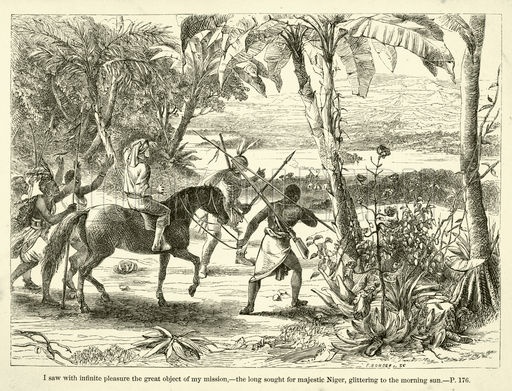
Maar ek wil oor Afrika-ontdekkers (eintlik -verkenners) skryf. Van die interessantste tekste en daarby waarheidsgetrou is die Skot Mungo Park (1771-1805) se verslae oor sy ekspedisies in die omgewing van die Nigerrivier in Wes-Afrika (Travels in the interior districts of Africa, Ware: Wordsworth, 2002, 390p; Amazon Kindle $1,13). Een van sy waarnemings was: “Loss of time is an object of no great importance in the eyes of a Negro. If he has anything of consequence to perform, it is a matter of indifference to him whether he does it to-day or to-morrow, or a month or two hence; so long as he can spend the present moment with any degree of comfort he gives himself very little concern about the future” (p 298). In Helper se 1868-boek (bron hier onder) is daar hierdie aanhaling: “Regardless of the past as reckless of the future, the present alone influences their actions” (Kindle 2738).
Oor sy swart vriend Karfa skryf Park: “Observing the improved state of our manufactures [die artikels wat Park uit Engeland saamgebring het],* and our manifest superiority in the arts of civilised life, he would sometimes appear pensive, and exclaim with an involuntary sigh … ‘Black men are nothing.’ At other times he would ask me, with great seriousness, what could possibly have induced me, who was no trader, to think of exploring so miserable a country as Africa? He meant by this, to signify that, after what I must have witnessed in my own country, nothing in Africa could, in his opinion, deserve a moment’s attention. I have preserved these little traits of character in this worthy Negro, not only from regard to the man, but also because they appear to me to demonstrate that he possessed a mind above his condition; and to such of my readers as love to contemplate human nature in all its varieties, and to trace progress from rudeness to refinement, I hope the account I have given of this poor African will not be unacceptable” (333-334). [* “All the articles of value which the Moors and the people of Jinnie bring to Sego, are made by us. If you speak of a good gun, who made it? – the white people” (371).]
Dit is verstaanbaar dat Park oor sy verblyf in Afrika geskryf het: “I … felt a painful longing for the manifold blessings of civilised society” (300). Maar hy het tereg teen veralgemening gewaarsku. In die konteks van raspolitiek word veralgemening deesdae stereotipering genoem. Maar stereotipering geskied nie oorsaakloos nie. Daar is seker ten minste ‘n element van waarheid in. Daar is seker ook ‘n mate van nawerking van die verlede in die hede. Lesers moet maar self besluit in hoeverre die inligting in die aanhalings steeds geldig is. Daar moet egter in gedagte gehou word dat meer as twee eeue sedert Park se dood verloop het. Maar groot kulturele verskille tussen blankes en swartes bestaan sekerlik steeds.
Daar is ‘n boek waarin die menings van talle Afrika-ontdekkingsreisigers byeengebring is: Hinton Rowan Helper (1829-1909) se The negroes in Negroland; The negroes in America; and, Negroes generally; also, The several races of white men (New York: GW Carleton, 1868, 255p; Amazon Kindle $1,13). Met Negroland word Afrika bedoel. Helper het ook twee ander boeke oor hierdie onderwerp gepubliseer: The impending crisis of the South: How to meet it (1857, 106p; Amazon Kindle $11,34) en Nojoque: A question for a continent (1867, 484p; Amazon Kindle $10,25). Daar is ook ‘n omvattende boek oor Helper beskikbaar: David Brown, Southern outcast: Hinton Rowan Helper and the impending crisis of the South (LSU Press, 2006, 333p; Amazon Kindle $18,23).
Helper was ‘n Amerikaanse Suiderling wat eerder om ekonomiese as morele redes teen slawerny gekant was. Hy het gedink dat as blanke werkers gebruik word die Suidelike state vinniger sou industrialiseer en ontwikkel en hulle agterstand teen die Noordelike state kon inhaal. Hy wou hê dat die swart slawe vrygestel en gerepatrieer word. Sy oogmerk vir Amerika was ‘n nasiestaat vir blankes: “The ultimate whitening up of all the Southern States” (1868-boek, Kindle 4419). Op daardie stadium was daar 30 miljoen blankes in Amerika teenoor 4 miljoen swartes. In die Suidelike state was Helper ‘n uitgeworpene omdat die meeste slawe-eienaars teen die vrystelling van die slawe gekant was omdat hulle swartes as goedkoop arbeiders wou behou. Daar is ook gemeen dat Helper as ondersteuner van Abraham Lincoln die Noorde teen die Suide gehelp het. Helper is verwerp deur pro-swart gesindes en diegene wat die slawe wou vrystel weens sy onsimpatieke, rassistiese houding jeens swartes.
Ek beperk my aandag tot Helper se 1868-boek, waarin ook inligting uit sy twee ander genoemde boeke aangehaal of herhaal word. Ek wou veral kennis neem van wat Afrika-ontdekkingsreisigers geskryf het. Baie van die destydse gebruike van swartes is grusaam, wat die teks onaangename leesstof maak. Daar is ook baie uitlatings wat aan Penny Sparrow herinner. Ek gaan egter nie opmerkings herhaal wat deesdae as rassisties geëtiketteer (kon) word nie. Al die outeurs is sekerlik nie so waarheidsgetrou soos Park nie. Tog kristalliseer daar ‘n redelike mate van konsensus.
Een van die dinge wat opval, is dat daar destyds gemeen is dat die getal swartes in Afrika besig was om te verminder, bv weens siektes en natuurrampe soos droogte. Die enigste plek waar die swartes glo meer geword het, was as die slawe van blankes in die Amerikas (2595). Dit blyk ook dat slawerny in Afrika bestaan het lank voordat met die transatlantiese slawehandel begin is en slawerny voortgeduur het lank nadat slawerny in die Westerse wêreld afgeskaf is. “The intercourse which the natives have had with white men does not seem to have much ameliorated their condition” (692). In Afrika is na bewering tradisioneel net sowat ‘n kwart van die swart bevolking nie deur hulle medeswartes verslaaf nie (541, 560, 1745). “Slavery in Africa as a national institution … seems to have existed always” (655).
“The most horrible topic connected with slavery is slave-hunting; and this is earned on, not only for the purpose of supplying the foreign market, but, in a far more extensive degree, for supplying the wants of domestic slavery” (590). “The liability to fall into a condition of servitude is not so frightful in Africa as it is where there is a higher appreciation of personal liberty; nor does the same odium attach to the term slave as is attached to it among civilized men. The African sees very little difference between the authority exercised over him by one whom he acknowledges as his master and the petty tyranny which is exercised by most African chiefs over their subjects; and so long as he is worked moderately, and treated kindly, he has but little cause for dissatisfaction, and not infrequently by his own choice places himself in this condition” (570).
Reeds in 1868 het Helper tereg verwys na “the gross error of inferring or supposing that color is the only differences – and that a very trivial difference – between the whites and the blacks” (70). In 2016 moet ons steeds aanhoor dat velkleur die enigste rede is waarom blankes rassesegregasie of apartheid toegepas het. Verskille in wêreld- en lewensbeskouing, in lewenswyse, oftewel kulturele verskille, word geïgnoreer. ‘n Sendeling moes die volgende redenasie aanhoor: “Me go to church, and you no pay me” (2213). “All missionaries praise the African for his strict observance of the Sabbath. He would have three hundred and sixty-five Sabbaths in the year, if possible, and he would as scrupulously observe them all” (2223).
“Gratitude with the African is not even a sense of prospective favor. He looks upon a benefit as the weakness of his benefactor and his own strength; consequently he will not recognize even the hand that feeds him” (1297). Swartes het ‘n “long list of wants without stint or shame” (1315). “Whatsoever is seen is surely demanded … The love of acquiring property stifles every sense of shame; and no compunction is felt in asking for the cloak from off the back” (1325). “True to his natural instincts, the king commenced begging, and being much struck with my Highland costume, he demanded it as a proof of friendship” (1344). “They never make a present without expecting to receive three times as much in return” (1335). “The more they receive the more they desire, but in return they will do nothing” (2156). “When they can no longer ask, they begin to borrow, with the firm resolution of never repaying; and, what is worst of all, when they make a present, they hold it a deadly offence not to receive at least double the value in return” (1362). “It often came about that our house was like a shop where there are customers in abundance, except that in our case they were customers who wished to have everything for nothing” (1371).
“Africa from the earliest ages has been the most conspicuous theatre of crime and of wrong; where social life has lost the traces of primitive simplicity, without rising to order, principle, or refinement; where fraud and violence are formed into national systems, and man trembles at the sight of his fellow-man” (1407). “Everything that comes in their way, which they cannot appropriate on the spot to their own use, is destroyed, that it may not be of advantage to others” (1438). “Their destructiveness is prominent; a slave never breaks a thing without an instinctive laugh of pleasure” (2291).
Meer as een outeur gebruik die voorbeelde van ‘n perd en ‘n donkie om die beduidende verskille tussen etniese groepe aan te dui; dat hulle nie saam in dieselfde tuig kan trek nie. “It is the grand error of equalizing that which is unequal” (2632). Dit herinner aan wat in Deuteronomium 22:10 staan: “Jy mag nie ‘n bees en ‘n donkie saam voor ‘n ploeg inspan nie” (3643). William Mungen het in 1867 gesê: “As soon as they admit that the races are of different origins they can no longer claim that all races are equal, any more than they can claim that the horse and the ass are equal” (3136). John Quincy Adams (1767-1848) het in 1843 geskryf: “It is only as immortal beings that all mankind can, in a sense, be said to be born equal” (2917). Senator Thurman van Ohio het in 1868 gesê: “Of all the delusions I have ever known, the idea of political equality between the black and white races seems to me the greatest … It is impossible that the race to which we belong can submit to negro domination; it is impossible that … the negro can compete with the white man in the business, much less the politics, of the country” (3057). Hiermee het ek reeds met die kommentaar van Amerikaners oor swartes in Amerika begin.
Soos uit die boektitel blyk, haal Helper ook outeurs aan wat oor Amerikaanse swartes geskryf het. Sowel Thomas Jefferson (1743-1826) as Abraham Lincoln (1809-1865) het gelyke saambestaan met swartes verwerp en verkies dat bevryde slawe gerepatrieer word. Soos Jefferson dit in 1824 gestel het: “Send the whole of that population from among us, and establish them, under our patronage and protection, as a separate, free, and independant people, in some country and climate friendly to human life and happiness” (2898). Lincoln het in 1858 gesê: “I do not understand the Declaration of Independence [1776] to mean that all men are created equal in all respects. Certainly the negro is not our equal in color – perhaps not in many other respects … I did not at any time say I was in favor of negro suffrage … I am not in favor of negro citizenship … I am not, and never have been, in favor of making voters or jurors of negroes, nor of qualifying them to hold office, nor to intermarry with whites … there is a physical difference between the black and white races, which I believe will forever forbid the two races living together on terms of social and political equality” (2935).
Montgomery Blair het in 1863 gesê: “An election would be a mockery in a community wherein there could be no other than black and white parties. In such communities, reason and experience show that one or the other race must be the dominent race, and that democracy is impossible” (2989). “The instinct of self-preservation … revolts at hybridism” (3006).
SS Cox het geskryf: “The white and black races thrive best apart; that a commingling of these races is a detriment to both; that it does not elevate the black, and it only depresses the white; that the history of this continent, especially in Hispano-America, shows that stable, civil order and government are impossible with such a population … It is an absurdity to say that two races, so dissimilar as black and white, of different origin, of unequal capacity, can succeed in the same society when placed in competition” (3092). Een van Fisher se raswette lui: “He may not lay a finger on one of those three wonderful boxes, the ballot-box, the jury-box, and the cartridge-box, which contain the instruments and weapons by which freemen defend their rights. They are for the white race only” (3256).
Samuel T Glover het in 1860 geskryf: “If you legislate to give the Africans place, position, and employment which would otherwise belong to white men, you depreciate white men – you invidiously stigmatize their race” (3529). Richard Grant White het in 1865 geskryf: “I believe that the greatness or abjectness of every people is due primarily, if not solely, to one cause – race” (3879). Theodore Parker het hierdie pluimpie vir blankes gegun: “The Caucassian differs from all other races; he is humane, he is civilized, and progresses” (3916).
In 1867 skryf Helper van ‘n verskynsel wat aan die nuwe Suid-Afrika kan herinner: “The negroes here … have hitherto been afforded opportunities, for both an education and for an easy and comfortable livelihood, far superior to the opportunities which were generally enjoyed by the poorer classes of white people … this cruel and flagitious discrimination in favor of the blacks as against the whites” (4042). “The poor whites were thus crowded away from the many desirable employments and places to which they alone should have been heartily welcomed” (4059).
Die volgende aanhaling herinner aan die U-draai wat die Nasionale Party van 1990 af gemaak het: Na die Amerikaanse Burgeroorlog (1861-1865) het die Republikeinse Party “Lucifer-like fallen from the white heights of Republicanism into the black depths of Radicalism” (4202). In daardie na-oorlogse situasie word van die Amerikaanse blankes verwag om hulle bekke te hou en gedwee alles te aanvaar wat na hulle kant toe kom. Max du Preez gee deesdae soortgelyke raad aan Suid-Afrikaanse blankes. “Endure the wrong, and pass the whole matter by in silence, and without action, rather than subject themselves to the insult, expense, and loss of time which they well knew they would be but too likely to incur by making complaint” (4227).
Helper skryf: “We insist upon it that it is pre-eminently our duty to be just and kind to our own race, and that the poor and distressed of the white race are those who, here, there, and everywhere, have the highest claims upon us, whether for service, for food, for clothing, for education, or for whatever other thing” (4336). Is dit voorstelbaar dat ‘n gedrukte Afrikaanse hoofstroomkoerant ‘n pleidooi ten bate van arm blankes sou lewer of selfs maar net hulle toestand in ‘n hoofartikel sou belig? Ek dink nie so nie. Dit sou nie polities korrek wees nie.


Leave a Reply
You must be logged in to post a comment.