Leon Lemmer: ‘n Manifes vir blanke etniese nasionaliste

Daar is veral twee behoudende, of konserwatiewe, hedendaagse Amerikaanse outeurs wat met hulle skrywes uitmuntende bydraes lewer. Ek verwys na Jared Taylor en Greg Johnson. Dit is asof hulle in boek na boek daarin slaag om hulle insigte te verfyn en dat hulle hulle idees al hoe duideliker formuleer. Van albei is daar ‘n hele aantal boeke in Kindle-weergawes by Amazon beskikbaar. Daar sal ongetwyfeld aksentverskille by hulle voorkom, maar ek het nog nie probeer om hulle opvattings te vergelyk nie. Wat prysenswaardig is, is dat hulle mekaar respekteer en ondersteun. Ek het in vorige rubrieke reeds na albei verwys. Taylor is die redakteur van die tydskrif, American Renaissance. Hy het die plaaslike Suidlanders ondersteun. Ek het al sy boek, Face to face with race (2014), bespreek (Praag 23.11.2014). Vandag kom die volgende boek van Johnson aan die beurt: The white nationalist manifesto (San Francisco: Counter-Currents Publishing, 2018, 159p; Amazon Kindle $4,01). Johnson se tydskrif is North American New Right. In sy jongste boek verwys Johnson by twee geleenthede met waardering na Taylor (Kindle 159, 1012). Waarmee albei besig is, is metapolitiek, dus “creating the conditions necessary for political success” (131). Soos Taylor is Johnson diep bewus van en goed ingelig oor gebeure en toestande in Suid-Afrika. Wat die blankes in 1990/94 mandaatloos en heeltemal onverdiend plaaslik aangedoen is, is die scenario wat albei outeurs ten alle koste in Amerika wil vermy.

“The greatest difficulty I faced in writing this manifesto is the feeling that I was repeating myself. Most of the ideas – and many of the words – in this book will be familiar to the readers of my five earlier books … and various uncollected online writings. But I prefer to think of my earlier works as a rehearsal for this manifesto. The purpose of this book is not to be novel, but to offer a clear, concise, and persuasive synthesis of arguments that I have been developing for more than a decade” (139). Dus, as u een van Johnson se boeke wil lees, is hierdie die aangewese een. “This entire book is an essay in metapolitics” (1520). “Basic metapolitical ideas include questions of identity (who are we, and who isn’t us?), morality (what are our duties to ourselves, our nations, our race, and other nations and races?), and practicality (how can we actually create white homelands?)” (1520).

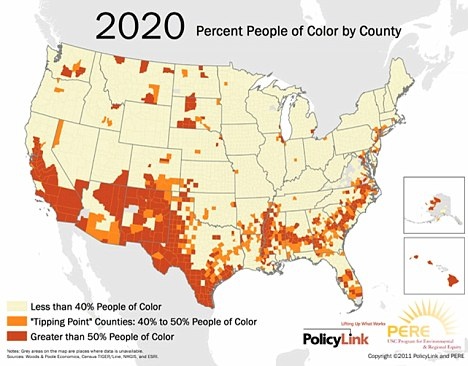
“Whites have gone from being about 90% of the US population in 1965 to about 60% today, and in many locations and age groups we are already a minority. Whites are projected to slip below 50% op the population around 2042. In a democracy, that inevitably means political disempowerment … If white Americans want to see what life is like as a dispised minority in a majority non-white society, they need only look at South Africa today” (70). In Amerika gun die blanke meerderheid ruim bevoordeling aan minderheidsgroepe, maar hulle besef dat ‘n swart meerderheid in Amerika, soos in Suid-Afrika, nie minderheidsregte aan blankes sal gun nie. In Suid-Afrika geniet die blankes selfs nie eens gelyke regte met swartes nie. Op talle maniere word daar doelbewus en suiwer rassisties teen blankes gediskrimineer. In die veel geprese Grondwet van 1996 word geen voorsiening vir ‘n keerdatum hiervoor gemaak nie. Rassediskriminasie teen blanke Suid-Afrikaners kan dus tot in die oneindige voortgesit word. Hou ook in gedagte dat minderheidsgroepe in Amerika grootliks volgens ras stem. Dit is net in die geval van blanke kiesers dat ‘n beduidende persentasie met hulle stemme uitdrukking aan hulle anti-blanke gesindheid gee. Die Amerikaanse blankes kan dus lank voordat hulle demografies ‘n minderheid word, beheer oor die politieke mag verloor. Dit is waarom Donald Trump se oorwinning in die jongste presidentsverkiesing so onverwags was en so merkwaardig is. Anders as wat die massa-inligtingsmedia voorgegee het, was en is die meerderheid blanke Amerikaanse kiesers hartlik gatvol vir progessiewe of linkse elemente soos die Clintons en Obamas.

Demokrasie is ‘n politieke stelsel wat glad nie tot doeltreffende regering in Suid-Afrika kan lei nie, onder meer omdat daar te veel ongeletterde, swak ingeligte en maklik intimideer- en misleibare kiesers is. Maar hierdie skyndemokrasie bied die sleutel tot swart politieke mag. In Amerika besef mense soos Johnson dat voortgesette demokrasie nie net die blanke politieke mag gaan vernietig nie, maar ook Amerika as die voorspoedigste Westerse en wêreldland: “In the present system, we have no future … Loss of hope for the future is what ties together a whole array of social pathologies afflicting white Americans … the collapse has been spiritual” (79). Ek vra my af: Is die apatie by so baie Afrikaners nie dalk op ‘n soortgelyke wyse toeskryfbaar aan die hopeloosheid van ons huidige en veral langtermyn-situasie nie?

Teen die verwagting in het die winde van verandering die Afrikaner omgewaai. In ‘n groot mate is dít die onontwykbare waarheid: Die Afrikaner het gaan lê en is in sy bed dood. FW de Klerk en sy groepie medepligtiges het met hulle hemelskreiende verraad die Afrikaner die doodskoot toegedien. Die balke en skarniere wat die Afrikanerdom bymekaar gehou het, is in die naam van (mede)menslikheid afgetakel. Dit is gedoen sonder om in ag te neem wat Immanuel Kant (1724-1804) en later ook Isaiah Berlin (1909-1997) gesê het: “From the crooked timber of humanity, no straight thing was ever made.” In ‘n ander bron staan: “The spirited part of the soul is intimately tied to one’s sense of belonging to a political community with ethno-cultural markers. Without this spirited part members of a community eventually lose their sense of collective pride, honor, and will to survive as a political people” (Ricardo Duchesne, Canada in decay: Mass immigration, diversity, and the ethnocide of European Canadians, London: Black House Publishing, 2017, 374p; Amazon Kindle $7.56; 4367).

“The entire political establishment in virtually every white country is committed to the policies that are driving white demographic decline: the destruction of the family* and the denigration of motherhood;** the promotion of hedonism and selfishness;*** encouraging multiculturalism, race-mixing, and race-replacement immigration; and the cult of ‘diversity’, which is just an euphemism for replacing whites with non-whites.**** If whites have no future in the current system, then we will simply have to set up a new one. That is the goal of White Nationalism. To give our people a future again, we need a new political vision and new political leadership … White nationalism is a form of white identity politics. White identity politics, at the minimum, means that whites think of ourselves as members of an ethnic group, with collective interests, and defend those interests against conflicting groups in the political realm” (Johnson 87). Ek is moeg vir die pryssange wat daar vir swart nasionalisme, selfs swart pan-Afrika-nasionalisme, weergalm terwyl daar dadelik helftige beswaar teen Afrikanernasionalisme opklink, asof dit iets uit die bose is pleks van dit as ‘n fundamentele mensereg te erken.

[* Weens kulturele marxisme.

** Weens militante (dikwels lesbiese) feminisme.

*** Dink aan die buitensporige vergoeding, luukse ampswonings en -motors, reis- en verblyfkoste, asook ander byvoordele van (onbekwame) ANC-leiers, wat valslik beweer dat hulle oor die armste van die armes begaan is.

**** Byvoorbeeld aan die Universiteit Stellenbosch (US) deur Wim de Villiers, die laksmannetjie van Afrikaans. Die afskaling van Afrikaans as onderrigmedium bring die inkorting van diversiteit/verskeidenheid mee.]

“White Nationalism, however, is not white supremacism, because we seek to replace multiracial, multicultural societies with racially and culturally homogeneous homelands, which we call ‘ethnostates’. Ethnonationalism is a universal right possessed by all races and peoples. White Nationalism is ethnonationalism for whites. White nationalism simply means the right of all white people to sovereign homelands. We recognize that some peoples might not wish to exercise this right … But if a people chooses national self-determination, nobody has the right to oppose them” (96). Dit gaan nie om ‘n tuisland vir generiese (dus alle) blankes nie, maar selfbeskikking in (potensieel) ‘n eie tuisland vir iedere etniese groep (105). Dus nie ‘n rasgebaseerde tuisland vir alle blanke Suid-Afrikaners nie, maar etniesgebaseerde tuislande, bv onder meer ‘n tuisland spesifiek (en sover prakties moontlik uitsluitlik) vir Afrikaners.

“White extinction is not an alarmist fantasy, but an alarming fact” (167). As dit vir Amerika en op langer termyn selfs moontlik vir die res van die wêreld geld, hoeveel te meer nie vir blankes in Afrika, insluitende die nuwe Suid-Afrika, nie? “Human beings – whites especially – do have an advantage over other species: our intelligence and creativity can help us to discover and defeat the causes of extinction” (195). Blanke egpare moet gemiddeld eerder drie pleks van twee of minder kinders hê sodat blankes as ‘n groep eerder meer as minder word (203). Uiteraard moet rasvermenging vermy word. Anders as voorheen, bv in Suid-Afrika, is daar nie meer ‘n verbod op rasvermenging nie. In die Weste, anders as in bv die Ooste, word rasvermenging in werklikheid aangemoedig (239). “Hybridization”, wat deur mense soos Nico Koopman gepropageer word, word “genetic pollution” genoem (212). Koopman is ‘n voorstander nie slegs van biologiese verbastering nie, maar sommer ook van taalverbastering of -vermenging, bv Kaaps.

‘n Ander faktor wat teengewerk moet word as blankes wil bly voortbestaan, is volksmoord/”genocide” (212); ‘n verskynsel wat die afgelope tyd spesifiek met verwysing na Suid-Afrikaanse blankes druk bespreek is. Johnson onderskei twee soorte volksmoord: “Hot genocide is the quick and violent extermination of a group. Cold genocide is the slow destruction of a group simply by establishing conditions that make its long-term survival impossible” (221). In Suid-Afrika het ons tans met koue volksmoord te make, maar dit sluit nie die moontlikheid uit dat dit al hoe warmer volksmoord kan word nie. Johnson haal uit die Verenigde Nasies se 1948-konvensie oor volksmoord aan (278). Die biologiese voortbestaan van blankes kan verseker (of ten minste verbeter) word deur hulle lewens in reservate, oftewel tuislande, te beskerm, soortgelyk aan dié wat steeds in Amerika vir Indiane bestaan; dus met ras- of etnisiteit as grondslag. Reservate is ‘n bewese manier om die lewens van diere te beskerm (366). Waarom dan nie ook die lewens van die blankes wat sekerlik waardevoller as diere is nie?

Maar naas die voorkoming van biologiese volksmoord, behoort daar ook teen kulturele volksmoord gewaak te word (366). Dit is iets wat buitensporige afmetings in die nuwe Suid-Afrika aanneem, bv die afskaling van Afrikaans, die vernietiging van monumente, openbare herbenamings, die herskrywing van die geskiedenis, ens. Die blankes moet die moed hê om hulle kulturele goedere te bewaar en wat vernietig is, terug te eis. Daarvoor is selfvertroue en selftrots nodig (366) – nie misplaaste skuldgevoelens nie. “As Alain de Benoist pointed out, appeals to white guilt are almost always part of a moral swindle, in which people who have not actually suffered anything demand atonement, money and privileges from people who have not actually wronged them. These uncomfortable facts are concealed by the fact that all whites are collectively held responsible for the acts of some white people, whereas all non-whites claim collective aggrievement because of the suffering of some non-whites at white hands. But if it is legitimate for whites to feel collective guilt for the crimes of some white people, isn’t it also legitimate for whites to feel collective pride in the achievement of some white people?” (384).

“If we start tallying up all the positive achievements of white people in science, technology, medicine, the arts, politics, the fight to save the natural world, etc, they rapidly outweigh all the negatives, leading us to conclude that white extinction would be a great tragedy for the planet. Furthermore, does collective guilt only apply to whites? Do only non-whites have collective grievances? Are only non-whites owed collective apologies and reparations? Are Asians collectively guilty for the Mongol invasions of Europe? Are Muslims collectively guilty for the Muslim invasions of Europe? Are whites collectively owed apologies and reparations? Does the Arab world owe reparations to Africa for their part of the slave trade? Do blacks in Africa owe reparations to blacks in the New World for their role in the slave trade?” (393).

“One of the greatest causes of unsafe breeding environments [for whites] is the presence of non-whites. Just as pandas do not breed well in captivity, whites do not breed well in [racially] diverse environments. In the past, whites had high birthrates while surrounded by non-whites. But these non-whites were enslaved or otherwise subordinate and forced to emulate white standards of behaviour. So whites specifically feel unsafe around free and unassimilated non-white populations, such as we find in modern multicultural societies” (221). Talle kere moes ek aanhoor dat blanke egpare dit onwys ag om kinders in die nuwe Suid-Afrika te hê. Die nie-blanke bevolking, daarenteen, het gewoonlik ‘n hoër geboortesyfer as die blankes. Die situasie word in sowel Amerika as Suid-Afrika vererger deur die invloei van veral nie-blanke immigrante, hetsy wettig of onwettig (230). In Amerika het die verdringing van blankes in 1965 met die ondertekening van die Hart-Cellar-wet deur Lyndon Johnson begin, toe immigrasie oorwegend die invloei van nie-blankes geword het (333).

In Suid-Afrika het FW de Klerk grensbeheer verslap. Onder die ANC-regering het die situasie verder versleg en dít in ‘n era toe die meeste lande grensbeheer verskerp het. Geen veldtog ten gunste van geboortebeperking word van owerheidsweë in Suid-Afrika gevoer nie omdat dit glo indruis teen die tradisionele lewenswyse van swartes. “In the case of white extinction, all of these causes are man-made” (249). Blankes kan dus iets doen om hulle uitwissing te verhoed, bv deur nie-geïntegreerd/apart te woon en lewe (239), in mindere mate geboortebeperking en aborsie toe te pas, ens (257, 289). Dit moet vir blankes lonend gemaak word om meer kinders te hê (297). Dit is immers in landsbelang. “If white demographic decline is not halted, the people who care least about the Earth will be the ones to inherit it” (266).

Wat op blanke Amerikaners as ‘n toekomstige minderheidsgroep wag, kan nie in Suid-Amerika waargeneem word nie: “Those societies are essentially white supremacist” (473) – blankes en mulatto’s/basters is die heersersklas. “To appreciate what life will be like once whites are a hated and powerless minority within a majority non-white, Third World country, we only need to look at the fates of whites in Rhodesia and South Africa” (473). Maar die toestande wat swart meerderhede skep, kan reeds in Amerikaanse stede soos Detroit en Los Angeles en in die Britse hoofstad, Londen, waargeneem word: “We can simply show our people the lawlessness, corruption, anti-white discrimination, alienation, collapsing public services, hellish commutes, blighted cityscapes, shrinking opportunities, and pervasive hopelessness that come with white demographic replacement” (473). “Even if we think of white identity politics as merely a temporary expedient to restore a meritocratic, individualist form of society, we need to remove parasite tribes from our societies and prevent new ones from entering, which requires that we drop the dominant taboo against identity politics for white people” (507). “We practice individualism, they practice tribalism” (490).

Johnson wil Amerika as ‘n blanke land hervestig; indien nie in sy geheel nie, dan ten minste die grootste deel as blanke tuisland of etniese staat. Sy ideaal is “demographic restoration” (691). Oor die deportasie van nie-blanke immigrante skryf hy: “If it was possible for them to come, it is possible for them to leave … In short, there is definitely a way to decolonize white homelands. We just need to have the will” (569). Nie-blanke immigrante kom gewoonlik in ‘n blanke land aan as enkellopende mans. Daarna word gepoog om die familie en uitgebreide familie in die nuwe land te kry. ‘n Skynbaar sterk morele argument wat dikwels gebruik word, is dat dit wreed is om nie die familie te herenig nie. Maar die punt is dat daar ‘n alternatiewe manier is om die familie weer te verenig: die enkelingimmigrant kan teruggaan vanwaar hy gekom het. Naas kettingimmigrasie is kettingrepatriasie moontlik (674), maar dit is ‘n duur opsie. “One of the main tenets of diversity advocates [is] that non-whites who come here enrich our societies … In truth, non-whites come to white societies because we enrich them” (606). Dink aan die onbehaaglike situasie in Europa: “The leadership of the present-day European Union is infected by a [anti-European] memetic virus, and it is doing all it can to flood Europe with non-whites” (791), wat dikwels op staatstoelaes vir oorlewing aangewese is.

“A nation-state is the same thing as an ethnostate, since the English word nation derives from the Latin natio, which refers to a group related by common descent” (712). “We need the ideas of the ethnostate and ethnonationalism, to emphasize ethnicity as the principle of unity of a sovereign state – even though ethnos is just the Greek equivalent of natio” (721). Dit is duidelik dat al die inwoners van Suid-Afrika nie ‘n nasie in etniese sin kan wees nie. Daar kan hoogstens sprake van ‘n Suid-Afrikaanse nasie in burgerlike/”civic” sin wees, bv dat almal in dieselfde land woon, dieselfde burgerskap kan hê, onderhewig aan dieselfde wette is, ens. (721). Swart mag vier hoogty, maar dit sluit blanke etniese nasionalisme uit. Afrikanernasionalisme kan net in ‘n eie nasie- of etniese staat tot sy reg kom.

Johnson skryf: “Some white ethnic groups are more biologically homogeneous than others. Thus what is essential in differentiating white nations are their distinct languages, cultures, and histories” (850). In hierdie verband noem hy spesifiek Afrikaners (859). In Suid-Afrika gaan dit dus nie om ‘n rasgebaseerde tuisland vir alle blankes te skep nie, maar ‘n etnies gebaseerde tuisland vir Afrikaners. Nie dat ras onbelangrik is nie. Met die oog op solidariteit/eensgesindheid: “We must emphasize all the things that Europeans [whites] have in common, and beyond all the differences of language, culture, and religion, the deepest root of European identity and solidarity is racial. All Europeans share common ancestors. We are one extended family” (903). “White people are the aboriginal peoples of Europe and their unmixed descendants around the world” (984). Naas swart mag moet daar ruimte vir blanke mag wees. Naas swart nasionalisme is blanke (insluitende Afrikaner-) nasionalisme ‘n onvervreembare reg wat in verskillende eie tuislande (vir Afrikaners, Anglo-blankes, ens) uitgeleef behoort te word.

‘n Aanklag wat dikwels teen blankes gelê word, is dat hulle ander rasse wil oorheers; dat hulle baas wil speel. Die Engelstalige term hiervoor is “supremacism”. Eintlik is twee sake hier ter sprake: dat blankes hulleself as beter as ander rasse beskou en dat hulle (daarom) oor ander rasse wil heers. Johnson se standpunt is dat blankes in sekere opsigte ongetwyfeld beter as ander rasse vaar. “I am very proud of our people, and we have a great deal to be proud of. In the areas in which we excel, we have done a lot for the world. Our superior achievements in comparison to other races are why so many non-whites are flooding into white societies … even if we were the sorriest lot of people on the planet and had accomplished almost nothing, it would still be natural, normal, and right for us to love our own and to be concerned with the future of our people. And it would still be politically expedient to demand our own sovereign homelands” (1012).

Wanneer ‘n blanke land onverdiend in die skoot van verswelgende swart mag val (soos in die geval van Suid-Afrika), of as die blanke meerderheid weens immigrasie ondergrawe word (soos in Amerika en Europa), dan begeer die nie-blankes “to change things to suit them better” (1031). Hierdie prosesse word transformasie, regstellende aksie, swart bemagtiging, ens, genoem. Dinge word verander (eerder as verbeter) om nie-blankes te pas, wat weens (groot) kulturele verskille noodwendig beteken dat blankes ongedurig in die nuwe opset is en nostalgies na die goeie ou dae verlang. William Blake (1757-1827) het gesê: “One law for the lion and ox is oppression” omdat dié twee hemelsbreed verskil, bv die een is vleis- terwyl die ander een plantetend is (1039). “Blacks … don’t find white civilization comfortable … when we impose our standards of punctuality and time preferences, demand that they follow our age-of-consent laws, or foist the nuclear family upon them … But if we don’t impose white standards upon blacks, we have chaos. We have great cities like Detroit transformed into wastelands” (1039). In die geval van Suid-Afrika is dit die hele land wat in die slag bly. Dit is om van te ween.

“Praising diversity is the civil religion of our time” (1063). Bill Clinton het gesê: “Diversity is America’s greatest strength” (1063). In die nuwe Suid-Afrika moet alles skielik divers en inklusief wees, bv aan die Universiteit Stellenbosch. Wat dit in werklikheid beteken, is dat nie-blankes in eens blanke plekke toegelaat moet word. Maar andersom geld dit nie. Daar word nie druk uitgeoefen dat die tradisioneel swart Universiteit Fort Hare divers en inklusief moet word nie. “Increasing diversity … is always a euphemism for having fewer white people” (1081). “If diversity means white dispossession, then obviously it’s a bad thing for white people … White nationalism is simply the inevitable resistance to the anti-white ethnic cleansing that we call diversity” (1091).

Johnson noem die voorbeeld van die eerste blanke Amerikaanse setlaars wat in 1612 voet aan wal in Jamestown gesit het. “Weren’t they just increasing the diversity of the place?” (1091). Dieselfde kan van die aankoms van Jan van Riebeeck en sy geselskap in Tafelbaai in 1652 gesê word. As diversiteit inherent goed is, waarom word die aankoms van hierdie setlaars nie deur die kulturele marxiste en ander linkses geloof nie? Die antwoord is: Omdat hulle blank is. “Without a relatively homogeneous population, order has to be imposed from the top down. Thus as diversity increases, democracy fails” (1155). “Diversity [is] a source of disharmony” (1163). “Similarity [is] a source of harmony” (1174). In Amerika was die ondervinding met immigrante uit verskillende Europese lande: “It was hard enough to assimilate fellow Europeans” (1199). Die assimilasie van nie-Europese immigrante het geblyk ‘n onbegonne taak te wees. “The happiest societies in the world are also the most genetically homogeneous” (1235).

In Amerika het diversiteit die standaarde of doeltreffendheid van die weermag, polisiediens, brandweerdienste, ens, verlaag of verminder (1063). “Multiculturalism, multiracialism, feminism and the LGBTQ agenda constitute the primary sense of diversity today” (1053). Die waarheid is dat monokulturaliteit, enkelrassigheid en slegs twee duidelik onderskeibare geslagte ‘n samelewing, bv ‘n nasie- of etniese staat, daarstel wat kan uitmunt in harmonie en doeltreffendheid. Maar dit beteken nie dat dit in wyer verband moet geld nie. “We do not want to see the emergence of a homogeneous European man or a white monoculture” (1304). Ras, bv blank wees, kan ‘n samebindende faktor wees, maar dit hef nie die wenslikheid van die behoud van etniese verskeidenheid (bv Afrikaans- en Engelssprekende blanke Suid-Afrikaners) op nie. “The primary cultural marker that sets ethnic groups apart is different native languages” (1329).

‘n Opsig waarin diversiteit ‘n bate is, is ‘n verskeidenheid van idees/opinies (1053), maar dit is wat in byderwetse geledere, bv in skole en aan universiteite, meedoënloos onderdruk word. Andersins: ter wille van ras- en kulturele verskeidenheid word toelatings- en deurlatingstandaarde/-vereistes aan universiteite drasties verlaag (1072), sowel in Amerika as Suid-Afrika. Byvoorbeeld, aan die Universiteit Stellenbosch is dit vir Wim de Villiers* ‘n passie om die tradisionele beeld van die US as ‘n Afrikaanse universiteit vir blankes uit te wis. Diversiteit word nagejaag deur voorkeur aan nie-Afrikaanse en nie-blanke studente en personeel te gee. Op hierdie manier word die blanke en Afrikaanse teenwoordigheid om nie-akademiese (naamlik politieke) redes afgeskaal. Maar die nie-blanke toestroming het toenemende verengelsing meegebring. Omdat die US hom, weer eens om politieke redes, as pro-swart eerder as pro-blank geposisioneer het, word Afrikaans afgeskaal en mettertyd waarskynlik uitgeskakel. Die resultaat is dus, ten minste wat taal betref, ‘n vermindering van diversiteit. Namate die verswelging deur swartes momentum opbou, sal rasdiversiteit ook al hoe meer onbeduidend word.

[* Ek wonder dikwels wat Wim de Villiers se Broederbond-pa van sy seun en die huidige US sou gedink het. De Villiers is besig om deur die US-eeufeesjaar te gaan sonder om enige erkenning aan die stigtingskenker, Jan Marais (1850-1915), te gee. Hy word ook nie deur bv die US-raadsvoorsitter daartoe verplig nie. De Villiers het in 2015 dieselfde laai uitgehaal en daarmee weggekom toe hy en die US versuim het om Marais se dood ‘n eeu tevore te gedenk. De Villiers se grief is dat Marais vereis het dat die US in minstens dieselfde mate as Engels Afrikaans moet wees. Dit is noodsaaklik dat De Villiers kortgevat word.]

Johnson se idealistiese, selfs utopiese, kuur vir die moontlike uitwissing van blankes is, soos in die Suid-Afrika van weleer, “complete separation” ingevolge ras en etnisiteit (1354). “The price of not pursuing white homelands is extinction” (1362). Is dit nie presies wat vir plaaslike blankes in die huidige staatkundige opset voorlê nie? Hy noem Pole en Japan as voorbeelde van bestaande etniese state (1378). Ten einde etniese state vir blankes in Amerika moontlik te maak, noem hy stappe soos die volgende: “First, we need to close our borders to non-white immigrants. Second, we must repatriate all post-1965 immigrants and their descendants to their ancestral homelands. Third, we must deal with pre-1965 non-white populations by offering them, for instance, autonomous reservations, independent ethostates, or resettlement in their ancestral homelands. Fourth, we must create barriers to race-mixing … Fifth, an ethnostate must institute pro-family policies” (1411). “Most Americans enjoyed a de facto white homeland until the 1960s” (1463). Johnson wil dit herstel. “We simply wish to restore every white American’s birthright” (1463). “As long as whites had complete freedom to dissociate with other races, the result would be a de facto White Nationalist society for the vast majority of whites” (1971).

Die blankes se situasie in die nuwe Suid-Afrika is so benard dat niemand hulle behoort te verkwalik as hulle hulle vir beter omstandighede beywer nie. In hierdie verband kan en behoort hulle kreatiewe verbeelding aan die dag te lê, selfs al sou dit terapeutiese, werklikheidsontsnappende drome wees. ‘n Tuisland vir Afrikaners kan utopies, oftewel onbereikbaar, blyk te wees. Samuel Francis (1947-2005) het my oortuig dat ‘n tuisland vir blankes in Amerika moeilik haalbaar is (Praag 24.09.2016). In Suid-Afrika lyk dit selfs nog meer onbereikbaar, al is so ‘n enklave (‘n tuisland, volks- of etniese nasiestaat) noodsaaklik om Afrikaners se oorlewing te verseker. Selfs al sou so ‘n geografiese gebied afgesonder en ontwikkel word, is daar die probleem dat, soos Carel Boshoff (1927-2011) dit in die konteks van Orania gestel het, uitsluitlik “volkseie arbeid” gebruik moet word; iets waaroor Boshoff groot teenstand ondervind het (Praag 19.12.2015). ‘n Afrikanertuisland sal na verwagting hoogs suksesvol wees, maar juis dit sal ‘n verdere probleem skep, naamlik dié van ongewenste inkommers, wat ten alle koste buite gehou moet word.

Meer as ‘n dekade gelede het Francis gedink dat die meeste blanke Amerikaners die verbrokkeling van Amerika teenstaan. Hy het dus eerder ‘n politieke en kulturele herowering van die land deur die blankes voorgestaan. In die jongste tyd word die moontlike opbreek van Amerika in tuislande egter dikwels geopper. Ek het reeds meer as een boek oor hierdie onderwerp gelees en is voornemens om in besonderhede daaroor te skryf.

Leon Lemmer: Samuel Francis oor ‘n tuisland vir blankes

My vorige rubriek (Praag 18 September) handel oor Samuel Francis (1947-2005) se boek, Essential writings on race (New Century Foundation, 2007, 119p; Amazon Kindle $5,64). Ek het egter sy omvattende derde hoofstuk oor die kwessie van ‘n tuisland vir Amerikaanse blankes agterweë gelaat. Dit is die tema van hierdie rubriek. Francis se beredenering vind in die konteks van blankes se “prospects for racial and cultural survival” plaas (Kindle 327). Sy teks is oorspronklik in Maart 1995 gepubliseer. Jared Taylor beskryf dit as “perhaps his most forceful exposition of the practical steps whites must take if the United States is to remain part of the West” (334).

Mayer Schiller se mening is: “As our population becomes increasingly non-white … European civilization can be preserved on this continent only if whites withdraw into an enclave. He conceded that territorial division was not likely in the near term but argued that no other solution could guarantee the survival of a distinctly Western society and culture” (327). Richard McCulloch het Schiller se standpunt ondersteun. Hierdie rubriek word gewy aan Samuel Francis se antwoord op Schiller en McCulloch se menings. Hou asseblief deurgaans moontlike implikasies vir ‘n tuisland vir Suid-Afrikaanse blankes of Afrikaners in gedagte.

Francis begin deur te skryf: “I do not question the arguments for the desirability of separation … I am willing to grant at least a pragmatic right of every self-conscious people to govern itself and to create and live within its own institutions” (341). Wat ‘n mens begeer is egter nie altyd haalbaar nie. “Racial separation means the relocation of the different races (let us limit the discussion here to the two main races in America, whites and blacks) either to areas of the country that would become politically independent and self-governing or to other countries” (348). Francis wil aantoon “racial separation involves problems that today are virtually insurmountable … until those problems are solved neither separation nor any other enduring solution to the racial crisis is possible” (341).

Die een moontlikheid is dus die verdeling van die land in “‘racial zones’ – in a word, the political breakup of the United States” (348). Die ander moontlikheid is “through relocation of one race by its removal (voluntary or not) to some other territory outside the present United States. In either case, there are three problems: (a) Where is each or either race actually going to go; (b) How is separation going to be implemented; and (c) How are the separated races going to be induced to stay where they are once they get there?” (348).

“Breaking up the United States” sal nie geredelik deur blankes aanvaar word nie “since it involves surrendering large parts of their own country to non-whites. Most white Americans retain too much sense of nationality and too much allegiance to their country and their own communities to accept the proposal of giving up large parts of the United States to others” (355). “Whites should not embrace this proposal because at the present time [1995] and for a long time to come, there is no need to … Europeans are still a large majority of the American population and still retain far more wealth, political power, and even cultural dominance than non-whites. If whites wanted to do so, they could dictate a solution to the racial problem tomorrow – by curtailing immigration and sealing the border, by imposing adequate fertility controls on non-whites and encouraging a higher white birth rate, by refusing to be bullied into enduring ‘multi-culturalism,’ affirmative action, civil rights laws and policies, and by refusing to submit to cultural dissolution, inter-racial violence and insults, and the guilt that multi-racialists inculcate. Ending all of these threats to the white European character of the United States … would involve an uncompromising assertion of white will and identity” (368).

Om ‘n ander land vir die hervestiging van miljoene blanke Amerikaners te vind, is problematies. Watter land sou bereid wees om dit te doen? Verder: “However much they may deplore their accelerating dispossession, most whites might not want to jump ship from the nation they created, and live in countries where they have no roots” (381). Vir groepe kleiner as miljoene kan dit myns insiens ‘n aanvaarbare alternatief bied. “If emigration to Europe [and Argentina or Australia?] is not practical for whites, emigration to Africa or other black majority regions is not practical for American blacks either. It is highly unlikely that very many black African countries would welcome large numbers of American black émigrés and even more unlikely that very many American blacks would want to go” (388). Dink bv aan die lotgevalle van Amerikaanse swartes wat hulle sedert die 1820’s in Liberië gevestig het. “Today, with independent and sovereign (however dilapidated and repressive) nation-states in Africa, mass migration there is not possible unless the African states were simply forced to accept it” (388).

Nog ‘n probleem is:

“How the separated races would be induced to remain separate … there will … remain immense pressures for the breakdown of this separation … Whites will want cheap labour, and many non-whites will want to supply it. If the black zone in any way resembles most of the black majority nation-states or American cities … it will be unable to support itself, to control crime and social disorder, to supply elementary administrative services, or even to avoid the most brutal political repression … Just as there would be immense pull pressure from the white zone for cheap labor, so there would be immense push pressure from within the black zone for emigration to the white zone” (395).

“The separation would gradually (perhaps quickly) dissolve. The fact is that the non-white world almost invariably beats a path to the white door, and the whites behind the door almost invariably open it … This is why, at the height of apartheid in South Africa, there were some 100 000 illegal black immigrants every year. Because whites are almost always more economically successful than non-whites, non-whites almost always want to come in, and because the whites (aside from generosity and ideology) often seek cheap labor, they often let them come or even subsidize their coming. This, after all, is why there was an African slave trade” (408).

Selfs die Suidelike Amerikaanse State wou nie eksklusief wit wees nie. Die Suiderling Hinton Rowan Helper (1829-1909), wat teen slawerny gekant was, was ‘n uitsondering (428).

Volgens Francis is ras as sodanig nie afdoende motivering vir radikale gebiedskeiding nie. “Only as it [race] takes on cultural and political flesh, as race becomes tied up with community, kinship, nationality, territory, language, literature, art, religion, moral codes and manners, social class, and political aspirations. It is precisely such accretions that convert the biological abstraction [or characteristic] of ‘race’ into the concrete category of a ‘people'” (435). Dus, Afrikaners as groep het meer as bloot ras gemeen. “Whites did not descend to their present pitiable condition because their racial purity was somehow diluted but because they conceptually surrendered their will and identity – which they did well before they began to surrender their heritage politically and materially … The conceptual surrender is leading to a situation where the biological survival of the race is threatened, and if that occurs, then – because race is necessary, because no other race or people seems able to replicate or adopt the concepts on which white civilization is based – the conceptual surrender will not be remedied, and white civilization, the whole conceptual corpus, will die with the race” (442).

“Who would be counted as part of a race and why?” (2251). Wie sou in bv ‘n Afrikanerstaat toegelaat word? Die Kodesa-hensoppers? Max du Preez, Willie Esterhuyse, Wim de Villiers, Pierre de Vos, Piet Croucamp? “If there were several white racial states, would one or more ally with non-white states against the white states? … It is idle talk about racial separatism without (a) a widely shared and well-defined concept of race to which virtually all whites would rigorously adhere and (b) equally widely shared and well-defined concepts of other criteria in addition to race that would prevent replication of the same errors and flaws that caused the problems in the first place” (455).

“Despite a good deal of racial mixture in 300 years,* there is no prospect of the extinction of either the black or white races on this continent because of mixture. The threat of white extinction is due to non-white immigration and high fertility coupled with low white fertility” (469). Verder: “The advances in transportation technology tend to render geographical isolation almost impossible, and certainly they have immensely facilitated immigration into Europe and North America” (475). [* “Whites continue to marry outside their own race less than any other race, and they do so in negligible numbers. The 2000 Census reports that only 3,5 percent of whites marry non-whites” (2325).]

“The most racially conscious white states (the early American Republic, the Confederacy, South Africa) used or planned to use the labor of subjugated races, and eventually (if the regimes lasted long enough), those races overcame their masters, at least indirectly … this urge to expand and conquer seems to be biologically rooted in whites … The passivity and timidity of today’s whites are clearly temporary though suicidal aberrations, due to historical causes” (495). “My bet is that no sooner should a white separatist state establish itself than it would begin to import non-whites for labor and other forms of exploitation [usefulness], and the whole history would begin to repeat itself. Moreover, my bet is that non-whites would eagerly lend themselves to this, as they have in the past, since the standard of living and political conditions in the white areas would be so much more attractive than in the non-white areas” (501).

“To summarize, it [racial separatism] fails to identify any physical area for the relocation of either race; it fails to anticipate the likely pressures for recombination of the races; it relies almost entirely on a suppositious white racial consciousness that has no historical precedent and would be inadequate by itself, even if it existed, to sustain a real society, culture, or government; and it involves the deliberate surrender of a part of a territory, political order, and civilization that were created by whites and remain theirs. Until the advocates of separatism can provide answers for these objections, I cannot see that what they advocate is anything more than a desperate and fantastic effort to avoid grappling with the real roots of our racial and cultural decline” (508).

“If white separatism is not the answer, what is? The answer is, quite simply, the reconquest of the United States. This reconquest does not involve any restoration of white supremacy in the political and legal sense that obtained under slavery or segregation, and there is no reason why non-whites who reside in the United States could not enjoy equality of legal rights. But a white reconquest of the United States would mean the supremacy of whites in a cultural sense, or in the sense of what is nowadays called ‘Eurocentrism.’ There are essentially three things that whites must do in order to carry out this reconquest of the nation and culture they have almost lost” (514):

“(1) Whites must formulate a white racial consciousness that identifies racial and biological endowments as important and relevant to social behavior, and their own racial endowments as essential to the continuing existence of Euro-American civilization … It means merely that we recognize racial realities, that we recognize that racial-biological endowments are necessary to certain kinds of human behavior (eg the political and civic behavior appropriate to stable self-government, the work habits and lifestyles appropriate to a dynamic economy; the intellectual behavior that is necessary for science and scholarship, etc) and that because these endowments are largely unique to whites, the behavior they make possible cannot be replicated by most non-whites” (521).

“The formation of white racial consciousness does mean that whites would recognize themselves as a race and their racially based behavior as legitimate, and hence it would mean the end of tolerance for non-white assaults on white people and the norms of white civilization. Whites would simply no longer countenance non-white aggression and insults or the idolization of non-white heroes, icons, and culture; white children* would be raised in accordance with what is proper to being white, and norms openly recognized as appropriate to whites would be the legitimizing and dominant norms of American society as they were prior to the 1960s. Racial guilt and truckling would end” (534).

[* “Non-white and non-Western holidays (Ramadan, Kwanzaa, Cinco de Mayo) are now observed in schools” (2284). Aan die Universiteit Stellenbosch word die nuwe Suid-Afrika se openbare vakansiedae met ‘n “bevrydingsgeurtjie” (Menseregtedag, Vryheidsdag, Werkersdag, Jeugdag, Vrouedag, Versoeningsdag), asook Mandela-dag en Afrika-dag, met oorgawe gevier, maar nie Van Riebeeck- of Beskawingsdag (6 April) en Afrikaansdag (14 Augustus) nie. Anders as in die geval van Nelson Mandela, wat bitter min ooit met die universiteit te make gehad het, word geen poging aangewend om jaarliks erkenning aan die stigter van die universiteit, Jan Marais, te gee nie.]

“(2) On the basis of this racial consciousness, whites must counter the demographic threat they face from immigration and non-white fertility and whites’ own infertility. This means (a) an absolute halt to all future legal [non-white] immigration into the United States, deployment of the armed forces on the appropriate borders to cut off illegal immigration, and deportation of all illegal immigrants (and perhaps many recent legal immigrants); (b) the end of subsidies for the non-white birth rate through welfare programs, obligatory use of contraception by welfare recipients, and encouragement of its use among non-whites, and (c) encouragement of increases in white fertility” (540).

“(3) Whites must correct the political and legal order to end the political power of non-white minorities and their white anti-white allies. This political effort would involve a radical dismantling of all affirmative action and civil rights legislation as well as a good part of the federal governmental superstructure that entrenches minority power. It also would require recovering an understanding of constitutional law that permits local and state governments to govern and private institutions to function independently of government” (540).

“Equality before the law, does not mean political equality, the right to vote, or the right to hold political office, let alone social and economic equality, nor the ‘right’ to attend the same schools, to serve on juries, to marry across racial lines, to serve in the armed forces, to eat at lunch counters, to ride on buses, to buy a house or rent a room or hold a job, to receive welfare, to be admitted to colleges and universities, to take academic degrees or to be promoted” (553).

“All these are phony ‘rights’ that have been fabricated through the corruption of our constitutional law and our understanding of it, and no citizen of any race is entitled to them. Under a proper understanding of constitutional law, states and localities could differ as to whether they recognized such ‘rights’ or not, but the federal government would not, and the only legal rights that either the United States or state governments would be required to recognize and enforce equally would be those Blackstonean rights of personal security, personal liberty, and property … Those citizens of either race who found these rights insufficient for the satisfaction of their ambitions would be free to depart” (553).

“In order to achieve these goals and the reconquest of the United States they involve, there must be an immense amount of cultural and intellectual reconquest beforehand, a long march through the dominant institutions and apparatus of power by which the incumbent elites exercise control over the state, the economy, and the culture of the United States … Recent political developments encourage me to believe that such a movement remains possible and is indeed beginning … it remains a strategy that is far more likely to succeed than the strategy of surrender that racial separatism involves. What white Americans must do is get on with ensuring that it does succeed before they lose their country, their heritage, and their posterity forever” (560).

Wat vir Amerika geld, kan nie sonder meer op Suid-Afrika toepaslik gemaak word nie. Maar daar is fundamentele ooreenkomste, soos hierdie netelige kwessies: Waar die een of meer tuislande gaan wees, hoe hierdie proses suksesvol uitgevoer kan word en hoe die voortbestaan van rasgebaseerde tuislande oor die langer termyn verseker kan word. Arbeidsbeleid is in laasgenoemde geval van deurslaggewende belang. Blankes sal bereid moet wees om nie van “volksvreemde arbeid” gebruik te maak nie, maar uitsluitlik van “volkseie arbeid”, soos Carel Boshoff dit gestel het.

‘n Groot verskil tussen Amerika en Suid-Afrika is dat die Amerikaanse blankes nog tyd het om sake reg te trek voordat hulle omstreeks 2050 ‘n etniese minderheid word wat aan die genade van ‘n nie-wit meerderheid oorgelaat sal wees. Maar soos Francis aantoon is dit mede-blankes wat die pogings van blankes om Amerika kultureel terug te wen, ondermyn. In Suid-Afrika is daar baie minder blankes as in Amerika en ‘n verswelgende swart meerderheid wat reeds in 1994 politieke beheer oorgeneem het. Anders as in die geval van Noord-Amerika is die Afrika-kontinent oorweldigend swart. Die “groter prentjie” is dat die tyd vir die afdwing van politieke Afrikanerideale dalk verby is. ‘n Eurosentristiese herowering, soos wat Francis in Amerika in die vooruitsig stel, kan kwalik in Suid-Afrika werklikheid word. Dit sou nie só gewees het as misleide blankes nie mede-blankes se regmatige regte veral sedert 1990 gesaboteer het nie.

‘n Opsig waarin Suid-Afrikaanse blankes en seker veral Afrikaners in ‘n sterker posisie as Amerikaanse blankes is, is dat hulle vaderland binne twee dekades feitlik onherkenbaar verander en verval het sodat hulle nie meer so sentimenteel soos vroeër daaroor voel nie, dat hulle eertydse lojaliteit verwater het, dat hulle liewer nie die brutale plaaslike werklikheid daagliks wil aanskou nie, dat dit ‘n salige verlossing kan wees om liewer elders ‘n heenkome te vind. In die praktyk is daardie hervestiging egter individueel of gesinsgewys en nie in die vorm van ‘n buitelandse tuisland nie.

‘n Positiewe element in Francis se redenasie is sy voorstel dat Amerikaanse blankes nie na ‘n ander land moet verkas om hulle probleme te probeer oplos nie; dat hulle eerder hulle eie vaderland moet hervorm. Dit is soortgelyk aan my redensasie dat ons nie ‘n nuwe private Afrikaanse universiteit moet skep nie maar eerder moet poog om die eens Afrikaanse universiteite terug te wen; te meer omdat Afrikaners daardie universiteite geskep en uitgebou het en blankes vanweë belasting steeds tot hulle voortbestaan bydra.

Tot dusver het ek gepraat van ‘n “tuisland”, dus ‘n plek waar blankes hulle eie ding na goeddunke kan doen, insluitende ‘n mate van plaaslike selfregering. Die eintlike ideaal is egter ‘n onafhanklike volk- of nasiestaat. Die Jode het dit teen die verwagting in in 1948 met die totstandkoming van die staat Israel reggekry. Maar die resultaat is onvolmaak, onder meer omdat meer as ‘n vyfde van die bevolking nie-Jode is, onwettige inkommers groot probleme skep en die inwoners se veiligheid deurlopend bedreig word. Alles in ag genome lyk dit asof Suid-Afrikaanse blankes of Afrikaners kwalik iets soortgelyks in Suid-Afrika of elders tot stand sal kan bring.

Berusting in die status quo is nie vir egte Afrikaners aanvaar- of leefbaar nie. Gaan ons sê: Waar daar ‘n wil is, is daar ‘n weg; oftewel: ‘n Boer maak ‘n plan? Die tragedie is dat die beste huidige alternatief blykbaar die stigting van mini- of posseël- (soos Ferdie Hartzenberg gesê het) enklaves soos Orania is. Dit is dalk die naaste wat daar deesdae aan Afrikanerselfbeskikking gekom kan word; ‘n “gereduseerde bestaan,” soos Carel Boshoff dit gestel het. Die Afrikaner het ‘n “randverskynsel”* geword. Die idee is dat Orania die eerste groeipunt vir ‘n Afrikanervolkstaat moet wees en dat dit deur ander soortgelyke groeipunte in die omgewing gevolg sal word, ‘n “pêrelstring van dorpe” (kyk: “Carel Boshoff: apart sonder apartheid,” Praag 19.12.2015). [* Wanneer die blankedom voorheen in tekste genoem is, is veral na Europa, Noord-Amerika, Suid-Afrika, Australië en Nieu-Seeland verwys. Dit is opvallend dat Suid-Afrika deesdae uit hierdie lysie gelaat word.]

As Francis gelyk gegee word dat ‘n blanke tuisland, volk- of nasiestaat in die hedendaagse wêreld ‘n verlore saak is en ons toegee dat dit ook vir ‘n Afrikanertuisland geld, besef ‘n mens die enormiteit van die onnoselheid asook die gemeenheid van die mandaadlose politieke magsoorgawe in 1990/94. ‘n Klein groepie blankes, waaronder Afrikaanssprekendes wat die leiding geneem het, het hulle mede-blankes grootliks sonder bedingingsmag gelaat. Sedertdien is daar by Afrikaners ‘n grootliks geïnternaliseerde rouproses aanwesig. Tot my laaste dag sal ek oor die verlies van die Afrikaner se politieke mag rou, des te meer omdat dit ook tot die einde van die blankedom in Suider-Afrika kan lei. Ek rou en dit is nie berustend nie maar wrokkig.

Leon Lemmer: Die beredeneerde regsheid van Samuel Francis

Die Amerikaner en trotse Suiderling, Samuel Francis (1947-2005), was ‘n historikus en joernalis wat met sy regse en ander geskrifte nasionale aansien verwerf het. Wanneer ‘n mens sy tekste lees, tref die diepte en oortuigingskrag daarvan jou dadelik. Hy het nie gewildheid gesoek nie en soms met sy onbesproke rasionaliteit sy vlakker en meer opportunistiese geesgenote teleurgestel, bv deur met redenasies aan te toon dat ‘n tuisland van Amerikaanse blankes nie realisties haalbaar is nie. Hieroor skryf ek volgende keer.

In regse geledere is daar groot ondersteuning vir Francis se standpunt dat rasse ingevolge persoonlikheid, gedrag en ook intelligensie verskil. Vandaar die tradisionele Amerikaanse beleid van rassesegregasie. Maar hy het blankes nie beter as ander rasse geag nie; bloot dat blankes anders is, bv dat wittes omstandighede skep waarin hulle (en ander rasse) meer tuis voel as die omstandighede wat deur die leefwyse van nie-wit rasse daargestel word; vandaar die uittog van nie-wittes uit hulle woonbuurte en hulle intog in tradisioneel blanke gebiede. “Non-whites may indeed create a different civilization of their own, but it will not be the same as the one we as whites created and live in, and most of us (or even most non-whites today) would not want to live in it” (Francis, bron hier onder, Kindle 2162).

Daar is ‘n omvattende versameling van Francis se geskrifte beskikbaar: Shots fired: Sam Francis on America’s culture war (FGF Books, 2006, 361p; Amazon Kindle $11,39). In hierdie rubriek bepaal ek my egter by sy politiek soos weerspieël in sy Essential writings on race (New Century Foundation, 2007, 119p; Amazon Kindle $5,64), met ‘n inleiding deur Jared Taylor.

Met verwysing na die Bybel verklaar Francis prontuit: “Neither ‘slavery’ nor ‘racism’ as an institution is a sin” (116). Albei is immers eeue lank algemeen as normaal in ontwikkelde of beskaafde samelewings aanvaar. Dieselfde geld rassediskriminasie of “apartheid and colonialism” (123). Laasgenoemde twee bestaan nie meer in Suid-Afrika nie, maar rassediskriminasie is sekerlik nog met ons, maar hierdie keer word dit met oorgawe in die naam van regstelling, transformasie, of watter eufemisme ook al, ten koste van blankes bedryf.

In die na-koloniale era “we see the transfer of power in almost every dimension of public and private life. Thus far, the transfer is more cultural than it is political or economic” (161). Francis verwys hier na Westerse lande. In die meeste voormalige kolonies is die eens blanke politieke mag aan nie-wittes afgestaan. “In South Africa, the transfer has already been completed” (154).

Vir Francis gaan dit uiteraard hoofsaaklik oor Amerikaanse toestande. Oor kulturele magsoordrag aldaar skryf hy:

“The Martin Luther King [public] holiday [introduced] in 1983 was the first and most important instance of the trend but by no means the last; indeed, it can be argued that the King holiday was merely the legitimizing agent of the attacks on other symbols that have occurred since. Attacks on the display of the Confederate battle flag and on other Confederate and Southern white symbols are now commonplace,* but the Alamo in San Antonio is another traditional white symbol that is also under attack – by Hispanics. The Custer battlefield in Montana now celebrates the Indian victory, although what is historically memorable about the battle of the Little Big Horn is not the victory of several thousand Indians over a small American cavalry detachment but rather the defeat of whites at the hands of non-whites” (161). [* “Attacks on the Confederacy really are: the opening salvo in an assault on everything that is distinctively European” (1478).]

Die swartes wil nie hê dat die vlag wat die Suidelike state in die Amerikaanse Burgeroorlog (1861-1865) gebruik het in die openbaar vertoon word nie omdat dit glo aan die era van slawerny herinner. “Only with the advent of the ‘civil rights’ era [1960s] and of mandated racial equality have the Confederate flag and all other symbols associated with the Confederacy been singled out for attack, and of course the reason is that these flags and symbols are the emblems of a government and culture that was based on slavery and racial inequality. In an age in which the egalitarian imperative is absolute and ‘racism’ is virtually a religious taboo, continuing to honor and display these symbols in public – especially by state and local governments – constitutes an outright act of resistance to the dominant egalitarian orthodoxies” (1492). “It is now open season on all things Confederate” (1558). “The rejection of the Southern and American past was implicit in signs carried by black anti-flag demonstrators last winter [1999-2000] that read, ‘Your Heritage Is Our Slavery'” (1571). Wat die swartes verlang of eis is “the total extirpation of those parts of the Southern past they find ‘offensive’ (ie anything that does not glorify blacks) and the rewriting of the past to magnify and glorify the achievements of their own race” (1577).

In Suid-Afrika matig nie-wittes en hulle blanke meelopers hulle die reg aan om ‘n verbod op die openbare vertoon van die vorige Suid-Afrikaanse vlag by bv sportbyeenkomste te plaas omdat dit glo aan apartheid herinner, asof die era van apartheid net sleg was. Daar is egter geen verbod op lof vir die afgryslike barbaarsheid en misdadigheid wat bv ANC/UDF- en PAC-terrorisme gekenmerk het nie. Ter verduideliking van wat hier bo staan: By Alamo is 180 blankes in 1836 deur Hispaniste gedood in die stryd om Texas se onafhanklikheid van Meksiko te verkry. Nie-wittes se oorwinning oor blankes by Alamo en by Custer mag gevier word maar nie blankes se oorwinnings oor Hispaniste en Indiane nie. Nie-wittes het in hierdie sin die kultuurstryd gewen. Die rede hiervoor is dat Hispaniste en Indiane, soos swartes en Asiate, etniese minderheidsgroepe in Amerika is en op grond daarvan as benadeeldes, as slagoffers van blanke boosheid, beskou word. Insgelyks mag die Voortrekkers se oorwinning by Bloedrivier eintlik nie meer gevier of selfs herdenk word nie omdat dit glo in nie-wit geledere aanstoot sal gee. Ook in die nuwe Suid-Afrika is die veralgemenende persepsie gevestig dat nie-wittes en veral swartes goed en blankes en veral Afrikaners sleg is. Op hierdie manier dring nie-wittes in Amerika en veral swartes in Suid-Afrika hulle wensbeeld van die geskiedenis aan die blankes op.

“The holidays, public anniversaries, flags, songs, statues, museums, symbols, and heroes that a people shares are fundamental to its identity and its existence as a people. What we are witnessing on the official level of public culture in the attacks on these traditional symbols and their displacement by the symbols of other races is the effective abolition of one people and the gradual creation of another” (168). Dit is aan hierdie soort kultuurmoord wat Max du Preez meedoen as hy skryf dat Cecil Rhodes se standbeeld maar gerus verwyder kan word want hy het nooit van Rhodes gehou nie. Du Preez het nie die visie om te besef dat dit in ‘n reeksaksie teen standbeelde van blankes sou ontaard nie. Insgelyk het Wim de Villiers van die verwydering van die laaste oorblyfsel van wat eens die Verwoerd-gebou was ‘n openbare spektakel gemaak om die ANC en Open Stellenbosch ter wille te wees. Mense soos Du Preez en De Villiers, met hulle Hugenote-vanne en anders as Francis, het nie die insig om te besef dat kultuurmoord die aanloop tot die uitwissing van die blankedom kan wees nie.

“Western movies now routinely define the whites as the villians and the Indians and Mexicans – or, even more fantastically, blacks – as the heroes or martyrs … It is routine also to display almost all criminals – rapists, murderers, robbers – as whites, though the statistical truth, of course is that violent crime in the United States is largely the work of non-whites” (175) al is hulle demografies die minderheid. Francis verwys na Mel Gibson se Lethal Weapon-reeks. “The second installment … depicted white South Africans – today’s Hollywood version of Nazis, no doubt – as masterminding drug smuggling into the United States” (181). Wanneer ek sodanige misleidende uitbeelding aanskou, dink ek: As rolprente en televisieprogramme en -advertensies die werklikheid weerspieël, het lande soos Amerika en Suid-Afrika glad nie ‘n ernstige misdaadprobleem nie.

“While the explicit racial hatred of whites expressed in black-directed films is well known, an increasingly common theme in mainstream television and film is that of the dangers represented by hordes of violent and vicious white supremacists, skinheads, neo-Nazis, paleo-Nazis, and racist terrorists who seem to lurk in every city, behind every storefront, in every small town throughout the country, everywhere, all the time. Recently [1994], in the ABC-TV production of the eight-hour film of Stephan King’s The Stand, a tale of the final struggle at the end of the world between supernatural forces of good and evil, the personification of goodness and of God was an elderly black woman, while the devil was portrayed as a blue-eyed, blond-haired white man, whose evil followers waved the Confederate flag. Even at the end of the world, it seems, Hollywood cannot rid us of white racism” (181).

“Today anti-white themes … provide the background and the context of popular entertainment” (195). “This is a calculated tactic aimed at seizing cultural legitimacy and cultural hegemony and ultimately coercive political power on behalf of non-whites at the expense of whites … It offers a conspirational interpretation of history in which whites are systematically demonized as the enemies of the black race, and a myth of black racial solidarity and supremacy. ‘Afro-racism’ is the ideological and political apparatus by which an explicit race war is prepared against the white race and its civilization, not as part of ‘rage’ nor as a response to ‘injustice’ and ‘neglect’ but, like any war, as part of a concerted strategy to acquire power” (201).

Francis haal die volgende groot waarheid op: “Of course non-whites are by no means the only peddlers of anti-white racism. One of the most remarkable features of our interesting times is the degree to which whites themselves help dig their own racial and civilizational grave” (208). Die nuwe Suid-Afrika is ‘n skandalige toonbeeld hiervan. Verlooptes redeneer dikwels “that race is merely a social invention rather than a fact of nature and argues for the abolition of the concept of race as applied to whites. Racial identity is forbidden for whites but not for non-whites (or at least blacks)” (208), wat op dubbele standaarde neerkom. “Of course the explicit goal is to destroy white civilization by doing away with the symbols and institutions of the collective consciousness that defines the race and is the foundation of the culture” (215).

“We know from the population projections by die US Census Bureau last year [1993] that by the middle of the next century [ie 2050] the present white majority of the United States will have dwindled to a minority in its own country, and given that fact and the increasing legitimization of anti-white racism in the United States, the situation in this country for whites is not going to get any better, to say the least. Of course, the revolution could not have succeeded or gone as far as it has without the active assistance of whites” (250).

Bill Clinton is een van die wittes wat die anti-wit-revolusie in woord en daad aanhelp. Omdat die meerderheid Amerikaners teen 2050 na verwagting nie-wit gaan wees, het Clinton blankes gewaarsku om goed vir nie-wittes te wees anders gaan hulle vorentoe bars. Sy naïewe veronderstelling is dat as blankes bv swartes op die hande dra en hulle oorvergoed, hulle dieselfde teenoor blankes sou doen as hulle politieke beheer kry. Dit is egter dwaas om te veronderstel dat daar wederkerigheid gaan wees. In Suid-Afrika het die nie-wittes en veral die swartes tydens apartheid steen en been oor rassediskriminasie gekla omdat dit oneties en ‘n euwel is. Desnieteenstaande is rassediskriminasie nie in die nuwe Suid-Afrika verbied nie en word dit met oorgawe toegepas, maar hierdie keer ten koste van blankes. Tydens apartheid het nie-blankes geëis dat politiek uit sport gehou moet word. In die nuwe Suid-Afrika is politieke inmenging in sport meer as ooit tevore aan die orde van die dag. Die “apartheidsregering” het tuislande aan etniese groepe gegun maar die ANC-regime gun nie ‘n tuisland aan blankes of Afrikaners nie. Blankes word deur swartes uitgesonder vir verguising en nie vir verering vir alles wat hulle tot stand gebring het nie. Ek kan steeds nie die onoortrefbare dwaasheid glo dat toegelaat is dat alles wat sedert 1652 plaaslik opgebou is grootliks onverdiend in die skoot en beheer van die swartes beland het en dat daar geen greintjie (amptelike) dankbaarheid of selfs blote erkentlikheid uit daardie oord jeens blankes is nie.

Volgens Francis is “the pervasive venom of universalism” (256) die onderliggende euwel. “In the universalist world-view, there is neither history nor race nor even species, neither specific cultures nor particular peoples nor meaningful boundaries. Therefore there are no concrete duties to race, nation, community, family, friend, or neighbor and indeed no distinctions to be drawn between neighbor and stranger, friend and foe, mine and thine, us and them. In the happyland of universalism, we owe as much to the children of Somalia – indeed more – than we do to the hapless citizens of Los Angeles … Even to invoke ‘our’ identity, our interests, our aspirations is to invite accusations of all the ‘isms’ and ‘phobias’ that are deployed to prevent further discussions and to paralyze the formation or the retention of a common consciousness that might at some point swell up into actual resistance to our dispossession (263).

Max du Preez is een van diegene wat van ander mense (eerder as homself) verwag om die onderskeid tussen “ons” en “hulle” uit te wis. Daar is ook Wim de Villiers met sy globale benadering waarvolgens die Universiteit Stellenbosch eerder ‘n Afrika- en wêrelduniversiteit moet wees as een wat aan die groepbelange (soos die tradisies, geskiedenis, kultuur en taal) van Afrikaners reg laat geskied. Francis huldig die teenoorgestelde standpunt:

“What we as whites must do is reassert our identity and our solidarity, and we must do so in explicitly racial terms through the articulation of a racial consciousness as whites” (283).

“The reassertion of our solidarity must be expressed in racial terms for two major reasons. In the first place, the attack upon us defines itself in racial terms and seeks through the delegitimization of race for whites and the legitimization of race for non-whites the dispersion and destruction of the foundation of our solidarity, while at the same time consolidating non-white cohesivemess against whites” (283). “Secondly, we need to assert a specifically racial identity because race is real … I do not suggest that race as a biological reality is by itself sufficient to explain the civilization of European man – if race were sufficient, there would be no problem – but race is necessary for it, and it is likely that biological science in the near future will show even more clearly how necessary racial, biological, and genetic explanations are to understanding social and historical events more fully” (290).

“The civilization that we as whites created in Europe and America could not have developed apart from the genetic endowments of the creating people, nor is there any reason to believe that the civilization can be successfully transmitted to a different people.* If the people or race who created and sustained the civilization of the West should die, then the civilization also will die. A mere cultural consciousness, then, that emphasizes only social and cultural factors as the roots of our civilization is not enough, because a merely cultural consciousness will not by itself conserve the race and people that were necessary for the creation of the culture and who remain necessary for its survival. We need not only to understand the role of race in creating our civilization but also to incorporate that understanding in our defense of our civilization. Until we do so, we can expect only to keep on losing the war we are in” (296).

[* Dink aan hoe woongebiede, skole, universiteite en wat ook al wat blankes opgebou het vir nie-wittes en veral swartes onaanvaarbaar is en opsluit verander/getransformeer moet word om eerder vir hulle as vir blankes te pas.]

Francis kom tot die gevolgtrekking “whites do not act cohesively or think of themselves as a unit, that whites have no racial consciousness … In the United States today, whites exist objectively but do not exist subjectively, and that is in my view the fundamental racial problem they face, the basic reason they (I should say ‘we’) are losing the racial war against us … the spineless abnegation of their own country and culture that is at the root of white male paranoia offers proof of the absence of a subjective existence” (310). “As long as whites continue to avoid and deny their own racial identity, at a time when almost every other racial and ethnic category is rediscovering and asserting its own, whites will have no chance to resist their dispossession and their eventual possible physical destruction” (317).

Blankes wêreldwyd het myns insiens meer om op trots te wees as waaroor hulle skaam hoef te wees. Hulle moet hulle nie laat breinspoel deur nie-wittes wat hulle kritiseer met eensydige voorstellings waarvolgens blankes net sleg is en dat hulle skuldig daaroor moet voel nie. Ek was voorheen (soms) geneig om eerder kultuur- as rasverskille te beklemtoon, maar Francis maak ‘n oortuigende saak daarvoor uit dat blankes in hulle eie belang rasbewus moet word en dat hulle hulle nie moet laat intimideer deur bv swartes wat rasbewustheid by blankes as “rassisme” etiketteer nie. Rasbewustheid kom in groot mate by swartes voor en behoort as teenvoeter ook algemeen by blankes aangetref te word.

Na aanleiding van die invalle van “barbare” in die Romeinse Ryk verwys Francis na “the Roman poet Juvenal’s [60-140 nC] famous line that ‘the Orontes [the main river of ancient Syria] empties its garbage into the Tiber” (942), die rivier by Rome in Italië. Gebeur iets soortgelyks dalk tans in veral Duitsland weens die instroming van immigrante uit die Midde-Ooste en van elders in die Derde Wêreld?

“The perversion of our strengths into weaknesses is exploited against us and our rivals seek victory through our back doors. European Man can survive today only if he begins to recognize that victory through honorable combat is not enough; he must also be prepared to meet the challenges on the level of cultural combat, and the only way he can do so is through recovery of his racial heritage, the roots of who we are and where we come from as a people” (949).

“Jared Taylor noted … ‘There is increasing evidence that personality traits … are under genetic control’ … we now know and are increasingly learning about the role of genetic forces (and therefore race) in shaping personality (and therefore culture)” (962). “Europeans have shown a tendency to neglect their own racial interests and … they find developing their own racial consciousness … difficult. As Jared Taylor noted … every other race tends to think in terms of its own race and group, and ‘Only whites pretend that pluralism and displacement are good things and that measures necessary to ensure group survival may be immoral.’ We tend to think that way because we are naturally prone to transcend subjective and particular interests and to idealize what is objective and universal” (989).

Sedert die jare sestig gee die Amerikaanse regering, anders as voorheen, voorkeur aan immigrante uit die Derde Wêreld; dermate dat deesdae beweer word “America is a ‘nation’ defined by no particular racial or ethnic identity” (1150). Ben Wattenberg het hierdie nuwe realiteit soos volg geformuleer: “America is the ‘first universal nation'” (1150). Bill Clinton noem dit “an embrace of our common humanity” (1164). Hierdie selfverklaarde Amerikaanse etniese en kulturele identiteitloosheid hinder hom nie. Francis skryf: “The idea that America is or has been a universal nation, that it defines itself through the proposition that ‘all men are created equal’,* is a myth. Indeed, it is something less than a myth, it is a mere propaganda line invoked to justify not only mass immigration and the coming racial revolution but also the erosion of nationality itself in globalist free trade and a One World political architecture. It also justifies the total reconstruction and re-definition of the United States as a multi-racial, multi-cultural, and transnational swamp” (1185). Later vra Francis: “If they are born or created equal, do they remain equal?” (1198). [* Die tweede sin van die Amerikaans Onafhanklikheidsverklaring (1776) lui: “We hold these truths to be self-evident, that all men are created equal …” Francis noem dit “one of the most arcane – and one of the most dangerous – sentences ever written, one of the major blunders of American history” (1205).]

‘n Grondwetkenner word soos volg aangehaal: “Black freedom and equality were, and are, a revolutionary change in the original constitutional system” (1232). Francis skryf: “We are not and never were a ‘universal nation’ … defined by the equality clause of the Declaration” (1329). “A universal nation is … a total rejection of the American past and the national identity as we have always known it. Racial universalism is not simply an adjustment or a ‘reform,’ let alone a continuation of the proper direction of American history, but a revolutionary reconstruction of the American identity” (1336). “Without the common blood that made us a nation in the first place, there will be no American nation” (1383). In Amerika neem die ras- en kulturele revolusie sulke afmetings aan dat daar van die “new America” gepraat word (1798, 2121), wat uiteraard aan die frase “nuwe Suid-Afrika” herinner. Bill Clinton verwelkom die nuwe Amerika en noem hierdie proses “the third great revolution in America” (2114).

“There are three general reasons why a revival of white racial consciousness and identity is needed. In the first place … race deeply affects and shapes cultural life” (2190). “What kind of society and how much civilization a people creates is now clearly known to be related to what kind of race they are, and the decline or disappearance of the white race can be anticipated to impoverish what remains of Western civilization” (2197). “Second, regardless of the role of biologically based racial differences in accounting for behavioral and cultural differences, whites, like any race, should wish to survive and flourish simply for their own sake … whatever their merits or flaws. Even the minimal rationale for racial survival is denied to whites today because of the constant demonization of whites that non-whites and whites themselves heap on them and because of the blindness of whites … to their own racial identity. And third, white racial consciousness is necessary simply as a means of self-protection. White racial identity is an integral component of the historic identity of America as a culture and a nation. The emergence of an explicit racial consciousness among non-whites in a country that remains (so far) majority white and in which whites have constituted the culturally defining and dominant race creates tensions that are already obvious and threaten to become far more dangerous and destabilizing in the future” (2203). Voorheen “white supremacy was able to exist at all only because whites possessed a powerful racial consciousness, and non-whites did not. Today, that situation is reversed – with ominous implications for the dwindling white population” (2250).

Deesdae klink die BLM-frase, “Black Lives Matter,” dikwels op. Plaaslik is ons grusame ervaring dat baie blankes jaarliks in ons stede en dorpe en op ons plase vermoor word, dikwels deur swartes. Het dit nie tyd geword dat ons die BLIK-frase, “Blanke Lewens Is Kosbaar,” tot vervelens toe ophaal nie? Ons weet dit is die waarheid. Waarom word dit nie gesê nie? Dit is myns insiens hoogs onwaarskynlik dat ‘n Afrikaanse koerant weens die sug na politieke korrektheid hom in ‘n hoofartikel positief oor BLIK sou uitlaat. As Max du Preez net lof vir swart bewussyn het, word ruimte graag daaraan afgestaan; selfs aan sy verregaande bewering: “swart landgenote sedert 1994 méér as ons moes aanpas en toegee” (Netwerk24, 13 September). Vir blankes sal Du Preez nie ‘n lansie breek nie. Ewewig is nie in sy aard nie.

Die lengte van hierdie rubriek is sodanig dat ek een van die belangrikste sake wat Francis beredeneer, die moontlikheid van ‘n tuisland vir blankes, nie kon insluit nie. Ek hoop om hierdie kwessie volgende naweek in my rubriek aan die orde te stel.

Leon Lemmer: Die kultuur van kultuurvernietiging

‘n Mens kan geneig wees om te dink dat Afrikaners geen vriende in ander lande het nie. In werklikheid is daar al hoe meer ingeligte, denkende mense wat die situasie van blankes in sowel die ou as die nuwe Suid-Afrika goed verstaan. Dit is veral die geval in lande wat reeds lank ‘n aansienlike (oproerige) swart bevolking het, bv Amerika. Sedert die Tweede Wêreldoorlog het die grootskaalse immigrasie uit die Derde Wêreld na Brittanje en die Europese vasteland begrip vir die dilemma waarin Suid-Afrikaanse blankes verkeer aansienlik aangewakker. In tradisioneel (grootliks) monokulturele lande was daar tot enkele dekades gelede geen werklike besef van die sosiale probleme wat die saambestaan van radikaal verskillende etniese denk- en leefwyses veroorsaak nie. Weens dure eerstehandse ervaring het insig hierin in baie Europese lande eers in hierdie eeu merkbaar geword. Heldersiende blankes in Westerse lande besef deesdae toenemend dat dit nie meer net gaan om die behoud van hulle tradisionele kultuur in hulle eie land nie, maar ook om die voortbestaan van die blanke groep as sodanig. Blankes het wêreldwyd ‘n bedreigde spesie geword, soos aangetoon deur bv Lothrop Stoddard (Praag 28.02.2015). Hierdie insig het ongelukkig eers na 1994 werklik in die buiteland posgevat, dus nadat die blanke politieke bewind in Suid-Afrika weens verraad in eie geledere reeds ondergegaan het.

Wat die blanke bewind in Suid-Afrika gedoen het, word deesdae dikwels tot rassesegregasie verskraal. Wat andersins tot stand gebring is en deesdae deur die nuwe bewindhebbers benut en deurgetrek word, word geïgnoreer. In die koloniale era was rassesegregasie die standaardbeleid wat ontwikkeling en vooruitgang in ‘n ordelike samelewing moontlik gemaak het. Apartheid het uit kolonialisme voortgespruit en het as afsonderlike ontwikkeling die potensiaal gehad om verskillende etniese groepe polities en kultureel tot hulle reg te laat kom. Dit is waarom daar groot begrip in veral die suidelike state van Amerika vir apartheid is en toenemend in ander Westerse lande, wat die erge negatiewe gevolge van die invloei van immigrante uit die Derde Wêreld ervaar.

Die huidige energie- en planloosheid van die plaaslike blanke politiek spruit nie soseer voort uit skaamte oor apartheid nie, al is dit wat die nuwe bewindhebbers ons probeer wysmaak, gerugsteun deur “meningsvormers” soos Leopold Scholtz (Praag 29 Mei). Die blankes en veral die Afrikaners is verdwaas en skaam oor die verraderlike manier waarop hulle eie mense hulle mandaatloos aan swart mag uitverkoop het. Dit kan ‘n geruime tyd duur voordat genoeg blankes tot verhaal kom en strategieë bedink en deurvoer wat sowel hulle voortbestaan as die behou van hulle kultuur verseker.

Wat Suid-Afrikaanse blankes (veral Afrikaners) deesdae daagliks in toenemende mate ervaar, is pogings tot kulturele uitwissing. ‘n Sprekende aktuele voorbeeld is die afskaling en selfs afskaffing van Afrikaans. Hierin neem verloopte Afrikaners dikwels die leiding. Wêreldwyd ervaar blankes ook reeds in ‘n mate hierdie kultuur van kultuurvernietiging, maar in die Weste tans nog op ‘n baie kleiner skaal as plaaslik. In die Weste is blanke kultuurvernietiging dus in groot mate toekomsmusiek. Soos in die res van Afrika (Kenia, Zimbabwe, Namibië) is blanke kultuurvernietiging in Suid-Afrika, met sy verswelgende 80%+ swart meerderheid, egter ‘n eietydse dodemars. Veral Afrikaners is hopelik bestem om hierdie doodsmusiek met die uitbundige sing van bv ‘Die Stem’ te verdring.

In hierdie konteks skryf ek vandag na aanleiding van ‘n Amerikaanse publikasie, The great erasure: The reconstruction of white identity, edited by Richard B Spencer (Whitefish, MT: Washington Summit Publishers, 2012, 300p; Amazon Kindle $9,11).

In die inleiding beskryf Spencer die inhoud van hierdie bundel opstelle soos volg:

“Its theme is the deconstruction of European, White identity worldwide – in terms of culture, politics, and historical heritage. It ultimately entails the destruction of Europeans as a unique biological entity. Though it was not planned this way at the outset, South Africa – and the Boer people in particular – serves as a Leitmotif throughout the collection. It seems that in the ghettos and security fences of contemporary Johannesburg, and in plucky Boer ethno-communities like Orania, one sees the worldwide status of the White man laid bare. He faces formidable challenges; the greatest of which is not, in fact, demographic decline, but that he has become the Zeitgeist‘s favorite villian” (Kindle 38).

“Beyond the crisis in South Africa, the experience of European peoples worldwide can be said to be distinctly ‘post-Apartheid’, ‘post-colonial’, and ‘post-national’. The White man lives in a world his race once dominated – and in which Black and Brown are now colonizers, in which European heritage is being taken away piece by piece: cultural heroes, literature, popular icons, identity – ultimately, everything. The Boers themselves can be counted as exceptional in this regard, for … they are actively resisting these trends and have not lost their self-respect and will to survive” (46).

Dít is waar van die regte Afrikaners; nie van die verlooptes nie. ‘n Verloopte Afrikaner is iemand wat bv sy eie mense doelbewus benadeel en ander mense bevoordeel; wat bv sy eie mense onnodig slegmaak en ander mense haas onherkenbaar goedpraat en onvoorwaardelik ondersteun.

Alex Kurtagic skryf: “‘Immigration’ is no longer an adequate term to describe the social, political, and racial transformation resulting from mass migration” (57). “Immigration” het ‘n eufemisme vir “invasion” geword. “Guillaume Faye calls it ‘colonization'”* (60). Faktore wat hierdie verskynsel vertroebel, is die omvang, permanensie en nie-assimileerbaarheid van hierdie immigrante. “It is well known that Third World settlers in the West … take advantage of the indigenous’ welfare state and concessionary provisions, and that these benefits are often a reason for immigrating in the first place; indeed, on the whole, these settlers consume more than they produce” (213). [Die verwysing is na Faye se boek, The colonisation of Europe, (2016, 330p; Amazon Kindle $12,53).]

Die frase “settler colonialism” is aanvanklik gebruik vir die baie positiewe dinge (uit die Westerse oogpunt) wat histories voortvloeiend uit blanke immigrasie in bv Suid-Afrika, Israel en Amerika gebeur het. “Among the characteristics of settler colonialism is that settlers come to stay and do not appeal to the established indigenous sovereignty, but rather deny it and seek to remove it in order to replace it with a reproduction or regeneration of their own society” (145).

Hierdie blanke setlaars het die genoemde drie lande dramaties ontwikkel/verbeter. Wat opgebou is, word deesdae deur revolusionêre magte bedreig. Die oogmerk is “to recast European society in their image” (201). Sedert 1990/1994 is Europese beskawing in Suid-Afrika al hoe meer deur afrikanisering verdring. In Israel word die Joodse beskawing aktief deur Palestyne/Arabiere/Moslems ondergrawe. Sedert veral die jare sestig word die blanke beskawing in Amerika deur gewelddadige swartes gyselaar gehou. Anders as die Hispaniste, Asiate en Indiane is die swartes die enigste Amerikaanse minderheidsgroep wat hulle (by voorkeur) tot geweld wend om politieke oogmerke te bereik. Lees gerus John D Skrentny se gesaghebbende boek, The minority rights revolution (Cambridge, Mass: Harvard University Press, 2002, 496p; Amazon Kindle $28,16). Die gewelddadige voorbeeld wat deur Amerikaanse swartes gestel word, is en word steeds slaafs deur swartes in Suid-Afrika nagevolg. Kurtagic beweer selfs: “Indigenous Others are rarely virtuous” (190) en hy vestig die aandag op die “often dysfunctional nature of Third World societies” (236).

In Suid-Afrika het die blankes aanvanklik per skip hier aangekom terwyl die swartes dit ongeveer dieselfde tyd te voet gedoen het. In die Weste (Amerika en Europa) het die swartes ná die blankes daar aangekom. “Most likely, given the multiracial character of settler colonization in the West, is that one ethnicity would gain the ascendancy over all the others, and it would be they who become the new indigenous. The Bantus in South Africa provide a historical example” (265).

Kurtagic sonder Jode, veral “radical Marxist Jews,” uit as diegene “that subjected traditional European identity and institutions to radical critiques. Their effect was die gradual deprecation of European tradition and racial identity and the development of universalism to its logical extreme. Interacting with guilt as the primary method of social control in the West, this made it possible even for genetically distant immigrants eventually to become legislators because it had become impossible for the indigenous to argue against exclusion based on race” (283). Kurtagic dink hier veral aan Brittanje, Wes-Europa en Amerika. Hy noem “changes in legislation that privilege settlers over the indigenous, abdication of indigenous racial consciousness as a morally legitimate cognitive structure, or discrimination policies against the indigenous designed disproportionately to enchance settlers’ access to higher education and the job market” (288).

“Third World settler colonization of the West is possible only as a result of a uniquely Western ideology (egalitarianism) and an autochthonous political system (democracy), both of which morally and ideologically disarm the indigenous against settler ascendancy and predation” (300). “Settler colonization is … a game of erasure: settlers erase or are erased” (318). “The single biggest impediment to Whites’ avoiding erasure is the hegemonic belief in the West in equality as an absolute moral good … Whites in Europe and North America, as well as in former colonies … currently lack a moral theory … with which to justify and secure their continuity. Unless a new moral theory of difference can be formulated to support an ideology and legal framework that both justifies and enables its self-preservation as a unique biological entity in their own homelands, the White race faces complete erasure from the earth” (323).

In sy essay skryf Andy Nowicki: “Compared to the rest of Africa … Blacks actually prospered in Apartheid-era South Africa” (364). Hy verwys na rolprente se “simplistic cinematic morality … with noble and magic Negro/White liberal heroes and hateful, mean-faced, invariably Afrikaner villians” (356). Wat literatuur betref is daar diegene “who want to dethrone the ‘Dead White Male’ Western canon and have us all reading crappy books written by semi-literate Aboriginal Eskimo albino lesbian hunchbacked cripples out of deference to a specious ‘inclusivity'” (376). Sedert 1994 “Johannesburg is newly notorious … as the rape and murder capital of the world” (395).

“Blacks have turned on the Boer nation – their former rulers – with particularly hateful ferocity … The democratically-elected ANC government changes the names of Afrikaans roads and cities in a transparent effort to punish the people who they felt oppressed them in the past, and imposes ruthless and insane racial quotas upon businesses and social services – even to the point where, for example, prospective black doctors in medical school are held to far less rigorous standards than their White counterparts, in order to increase the representation of Black doctors … White farmers (predominantly Afrikaner) are asked to cede ever more of their private property in the interests of agricultural affirmative action; meanwhile, farm murders continue apace in a steady, dreary campaign of terror” (428).

Nowicki verwys na “irresponsible, vindictive anti-White rhetoric and propaganda, creating an atmosphere of hate” (434). Die blankes “accept responsibility” vir wat hulle doen. Die swartes, daarenteen, “replace responsibility” (452). Byvoorbeeld, daar is “mounting Black frustration over unemployment and poverty, which haven’t improved and have in fact largely worsened since Mandela’s election in 1994, but both of which are still commonly blamed on the ‘legacy of Apartheid’ and White racism and colonialism” (476).

Tydens sy besoek aan Suid-Afrika het Nowicki met Dan Roodt, “a distinguished writer and long-standing Afrikaner activist,” gesprek gevoer. Hy haal Roodt soos volg aan: “In South Africa, we have the most violent peacetime society in the world … It’s almost like a low-intensity war” (501). “Roodt blames the ‘climate of hate’ created by an ANC-dominated education system. ‘South African Blacks are more anti-White than any population in the world … It’s a part of this whole “victim” mentality. The ANC has created a fictional past “reality” that feeds the present violence'” (501). “Foremost among the goals of Roodt and others like him is to forge an authentic Afrikaner homeland, a place where the descendents of the historic ‘Boers’ can feel safe and can be assured of their legitimate interests being protected” (538).

Sommige Afrikaners “have staked their hopes on the prospect of seceding from the current wreck of a ‘Rainbow Nation,’ and constructing a kind of Boer ethno-state in its very midst, with the intention of reclaiming their genetic and cultural self-determination, and saving the Afrikaner identity from dilution and eventual extinction” (558). Nowicki verwys na twee konkrete voorbeelde van etniese gemeenskappe: Orania en Kleinfontein (558). Die refrein wat hy daar gehoor het, is “self-reliance” (575) en “self-sufficient” (580).

Daar is sowat 5 miljoen blankes wat 9% van die Suid-Afrikaanse bevolking van meer as 50 miljoen uitmaak (580), “with the untold numbers of non-White illegal immigrants pouring in daily through the porous northern border, rendering the Whites of the country even more racially outnumbered. Of that five million, it’s estimated that around three and a half million are of Afrikaner descent – the rest being chiefly British. With such dwindling minority status, Afrikaners zealous to maintain their heritage must take particular precautions” (587). Hy skryf goed ingelig oor die trotse geskiedenis van die ou Suid-Afrika, maar kom dan tot hierdie gevolgtrekking: Die Afrikaner se “country, in essence, no longer exists” (792).

In sy artikel bevestig Derek Turner wat Nowicki geskryf het: In die ou Suid-Afrika “life for the ordinary people was infinitely better than anywhere else between the Limpopo and the Sahara” (878). Hy meld “the British had introduced laws discriminating against Blacks as early as 1847” (1019). Daar is hierdie verwarrende sin: “In 1994, the world had its way, and White voters voted two to one in favour of power-sharing” (1057). In 1992 was daar ‘n referendum waarin toestemming van die blanke kiesers vir onderhandeling met die oog op politieke magsdeling verkry is. Daar is toe plegtig maar valslik belowe dat enige ooreenkoms in ‘n latere referendum aan die blanke kiesers vir goedkeuring voorgelê sou word. Dit is nooit gedoen nie. FW de Klerk het sy flagrante versuim probeer regverdig met die redenasie dat magsoorgawe en sy belofte van magsdeling eintlik maar dieselfde is. In 1994 was daar ‘n een mens, een stem verkiesing wat nie politieke magsdeling as resultaat gehad het nie maar revolusionêre oorheersing deur swart mag.

“Gallant writers (always too few), like Dan Roodt, Philip du Toit, and Ilana Mercer*, have written powerfully of what had happened since – the increasing inefficiency and corruption of government, the decline in public health, the coarsening of culture, the humiliations visited upon the former masters by the former servants, the symbolic renaming of landmarks – the carjackings, the robberies, the rapes, the drive-by shootings, and, most symbolically of all, the farm murders. The proud pioneers who persuaded the deserts to bloom … are being picked off one by one” (1063). “A few … lounge Lenins are even now attempting to assure Afrikanerdom’s extirpation … Many have already outspanned overseas – strangely enough, often those who decided not to be racists, not to be fools, and so voted for power-sharing. But many others have nowhere to go or cannot afford to leave, and must take their chances in a country which has already changed hugely and will every year become less familiar and less safe” (1080). [* Ilana Mercer, Into the cannibal’s pot (Praag 29.12.2013).]

“Afrikaners … for the foreseeable future exist on sufferance, playing a loaded game by alien rules, swimming in an ocean of Others … For the foreseeable future, they are constrained to do what persecuted peoples have always done in evil times – inspan into Bantustans of their own, look in on themselves and heal their hurts, tend the groves and mend the walls, teach the children and make plans. But howsoever hurt, they still have strengths – their tried and tested faith, their cultural identity, their shared history, their close links to the landscape – and inside the timidest heart subsists something of the psalm-singing corduroy commandos who once set the world at defiance, and may one day ride again” (1085).

In sy hoofstuk skryf KR Bolton: “While Washington pursued its decolonization agenda, the White peoples of Africa simply became collateral damage,” bv vir “the thugs who hold sway today in former Rhodesia and South Africa. Washington not only left the Whites to their fate but actually empowered their Black enemies and usurpers” (1203), bv met studiebeurse uitsluitlik vir swart studente. “The strategy to destroy White rule in Rhodesia [was] … a pincer movement of terrorism from below and economic pressure from above” (1305). “In former Rhodesia, 4 000 farmers have been driven from their land” (1332).

“South Africa, the final redoubt of White rule anywhere in the world, lost its vision after the assassination of Prime Minister Hendrik Verwoerd in 1966” (1317). “Since ‘liberation’ in 1994, over 3 000 White farmers have been killed. The old ANC slogan is again popular: ‘One settler, one bullet!’ ‘Kill the Boer, kill the farmer!’ ‘Maak dood die wit man'” (1332).

Ek verskaf slegs twee aanhalings uit Colin Liddell se opstel. “One of the functions of civilization is to shape its people, to give them a collective set of precepts, a way of looking at the world, and an identity” (2754). Die Weste het sy morele kompas verloor. “The morality of the West becomes the enforcement of the anti-morality: gay rights, the mass murder of fetuses, a culture of divorce and one-parent families, the privileges of the immigrant over the rights of the indigenous, the enforced equivalence of all forms of dysfunction with normalcy; while its identitarianism becomes a negative one of not belonging to the despised groups, the ‘racists,’ ‘neo-Nazis,’ and ‘haters,’ who crave a positive civilizational identity” (2761).

Samuel Francis delf in die geskiedenis van die eerste blankes en gebruik gevolglik die term “Ariërs”. Hy verwys na Jared Taylor se mening: “Every other race tends to think in terms of its own race and group, and, ‘Only whites pretend that pluralism and displacement are good things and that the measures necessary to ensure group survival may be immoral.’ We tend to think that way because we are naturally prone to transcend subjective and particular interests and to idealize what is objective and universal. But this misapplication of a natural and healthy Aryan instinct is not in itself natural but rather the result of ethical and philosophical confusions that have arisen in modern times” (3286). Die “Aryans … never confused honor with equality or sameness” (3308).

“I do not see that such traits as missionary activity, the passion to improve or change the world, the elimination of hereditary class differences, competition according to individual ability, concern for the natural environment are particularly characteristic of Aryans, however. Some of these may be desirable traits, though they have obviously gone far beyond what was really characteristic of early Aryans and what can be useful for white racial survival. Nevertheless, some of them, such as missionary activities and crusading to change or reform society, may well ultimately derive from Aryan dynamism and expansionism, while competition according to individual merit may be a modern form of single combat and a reflection of Aryan individuality. The modern demand to eliminate hereditary class distinctions may be an exaggerated but not very healthy version of this instinct” (3314). Ek is geneig om teen oorgeërfde klasse (soos die koninklikes en aristokrate) te wees, maar die uitwissing van alle klasse, insluitende meriete gebaseerde klasse, is ‘n simptoom van die ongesonde gelykverklaringsmanie.

“What is important to understand, however, is that Aryans, because of their Faustian dynamism and individuality, seem to be especially prone to misapplications of their most ennobling traits, and when the modern ideologies of egalitarianism, leveling, feminism, and universalism are joined to forces such as modern capitalism and technology, the danger of losing contact with and understanding of the natural propensities of our own racial character and of misunderstanding their limits and proper functions is great” (3325). Blankes/Afrikaners moet hulle nie laat intimideer deur diegene wat skynbaar skaam oor hulle etnisiteit is nie. Eeue lank was blankheid die aanvaarde norm waarna ander etnisiteite gestreef het. Ons kan en behoort ons steeds trots op blankheid te beroep wanneer dit ons pas.

Wat plaasgevind het, is “the alienation of modern European man from his natural inclinations and ancient heritage … we can work to correct the misapplications of our talents and traits, to eradicate the confusions and degenerations of modern mass democracy and culture, and eventually to restore or create anew a social, political, and cultural order that incorporates and reflects the healthy and natural instincts of our race” (3330). Dus, “we can make the enduring characteristics of our race serve us again in our endless quest to meet the destiny of European man” (3336).