Ter aanvulling van my vorige rubriek (Praag 14.03.2020) bespreek het nog twee minder bekende boeke oor die Anglo-Boereoorlog (ABO) wat in daardie era gepubliseer is.
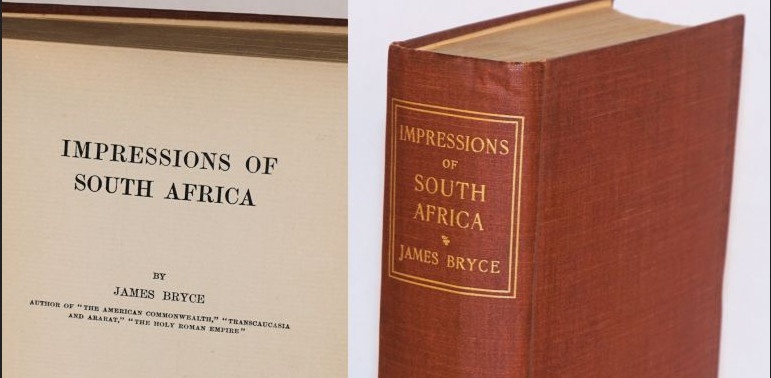
Impressions of South Africa
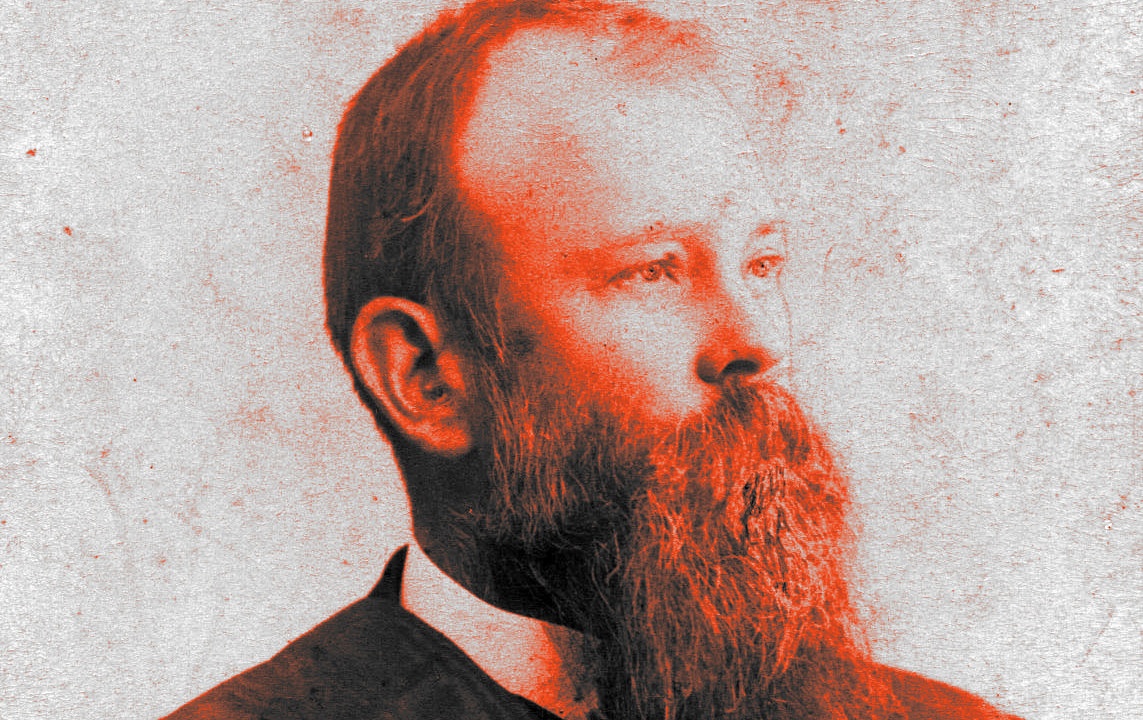
James Bryce (1838-1922) was ‘n Britse historikus en politikus. Vanweë studie in Duitsland het hy groot waardering vir die Duitsers gehad. “There are no better colonists than the Germans” (bron hier onder, Kindle 5713). Hy erken darem dat in die Zuid-Afrikaansche Republiek (ZAR)/Transvaal “most of the Germans, moved by anti-British feeling, favoured President Kruger’s Government” (6157). Bryce was later die sekretaris/minister vir Ierland (1905-1907) en die Britse ambassadeur in Amerika (1907-1913). Hy het Suid-Afrika in 1897 besoek en die volgende boek gepubliseer: Impressions of South Africa (London: Macmillan, 1897, 1898, 1899, 423p; Amazon Kindle $3,44). Bryce was ‘n voortreflike akademikus en het deeglike, omvattende navorsing oor Suid-Afrika gedoen.
Sy ideaal as historikus was om objektief te wees. Hy kry dit soms reg, maar ander kere is hy kenmerkend Brits en is hy skynbaar nie in staat om buite die destydse geykte raamwerk te dink nie. Hy skryf bv: “The British Government has been perfectly impartial” (6726) en “It may nevertheless be truly said for the British Government that it almost always sought to act justly” (6753), asook “The mother country never interferes with any matters of colonial concern, unless in the rare cases where a matter primarily local may affect the general relations and interests of the whole empire” (6980). Om die een of ander rede aanvaar Bryce sonder meer dat Suidelike Afrika Britse koloniale eiendom mag en moet wees. ‘n Mens kon ook nie verwag dat hy na ‘n enkele besoek gesaghebbend oor alle plaaslike onderwerpe sou skryf nie. Tydens die ABO was sy boek baie invloedryk in Brittanje. Soms sê hy die Afrikaners uiters sleg; ook die swartes, wat hy dink soos kinders behandel moet word – in ooreenstemming met ‘n standpunt wat destyds wye aanhang in Brittanje en Europa geniet het.
Wat hom van Suid-Afrika opgeval het, is dat “the country is a black man’s country” (5239). “All unskilled work is done by black people” (5286). “As servants in stores [blacks] are little more prone to petty thefts than are Europeans” (5306). “Taken as a whole, they [blacks] are a quiet and orderly people, not given to crimes of violence, and less given (so far as I could gather) to pilfering than are the negroes of the Southern States of America. The stealing of stock from farms has greatly diminished. Assaults upon women, such as are frequent in those States, and have recently caused a hideous epidemic of lynching, are extremely rare” (4313). Volgens wat hy skryf, kan blanke Suid-Afrikaners van geluk spreek wat betref die meerderheidsgroep in die bevolking. Hulle, die swartes, “will in time show capacity, and tell you that their inferiority to white men lies less in mere intellectual ability than in power of will and steadiness of purpose” (5319).
Die Khoi-San (soos ons hulle deesdae noem) is die enigste inheemses. Die swartes is indringers wat uit die noorde gekom het (5245). Daar is enkele selfregerende Britse kolonies. Hoekom? “Because they have a European population that they [the British government] have been deemed fit to govern themselves” (5258). “The traveller in South Africa is astonished at the strong feeling of dislike and contempt – one might almost say of hostility – which the bulk of the whites show to their black neighbours” (5326). “This sense of annoyance is naturally more intense toward a race so widely removed from the modern European as the Kafirs are” (5333). “The laws of the Boer Republics are far more harsh than those of the English Colonies, and the Transvaal Boers have been always severe and cruel in their dealings with the natives. But the English also have done so many things to be deplored that it does not lie with them to cast stones at the Boers” (5346).
Rassesegregasie kom van ver af: “There is indeed a complete social separation. Intermarriage, though permitted by law in the British Colonies, is extremely rare, and illicit unions are uncommon” (5353). In die Engelse kerke “blacks are admitted along with whites to the sacrament of the Lord’s Supper; but this (so I was told) is not the case in the Dutch Reformed Church” (5360). “Apart from this social disparagement, the native does not suffer much actual wrong” (5373). “There are no lynchings, as in America, and the white judges and magistrates, if not always the juries, administer the law with impartiality” (5379). “Cape Colony has a so-called ‘curfew law’ [aandklokreëling], requiring natives who are out of doors after dark to be provided with a pass – a law which is found oppressive by the best class of natives, educated and respectable men, though defended as necessary for public order, having regard to the large black population of the lower class, and their propensity to drink and petty offences” (5379). Anders as in die Kaapkolonie staan daar in die ZAR-grondwet van 1858: “The people will suffer no equality of whites and blacks, either in state or in church” (5414).
Soms wek Bryce die indruk van voorbeeldige nugterheid: “It is easy for people in Europe, who have had no experience of the presence among them of a semi-civilized race, destitute of the ideas and habits which lie at the basis of free government, to condemn the action of these Colonies in seeking to preserve a decisive electoral majority for the whites. But any one who has studied the question on the spot, and especially any one who has seen the evils which in America have followed the grant of the suffrage to persons unfit for it, will form a more charitable judgment” (5441). Maar die armsalige FW de Klerk en sy groepie meelopers het eerstehandse kennis van die plaaslike omstandighede gehad en nogtans toegegee aan die eis van swart meerderheidsregering. “To toss the gift [not right] of political power into the lap of a multitude of persons who are not only ignorant, but in mind children rather than men, is not to confer a boon, but to inflict an injury” (5448). “The black man accepts the superiority of the white as part of the order of nature. He is too low down, too completely severed from the white, to feel indignant” (5455). “Each race goes its own way and lives its own life” (5462).
Tereg vestig Bryce die aandag op die deurslaggewende demografiese verskil tussen Amerika en Suid-Afrika: “In the whole Unites States the whites are to the blacks as ten to one; in Africa south of the Zambesi it is the blacks who are ten to one to the whites” (5495). Myns insiens verduidelik dit heel moontlik waarom Amerika steeds welvarend is en Suid-Afrika nooit daardie hoogtes van sukses en voorspoed bereik het nie en sedert 1994 drasties agteruitboer. “In point of natural capacity and force of character the Bantu races are at least equal, probably superior, to the negroes brought from Africa to North America, most of whom seem to have come from the Guinea coasts. But in point of education and in habits of industry the American negroes are far ahead of the South African; for the latter have not been subjected to the industrial training of nearly two centuries of plantation life or domestic service,* while comparatively few have had any industrial contact with white workman, or any stimulation like that which the grant of the suffrage after the War of Secession [American Civil War, 1861-1865] has exercised upon a large section of the American negroes” (5502). “In both countries we see two races in very different stages of civilisation dwelling side by side, yet not mingling nor likely to mingle” (5508). [* Dit is een van die voordele van slawerny. Die swartes in Suidelike Afrika was nooit slawe nie.]
Bryce skryf hierdie profetiese woorde: “No traveller can study the colour problem in South Africa without anxiety – anxiety, not for the present, but for the future” (5515). Dit is onwaarskynlik dat selfs die grootste pessimis of die grootste veragter van die Afrikanerdom kon voorsien dat ‘n groepie blanke Afrikaanssprekendes ná verloop van minder as ‘n eeu, sedert die publikasie van Bryce se boek, feitlik ongekwalifiseerd aan die eise van swart mag sou toegee. Bryce voorspel ook: “Probably in the long run English will prevail and become the common speech of the southern half of the continent” (5530). Dit is besig om te gebeur vanweë die 1990/94-dwaasheid waarvolgens die politieke mag aan die terroristiese SWAPO en ANC toevertrou is. Vóór 1990 was Afrikaans die algemene spreektaal in sowel Suid-Afrika as Namibië en was Afrikaans in ‘n uitstekende posisie om die enigste amptelike taal in albei lande te word. Die bevolking, met Engels as spreektaal, “will form to a far greater extent than now a homogeneous mass pervaded by the same ideas and customs” (5530). Engels-eentaligheid is deel van die gelyk- en eendersmakingsproses van SWAPO en die ANC waarin Afrikaners en Afrikaans eintlik geen plek gegun word nie.
Vervolgens weerspreek Bryce hom egter oor homogenisering. “While thus constituting one vast black community, they will probably remain as sharply marked off from the whites as they are today. That there will be no intermarriage may safely be assumed from the fact that mixture of blood has greatly diminished since the days of slavery, just as it has diminished in the Southern States of America. White opinion universally condemns it, and rightly, for as things are now the white race would lose more by the admixture than the coloured race would gain” (5530). Bryce kon onmoontlik voorsien het dat die hoofstroom Afrikaanse inligtingsmedia, oftewel Naspers/Media24, binne ‘n eeu geen steen onaangeroerd sou laat om interrassige huwelike, asook sodanige seksuele verhoudings, aan te moedig en te verheerlik nie. Dieselfde word in die geval van selfdegeslaghuwelike en -verhoudings gedoen; verskynsels wat in Bryce se tyd nie geduld is nie.
Bryce voorspel voorts: “The Kafirs will be far more generally educated than they are now, and will have developed a much higher intelligence. That they will remain inferior to the whites in all intellectual pursuits and in most handicrafts may be concluded from American experience” (5536). “The day will arrive when South Africa will see itself filled by a large coloured [non-white] population, tolerably homogeneous, using the same language, having forgotten its ancient tribal feuds” (5536). “When will that day arrive? Probably not for at least a century, possibly not for two centuries” (5543). Hiervolgens het FW de Klerk se staatsmanskap ‘n eeu te vroeg sy opwagting gemaak. “Fast as the world moves in our time, it must take several generations to develop a race so backward as the Kafirs” (5543). “When, perhaps in the twenty-first century, the native population has reached the point of progress we have been imagining, the position may be for both races a grave or even a perilous one … the preponderance of numbers on the black side may make it more serious than it could be in the United States” (5550). Een van die dinge wat die koloniale owerheid dadelik ivm “this native problem” moet doen, is “keep them from flocking as a loafing proletariate into the towns” (5557). Plaaslik is instromingsbeheer en aandklokreëlings egter reeds lank gelede afgeskaf. “Could he [the average white] be got to feel more kindly toward the native, and to treat him, if not as an equal, which he is not, yet as a child, the social aspect of the problem – and it is the not least serious aspect – would be completely altered” (5564).
Bryce verwys na wat die historikus, George McCall Theal (1837-1917), oor die plaaslike sendelinge geskryf het. “They used to bring groundless or exaggerated charges against the Boer farmers, and always sided with the natives, whatever the merits of the case” (5659). Maar Bryce laat hom ook ongunstig oor die Afrikaners uit. Hulle is glo “slow” [slapgat?] (5687) en “suspicious” (5693). “The women are usually ill-educated and often unattractive … That love of cleanliness for which their kinsfolk in Holland are famous has vanished under the conditions of a settler’s life and the practice of using negro servants, and they are now apt to be slatternly” (5693). “The [white] population is so extremely thin, the towns so few and so small, that it is not surprising that a people who came out from the least educated strata of society in Holland should, under the difficult conditions of a settler’s life, have remained at a low level of mental culture” (5699).
Die plaaslike Britte was anders, glo beter, as die Afrikaners. “They have more enterprise than the Dutch, and are much less antiquated in their ideas” (5706). “Partly from their desire to be unlike the Dutch, they have remained markedly English, both in their speech, in their ideas, and, so far as the differences of climate permit, in their way of life. Nevertheless, they have been affected by the Dutch. They have taken from the latter the aversion to field labour, the contempt for the blacks, the tendency to prefer large pastoral farms to agriculture, and, in some districts, a rather sleepy and easy-going temperament” (5706). “The Englishman will deride the slowness of the Dutchman, the Dutchman may distrust the adroitness or fear the activity of the Englishman” (5719).
Oorafhanklikheid van swart arbeid is inderdaad een van die groot struikelblokke wat in die pad van ‘n Afrikaner-tuisland staan. Ons sal moet leer om alles self te doen, self handearbeid te verrig, dus ook in daardie opsig onafhanklik te wees. Oor plaaslike arbeid skryf Bryce: “Labour is neither cheap nor good” (6622). “In South Africa skilled labour is dear because scarce, and unskilled labour is dear because bad … black labour is seldom effective labour … they [blacks] are often changeable and unstable, apt to forsake their employment for some trifling cause … a white labourer at twice the price would, for most kinds of work, be cheaper” (6542).
“Severed from Europe and its influences two hundred years ago, they [the Transvaal Boers] have, in some of the elements of modern civilisation, gone back rather than forward” (6030). “Living in the open air, and mostly in the saddle, they are strangely ignorant and old fashioned in all their ideas … They dislike and despise the Kafirs” (6037). “They hate the English also, who are to them the hereditary enemies that conquered them at the Cape; that drove them out into the wilderness in 1838; that annexed their Republic in 1877, and thereafter broke the promises of self-government made at the time of the annexation; that stopped their expansion on the west by occupying Bechuanaland, and on the north by occupying Matabililand and Mashonaland; and that were still, as they believe, plotting to find some pretext for overthrowing their independence. This hatred is mingled with a contempt for those whom they defeated at Laing’s Nek and Majuba Hill, and with a fear born of the sense that the English are their superiors in knowledge, in activity, and in statecraft. It is always hard for a nation to see the good qualities of its rivals and the strong points of its opponents’ case; but with the Boers the difficulty is all the greater because they know little or nothing of the modern world and of international politics” (6042).
“Two centuries of solitary pastoral life have not only given them [the Transvaal Boers] an aversion for commerce, for industrial pursuits, and for finance, but an absolute incapacity for such occupations, so that when gold was discovered in their country, they did not even attempt to work it … the corruption of their Legislature shows that it is rather to the absence of temptation than to any superior strength of moral principle that these merits have been due. For politics they have little taste or gift” (6050). Oor die Transvaalse Grondwet skryf Bryce: “Enacted in 1858 and partly based on a prior draft of 1855. it is a very crude, and indeed rude, instrument, occasionally obscure, and containing much matter not fit for a constitution” (6084). “In 1881, when the Republic recovered its independence, there were neither roads, railways, nor telegraphs in the country. Its towns were rough hamlets planted round a little church. Its people had only the bare necessaries of life” (6098).
Bryce keer terug na die taalkwessie. “The hold of Dutch [Afrikaans] is so strong that it will probably continue to be spoken in the Colony for two generations at least” (5733). Die plaaslike Nederlands “adopted many Kafir or Hottentot words, and having become vulgarized into a dialect called Taal, which is almost incapable of expressing abstract thought or being a vehicle for any ideas beyond those of daily life … This defect might give English a great advantage if the Boers wished to express abstract ideas. But they have not this wish, for they have no abstract ideas to express. They are a people who live in the concrete” (5740). Volgens Bryce is daar net drie plaaslike skrywers wat vermelding verdien: Robert Pringle, Olive Schreiner en William Charles Scully,” die outeur van Kafir tales (5777). Al drie is Engels. “The Dutch section is practically disqualified by its language (which, be it remembered, is not the language of Holland, but a debased dialect) from literary composition, even were it otherwise disposed to authorship. Literature will always, I think, remain English in character, bearing few or no traces of the Dutch element in the people” (5784).
Bryce verwys na iets wat hy sekerlik sou toeskryf aan die voortreflike voorbeeld wat die Britte stel: “The high level of decorum maintained in the Cape Parlement, where scenes of disorder are, I believe, unknown, and violent language is rare” (5753). Sedert 1994 het die situasie in die parlement in hierdie opsigte ingrypend verander. “I heard of little or nothing amounting to corruption. Elections were said to be free from bribery” (5999). Sedert 1994 het die situasie in hierdie opsigte ook radikaal verander.”The suffrage [in Cape Colony] is so wide as to admit nearly all the whites, and there is, of course, no desire to go lower and admit more blacks” (5932). Politieke kwessies “turn not, as in the Southern States of America, upon the political rights of the black man (for on this subject the ruling whites are in both Colonies [Cape and Natal] unanimous, but upon land rights and the regulation of native labour … One cannot say that there exist pro-native or anti-native parties, but the Dutch are by tradition more disposed than the English to treat the native severely, and, as they express it, keep him in his place. Many Englishmen share the Dutch feeling, yet it is always by Englishmen that the advocacy of the native case is undertaken” (5946).
“The rapid increase of Indian immigrants in that Colony [Natal] alarmed the whites, and led to the passing, in 1896, of an Act which will practically debar these immigrants from political rights” (5441). “In Natal both races [English and Afrikaans whites] are equally anti-Indian” (5946). Nog iets wat Bryce oor Natal skryf, is: “The south-coast Kafirs far outnumbered the whites, were full of courage, had a rough and thickly wooded country to defend, and were so ignorant as never to know when they were beaten. A more intelligent race might have sooner abandoned the contest” (6740).
In anti-Afrikaner geledere word die Voortrekkers dikwels kwalik geneem omdat hulle met die oog op selfbehoud laer getrek het. Deesdae is die oproep uit dieselfde oord “ontlaering” (gebruik in hierdie verband die soekfunksie op LitNet), dus dat die Afrikanerdom in sy swernoot moet gaan. Bryce doen dieselfde. Hy verkwalik die Transvaal omdat die vereistes vir burgerskap na die ontdekking van goud strenger gemaak is. Maar die Transvaal is in ‘n kort tyd deur Uitlanders verswelg, soortgelyk aan die versnelde verswelging deur inkommers waarmee ons sedert 1994 te make het. “There are about 65 000 Boers, all told, and about 24 000 male citizens over the age of sixteen. The … Uitlanders numbered nearly 100 000, of whom fully one-half were adult males” (6211). “Over against the Uitlanders stood the native Boer population … The majority, consisting of the old ‘true blues’, who hated the British Government and clung to their national ways, supported the Boer Government in its stubborn refusal to grant reforms” (6218). Oor Paul Kruger skryf Bryce: “Exercising by his constant harangues in the Volksraad, what has been called a ‘dictatorship of persuasion’, he warned the people that their customs, their freedom, their religion, were at stake, and could be saved only by keeping the newcomers out of power” (6225). “It was the Government of a small and ignorant minority, and, since they [the Uitlanders] believed it to be corrupt as well as incompetent, it inspired no respect” (6299).
In sy laaste hoofstuk skryf Bryce: “There has been a collision of two types of civilisation, one belonging to the nineteenth century, the other to the seventeenth. His isolation, not only in a distant corner of the southern hemisphere, but in the great, wide, bare veldt over which his flocks and herds roam, has kept the Boer fast bound in the ideas and habits op a past age, and he shrinks from the contact of the keen restless modern man, with new arts of gain and new forms of pleasure” (6693). Bryce het darem ook tot die volgende insig gekom: “An Afrikander patriotism of their own – a patriotism which is not Dutch, for they care nothing for the traditions of Holland, but purely Africander” (6700).* “On the other hand, the English of the Colony … have remained more thoroughly English than those of most British Colonies, and have never conceived the idea of severing their own connection with the mother country” (6713). By die Boere is daar “the wish to be left alone, and a stubborness of will that made independence seem more desirable the more it was threatened” (6719). Maar nóg die Britte nóg die swartes wou die Afrikaners met rus laat. Nie-Afrikaners, deesdae insluitende verloopte Afrikaners, gaan voort om hulle wense aan Afrikaners op te dring. [* Bryce weerspreek baie van wat hy geskryf het, wanneer hy teen die einde verklaar: “Those of Dutch origin, warm as is their Africander patriotism, have never been hostile to the British Crown” (6993).]
Die laaste toekomsblik wat Bryce hom veroorloof, het ook die kol gemis. “There is, of course the danger that a class may spring up composed of men unfit for the higher kinds of work [blacks?], and yet too lazy or too proud to work with their hands [Afrikaners?]; and some observers already discover signs of the appearance of such a class. If its growth can be averted the conditions for the progress and happiness of the white race in South Africa seem favourable; and we are approaching an age of the world when the quality of a population will be more important than its quantity” (6858). Sedert 1994 troon die voorkeur vir kwantiteit egter loshande bo kwaliteit uit.
Bryce vertolk die voorafgaande egter as ‘n toekoms wat gunstig vir die Britte gaan verloop. “The English-speaking element will, if the mining industry continues to thrive, become politically as well as economically supreme … A country must, after all, take its character from the large majority of its inhabitants, especially when those who form that large majority are the wealthiest, most educated, and most enterprising part of the population” (6913). Hy droom van ‘n onafhanklike “Anglo-Dutch Republic” (6967), “though under the protection and dignified by the traditions of an ancient and famous monarchy. Nor has it been fully realized that the Colonies derive even greater substantial advantages from the connection than does the mother country. The mother country profits perhaps [!] to some extent – though this is doubtful [!] – in respect of trade, but chiefly in the sentiment of pride and the consciousness of a great mission in the world which the possession of these vast territories, scattered over the oceans, naturally and properly inspires” (6973).
Heroes of the Boer War
Frederik Rompel (1870-1940) was ‘n Volkstem-joernalis en ‘n oorlogskorrespondent tydens die ABO. Hy het eerstehands met die leidende figure van albei partye kennis gemaak. Van hom is die volgende boek gepubliseer: Heroes of the Boer War (Nederland Publishing Company, 1903, 242p; Amazon Kindle R2,29). Die Kindle-weergawe is hoogs onvolmaak, maar teen die prys steeds die moeite werd om te lees.
Ná die stigting van De Burger in 1915 is DF Malan as die eerste redakteur aangestel. Malan het veral die hoofartikels geskryf en hom nie met die ander joernaliste en die produksie van die koerant bemoei nie. Hy het hom spoedig eerder “aan sy parlementêre loopbaan gewy en sy kantoor by De Burger het meestal leeggestaan. Die publiek was egter salig onbewus van die feit dat die meeste van De Burger se hoofartikels nou geskryf is deur die tegniese redakteur, Frederik Rompel – ‘n Nederlandse Katoliek van geboorte, met ‘n Joodse vrou wat intussen in die Afrikanergemeenskap opgeneem is. Rompel en sy kollega Louis Hiemstra [1897-1978] is in 1921 by De Burger aangestel. Saam het hulle die gehalte van die koerant verbeter” (Lindie Koorts, DF Malan en die opkoms van Afrikaner-nasionalisme, Kaapstad: Tafelberg, 2014, Kindle 3980).
Rompel se boek is die teenoorgestelde van Yves Guyot se boek (Praag 14.03.2020). Guyot het hom teen die Boere geskaar, terwyl Rompel die hoogste lof vir hulle het. Maar Rompel is nie heeltemal onkrities nie. Hy maak bv melding van die gebrek aan dissipline by sommige Boere, wat tydens die ABO na hulle huise of plase teruggekeer het wanneer dit hulle gepas het; ook die nadelige invloed wat die saamsleep van ossewaens met vroue en kinders op die oorlogsukses van die Boere gehad het. Heel aan die begin wys hy op die wydverspreide valse vertroue wat die Boere in koningin Victoria gehad het: “If your queen only knew” (Kindle 653).
In sy voorwoord skryf William Thomas Stead (1849-1912): “It is only by reading this book that we English can understand how it was that the whole non-English world regarded with horror and indignation the British devastation of the two Republics” (8). Stead noem die Britse optrede tydens die ABO inderdaad ‘n “crime against humanity” (19). Hierdie frase word deesdae teen apartheid misbruik. Verloopte Afrikaners, soos Willie Esterhuyse, Wannie Carstens, Lindie Koorts en André Bartlett (die gebruiklike verdagtes wanneer publisiteit vir hulleself ten koste van die Afrikanerdom gesoek word), het dit ANC-gedienstig onlangs weer ingevryf (Netwerk24, 23.02.2020). Wanneer bv plaasmoorde veroordeel word, skitter hierdie mense egter in hulle afwesigheid.
Ek vind dit interessant dat Stead in hierdie konteks na Andreas Hofer (1767-1810) verwys as “that indomitable Boer of the Tyrol” (28) – kyk Wikipedia. In sy inleiding vergelyk Albert Pfister die setlaars in die Nuwe Wêreld/die Amerikas met die Kaapse Hollanders: “They had not the stamina of the hardy settlers at the Cape” (151). Hulle het mettertyd as Boere die binneland in getrek. Hulle was “strong, virtuous, self-reliant” (160).
Rompel beskryf agtereenvolgend en in besonderhede die volgende Afrikanerhelde, sommige waarvan later geblyk het nie danige helde te wees nie: Paul Kruger, MT Steyn, WJ Leyds, ADW Wolmarans, Cornelis Wessels, Abraham Fischer, Schalk Willem Burger, FW Reitz, PJ (Piet) Joubert, PA (Piet) Cronjé, Louis Botha, Christiaan de Wet, JH (Koos) de la Rey, Ben Viljoen, Danie Theron, JBM Hertzog, JC (Jan) Smuts, SG Maritz, GJ (Gideon) Scheepers en PH Kritzinger.
Rompel het ook groot lof vir Afrikanervroue gehad, waaraan ‘n aparte hoofstuk gewy word. Hy haal MT Steyn soos volg aan: “Our women have gone through the fire of patriotism and not been found wanting. They will suffer patiently, if only we continue the sacred struggle for independence” (4071). Steyn word “the soul of the Africander resistance” genoem (1587). Ek volstaan met ‘n aanhaling van Christiaan de Wet: “A Boer first gets dangerous when you succeed in surrounding him” (3043). Deesdae het die plaaslike blankes met verswelging te make. Het die hedendaagse Boere/Afrikaners die murg in hulle pype om nie in hierdie onverdiende lot te berus nie, deur sorg te dra dat hulle situasie stelselmatig verbeter eerder as versleg?