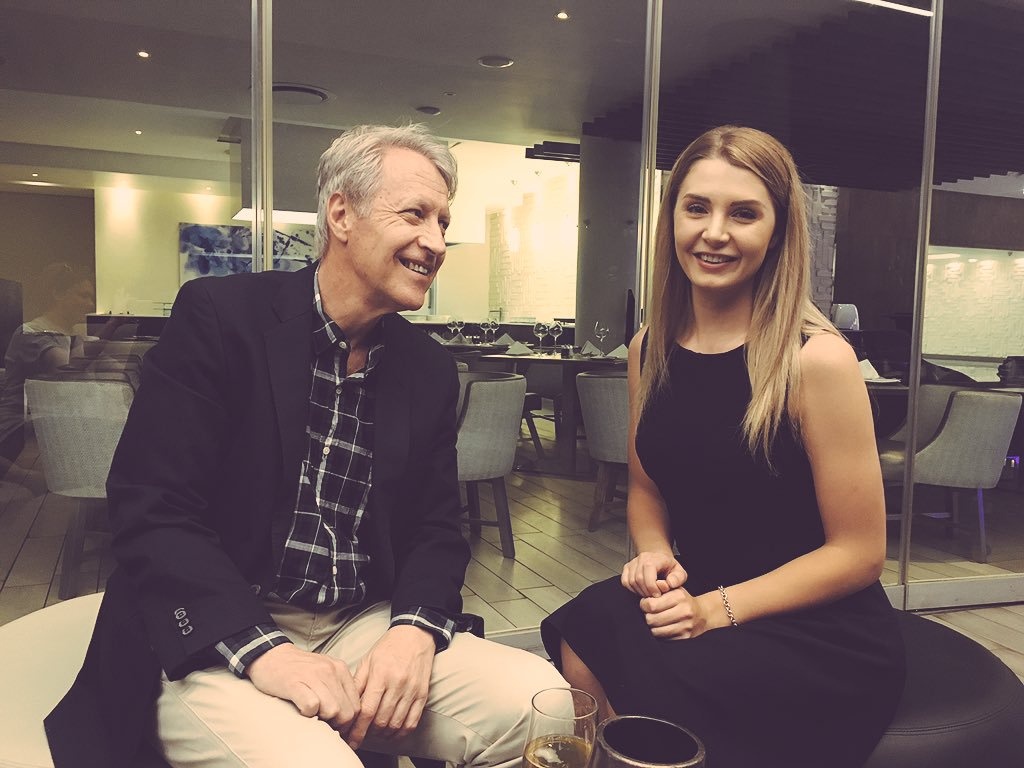
Lauren Southern (gebore in 1995) is ‘n aantreklike Kanadees wat haar politieke idees as regs eerder as konserwatief beskryf. Sy is reeds op Praag (14.07.2018) bekend gestel. Tot Maart 2017 was sy ‘n joernalis by Rebel Media, wat deur Ezra Levant (gebore in 1972) gestig is. Sedertdien doen sy onafhanklik joernalistieke werk. Levant was aktief betrokke by die Unite the White-beweging (1996-2003) in Kanada en was daarna die redakteur van die Western Standard (2004-2007) in Calgary, Alberta. In 2006 het hy heelwat opspraak verwek deur die Deense Mohammed-spotprente te publiseer. Levant het naas ander boeke twee uitstekende werke gepubliseer, wat ek nog wil bespreek: Shakedown: How our government is undermining democracy in the name of human rights (2009, 234p; Amazon Kindle $13,79) en Trumping Trudeau: How Donald Trump will change Canada even if Justin Trudeau doesn’t know it yet (2017, 102p; Amazon Kindle $5,74).
Hierdie rubriek handel egter veral oor Southern. As regse aktivis is sy net so bedrywig soos Milo Yiannopoulos (gebore in 1984) (Praag 7.10.2017), maar anders as die homoseksuele Yiannopoulos is Southern se standpunt dat daar net twee geslagte is. Sy is ook teen militante feminisme gekant. In Mei 2017 het sy in die moeilikheid in Italië beland toe sy wou verhoed dat skepe onwettige immigrante of vlugtelinge uit die Middellandse See red. Sy is sterk teen veral Moslem-immigrante gekant en is om hierdie rede hertoelating tot Brittanje geweier. In Julie 2018 was sy in Australië en het sy ‘n T-temp met die bewoording “It’s OK to be white” gedra as teenvoeter vir “Black is beautiful.” In Australië het Southern sowel ondersteuning as teenstand ervaar. Na aanleiding van Southern se T-hemp: Onder die leiding van blankes is Suid-Afrika vóór 1994 tot die voorspoedigste land in Afrika ontwikkel. Ons as blankes moet dus nie toelaat dat skuldgevoelens by ons aangewakker word deur elemente wat openlik verklaar het dat hulle, ten einde die politieke mag te bekom, bereid was om die land tot in die grond af te breek nie; iets wat hulle sedert 1994 eintlik steeds doen.
In Augustus vanjaar is Southern se besoek aan Nieu-Seeland gesaboteer op ‘n manier soortgelyk aan die taktiek wat plaaslik en elders, bv in Nederland, teen Steve Hofmeyr gebruik is: Die eienaars van die lokale waarin sy sou optree, het weens politieke inmenging hulle toestemming vir die byeenkomste teruggetrek. Daar is beweer dat dit in die openbare belang gedoen is terwyl sy aanvoer dat daar geen sprake van haatspraak by haar is nie en dat vryheid van uitdrukking weens sulke optrede ondermyn word. Wat van besondere plaaslike belang is, is dat Southern in Junie vanjaar ‘n dokumentêre video oor Suid-Afrikaanse plaasmoorde en die kwessie van grondherverdeling vrygestel het. Dit is op die internet beskikbaar. Sy is onthuts oor die wrede marteling wat so kenmerkend van plaasmoorde is. Daarenteen laat sy haar positief oor Orania uit. Kort hierna, in Augustus, is Ernst Roets se boek oor dieselfde onderwerp gepubliseer: Kill the Boer: Government complicity in South Africa’s brutal farm murders (2018, 413p; Amazon Kindle $11,49).
Hierdie ronde skryf ek egter oor Southern se boek, Barbarians: How Baby Boomers, immigration, and Islam screwed my generation (Toronto: Rebel Media, 2016, 90p; Amazon Kindle $5,74). Baby Boomers is die Amerikaanse benaming vir die geslag wat ná die Tweede Wêreldoorlog gebore is. In haar erkennings bedank sy haar pa vir sy wysheid en spreek sy die hoop uit dat haar generasie ‘n skild teen barbaarsheid en globalisme sal wees en ‘n bydrae tot die behoud van (Westerse) beskawing sal lewer (Kindle 45). Oor Southern word gesê: “She is an avid reader and lover of liberty, individualism and responsibility” (1184). In sy voorwoord beskryf Ezra Levant die outeur as: “a right wing millennial with a cause” (56).
Southern was in Kanada op skool en universiteit, hoewel sy net die eerste twee jaar van haar graadstudie voltooi het. Soos in Amerika is onderwys in Kanada deurspek met linkse politieke propaganda, soos ook al hoe meer in Suid-Afrika die geval is. “I was completely equal to everyone, which is to say average and mediocre. I was taught that diversity is unity. That to regress is to progress” (114), wat herinner aan die lof vir die nuwe demokratiese Suid-Afrika. Danksy die behoudende opvoeding wat sy tuis ontvang het, kon Southern haar gesonde(r) uitkyk op die werklikheid behou; “correcting my own flawed education … I think I’m slowly gaining on reality. If the rest of my generation are going to follow suit, they’re going to have to reckon with many of the same facts” (126).
Sy lys dan hierdie vyf feite vir haar tydgenote: “[1] They’ll have to accept that they’re not all that special, and greatness is measured in hard-earned victories, not participation trophies. [2] They’ll have to accept that Western ideals have shaped our cultures into some of the greatest, freest, most generous, most decent, most egalitarian, and most peaceful on Earth. [3] They’ll have to accept that it’s not Christian terrorism to push back as hard as possible against Muslim invasion. [4] They’ll have to accept the rights guaranteed by Western ideals exist because our civilization was willing to shed blood in order to shut down its enemies, rather than provide safe spaces to savages. And [5] most importantly, they’ll have to accept that diversity is not a strength; it’s a weakness. Its legacy is not peace and love, but division and hate” (132).
“While pride in the West has been ruthlessly suppressed to the point of being forgotten altogether, the unfortunate fact is that it’s been done with the consent of those indoctrinated by the new system, very much including many millennials” (139). “Dismissing the guidance built for us over thousands and thousands of years in the form of gender roles, traditional lifestyles, hard work, objectivity, and cultural supremacy was, in fact, painfully stupid” (151). “Sure, it’ll be hard for us to dig ourselves out of the pit that the left-wing indoctrination and media machines has dug for everyone our age” (168). Die eerste hoofstuk van haar boek het as opskrif: “The West is dying”, ‘n onderwerp wat ek al dikwels bespreek het. Die Weste gaan agteruit veral weens kulturele marxisme, wat alles wat bv blank en Westers is, ondermyn: “We have experienced an utter dispossession, dilution, and disintegration of the Western soul” (81). In die nuwe dekadente opset, “you won’t find more meaning. You won’t find more belonging. You won’t find more purpose” (74). Sy het ‘n sterk afkeer van jong mense se hedonisme; hulle toegewydheid aan plesier/genot (145).
Southern is nog jonk en sy moet nog heelwat leeswerk inhaal voordat haar insig in alle opsigte sal oortuig. Byvoorbeeld: “Rather than look up to giants of history like Charlemagne, Cecil Rhodes, or John Adams, our generation turns to virtue-signaling idiots like Justin Trudeau and Deray McKesson for moral guidance” (145). Justin Trudeau (gebore in 1971), is sedert 2015 die Kanadese eerste minister. Hy is onvleiend die onderwerp van Ezra Levant se 2017-boek, waarna in die eerste paragraaf hier bo verwys is. Deray McKesson (gebore in 1985) is ‘n swart Amerikaanse Black Lives Matter-aktivis. Maar Afrikaners sal kwalik met Southern oor die historiese grootsheid van Cecil Rhodes saamstem.
Hoofstuk 2 handel oor Southern se ervaring as universiteitstudent in Toronto. In Engels I is van studente verwag om ‘n werkstuk oor die swart Amerikaner, Toni Morrison (gebore in 1931), te voltooi. Morrison het in 1993 die Nobel-prys vir Letterkunde ontvang. Die ontleding van haar Nobel-aanvaardingstoespraak is ‘n tipiese voorbeeld van die soort werk wat van studente aan Kanadese en Amerikaanse universiteite verwag word. Die dosent “started bringing up politics and with each session, his views got progressively more unhinged and radical” (184); dermate dat Southern later nie meer stil kon bly nie. Die oorwegend linksgesindheid van hierdie dosente assosieer sy met die Baby Boomers-geslag. Hulle is gebore in ‘n tyd toe voorspoed en vryheid vooropgestel is. “Which, naturally, led them being absolutely unwilling to absorb the tough-minded values of their parents … Instead, they wanted to start a new generation of love, of peace, and of no mean authoritative figures” (230).
Die meeste van hierdie dosente “fell in love with communism and fell out with religion” (236). Hulle is vaandeldraers van “the New Left” (248). In hierdie konteks verwys sy goedkeurend na die gelowige Rooms-Katoliek, William F Buckley, jr (1925-2008), se boek, God and man at Yale: The superstitions of ‘academic freedom’ (1951/2012, 304p; Amazon Kindle $10,92). Sedertdien het die situasie in die akademie aanmerklik versleg, want die dosente in die middel van die vorige eeu “still believed in classical Western concepts like rationalism, free speech and free inquiry” (242). In Noord-Amerika, soos deesdae in Suid-Afrika, is daar aan die universiteite, asook in die hoofstroom-inligtingsmedia, “bitter and authoritarian suppression of contrary viewpoints” (266). Op universiteitskampusse ontlok behoudende, tradisionele, konserwatiewe of regse menings hewige teenstand: “The protests themselves had never been anything but cover for communist infiltration – and destruction – of Western centers of learning” (266).
Dít is deel van wat die linkse Duitse studenteleier, Rudi Dutschke (1940-1979), “the long march through the [Western] institutions” van mag, waaronder die universiteite, noem (271). Geen wonder dat Herbert Marcuse (1898-1979), ‘n aanhanger van die Kritiese Teorie van die marxistiese Frankfurt-skool, van Dutschke se strategie gesê het: Dit is “‘the only effective way’ to achieve the communist domination required to achieve utopia” (278). Nelson Mandela se outobiografie, Long walk to freedom (1994), is in dieselfde liga weens sy anti-blanke en anti-Westerse ingesteldheid. ‘n Sinvolle boek oor hierdie onderwerp is Roger Kimball se The long march: How the cultural revolution of the 1960s changed America (New York: Encounter Books, 2000, 338p; Amazon Kindle $11,49). Die boektitel is ontleen aan Mao Zedong/Tse-tung (1893-1976) se kommunistiese leër wat Jiang Jie Shi/Chiang Kai-shek (1887-1975) se Guamindang/Kuomintang-magte in 1934/5 oor ‘n afstand van 10 000 kilometer ontvlug het.
Kragtens Marcuse se “repressive tolerance” moet regse idees onderdruk en linkse idees ooreenkomstig “liberating tolerance” bevorder word (285). Lees bv die artikel oor die boek, A critique of pure tolerance (1965), in die Wikipedia. Southern verwys ook na die destruktiewe gevolge van Michel Foucault (1926-1984) se poststrukturele opvattings en Jacques Derrida (1930-2004) se dekonstruksie-idees (299). Volgens Foucault is geestelike gesondheid en rasionaliteit konstrukte “designed by society to keep the oppressed down” (305). “Derrida argued that language itself was a social construct designed by the powerful to keep the oppressed down” (312). Dit is hierdie soort idees wat by voorkeur deur die “Boomer academics” versprei word (317).
In Amerika word tussen allerhande soorte konserwatisme onderskei. In Suid-Afrika is linksheid egter so oorheersend dat ‘n mens geneig kan wees om enige gematigde of behoudende standpunt te ondersteun. Fynere onderskeide word dan as van mindere belang beskou. Dit sou egter ‘n fout wees, soos hier onder duidelik blyk. In hoofstuk 3 noem Southern die verkiesing in 2016 van Donald Trump (gebore in 1946) as die 45ste Amerikaanse president “exhilarating” (370). Sy skryf: “Baby Boom conservatism is definitely dead” (378). Sy verwys hier veral na die aanvanklike onwilligheid en die voortgesette traagheid in die Republikeinse Party om Trump te ondersteun. “With rare, rare exceptions, the anti-Trump ‘conservatives’ were out of touch, boring, lame, ineffective, self-righteous losers without enough flare or original thought” (399).
Southern noem twee konserwatiewes van weleer waarvoor sy respek het: William Buckley en Ronald Reagan (1911-2004) (406). Later noem sy ook die sosioloog, Daniel Bell (1919-2011), wat myns insiens nie genoeg waardering ontlok nie,* en die joernalis, Irving Kristol (1920-2009). Laasgenoemde “coined a cute little definition ..:’A neoconservative is a liberal who’s been mugged by reality'” (424). Die Britse joernalis, Melanie Phillips (gebore in 1951), gebruik Kristol se frase, “mugged by reality”, om haar eie oorgang van linksheid na konserwatisme te beskryf (Praag 18.08.2018). Southern het ook waardering vir Barry Goldwater (1909-1998), wat as Amerikaanse presidentskandidaat in 1964 die weg vir die presidentskap van Reagan (1981-1989) voorberei het (430). [* “Daniel Bell used to say that he was a social democrat in economics, a liberal in politics, and on social and cultural matters somewhat conservative” (David Goodhart, The road to somewhere: The new tribes shaping British politics, Penguin, 2017, 304p; Amazon Kindle $14.46, 268).]
Maar die algemene neiging by neokonserwatiewes in Amerika was al hoe meer “to sanitize the right – to make it more like the old left. In other words, they tried to make it more technocratic, more stuffy, more ‘responsible’, less rebellious, less edgy, less young, and above all, less politically incorrect” (Southern 430). “Let’s be clear: the modern generation of neoconservatives are deeply dangerous to the right because even in the context of a Trump administration, they still have the means to control how young right-wingers learn the history of their movement” (459). Dit is blykbaar veral George W Bush (gebore in 1946, die 43ste Amerikaanse president en die oudste seun van George HW Bush, gebore in 1924 en die 41ste president) wat as neokonserwatiewe nie guns in Southern se oë vind nie (471).
Hoofstuk 4 het as opskrif: “How immigration is ruining everything.” “We’re not going to pretend religious freedom or multiculturalism takes primacy over everything if it permits Jihadists to enter our country” (500). “Before his father was elected, Donald Trump, Jr [born in 1977], got into a lot of trouble for comparing immigration to a bowl of Skittles [± Smarties]. If only a few Skittles in a bowl were poisonous, Trump, Jr, asked, would you still take a handful? This set off a flood of outrage from lefties and cucked ‘conservatives,’ who complained that the metaphor was ‘dehumanizing.’ Which is another way of saying ‘too on-point for our feelings to handle'” (535). “In small numbers, it [immigration] can be fine, and even improve your country’s makeup. But take too many in, and you lose the ability to assimilate them, and everything goes to s–t ” (544). (Southern is ongelukkig geneig om te dikwels op ‘n steurende manier na mense se uitskeidings en seks te verwys.)
Die ekonoom, Milton Friedman (1912-2006), het tereg genoem: “You can’t have open borders and a welfare state” (550), maar dit is ongelukkig deel van die wrede werklikheid van die nuwe Suid-Afrika. “Even if you only consider immigration from an economic perspective, an ‘invite the world’ policy still comes out to an invitation for eventual anarchy” (567). “With the conservatives, you can argue economics and facts. Liberals have no such limitations. For them, immigration is all about playing mommy to the poor, vulnerable immigrant population, who obviously contribute so much to diversity and multiculturalism” (578). “Invite the world” is die frase wat gebruik word om die immigrasiebeleid van Pierre Trudeau (1919-2000) en sy oudste seun, Justin (gebore in 1971) te beskryf. “In 1971, during Pierre Trudeau’s reign, Canada was the first country in the world to adopt state multiculturalism as official policy. If you look [at] his son, Canada’s current prime minister Justin Trudeau, it should be obvious to you at this point that the worm-eaten apple doesn’t fall far from the tree. By now, it should be obvious how cancerous the dedication by both Trudeau’s to a ‘multicultural’ state has been throughout the West” (594).
“In the end the result of mass immigration is the destruction of the economy, of our culture, and of the very moral norms that make those emotional arguments have resonance in the first place” (600). “Unchecked immigration is a moral eyesore. It asks our states to fail their most basic obligation by putting the needs of faceless, dubiously friendly strangers over the needs of the citizens they exist to protect and serve” (605). “The multicultural worldview that promotes unchecked immigration is not about fulfilling the obligation of a government toward its own people. It is instead a recklessly naïve, utopian view of the world holding hands, loving each other, and singing Kumbaya [a spiritual folk song], even though all of history, social science, and common sense militate against that actually happening. Similarly, multiculturalism is not motivated by a desire for integration or assimilation of the best of foreign cultures into Western culture: rather, it seeks to put every culture in its own ghetto-sized safe space while forcing the surrounding country to conform, rather than the other way round” (612).
“They [globalists] say it [mass immigration] means simply being a ‘citizen of the world,’ which sounds great. But behind that contentless phrase are sinister implications. Thus the more wonky defenders of globalism define it as being ‘interconnected by removing cultural and legal barriers,’ or as ‘the pooling of states’ sovereignty into supranational organizations’ … They don’t want your vote to count unless the wise men in Brussels, or on Wall Street, or in the UN building, decide to allow it to count” (669). “Individualism and unique identity is the antithesis of global government. It’s the antithesis of the European Union, of the United Nations, of the World Bank … This is why globalists hold contempt for citizenship, tradition, national culture and religion. These things promote sovereignty of nations – they create unique identities for nations. Destroying those unique identities is the key to submission” (675).
“The first goal of Marxists was to destroy the family and the church because both were foundations for one’s life. You could count on both to support you, you could count on them to give you guidance. But for Marxists and their progressive allies, it was essential that government fill both roles: both as your last line of support, and as the people with the power to set the agenda for your life. Globalism has a similar goal on a larger scale. They don’t want the family, the church or your government to set the agenda – they want to set the agenda from super-national organizations. They want to sweep nationalism, nation states, and national democracy under the rug. They want to leave local communities to pick up the tab for their agenda, and shut out any local voices complaining about the cost. Whether that be financial, criminal, or cultural” (682).
“They use the false flag of ‘diversity’ as cover to mold people into how their balance sheets and Econ 101 textbooks see you – as faceless, expendable consumers, deprived of culture, identity or thought. They’ve had a strong grip on society for the last decade, but Trump and those like him are monkey wrenches thrown into their machine of deceit. Out of nowhere, Trump and his allies spoke up for those who were disaffected by the failure of immigration and had no compunctions about naming the problem. As Trump himself said in a speech, no longer will we listen to the ‘false song of globalism'” (689).
“Whatever libertarian wonks and naïve evangelical missionaries on the right believe, mass immigration is not about the economy or about moral duty. It’s about diversity, and the dilution of what makes our countries recognizable, pure and simple. It’s about dividing the people so that politicians and corporate elites have an easier time picking their pocket” (695).
Hoofstuk 5 handel spesifiek oor Moslem-immigrante wat nie wil integreer nie en die gasheerland volgens hulle behoeftes wil verander. As bedenkinge teen hierdie Moslems uitgespreek word, word dit uit linkse geledere ‘n fobie, ‘n irrasionele vrees, genoem (725). “Western citizens might be justified in being suspicious or hostile toward non-Western culture … as the Dutch politician Geert Wilders has repeatedly stressed, while individual Muslims can no doubt be decent and noble people, just as tame wolves do exist, the fact is that Islam the religion is by its nature dangerous to the West” (737). Daar word teengewerp dat die Bybel ook barbaarse idees verkondig. “Sure, there are parts of the holy books of practically every religion that would offend our modern enlightenment-era sensibilities. But there are also centuries of theology that have been written since those holy books that have rendered the offending passages inoperable in the minds of all but the most fanatical believers … Islam has not had its enlightenment” (743). “Where are the marches on the streets against terrorism by Muslims?” (755). “Islam’s ambition has been the destruction of Christendom – which is to say, not just Christians, but Jews, European Pagans, and everyone else living under the banner of Western culture” (814). Die Moslem-einddoel is “a global caliphate” (989).
In hoofstuk 6 noem Southern dat sy verkwalik word omdat sy blanke bevoorregting ontken (836). Die uitgangspunt van linkse elemente is dat almal gelyk en wesenlik eenders is. As in die praktyk duidelik blyk dat daar ongelykheid is, dat die blankes wêreldwyd neig om welvarend te wees terwyl die nie-blankes dikwels arm is, word beweer dat dit is omdat die blankes die nie-blankes uitbuit. Die punt is dat die uitgangspunt foutief is. Mense verskil, ook binne dieselfde ras en etniese groep. Mense het verskillende talente wat meebring dat hulle in sommige opsigte uitmunt maar nie in ander nie. Sommige groepe kan oor die algemeen meer geskik wees vir prestasie in bv die hedendaagse ekonomies-finansiële werklikheid. Andersyds beleef ons plaaslik die Orwelliaanse werklikheid dat die gebruik van sekere woorde verbode is; dat blankes (anders as nie-blankes) hulle nie mag uiter nie; dat selfs tronkstraf aan blankes opgelê kan word al is geen skade bewys nie. Southern skryf: “Suppressing words doesn’t actually solve problems, and may actually make those problems worse” (896). Mense kan dan verplig voel om hulle gevoelens op te krop en hulle idees te radikaliseer. As ‘n mens teen iets gekant is en dit sê, is dit nie noodwendig haatspraak nie. Dit kan bloot die uitdrukking van meningsverskil wees.
In die laaste hoofstuk staan: “The West is withering away from cancer, and globalism is the cancer … Left-wing globalism is simply Communism Lite, where a Marxist culture replaces a Marxist economy” (971). Teenoor kulturele marxisme stel Southern nasionalisme as “a great, necessary idea … Nationalism is what builds societies” (1028). “Nationalism is more than just not-that-bad. It’s awesome. Particularly … pan-Western nationalism” (1034); dus, blanke solidariteit is nodig omdat die voortbestaan van blankes wêreldwyd bedreig word. Sy is optimisties: “This kind of nationalism has a chance at defining world politics for centuries. Why? Because it conforms to human nature … its superiority to globalism is actually based on one of the most healthy parts of human nature: the preference for a group that supports each other, like a family” (1039). “The West needs to think of itself as a family again, not as a sugar daddy for other people and their families” (1045).
“We need to re-learn that borders are good, necessary things” (1055). Dit is waarom Donald Trump ‘n muur op die Amerikaanse grens met Mexiko wil bou ten einde ongewenste inkommers uit te hou. Maar “he repeatedly talked about the ‘big, beautiful door’ he wanted to build in his wall” (1067). “We need to decide just who we do actually want to let through those doors” (1072). Die probleem is dat die tradisionele immigrasiebeleid in die Weste “simply fails to be remotely meritocratic” (1093). Trump wil dit regstel.
Nog ‘n pro-nasionalistiese ding wat ons moet doen, is “to restore a fair battle of ideas. The only way to ensure this is to ensure that complete free speech and expression triumph, and that those that try to destroy either are denied the power. Today, censorship proceeds not primarily from the government, but from the power of social sanction from a dominant culture ruled by the corporate and media left” (1105). In Suid-Afrika is dit swart mag wat sedert 1994 in beheer is en wyd deur blanke kruipsugtiges gesteun word. “Those of us on the right need to rediscover the capacity to argue against private censorship and the usage of corporate power to stifle dissent” (1105). “A free marketplace of ideas enables us to consider all options” (1110). In die nuwe Suid-Afrika neem selfsensuur en ‘n gepaardgaande gebrek aan durf ongelukkig groot afmetings aan.
‘n Ander euwel “and perhaps most crucially, entitlement culture must be destroyed. In the 60s, the UK and America had a culture that would leave one ashamed to be on the dole, to not have a job” (1110). In Suid-Afrika is daar meer mense wat staatstoelaes ontvang as wat daar betalers van inkomstebelasting is. Die absurditeit is dat hierdie meerderheid bakhandstaners met die stemreg waaroor hulle sedert 1994 beskik, kan verseker dat ‘n simpatieke, pro-welsynsregering in die kussings bly. As daar eerder ‘n kultuur van skaamte oor welsyn bestaan, “a welfare state can work as it was intended: as a safety net for those temporarily on hard times. Only when people treat welfare as an ugly necessity for the temporarily humbled, or for defeated, failed human beings with nowhere else to go, can it avoid becoming a machine for the creation of mass-entitlement” (1117).
In Suid-Afrika is daar egter nie ‘n kat se kans dat die ANC aan die afhanklikes van staatstoelaes sal sê dat hulle selfversorgend moet word nie, dat hulle toelaes afgeskaal of weggeneem sal word nie. Die ANC sal eerder voor verkiesings hoër toelaes aan meer ontvangers belowe. In hierdie opsig is Southern pessimisties. Ietwat oordrewe skryf sy: “I don’t think anyone really wants to succeed anymore, period. They want to do as little as possible … They want to cheat the system and are happy to brag about it” (1123). Die kuur hiervoor is “a cultural revival of the idea that failure should be a source of shame, that losers should be shunned and even mocked” (1123). In Suid-Afrika word ‘n omgekeerde benadering gevolg: Diegene wat suksesvol was en is, word van uitbuiting en oneerlikheid beskuldig en daar word van hulle verwag om hulle oor hulle prestasies te skaam.
Daar is nog ‘n idee wat Southern wil laat herleef: “The idea that success through the power of the human will represents humanity at its best” (1129). “We are the people who will be forced to wake up to the failure of multiculturalism, liberalism and globalism” (1151). “To be on the right today is to want to restore things that have been lost: things like merit, justice, virtue and nationhood. But we have not lost truth, and with truth, all other things can be found” (1157).
Ricardo Duchesne
Southern het dit tereg teen globalisme (‘n ideologie) en nie teen globalisering (‘n proses) nie. Dit is uiters belanglik om hierdie twee terme/begrippe duidelik te onderskei. Hou ook in gedagte dat Southern tussen neokonserwatisme (wat sy verwerp) en regsheid (wat sy onderskryf) onderskei. Robert Locke skryf: “Globalization and globalism are fundamentally different: globalization is an historical process, a fact of how things are, but globalism is an ideology, a set op opinions about how things ought to be. Globalism is the ideology that advocates the liquidation of nations. Its opposite is nationalism. Globalization, on the other hand, is not an ideology at all. Ultimately, it is just the growth of communications and trade, and it has been happening since 1492* … Globalism is a deliberate political choice, no more inevitable than socialism … Globalization can exist without globalism … Japan has based her economy on exports for 50 years without ceasing to be one of the most nationalistic and culturally distinctive nations on earth” (aangehaal deur Ricardo Duchesne, Canada in decay: Mass immigration, diversity, and the ethnocide of European Canadians, London: Black House Publishing, 2017, 374p; Amazon Kindle $7.56, 2797). [* ‘n Verwysing na Christopher Columbus se “ontdekking” van die Nuwe Wêreld/die Amerikas.]
Ricardo Duchesne is, soos Lauren Southern, ‘n Kanadees. Op grond van die duidelike onderskeid wat Robert Locke tussen globalisering en globalisme tref, skryf Duchesne tereg: “Globalization and immigration are not necessarily connected” (2780). Later brei hy hierop uit en maak Duchesne seker die duidelikste en briljantste onderskeid tussen neokonserwatiewes (hier regse genoem) en linkses, bv liberaliste, wat ek in die literatuur teëgekom het: “It has been … in their endorsement of globalism (masquerading as globalization) that the left and right [called neoconservatives by Southern] have really converged in a state of amicable reinforcement, notwithstanding their varying emphasis on different aspects of globalism. The right’s [neoconservative’s] main interest has been the promotion of policies that augment the expansion of global capitalism, deregulation, freer mobility of capital and information at low cost between borders, as well as international labour migration” (5996). “National identities are inefficient, slow moving, inconsistent with the new technologies of communications. They want humans without national identities endlessly seeking pleasures in a ‘homogenized world market’ in which every person in the globe ‘wants products and features that everybody else wants.’ Different cultural preferences, national tastes, production standards and technologies are ‘vestiges of the past'” (6005).
“The Left’s globalist narrative is more complicated and goes something like this: Humans are members of the same species; the racial differences between them are superficial, cultures should not be viewed in ‘essentialist’ terms, but as constructs in a state of continuous change. To be a true liberal, one must allow individuals to express themselves without being tied to pre-given identities, be they cultural, national, or sexual identities. With the ‘freeing’ of humans from identities ‘constructed’ by ‘White males’ and the emergence of new gender and racial identities, humans will learn to become global citizens, identifying themselves as members of an ‘international community’ devoid of hierarchies of dominance and the divisions generated by ‘exclusive’ national identities” (6012). “These new humans will be morally sensitive to the suffering of ‘strangers,’ quick in their responses to violations in the human rights of everyone, assist those threatened by famines in Africa, tsunamis in Asia, floods and earthquakes, while celebrating trans-sexuality en pan-sexuality in an orgiastic state of happiness. With the spread of transnational corporations, IGOs [International Governmental Organizations] and INGOs [International Non-Governmental Organizations], the European Union and other supranational organizations and trade blocks, power has become ‘deterritorialized’ and so there is a need for global governance and the breakdown of nationalism. As members of this increasingly transnational world, Europeans must think of their cosmopolitan responsibility rather than their national interests” (6021).
“The right [neoconservatives] may not be as keen with leftist demands for ‘global social justice,’ but corporate globalists have come to realize that the seemingly humanitarian concerns of the left serve as an excellent moral umbrella for the spread of global capitalism. Corporations love the way leftist causes adorned the narcissistic consumerist culture they promote with humanitarian concerns about transsexual rights, ‘discriminated minorities’ and ‘suffering refugees.’ The left and the right have actually reached a new consensus on the supposed economic benefits of mass immigration. The dominant pro-immigration argument today is really a combination of right and left economic concerns about how the populations of Western countries are set to decline dramatically in the next decades due to continuing below-replacement fertility rates, which is resulting in a shrinking labour force, at the same time as the population is aging, which will bring a decline, so they argue, in both economic growth and in the possibility of financing socialist programs. A decline in population, both sides say, will bring a ‘massive’ crisis which, left to its own, without mass immigration, will result in widespread labour shortages, lower tax receipts, declining welfare supports and lower consumption levels” (6030).
Die samevattende gevolgtrekking waartoe Duchesne kom, is: “Forget left and right – the new divide in politics is between nationalists and globalists” (6036). “The Left and the Right are two sides of the same coin promoting globalism and identifying nationalists as the enemy. In the language of Carl Schmitt [1888-1985], both sides believe that the friend-enemy distinction can be abolished in a world in which there is consensus on basic human rights and economic interdependency. The one obstacle standing in the way of this abolition, they hold, is the tribalism of nationalism and White identity. Mass immigration will result in the mixing of races inside White created countries, and this will result in eternal happiness and endless prosperity” (6286).
Duchesne haal soos volg aan uit ‘n berig in die New York Times (4.03.2017): “Being mixed makes it harder to fall back on the tribal identities that have guided so much of human history, and that are now resurgent. Your background pushes you to construct a worldview that transcends the tribal … President Trump has answered this challenge by reaching backward – vowing to wall off America and invoking a whiter, more homogeneous country … The point is that diversity – of one’s own makeup, one’s experience, of groups of people solving problems, of cities and nations – is linked to economic prosperity, greater scientific prowess and a fairer judicial process” (6286).
Duchesne lewer die volgende kommentaar op hierdie berig: “This article … suffers from a sequence of monumental contradictions. First, it argues against the racist ‘homogeneity’ of whiter America, while insisting that race-mixed individuals are superior in intelligence and overall ability to create better nations. Secondly, it says that increasing racial diversification in the United States has been behind its prosperity, while informing us that ‘multiracials’ today make up only ‘an estimated 7 percent of Americans.’ What about the making of the United States into the wealthiest and most innovative nation in the world by the 1950s when the nation was whiter, and when non-whites were not partaking in the nation’s creative genius? Thirdly, the studies it cites about the superiority of mixed individuals amount to nothing more than ‘demonstrating’ that race mixed individuals tend to be stronger believers in ‘diversity’ and since diversity is good, and thus they are better for the nation’s wellbeing. This is the trashy reasoning they teach at American Ivy Leagues [universities]” (8915).
Duchesne skryf verder: “What the globalists fail to realize is that only Europeans are relinquishing the political, their tribal identity, whereas non-European nations and ethnic groups inside the West are globalizing and playing up to cosmopolitan values while maintaining their ethno-national identities. In the end, non-Europeans, if current trends continue, will win since the political ultimately exists in the context of a national community, and can never become universal. The US versus Them distinction cannot be abolished, for it is part of human nature, human creativity, the very energy that makes life meaningful, gives it colour and real diversity” (6294).
Slegs ‘n enkele aspek van Duchesne se jongste boek is hier bo bespreek. Ek het by ‘n vorige geleentheid oor ‘n ander boek van Duchesne geskryf: “Die kreatiewe, dinamiese ondermeningsgees van Europeërs” (Praag 24.02.2018). Daarin redeneer hy onder meer dat die blanke bevolking in Kanada eerder Europees as Amerikaans is. Die boek van Southern wat hier bo bespreek is sowel as dié van Duchesne toon egter in hoe ‘n groot mate die Kanadese en Amerikaanse werklikheid verstrengel is.