In Suid-Afrika het ons in 1990/1994 die oorskakeling na die veelgeprese demokratiese orde beleef, waarin alle volwasse inwoners stemreg het; dus eintlik ‘n gepeupelkrasie. Ingevolge FW de Klerk se beloftes sou die nuwe Suid-Afrika vry van kommunisme en geweld wees. Pleks daarvan was al die staatshoofde sedert 1994 kommuniste en word die geweld, wat so kenmerkend van die UDF/ANC se “bevrydingstryd” was, tot op hede onverpoos voortgesit. Die mate waarin ons deur ‘n gewelddadige samelewing gekondisioneer word, het duidelik geblyk toe die onlangse studente-onrus en -vandalisme allerweë lof toegeswaai is; nie net deur fundamenteel misleide joernaliste soos Max du Preez nie, maar ook deur die staatshoof, die minister van hoër onderwys en universiteitsrektore.
Die plaaslike politieke opset is sodanig dat die oorweldigende swart meerderheid nooit iets anders as ‘n swart staatshoof sal wil hê nie. Dit spreek boekdele teen die populêre veronderstelling dat swartes noodwendig nie-rassisties is. In Amerika, met die teenoorgestelde bevolkingsamestelling (wit meerderheid, swart minderheid), het die swartes bankvat saam met baie links-liberale blankes ‘n swart president, Barack Obama junior, tot staatshoof verkies. In Suid-Afrika tref ‘n mens ook toenemend die verskynsel aan dat poste wat tradisioneel deur blankes beklee is nou deur swartes gevul word, asof dit ‘n noodwendigheid is.
Die Burger het vir ‘n aantal jare (2006-2011) ‘n “swart” redakteur, Henry Jeffreys, probeer maar hy was te doeltreffend met die vervreemding van die tradisionele, beskaafde, Europeesgeoriënteerde lesers. Die Universiteit Stellenbosch (US) het ‘n “swart” rektor (2007-2014), Russel Botman, aangestel, met katastrofiese gevolge vir Afrikaans en Afrikanerkultuur aan daardie universiteit. Die DA het verplig gevoel om ‘n swart leier, Mmusi Maimane, te verkies. Dit is die soort ding wat vroeër of later in links-liberale geledere gebeur omdat daarop aangedring word dat polities verligtes moet uitleef wat hulle propageer.
In al vier die laasgenoemde gevalle (Obama, Jeffreys, Botman, Maimane) het die aanstelling van ‘n swarte ‘n kulturele breuk met die verlede veroorsaak; selfs ‘n grondige verandering van die institusionele kultuur genoodsaak. Dieselfde neiging kan aan die Universiteit Vrystaat en op die Potchefstroom-kampus van die Noordwes-universiteit waargeneem word, na die aanstelling as rektor van onderskeidelik Jonathan Jansen en Dan Kgwadi. Mense is minder eenders as wat dikwels voorgegee word.
In die geval van godsdiens is daar die neiging om ‘n religie by die behoeftes van ‘n groep en selfs ‘n individu aan te pas. Elkeen glo in meerdere of mindere mate soos dit hom pas omdat dit so ‘n diep persoonlike saak is. Wat die christelike godsdiens betref is daar nie net Rooms-Katolieke en Oosters-Ortodokse en Protestantse christene nie, maar talle variasies binne hierdie groepe. Pinkster- (Pentacostal) en soortgelyke charismatiese groepe, waar daar meer aksie is, het baie gewild geword by mense wat bv graag sing en dans. Die (radikale) aanpassing van nie-inheemse godsdienste kom algemeen by swartes voor. Meer uitsonderlik is dat swartes dit noodsaaklik ag dat soortgelyke aanpassings ook by ander instansies, soos universiteite, gemaak moet word. Pleks van by die aard van ‘n instansie aan te pas, word verlang (kenmerkend, by voorkeur geëis) dat die instansie eerder by swartes moet aanpas/transformeer, met potensieel noodlottige gevolge vir die voortgesette doeltreffende funksionering van die instansie. Dink bv aan die US.
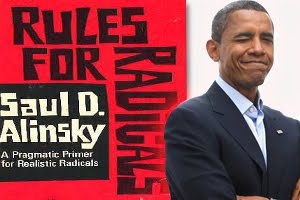
William Washington Bragg het ‘n uitstekende boek oor die ideologiese wortels van Barack Obama geskryf: Obama’s radical roots: Saul Alinsky, Jeremiah Wright, and the others who shaped his worldview (Jefferson Adams Library of American History, 2011, 105p; Amazon Kindle $7,97). Daardie “others” verwys na Charles Ogletree, asook Afrika- en Moslem-invloed. Ek het by ‘n vorige geleentheid oor Jeremiah Wright en bevrydingsteologie geskryf (Praag 9 Januarie). Vandag skryf ek oor Obama se beïnvloeding deur sy biologiese afkoms, asook oor Saul Alinsky en andere. Uit wat volg, kan afgelei word in hoe ‘n groot mate Obama se presidentskap (sedert 2009) ‘n breuk met die verlede is. Hy is polities linkser as enige van sy voorgangers. Hy is “not one of us” (Kindle 62). Die aanwesigheid van swartes in die Withuis is vir baie blanke Amerikaners ‘n ongemaklike waarheid. Obama verkeer onmiskenbaar buite die hoofstroom. Dit word nie as ‘n kompliment bedoel nie. Dit illustreer sy onaanpasbaarheid. Let in wat volg ook op die talle ooreenkomste tussen Obama aan die een kant en plaaslike en Afrika-swartes en die ANC aan die ander kant.
Onyango Obama
Barack Obama jr se andersheid kan onder meer (kenmerkend) teruggevoer word na sy ouerhuis, of eintlik die gebrek aan so ‘n huis. Hy het sy pa net een keer ontmoet. Sy oupa was die Moslem en veelwywer Onyango Obama (1895-1979). Barack jr bewaar sy oupa se pasboek, sodat hy weet dat dit nie net die apartheidsregime nie maar ook die Britte is wat van reservaatswartes in Kenia pasboekdraers gemaak het. Onyango was ‘n kok wat vir Britte gewerk het. Soos wat ANC-kamerade deesdae graag verkondig, het Onyango daarop geroem dat hy weerstand teen die blanke owerheid gebied het en daarom gemartel en in die tronk gegooi is. Volgens Sarah, sy derde vrou: “The African warders were instructed by the white soldiers to whip him every morning” (159).
Toe Barack jr dié storie hoor, wat heel moontlik aangedik of fiktief is, het hy tot die besef gekom dat “their struggle was my birthright” (113). Bragg: “It is impossible to know … whether he was imprisoned at all … no records of his imprisonment have appeared” (151). “In understanding [Barack] Obama [Jr] and how he was shaped by his family, it is the legend that matters. In his memoir Obama admits that he too felt lasting resentment towards his [grandfather’s and] father’s oppressors” (172). Dit is nie net plaaslike swartes wat dit teen standbeelde van blankes het nie. “When Obama entered the White House [2009], he pointedly returmed to Britain the bust of Winston Churchill that the British government had lent to George W Bush after the 9-11 attacks” (179).
Barack Obama sr
Onyango se oudste seun was Barack Obama senior (1936-1982). “Baraka” beteken seën (blessing) in Arabies. Hy het ‘n sendingskool bygewoon en die christelike geloof aangeneem. Reeds op skool was hy opstandig. In Nairobi het hy in aanraking gekom met radikale arbeidsaktiviste soos Tom Mboya (1930-1969), wat ‘n leier in die onafhanklikheidsbeweging was. Mboya se leuse was: “To hell with European domination” (200). Barack sr is ook beïnvloed deur ‘n radikaal linkse Keniaanse onafhanklikheidstryder, Oginga Odinga (1911-1994), wat belangstelling in Sowjet-Rusland in hom aangewakker het. ‘n Amerikaanse geletterdheidsonderwyseres, Elizabeth Mooney, het gesorg dat Barack sr in 1959 ‘n student aan die Universiteit van Hawaii geword het. Daar was hy een van die “counter-culture people” wat op sy “promiscuous love life” geroem het (221). Hy het ook aan swart burgerregtebetogings deelgeneem.
In sy tweede studiejaar het Barack sr in die Russiese klas kennis met ‘n blanke Amerikaanse eerstejaar, Stanley Ann Dunham, gemaak. Hoewel hy sedert 1954 tot sy dood met Kezia Aoko getroud was en reeds twee kinders gehad het, het hy voorgegee dat hy van sy eerste vrou geskei was. Dunham was spoedig swanger en hulle het in 1961 getrou. Barack sr het dus sy pa se veelwywery voortgesit. Toe hy in 1962 ‘n Harvard-studiebeurs ontvang, het hy vertrek en sy vrou en kind, Barack jr (gebore in 1961), in Hawaii agtergelaat. Hulle het in 1964 geskei. Aan die Universiteit Harvard Barack sr “continued his drinking and womanizing” (266). In 1964 is sy studiebeurs weens wanprestasie nie hernu nie en moes hy na Kenia terugkeer.
In 1963 het Kenia onafhanklik geword met Jomo Kenyatta (1894-1978) as president, Odinga as visepresident en Mboya as minister van justisie. Baie blankes en Asiate het die land verlaat. Barack sr het werk by Shell gekry. Hy het valslik voorgegee dat hy ‘n doktorsgraad het. Toe Mboya in 1964 die minister van ekonomiese sake word, is Barack sr as ‘n beplanningsbeampte aangestel. Hy het Afrika-sosialisme as beleid voorgestel. Dit het die herverdeling van rykdom, bv “radically progressive taxation” (423) en die uitwissing van privaat eiendom ingesluit. “At the very least restrict the size of farms” (375). “Wealthy individuals could in principle be stripped of everything without any real cost to the overall good” (436). Heelwat van sy voorstelle is eintlik marxisties en word ook plaaslik by die ANC-regering aangetref. “His ultimate objective was to see at least enterprises nationalized” (386). “Nationalization would primarily target white- and Asian-owned enterprises” (411).
Hierna het Barack sr ‘n pos by die Reserwebank gekry en daarna een by die toeristekorporasie, maar sy alkoholisme het deurlopend vererger. Later was hy soms werkloos. In 1971 het hy Hawaii besoek “visiting his son for the first and only time. Ann was by this time separated from her second husband, Lolo Sotero, though she was still living in Jakarta. Barack Jr was living with his grandparents in Honolulu … back in Africa, Obama’s second American wife, who he had met while at Harvard, was taking advantage of his absence to flee his home and file for divorce. Ruth Baker was a Jewish schoolteacher from Boston … she … had endured years of mistreatment before finally leaving for good” (494). Hulle het in 1973 geskei. In 1982 “while coming home from the bar, Barack Obama Sr slammed his car into a tree at high speed and was killed” (512).
Ann Dunham
Barack jr se ma, Ann Dunham (1942-1995), “was for much of her adult life a foreign aid worker, who was often well paid by American foundations and government agencies” (528). Dalk is dit wat van haar kind “a black activist in Chicago” gemaak het (551). Hy “embraced a ‘post-racial’ conception of himself” en “pledged to open America to the world, a … sort of cosmopolitan outlook” (566). Dunham was “a dreamy idealist on a futile quest to change the world” (535). Haar pa was onder meer ‘n meubelverkoper. Sy het ‘n student aan die Universiteit van Hawaii geword. “Hawaii was by far the most multi-cultural of all the states” (619). Hier het sy Barack sr ontmoet, swanger geraak, getrou, Barack jr as kind gekry en geskei.
Daarna het Dunham die Indonesiër en Islamiet Lolo Sotero (ook Soetoro, 1935-1987) ontmoet, met hom getrou (1965) en in Jakarta gaan woon (1966). In 1970 is hulle dogter, Maya, gebore. Barack jr “attended two different schools in Jakarta: one Catholic, one Muslim* … when the boy was nine [1971], she sent him back to Hawaii to live with his grandparents” (658). Gedurende sy skoolloopbaan was Dunham net drie jaar lank in Hawaii, toe sy weer ‘n universiteitstudent was. In 1975 het sy na Indonesië teruggekeer om as deel van verdere studie tot 1978 veldwerk in antropologie te doen. Haar proefskrif het sy egter eers meer as ‘n dekade later suksesvol voltooi. Sy het die Ford Foundation sover gekry om “a women’s studies program at the University of Indonesia” te begin (725). Daarna was sy onder meer gemoeid met mikrokredietverlening.
[* Barack jr se oupa en sy stiefpa was Moslems en hy het ‘n Moslemskool bygewoon. Dit is van die redes waarom Donald Trump in sy presidensiële verkiesingsveldtog met anti-Moslemuitsprake vorendag kom.]
“If there is a constant theme through her life and work, it was an interest in inequalities that result from flaws in the social system itself … It was the kind of thing she was very interested in – some kind of injustice based on something structural or cultural” (783), bv die uitbuiting van armes. Ons ken dit plaaslik: Die stelsel kry die skuld, nie die “slagoffers” nie. Sy was ‘n aanhanger van Jesse Jackson se militante swartbewussynspropaganda, “his idea of a multiracial ‘rainbow coalition'” (795); vandaar Desmond Tutu se “rainbow nation”. Dunham het georganiseerde godsdiens vermy ten gunste van “eclectic spiritualism … She meditated in Buddist monasteries en left small offerings in the Hindu communities” (795). “She raised her children to adopt the same detached, eclectic attitude” (803). Sy en Sotero het in 1980 geskei.
Saul Alinsky
In 1985 het Barack Obama jr (van nou af bloot Obama genoem) aan die Universiteit van Columbia gegradueer. Soos die kommuniste wou hy die wêreld verander. “To bring about what he saw as real, fundamental change to society, he chose to become a community organizer … ‘Change will come from a mobilized grass roots. That’s what I’ll do. I’ll organize black folks … What really inspired me was the civil rights movement'” (821). Hy het ‘n gemeenskapsorganiseerder, onder meer ‘n opstoker, in Chicago geword, “the capital of the African American community” (835) en deesdae die toonbeeld van ‘n geruïneerde stad. Dit was die setel van Saul Alinsky (1909-1972) se gemeenskapsorganisering, met Obama as een van sy toegewydste dissipels. “After Obama was elected to the United States Senate in 2004, Michelle Obama [his wife] claimed: ‘Barack is not a politician first and foremost. He’s a community activist exploring the viability of politics to make change'” (858). Toe Obama in 2007 sy kandidatuur vir die presidentskap aangekondig het, “he continued to invoke the spirit of Alinsky into the presidential campaign … Obama called his training in community organising the ‘best education’ he ever had” (864).
Alinsky, ‘n Jood van Russiese afkoms, is nooit weens sy pro-burgerregtebedrywighede gearresteer nie, maar om hom vir swartes meer aanvaarbaar te maak, het hy beweer dat hy tronkstraf uitgedien het. Sy pa was Benjamin en sy ma Sarah. Sy was ‘n moeilike vrou. “‘a plotka Führer’, troublemaker” (1910). Nelson Mandela se voornaam, Rolihlahla, beteken ook moeilikheidmaker/skoorsoeker. Alinsky was ‘n sosiologiestudent en veral geïnteresseerd in kriminologie. “He, like his [University of Chicago] professors, believed … ghettos made criminals and poor people, not the other way around … due to social disorganization which … [is] largely the result of economic defects in our social order” (920; ook 981). Die skuld word dus op blankes gepak. Dit is Alinsky wat gesê het: “The issue is never the issue” (1018); “the revolution is the issue” (1179). Dink aan Open Stellenbosch wat teen Afrikaans agiteer maar eintlik revolusie najaag.
Die manier waarop gemeenskappe georganiseer was, het glo veroorsaak dat mense “deprived or disenfranchised” gevoel het (981). Al Capone (1899-1947) het die bendebedrywighede in Chicago aangevoer. Alinsky en sy “confrontational, anti-establishment organization” (992) “was accepted by the mobsters” (932). Alinsky se boek, Rules for Radicals (1946/1971), “is written for the Have-Nots on how to take it away” (1066). Alinsky: “You want to organize for power!” (1076). “He wanted his organizers to agitate and mobilize heretofore quiet people into active, protesting citizens who, if necessary, would publicly confront city officials and make demands” (1097). “He said the organizer should be ‘an abrasive agent to rub raw the resentments of the people of the community; to fan latent hostilities of many of the people to the point of overt expressions'” (1113).
As Alinsky-dissipel kon Obama hom nadoen: Obama “was a natural, the undisputed master of agitation, who could engage a room full of recruiting targets in a rapid-fire Socratic dialogue, nudging them to admit that they were not living up to their own standards … He could be aggressive and confrontational. With probing, sometimes personal questions, he would pinpoint the source of pain in their lives, tearing down their egos just enough before dangling a carrot of hope that they could make things better” (1119). Die begrip “hoop” speel ‘n opvallende rol in die burgerregtebeweging van die Amerikaanse swartes; vandaar Russel Botman se HOOP-projek aan die US, wat deur Wim de Villiers voorgesit word (Matieland, 2015, p 40). De Villiers: “Ek staan op die skouers van reuse soos my voorganger, prof Russel Botman” (p 41).
Alinsky “hated exploitation and felt obliged to facilitate an equalizing of opportunity … If Alinsky’s true goal was fundamental social change, a goal that seems to have attracted Obama to organizing, this raises the deeper question: change of what kind? Alinsky was unquestionably, as he said himself many times, a radical. But what sort of a radical was he? He acknowledged an affinity with C Wright Mills [1916-1962], who called himself a ‘plain Marxist'”(1202). Alinsky “always insisted he was not a communist” (1210). Maar hy was gewillig om met kommuniste saam te werk “when he thought it would advance his goals. He opposed the purging of Communists from unions, and endured criticism because he, as a friend recalled, ‘wouldn’t be part of this liberal anti-communist attitude'” (1216).
“He earned the respect and indeed admiration of at least one radical black leader, Malcolm X” [1925-1965] (1236). “It is not fanciful to imagine that Alinsky would have been proud of the pupil [Obama] he never met, but who went further than anyone trained in his philosophy and methods ever had done” (1265). “Alinsky’s basic ideas … shaped Obama’s own thinking about politics and society” (1275).
Charles Ogletree
Charles Ogletree (gebore in 1962) maak daarop aanspraak dat hy sowel Barack as Michelle Obama se mentor was toe hulle regte aan die Universiteit Harvard studeer het. “After the 2004 Democratic Convention, Obama travelled to Martha’s Vineyard to attend the annual discussion about race and social justice hosted by Ogletree and Henry Louis Gates” (1782). Ogletree en Gates (gebore in 1950) is albei swart dosente verbonde aan Harvard; Ogletree in regte en Gates in African American Studies. Vir Ogletree gaan dit om bv menseregte en geregtigheid. “He tries to ensure that he can use the classroom as a way of ‘working for social justice'” (1951). Dit herinner aan Nico Koopman aan die US. Gates se oriëntasie, daarenteen, is literêr, maar ook pro-swart. Hy wil hê die werke van swartes moet in die literêre kanon* (lys van beste boeke) opgeneem word. Diegene wat walgooi, ly glo aan intellektuele rassisme.
[* Harold Bloom bespreek in sy boek, The Western Canon: The books and school of the ages (London: Papermac, 1995), 26 outeurs, waarvan almal blank en net vier (Jane Austin, Emily Dickinson, George Eliot, Virginia Woolf) vroue is. In sy uitgebreide kanon (p 531-567), wat ook nie-Westerse werke insluit, oorheers die teenwoordigheid van blanke mans (Dead White European Males) ook. “Nearly everything that has been revived or discovered by Feminist and African-American literary scholars falls all too precisely into the category of ‘period pieces’, as imaginatively dated now as they were already enfeebled when they first came into existence” (p 540). “In our schools and colleges … all aesthetic and most intellectual standards are being abandoned in the name of social harmony and the remedying of historical injustice. Pragmatically, the ‘expansion of the Canon’ [soos wat Gates verlang – kyk vorige paragraaf] has meant the destruction of the Canon, since what is being taught includes by no means the best writers who happen te be women, African, Hispanic, or Asian, but rather the writers who offer little but the resentment they have developed as part of their sense of identity” (p 7). “We are destroying all intellectual and aesthetic standards in the humanities and social sciences, in the name of social justice” (35).]
Bragg: “Perhaps the cause to which Ogletree has devoted the most attention is that of reparations for slavery” (1958). Hedendaagse blankes moet glo weens die destydse slawerny skadevergoeding aan hedendaagse swartes betaal. “He argues that there is a direct line of continuity between the enslavement of blacks and their current economic position. He says: ‘while the causes of African American poverty are complex, they are based in part on a history of racism and discrimination that politically, culturally, socially, and psychologically disenfranchised African Americans'” (1965). “As well as seeking compensation from the government and taxpayers, Ogletree would like to see reparations claims made against specific companies that he feels profited from the slave era” (1977). “Race has provided the focus of Ogletree’s life and works” (1855). Hy het onder meer oor Suid-Afrika gepubliseer (kyk die Wikipedia). Soos Thabo Mbeki sê hy “we live in two societies: one black, one white” (1855). Soos Mbeki noem hy swartes eerste.
Volgens Ogletree is swart diewe “in jail because of their poverty … If they had the resources they would not be out there robbing” (1831). Dus, as ‘n swarte ‘n BMW-motor gehad het, sou hy nie een gesteel het nie. Dit is soos Michael le Cordeur redeneer: Swart studente beroof die universiteit se kafeteria omdat hulle honger is. Die hoë prioriteit wat die besteling van drankwinkels geniet, kan dan aan die diewe se dors toegeskryf word, ens. Ogletree: “The law can be ‘an instrument for social and political change … a tool to empower the dispossessed and disenfranchised … and a means to make the privileged more respectful of differences'” (1841). “The courts have proved an especially powerful and pernicious vehicle for racism … Ogletree openly describes himself as a liberal and judicial activist” (1862). “He believes that the state exists not just to protect individual rights and arbitrate neutrally between the claims of various individuals and groups. Rather, it must take an active part in addressing inequalities created by the social system” (1869).
Volgens Ogletree moet die staat bv haatspraak reguleer. “He considers individuals, communities and the state to be under a moral obligation ‘to offset the burdens of free speech as it affects minority communities.'” Daarmee breek hy nie ‘n lansie vir blankes in Suid-Afrika nie, maar vir swartes in Amerika. “He has openly compared capital punishment to lynching, and thinks that the use of the death penalty is a reflection of America’s pervasive racism. … ‘To take a historical view, the racially disproportionate application of the death penalty can be seen as being in historical continuity with the long and sordid history of lynching in this country'” (1905). Nelson Mandela het hom ook teen die doodstraf uitgespreek omdat die meeste misdadigers wat andersins tereggestel sou word swart sou wees.
Ogletree ondersteun uiteraard ook regstellende aksie. Hy sê bv van universiteitstoelating: “Affirmative action admissions policies seek to realign the balance of power and opportunity by doing what is, at heart, quite simple: affirmatively including the formerly excluded” (1869). Russel Botman het ontken dat daar by die US se MBChB-toelating teen blankes op grond van ras gediskrimineer word. Dié toelating word glo bloot “belyn”. Obama se wens om onwettige immigrante wettig te verklaar en grensbeheer tussen die suidelike state en Mexiko te verslap, kan aan die invloed van Ogletree toegeskryf word. Die oorgrote meerderheid sodanig gewettigde inkommers sal vir die Demokratiese Party stem. Ogletree beweer Amerika se immigrasiebeleid berus op dubbele standaarde omdat blankes bevoordeel en nie-wittes benadeel word. “Once inside the country, Latinos are systematically and disproportionately targeted for deportation” (1931).
Slot
In Suid-Afrika word die staatshoof deur die dominante politieke party benoem. In Amerika word hy regstreeks deur die kiesers verkies. Dat iemand soos Obama, met sy anti-blanke, kommunistiese en Moslem-simpatieë, die president van Amerika geword het en selfs vir ‘n tweede termyn herkies is, behoort wantroue in demokrasie as politieke stelsel te wek. Die oorwig Amerikaanse kiesers word as beskaafde, geletterde, ontwikkelde mense beskou. Hulle behoort ook in redelike mate ingeligte mense te wees, hoewel die betroubaarheid/ewewigtigheid van baie van die (ideologiese) inligting wat hulle bereik, bevraagteken kan word. In Suid-Afrika, met sy oorwig van minder ontwikkelde, beperk geletterde en swak ingeligte kiesers, het stikdonker nag in 1994 aangebreek weens bv algemene stemreg en ‘n uiters gebrekkige grondwet. Byvoorbeeld, omdat die staatshoof nie direk deur die kiesers verkies word nie, het Nelson Mandela die dwaasheid verkondig dat hy sy laaste jaar in dié pos wou gebruik om uitsluitlik die ANC se belange te dien. As staatshoof beskou Jacob Zuma hom klaarblyklik nie as iemand wat alle Suid-Afrikaners se belange moet bevorder nie. Daarom gee hy blankes die skuld vir alles wat verkeerd is en etiketteer hy hulle selfs as gronddiewe.