Leon Lemmer: Madeleine Albright oor fascisme

Madeleine Albright (gebore in 1937) was die Amerikaanse minister van buitelandse sake (1997-2001). In ‘n vorige rubliek het ek geskryf oor haar skandalige inmenging in die sake van Bosnië, Kosovo en Serwië, wat bombardering deur NAVO ingesluit het (Praag 12 Mei). Vandag skryf ek na aanleiding van haar jongste boek, Fascism: A warning (London: William Collins, 2017, 283p; Amazon Kindle $17,24).
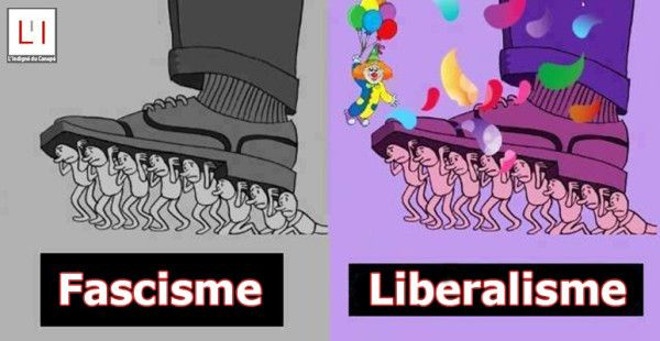
“Fascisme” word graag as ‘n skelwoord teen konserwatiewes en regses gebruik. In werklikheid is die betekenis van die term so plooibaar dat dit ook op linkses, insluitende ANC-lede, van toepassing gemaak kan word en in selfs groter mate op die EFF. Albright gaan nie verhelderend met haar gebruik van die term om nie, gevolglik skenk ek eers aandag aan die betekenisse wat aan fascisme geheg word.

William Ebenstein

In my jeug was William Ebenstein* se boek, Today’s isms: communism, fascism, capitalism, socialism (Englewood Cliffs: Prentice Hall, 1954/1965, 248p) een van die aanbevole handboeke. Wat opval, is dat die teks oor fascisme baie korter as dié oor die ander drie ismes is omdat dit moeiliker is om fascisme in duidelik eiesoortige besonderhede te karakteriseer. Ebenstein skryf: “Stripped to its essentials, fascism is the totalitarian organization of government and society by a single-party dictatorship, intensely nationalist, racialist, militarist, and imperialist” (p 100). Hy noem dan vier lande wat fascisties geword het: Italië in 1922, Duitsland in 1933, Japan paaiementsgewys in die 1930’s en Argentinië in 1943. Hierby kan Portugal (in 1933) en Spanje (in 1939) gevoeg word.

[* Ebenstein beïndruk nie deurgaans met sy kennis of insig nie. Oor die voor-1994 Suid-Afrika skryf hy: “Democracy as known before no longer exists in South Africa, for example: racialism and democracy just do not mix. The racialism that started out in South Africa to be directed solely against the Negroes later turned against the Indians, and finally took in the whole English-speaking part, nearly one-half, of the white population” (125). Die ANC-bewind is egter ‘n sprekende voorbeeld van die vermenging van rasbeheptheid en demokrasie. Verder, tydens die blanke bewind het die blanke kiesers in groter mate die voordele van demokrasie geniet as tydens ons huidige sogenaamde “jong demokrasie”, waarmee daar deesdae geïmpliseer word dat daar voor 1994 plaaslik geen demokrasie was nie. Apartheid is ook nie ten koste van Engelssprekende blankes bedryf soos Ebenstein te kenne gee nie.]

Ebenstein klassifiseer “communism and fascism on the totalitarian side, capitalism and socialism on the democratic” (v). In die praktyk kan sosialisme egter baie van die kenmerke van kommunisme aanneem, soos tans in Suid-Afrika. In sowel Italië as Duitsland het fascisme uit sosialisme ontwikkel. Kommunisme word dikwels as uiters links en fascisme as uiters regs gekarakteriseer, maar dit volg nie dat hulle heeltemal verskillend is nie omdat talle ooreenkomste uitgewys kan word: “The fascist theory and practice … are not so different from those of communism” (117). Daardie vier ismes van Ebenstein is vloeibare begrippe, soos bv Jonah Goldberg aantoon in sy boek, Liberal Fascism: The secret history of the Left from Mussolini to the politics of meaning (Penguin, 2009, 492p; Amazon Kindle $15,69): “It is modern progressivism – and not conservatism – that shares the same intellectual roots as fascism.”

Wat plaaslik nodig is, is dat ons nie net bedag moet wees op die ANC-regering se sosialisme wat neig om kommunisme te wees nie, maar dat ons ook die fascistiese kenmerke van die ANC moet waarneem. Let bv op na die rol wat “the personal magic of one man” (Ebenstein 101) – Mussolini, Hitler, Mandela – kan speel. Hiervoor is “mass support (not necessarily majority support)” (101) nodig. Die meerderheid kiesers se stemme kan met propaganda, intimidasie en geweld verkry word, dus: “A small minority … is capable of understanding what is best for the whole community” (112). “The objective of the corporate [fascist] state is the power of the state rather than the welfare of the individual” (118). “The very existence of an authoritarian mass movement like fascism depends on the desire of many persons to submit and obey” (106).

“The totalitarian fascist state either denies that there are divergent social interests (abhorring as it does the notion of variety, especially in the form of departures from state-imposed uniformity), or, if it half-heartedly concedes the existence of divergent social interests, it resolves such differences by force … communism is the totalitarian way of industrializing a backward society; fascism is the totalitarian method of solving conflicts within an industrially more advanced society” (102). Suid-Afrika huisves sowel onontwikkelde as ontwikkelde sektore. Wesenlike verskille by mense word deur die ANC ontken. Daar is sensitiwiteit uitsluitlik vir die belange van swartes, gevolglik moet bv onderrig feitlik uitsluitlik in hulle voorkeurtaal, Engels, aangebied word. Welvaart moet (sonder teenprestasie) gedeel word, gevolglik kan blankes se eiendom sonder vergoeding gekonfiskeer word, ens. “The fascist economy is … state-controlled” (117); dink aan bv swart ekonomiese bemagtiging. Fascisme (en die ANC) “is totalitarian in its objective: to control all phases of human life” (114). In hierdie sin was daar geen bevryding in 1994 nie.

Adolf Hitler

Ebenstein noem dat “the absence of a universally recognized authoritative statement of fascist principles is not total” (109). Daar is bv Adolf Hitler (1889-1945) se wydlopige Mein Kampf (1925-1927) en Mussolini se bondige The doctrine of fascism (1932). Soos uit die boektitel blyk, is Hitler, soos die ANC, gepreokkupeer met die “struggle”. Nêrens in Hitler se boek word ‘n definisie of kortbegrip van fascisme of naziïsme gegee nie, onder meer omdat sulke begrippe toe nog nie bestaan het nie, hoewel hy reeds in 1919 lid van die Nazi-party geword het. In sy boek blyk Hitler se oordele en vooroordele duidelik en dit skep ‘n bepaalde ideologiese klimaat, wat later al hoe duideliker in sy gedrag neerslag gevind het. Hy was bv sterk teen kommuniste en Jode gekant. Ek het destyds my eksemplaar van Mein Kampf (London: Hutchinson, 1933/1977, xlviii, 629p) van voor tot agter gelees en dit nou weer deurgegaan, maar daar is nie ruimte om hierdie teks hier in besonderhede te bespreek nie. In ander lande is Mussolini se meer gematigde weergawe van fascisme eerder nagevolg. Van belang vir Praaglesers is wat Hitler (“I am no ‘pacifist'”, p 144) van die Anglo-Boere-oorlog skryf: “The Boer War was like summer lightning to me. Every day I waited impatiently for the newspapers and devoured dispatches and news reports, happy at the privilege of witnessing this heroic struggle even at a distance” (145).

Benito Mussolini

Benito Mussolini (1883-1945) word gewoonlik as die grondlegger van fascisme beskou. “Units called fasci di combattimento (combat groups), from the Latin fasces, were originally established to oppose communism. The fascist party, the Partitio Nazionale Fascista, controlled Italy 1922-1943″ (Collins World Encyclopedia, 2003, p 332). Soos kenmerkend van die ANC skryf Mussolini: “Fascism … conceives of life as a struggle” (The doctrine of fascism, 1935/2014, 72p; Amazon Kindle $1.14, 62). In sy boek klits Mussolini Ebenstein se vier ismes heeltemal deurmekaar en daar is baie teenstrydighede. Maar let vervolgens op hoe hy soms dieselfde leerstellings as die ANC aanhang en ander kere die teenoorgestelde. “Anti-individualistic, the Fascist conception of life stresses the importance of the State and accepts the individual only in so far as his interests coincide with those of the State … It is opposed to classical liberalism” (Kindle 93). “Fascism stands for liberty, and for the only liberty worth having, the liberty of the State and of the individual within the State” (99).

“Fascism is totalitarian and the Fascist State – a synthesis and a unit inclusive of all values – interprets, develops, and potentates the whole life of a people. No individuals or groups … [are] outside the State. Fascism is therefore opposed to Socialism to which unity within the State is unknown, and which sees in history nothing but the class struggle. Fascism is likewise opposed to trade unionism as a class weapon” (105). Mussolini raak soms liries-idealisties: “Fascism is … opposed to that form of democracy which equates a nation to the majority, lowering it to the level of the largest number, but it is the purest form of democracy if the nation be considered as it should be from the point of view of quality rather than quantity, as an idea, the mightiest because the most ethical, the most coherent, the truest, expressing itself in a people as the conscience and will of the few, if not, indeed, of one, and ending to express itself in the conscience and the will of the mass, of the whole group ethnically molded by natural and historical conditions into a nation, advancing, as one conscience and one will, along the self same line of development and spiritual formation. Not a race, nor a geographically defined region, but a people, historically perpetuating itself; a multitude unified by an idea and imbued with the will to live, the will to power, self-consciousness, personality” (116).

“It is the State which creates the nation, conferring volition and therefore real life on a people made aware of their moral unity” (125) – dink aan hoe die ANC ‘n nasie probeer bou op grond van gewaande hoë moraliteit, gebaseer op sogenaamde onreg in die verlede, met net swartes in die gedagte. Fascisme “is evidence of a fighting spirit which accepts all risks” (225). “Fascism carries [an] anti-pacifistic attitude” (221). “War alone keys up all human energies to their maximum tension and sets the seal of nobility on those peoples who have the courage to face it” (218) – vandaar struggle-helde, ikone en talle volksvaders en -moeders. “Peace at all costs are incompatible with Fascism” (218).

“Fascism denies that numbers, as such, can be the determining factor in human society … it asserts the irremediable and fertile and beneficent inequality of men who cannot be leveled by any such mechanical and extrinsic device as universal suffrage” (251). “In rejecting democracy Fascism rejects the absurd conventional lie of political equalitarianism, the habit of collective irresponsibility” (273). Fascism word vervolgens gedefinieer as “an organized, centralized, authoritarian democracy” (278). “Fascism is definitely and absolutely opposed to the doctrines of liberalism” (278).

“We are free to believe that this is the century of authority, a century tending to the ‘right’, a Fascist century. If the 19th century was the century of the individual (liberalism implies individualism) we are free to believe that this is the ‘collective’ century, and therefore the century of the State” (319). “For Fascism the State is absolute, individuals and groups relative” (331). “The Fascist State is … not reactionary but revolutionary” (360). “The individual exists only in so far as he is within the State and subjected to the requirements of the State and … as civilization assumes aspects which grow more and more complicated, individual freedom becomes more and more restricted” (543).

Gleaves Whitney

In American conservatism: An encyclopedia (edited by Bruce Frohnen and others, Wilmington: Intercollegiate Studies Institute, 2006, 1000p; Amazon Kindle $11,49) is daar ‘n artikel oor fascisme geskryf deur Gleaves Whitney. “The word ‘fascism’ was coined by Mussolini. It derives from the Latin fasces, referring to the bundle of rods and projecting ax-head that in antiquity was carried before Roman consuls as a sign of state authority. The rods symbolized social unity; the executioner’s ax, firm political leadership” (Kindle 8592). “Fascism is characterized more by a common ethos than a consistent political philosophy … Fascist parties showed implacable hostility toward parliamentary democracy, egalitarianism, and the values of the liberal Enlightenment … To secure control of a people, fascists advocated one-party rule by an elite, the use of secret police to eliminate dissent, strict control over the media and unquestioning obedience to a charismatic leader. To incite enthusiasm for their rule they made appeals to youth and promoted a cult of violence” (8597). Dink aan die rol van bv die ANC-jeugliga en die EFF.

“Scholars have long debated the extent to which fascism was the outgrowth of the Left or Right … [Leon] Trotsky [1879-1940] himself recognized that ‘Stalinism and fascism, in spite of a deep difference in social foundations, are symmetrical phenomena. In many of their features they show a deadly similarity'” (8613). “Indeed, many scholars see not just Stalinism but Marxist-Leninism as a totalitarian cousin to fascism. It would thus be misleading to place Marxism and fascism at opposite ends of the Left-Right political spectrum. Mussolini, after all, began his political career as a socialist, and his mature fascist doctrines bear the unmistakable stamp of Marx, [Georges] Sorel [1847-1922], and Lenin” (8618). “‘Nationalism plus Socialism equals Fascism,’ a formula that reveals fascism’s affinity with the Left. Even the word ‘Nazi’ has a leftist connotation, derived as it is from the full party title, the National Socialist German Workers’ Party (Nationalsozialistische Deutsche Arbeiterpartei)” (8623).

“Communism would exit the world stage revealed for what it truly was: fascism, without fascism’s ability to make the trains run on time” (Robert D Kaplan, Balkan ghosts: A journey through history, London: Papermac, 1994, p 76).

Madeleine Albright

Albright het reeds ses boeke gepubliseer, maar nie sonder uitgebreide hulp van haar navorsers nie. In haar jongste boek (genoem in die eerste paragraaf hier bo) is dit vir die kritiese leser gou duidelik dat hierdie linkse Jodin die vloeibaarheid van die begrip fascisme misbruik om by uitstek een van haar politieke vyande, Donald Trump, te diskrediteer. “‘Fascist’ was the most versatile of insults” (Kindle 1128). Die waarskuwing in die newetitel van die boek is dus veral teen Trumpisme gemik. “The herd is moving in a Fascist direction” (3408). Fascisme word deur Albright as veral ‘n regse verskynsel vertolk, wat doelbewus eensydig is. Maar dit help haar om die aansien van Trump en ander mense wat sy as polities regs beskou, skade aan te doen deur hulle oortuigings en optrede verdag te maak. “To use the term ‘Fascist’ is to reveal oneself. For those on the far left, virtually any corporate bigwig fits the bill. To some on the not-so-far right, Barack Obama is a Fascist – in addition to being a Socialist and a closet Muslim” (153).

“Why, this far into the twenty-first century, are we once again talking about Fascism? One reason, frankly, is Donald Trump. If we think of Fascism as a wound from the past that had almost healed, putting Trump in the White House was like ripping off the bandage and picking at the scab … we [Americans] have not had a chief executive in the modern era whose statements and actions are so at odds with democratic ideals” (110). “The shadow looming over these pages is, of course, that of Donald Trump … Trump is the first anti-democratic president in modern US history” (3403). “What separates Trump from every president since the dismal [Republican Party] trio of [Warren] Harding [1921-1923], [Calvin] Coolidge [1923-1929], and [Herbert] Hoover [1929-1933], is his conception of how America’s interests are best advanced. He conceives of the world as a battlefield in which every country is intent on dominating every other” (127). “Presidents from Roosevelt to Obama have sought to help allies protect themselves and to engage in collective defense against common dangers” (137). “America, the rock against which Fascism crashed in the last century, may have begun to slide” (1654).

Albright is ‘n dosent aan Georgetown University in Washington DC. Oor fascisme skryf sy: “There are no fully agreed-upon or satisfactory definitions” (159). Volgens haar studente is fasciste “nationalist, authoritarian, anti-democratic” en “almost always considered right-wing, arguing, ‘Stalin was as much a Fascist as Hitler’ … Fascism is often linked to people who are part of a distinct ethnic or racial group” (164). “My students remarked that the Fascist chiefs we remember best were charismatic” (175). “The more painful the grounds for resentment, the easier it is for a Fascist leader to gain followers by dangling the prospect of renewal or by vowing to take back what has been stolen” (180), bv grond/plase.

Albright gebruik haar boek om enersyds haar dade te regverdig en andersyds haar kennis van internasionale sake uit te stal. Oor Suid-Afrika skryf sy: “Nelson Mandela – another prisoner who became president – engendered hopes of a regional renaissance” (98). Sedert 1994 was daar egter nie sodanige oplewing in Suider-Afrika nie en in Suid-Afrika is daar onmiskenbaar agteruitgang. Albright was voorheen die vise-voorsitster en tans die voorsitster van die National Democratic Institute (NDI), gestig in 1983, in Washington DC. “NDI was … present during the historic 1994 election in South Africa that brought down the curtain on apartheid” (1522). “Mandela and many other memorable leaders have found in righteous [!] indignation the psychological edge they needed to endure years of doubt and trial” (1748).

Hoe en wat Albright is, kan uit die volgende passasie oor Mandela afgelei word: “His crime was to oppose the racist oppressors who had secured a monopoly on power and privilege in his country. The courageous dissident had a profound cause for grievance, a legitimate reason for bitterness, and thousands of days behind bars to cultivate hate. Instead he chose to spend time learning about the people who had put him in jail – the Afrikaners. He studied their language, history, resentments, and fears. When the long-awaited day came and he was finally released, Mandela not only understood those who had thrown him into prison; he was able to communicate with them, find common ground with them, forgive them, and – most astonishingly – lead them. As president, Mandela pushed back against the many in his party who wanted immediate justice for the multitude of wrongs done to members of the anti-apartheid movement. He appointed a Truth and Reconciliation Commission that received testimony from all sides. Unlike so many, he found the trappings of high office eminently resistible and refused to stand for a second term … [Abraham] Lincoln and Mandela each fought with monsters [!]; neither became one” (3479). “We cannot, of course, expect every leader to possess the wisdom of Lincoln or Mandela’s largeness of soul” (3497).

Die volgende definisie word verskaf: “To my mind, a Fascist is someone who identifies strongly with and claims to speak for a whole nation or group, is unconcerned with the rights of others, and is willing to use whatever means are necessary – including violence – to achieve his or her goals” (208, ook 3397). Die definisie is so breed of vaag dat sowel die ANC as die EFF hiervolgens fascisties is. Die EFF se rooi klere herinner aan die volgelinge van Mussolini se swart hemde en dié van Hitler se bruin hemde. Wanneer ANC- en EFF-politici van “the people” of “nation” praat, word swartes bedoel en die regte van blankes geïgnoreer. Geweld is skering en inslag van albei hierdie politieke partye.

Albright noem dat daar ná die Tweede Wêreldoorlog “Soviet-style Fascism” in haar geboorteland Tsjeggië was (1182). “The Soviet Union in this period continued to exhibit many of the classic symptoms of Fascism” (1261). Sy besin in meer besonderhede oor die verhouding fascisme/kommunisme: “Fascism and Communism were opposites, but the contrast is more complicated” (1133). Vir die fascis Mussolini “‘the State is all-embracing’ … in so doing, he acknowledged its overlap with Communism … Both Fascism and Communism had utopian aspirations … The Nazis sorted humans based on nationality and race; to Communists, the key determinant was class” (1133) terwyl stamverwantskap ‘n groot rol in die politiek van swartes speel. “Communists insisted that national identity was irrelevant” (1144). Die ANC verwater nasionale identiteit deur die plaaslike swartes se rasidentiteit met die res van swart Afrika te beklemtoon. “Like the Nazis, the Communists sought to shape the minds of citizens by owerwhelming their senses with propagandistic spam” (1155). Insgelyks wil die ANC met propaganda al hoe meer die inwoners/kiesers se denke beïnvloed en hulle uitdrukkingsvryheid aan bande lê.

Oor Mussolin skryf Albright: “Justice, he said, could be obtained only through violent struggle. Revolution was essential” (272). Nelson Mandela het gewelddadige revolusie herhaaldelik bepleit ter regverdiging van sy stigting en aktivering van die MK-terreurbendes. In die plek van Mandela se hooggeligte gebalde vuis het Mussolini “a Roman salute” gebruik (358, 826). Hitler het ‘n soortgelyke arm- en handgebaar gehad: “a stiff-armed salute” (508). Die Mandela-saluut wek egter ‘n meer militante en gewelddadige indruk as dié van Mussolini en Hitler. Mussolini het as “Il Duce” bekend gestaan (359), Hitler as “der Führer” (535) en Mandela as “Madiba”.

Van Mussolini word gesê: “He had not learned which spoon or fork to use at a social dinner”(415). Mandela skryf: “I was still used to eating at home, where we did not use a knife and fork” (Long walk to freedom, London: Abacus, 1995, p 28). “In the [Italian] countryside, Socialist peasants claimed the land they had long been tilling, sometimes murdering estate owners to spread terror and settle personal scores … and seize and redistribute land” (Albright 294). Grondbesetting en plaasmoorde is kennelik nie eers ná 1994 in Suid-Afrika uitgevind nie. Mussolini het Hitler se rasideologie, bv anti-semitisme, aanvanklik verwerp (646). Hitler het in “a master Nordic race” geglo (646), asook in “the racial inferiority of Mediterranean peoples” (663), wat die Italianers ingesluit het. In 1938 is Mussolini tot Hitler se anti-semitisme bekeer (1056). Soos Mandela was Mussolini uiters militant: “War is to a man what motherhood is to a woman” (686).

In 1933 Hitler “assumed power not via popular acclaim but because he commanded the most violent gangs” (448). Toe die ANC in 1994 die politieke beheer in Suid-Afrika oorgeneem het, was dit onder meer te wyte aan die geweld wat hy vanaf veral 1984 tot 1994 gepleeg het. Anders as in Nazi-Duitsland het die ANC aanspraak op meerderheidsteun by die kiesers gemaak na ‘n chaotiese verkiesing waarin bv baie ongeletterdes en oningeligtes geïntimideer is om vir die ANC te stem. Hitler het sy magsoorname “a legal revolution” genoem (552). Die eerlose magsoorgawe aan die ANC is deur Allister Sparks in die titel van sy 1994-boek ‘n “negotiated revolution” genoem. Soos in Suid-Afrika onder ANC-bewind (bv swart ekonomiese bemagtiging) het Hitler spoedig begin met “share-the-wealth measures directed at the rich” (491). Oor die Nazi-gepeupel word gesê: “In the cities, they wanted jobs; in the countryside, land” (569). Hierdie soort bakhandstanery is oorbekend in die nuwe Suid-Afrika. “Hitler told his fellow Nazis, ‘The Constitution only maps out the arena of the battle, not the goal … once we possess constitutional power, we will mold the state into the shape we hold to be suitable'” (1532). Op ‘n soortgelyke manier beskou die ANC die 1996-Grondwet bloot as ‘n manier om onder die dekmantel van demokrasie die politieke mag te bekom en die Grondwet daarna na goeddunke te hervertolk (bv eiendomsreg) en te verander. Die moontlikheid van ‘n eenpartystaat word nie uitgesluit nie.

Albright skryf: “All humans are of equal worth. This generosity of spirit – this caring about others and about the proposition that we are all created equal – is the single most effective antidote to the self-centered moral numbness that allows Fascism to thrive”(933). In werklikheid is die gelykverklaring van alle mense geen teenmiddel teen fascisme nie. Ekonomies is die sakeman of nyweraar heelwat meer werd as die werklose plakker. Mense word op dieselfde manier gebore, maar dit volg nie dat hulle gelyk geskape is nie. Byvoorbeeld, selfs in dieselfde gesin kan kinders hemelsbreed verskil, bv wat intelligensie of ander talente betref. Gelyke stemreg maak nie mense terselfdertyd in ander opsigte gelyk nie – soos Mussolini (251 hier bo) tereg opgemerk het.

Albright spoor fascistiese kenmerke by baie staatshoofde en ander politici op, bv by die Amerikaner Joseph McCarthy (1277), Hugo Chávez in Venezuela (1671), Recep Tayyip Erdogan in Turkye (1889), Vladimir Poetin in Rusland (2128), Viktor Orbán in Hongarye (2355) en Kim Il-soeng, Kim Jong-il en Kim Jong-oen van Noord-Korea (2661). Al die regse politieke partye in Europa (“goose-stepping right-wingers” – 3215) is volgens Albright ‘n teelaarde vir fascisme met “such sentiments as ‘White Europe’ and ‘Refugees Out'” (2536).

Hoofstuk 15 word in die konteks van fascisme gebruik om allerhande besware teen Donald Trump as persoon (bv “his country-club lifestyle” – 3164) en sy beleid te opper, bv “America First is a slogan with a past” (3000). Trump het in die VN gesê: “I will always put America first, just like you, as the leaders of your countries, will always and should always put your countries first” (3011). Dit is immers wat Albright ampshalwe vir Amerika probeer doen het. Barry Hertzog se beleid was: Suid-Afrika eerste – nie Brittanje nie. In soverre die ANC se beleid (swart) Afrika eerste is, is dit onverdunde dwaasheid.

“Trump has attempted to fulfill campaign promises that he should never have made … squandering resources on the Mexico wall; trying to ban Muslim immigrants” (3073). “I continue to believe that the United States banked enough international goodwill in the interval between George Washington and Barack Obama to recover from the present embarrassment” (3078). “Years from now, we may look back on Trump as a onetime oddity who taught us a lesson we will not forget about the quirks of democracy” (3247).

Omdat Albright self ontworteling ervaar het, kom sy met die volgende sinvolle opmerkings vorendag: “The identification we feel toward the places where we live or were born can give us an anchor in a chaotic world and strengthen our connections to family, community, and the generations that preceded and will follow us. At the best, such feelings are a celebration of culture and all that comes with it in the form of literature, language, music, food, folktales, and even the wildlife we associate with our homelands” (1356). Maar het Albright hierdie sensitiwiteit in haar besluite oor bv Kosovo and Serwië geopenbaar? Dit is onwaarskynlik dat Albright enige simpatie met ons as Afrikaners het wat onverdiend en op die allerskandaligste verraderlike manier van ons vaderland beroof is.
Leon Lemmer: Madeleine Albright se wanprestasie in Kosovo

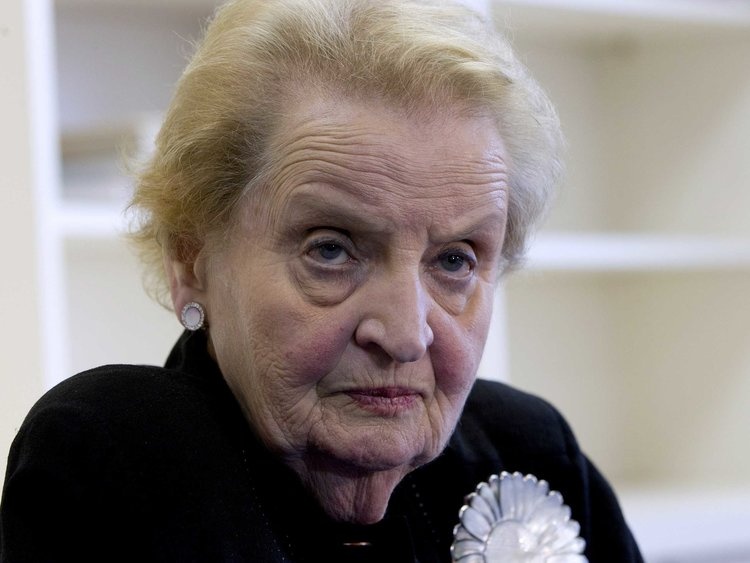
Madeleine Albright (gebore in 1937) is die eerste vrou wat as Amerikaanse minister van buitelandse sake – “State Department” genoem – gedien het (1997-2001). Sy is deur Bill Clinton aangestel nadat sy die Amerikaanse ambassadeur by die Verenigde Nasies was (1993-1997). Ons lewe in ‘n tyd waarin daar graag gewag gemaak word van die eerste vrou wat dít vermag het of die eerste swarte wat dát geword het. Lank gelede het vroue vir twee eerstes gesorg, te wete die oudste beroep (prostitusie) en die tweede oudste beroep (moederskap). Albright se aanstelling kan kwalik as ‘n deurbraak vir vroulikheid beskou word omdat haar voorkoms so onelegant soos dié van ‘n dubbeldeur-vrieskas is, waarmee ek ontleen aan hoe ‘n naamgenoot, die Afrikaanse skryfster Madeleine van Biljon (1928-2010), haarself beskryf het. Albright is sedert 1982 ‘n geskeide vrou.

Albright het reeds ses boeke gepubliseer, maar nie sonder uitgebreide hulp van haar navorsers nie. Haar jongste boek is Fascism: A warning (London: William Collins, 2017, 283p; Amazon Kindle $17,24). Soos van Albright as linkse Jodin verwag kon word, is dit eintlik ‘n anti-Donald Trump boek. As onder meer vurige feminis was sy ‘n ondersteuner van Hillary Clinton, Trump se teenstander in 2016 se Amerikaanse presidentsverkiesing. Die gevaar bestaan dat die lesers van hierdie boek onbewus kan wees van die oorlogsugtigheid waaraan Albright haar skuldig gemaak het. Voordat ek oor fascisme skryf (hopelik volgende keer), ag ek dit dus nodig om te verduidelik waarom ek besware teen Albright het. Daar is by uitstek een saak, Kosovo, waaroor ek Albright en twee staatshoofde, Bill Clinton (Amerikaanse president 1993-2001) en Tony Blair (Britse eerste minister 1997-2007), verkwalik. Wat ek my deurgaans afgevra het, is of die blanke bewind in Suid-Afrika nie op ‘n manier soortgelyk aan Kosovo en Slobodan Milosevic deur buitelandse (veral Westerse) regerings, by name hulle staatshoofde, ministers en diplomate, ondergrawe is nie.

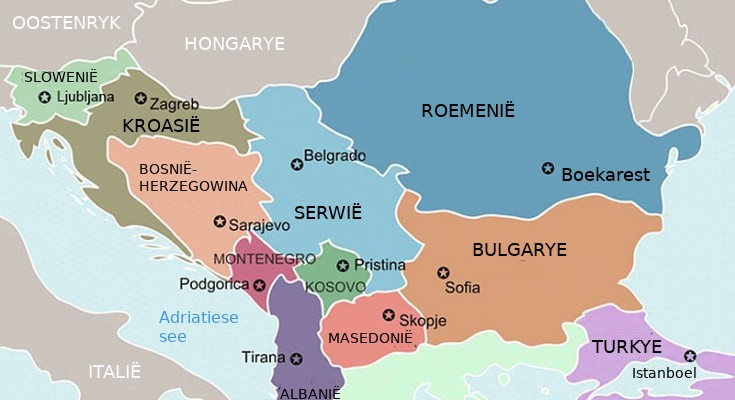
Kaart van die Balkanstate waarna in dié artikel verwys word.

In 732 het Karel Martel die indringing van Moslems uit die suide van Europa (Iberiese skiereiland) by Tours in Frankryk gestuit. Die inval van Moslem uit die ooste van Europa is in 1529 en 1683 by Wene afgeweer. Danksy hierdie drie veldslae was Wes- en Sentraal-Europa tot in die 20ste eeu redelik vry van Moslems. Die afgelope dekades het vermurwing ingetree weens Moslems wat hulle op groot skaal eers as gasarbeiders en daarna as onwettige immigrante en (ekonomiese) vlugtelinge in Europa gevestig het. ‘n Mens sou verwag dat Albright, wat weens naziïsme uit Europa (haar geboorteland Tsjeggië) gevlug het, respek vir Europese of Westerse kultuur sou hê deur kant vir Judaïsme en die christelike godsdiens teen Islam te kies.

Sy het die teenoorgestelde gedoen. “Although too much bureaucracy can be annoying, there is an even larger threat to intra-European solidarity. That danger comes from the outside, from the dread that immigration – whether legal or illegal – will swamp countries, drown them economically, and further dilute people’s sense of who they are. The premise of the EU is that individuals should conceive of themselves less as French, Czech, Slovenian, or whatever their etnicity might be and instead subscribe to the idea that they are just plain European … the faces peering back from European mirrors become more diverse” (Kindle 2504). “Since 1975, Europe’s Muslim population has more than tripled; France alone has nearly six million – 9 percent of its people” (2509). “Today, nearly two-thirds of the citizens in EU countries believe immigration has a harmful impact on their societies. Cosmopolitanism, once considered a virtue, is less in vogue than nativism. In 2015, immigration became the paramount political issue in Europe … in the United Kingdom … wariness toward migrants almost certainly spelled the difference between success and failure for the 2016 Brexit referendum, an exercise in economic masochism[!] that Britons will long regret” (2514). Masochisme is ‘n soort sadisme wat seksuele genot uit lyding put.

Hierteenoor is daar Viktor Orbán, die Hongaarse eerste minister, se standpunt: Die doel met Moslem immigrasie is “reshaping the religious and cultural landscape of Europe, and to reengineer its ethnic foundations” (2563). Orbán sê: “We are who we were, and we shall be what we are” (2607). Dit herinner aan die volgende woorde: “‘Hulle het nou alles,’ sê Bart, ‘Net my het hulle nog nie … My kry hulle nooit … Ek is Bart Nel van toe af, en ek is nog hy'” (J van Melle, Bart Nel, Kaapstad: 2004, p 162-163). Afrikaners behoort trots te wees op wat hulle is. Hulle moet hulle nie laat mislei deur prestasieloses wat daarop aandring dat Afrikaners hulle behoort te skaam nie.

Daar is ‘n subjektiewe rede waarom Albright ten gunste van massa-immigrasie in Europa is: “I am a refugee” (2575). Sy wil nasiestate en nasionalisme afbreek en van mense wêreldburgers maak. Van beweerde parogiale, kleinburgerlike agterlikheid moet ons tot kosmopolitisme vorder. Kultuur en identiteit moet afgewater word totdat almal sover moontlik eenders is. Daarom hou polities linkses soos Albright van internasionalisering soos vergestalt in die Europese Unie (EU), Noord-Atlantiese Verdragsorganisasie (NAVO), Verenigde Nasies (VN) en Internasionale Strafhof. Brexit en Trumpisme was twee groot terugslae vir hierdie progressiewes.

Groot dele van die Balkanstate in Suidoos-Europa is bergagtig. “Balkan” is die Turkse woord vir berg (Dennis P Hupchick, The Balkans from Constantinople to Communism, New York: Palgrave, 2002, p 2). In hierdie boek is daar ‘n dosyn landkaarte wat inligting oor die geskiedenis, landsgrense, etnisiteite, tipografie, ens, van die Balkanstreek duidelik uitbeeld. Ek fokus hier op veral vier van die Balkanlande wat voorheen as Joego-Slawië (of Suid-Slawië) bekend gestaan het, maar van 1991 af polities onafhanklik geword het, naamlik Bosnië-Herzegowina (Bosnië in die noorde en Herzegowina in die suide), Kosovo (sy onafhanklikheid word deur veral Serwië en Rusland betwis), Serwië en Montenegro. Laasgenoemde twee is die enigste lande wat in die federasie van Joego-Slawië oorgebly het.

Die ander lande wat voorheen deel van Joego-Slawië was, is Slovenië, Kroasië en Masedonië. ‘n Buurland, Albanië, kom hier ook dikwels ter sprake. Nie-Joego-Slawiese Balkanlande is Roemenië, Bulgarye en Griekeland. “The great ethnic diversity resulting from successive waves of invasion has made the Balkans a byword for political dissension, and the 1990s saw the break-up of Yugoslavia along ethnic lines. To ‘Balkanize’ is to divide into small warring states” ( Collins World Encyclopedia, 2003, p 79). “I travelled through a land green as our own [England], with oaks and beeches and fern, and everywhere the print of war was upon it” (Durham, 1904-boek – kyk volgende paragraaf – Kindle 2287). Maar “it seems … unreasonable to expect the Balkan peoples to be the ones to set an example to the rest of the world by dropping all international jealousies and national aspirations” (3709).

Daar is reisverhale wat dit ‘n aangename ondervinding maak om die Balkanstreek van weleer te leer ken. Mary Edith Durham (1863-1944) het van 1900 tot 1920 daar besoeke afgelê en sewe reisboeke oor haar indrukke geskryf. Haar bekendste boeke is: Through the lands of the Serb (1904; Amazon Kindle $2,29), The burden of the Balkans (1905; Amazon Kindle $5,74) en High Albania (1909; Amazon Kindle $3,45). In my teks verwys ek net na Durham se 1904-boek. Wat opval, is dat sy aanvanklik pro-Serwies (ortodoks-christelik) gesind was maar later haar mening verander het en sterk pro-Albanies (Moslem) geword het. Dit het onder meer beteken dat sy teen die Serwiese bewind in Kosovo was.

Die bekendste reisboek oor Joego-Slawië is Rebecca West (1892-1983) se Black lamb and grey falcon: A journey through Yugoslavia (1941; Amazon Kindle $17,24), wat 1 326 bladsye beslaan. Ek wil hierdie beroemde boek nog lees voordat ek saliger word. Die kern van West se betoog is: “The past has made the present.” Sy het van 1936 tot 1938 daar gereis. Haar gesindheid was sterk pro-Serwies, wat haar in konflik met Durham gebring het. Hoewel West se algemene politieke oriëntasie linksgesind was (sy het die Britse Arbeidersparty ondersteun) het sy sowel fascisme as kommunisme (veral dié van Stalin en Tito) as outoritêre stelsels verwerp, maar sy het die Republikeine in die Spaanse Burgeroorlog teen Franco se fasciste gesteun. In 1960 het sy Suid-Afrika besoek en artikels oor apartheid in die Britse Sunday Times gepubliseer.

Robert D Kaplan haal ‘n Joego-Slawiër soos volg aan: “We would have been even greater than the Italians, were it not for the Turks [Muslims]” (Balkan ghosts: A journey through history, London: Papermac, 1994, p 32). West stem hiermee saam: “The Turks ruined the Balkans, with a ruin so great that it has not yet been repaired” (32). Durham skryf: “Those who love him [the Turk] best do not pretend that he has ever attempted to civilise, cultivate, or in any way improve the conditions of, his subject races. Under the Turk all development is arrested” (1904-boek 859). “The Servians have done more in fifty years for the improvement of the place and the conditions of life than the Turk did in four centuries … a journey from Servia into Turkey is like stepping off the pavement into the sewer” (2221).

Turkye is sedert 1952 ‘n lid van NAVO. Turkye begeer reeds dekades lank om lid van die EU te word. Daar is gesonde weerstand daarteen, maar al hoe meer druk word uitgeoefen. Durham het in 1904 geskryf: “I never cross his (the Ottoman Empire’s) frontier without hoping soon to be able to witness his departure from Europe” (1048). “For centuries ‘government’ in Servia meant ‘the Turk’ and was a thing to be resisted or at least evaded” (2236). In Serwië was Durham beïndruk met “how little it requires to make life worth living, provided there are no Turks about” (2920). “As long as the Turk is permitted to ‘govern’ Christian peoples, so long will there be trouble in the Balkans” (3714).

Weens die Ottomanryk se destydse oorheersing van groot dele van Oos-Europa het die Balkanstaat Bosnia-Herzegowina se bevolking met politieke onafhanklikheid in 1992 uit 44% Moslems, 33% ortodoks-christelike Serwiërs (amptelik pro-Rusland en kommunisties gesind) en 17% Rooms-Katolieke Kroate (histories pro-Nazi-Duitsland gesind) bestaan. Albright beweer valslik dat die Moslems toe reeds in die meerderheid was (1395). In die Balkanlande is ras vloeibaar* maar etnisiteit in die sin van veral godsdiens blyk dikwels ‘n onoorkomelike hekkie te wees. “The state has to protect the interests of the nation, and in the Balkans a nation means one particular ethnic group. Keeping the peace in this region means that every minority has to be completely assimilated into the majority” (Kaplan 215). [* “The race question in the Balkans is so exceedingly complicated that I cannot attempt to unravel it” (Durham 2211). “The whole notion of pure blood is laughable, but that does not stop tribal instincts and their accompanying national mythologies from exercising a powerful sway over behavior” (Albright 2470).]

Die Bosniese burgeroorlog het van 1992 tot 1995 gewoed, waarin die Kroate hulle mettertyd by die Moslems geskaar het. Hierdie soort samewerking dateer ver terug: “Both Mohammedan and Roman Catholic were ready to make common cause against the Christians of the Eastern Church” (Durham 888). Die Kroate “embraced the Albanians [Muslims] the way northern white American liberals in the 60s embraced the safely distant southern blacks” (Brian Hall, The impossible country: A journey through the last days of Yugoslavia, London: Minerva, 1996, p 339). NAVO het in 1995 kant teen die Serwiërs gekies en hulle stellings gebombardeer en sodoende hierdie burgeroorlog tot ‘n einde gebring. Albright was toe die Amerikaanse ambassadeur by die VN. Moslems maak sedertdien die meerderheid van die Bosniese bevolking uit. “The military balance in Bosnia has shifted since the end of the war in favour of the Muslim-Croat Federation, thanks in part to America’s $400m ‘training and equip’ programme” ( The Economist, 13.03.1999, p 39).

In die nabygeleë Kosovo het die Moslemse Kosovo Bevrydingsleër (Kosovo Liberation Army – KLA) sedert 1991 terreurdade teen die Joego-Slawiese owerheid (die federasie van Serwië en Montenegro) gepleeg en (soos die ANC destyds) enigeen in eie geledere wat met die owerheid saamgewerk het, probeer uitmoor. In die Kosovo-oorlog (1998-1999), toe Albright die Amerikaanse minister van buitelande sake was, het NAVO weer die kant van die Moslems gekies en Serwië en Montenegro gebombardeer. Albanië (59% Moslem) het met soldate en wapens die opstandige Moslems in sy buurland Kosovo ondersteun. Voor die oorlog het baie ortodoks-christelike Serwiërs en Montenegryne in Kosovo gewoon. Teen 2011 was die Kosovo-bevolking egter 95,6% Moslem. Wat in Bosnië-Herzegowina en Kosovo weens Westerse militêre ingryping gebeur het, het ‘n hupstoot aan die Islamisering van Europa gegee terwyl dit algemeen bekend is dat Moslems wesenlik onassimileerbaar in die Europese kultuur is.

In ‘n Moslem-gedig staan: “The mosques are our barracks, the domes our helmets, the minarets our bayonets, and the faithful our soldiers” (Albright 1889). Oor die bedreiging wat militante Moslems vir die Westerse kultuur inhou, moet daar liefs nie illusies wees nie. Tydens die Suid-Afrikaanse “bevrydingstryd” is moskees en (Engelse) kerke deur die NP-regering en sy veiligheidsmagte verkeerdelik as heilige plekke getakseer en gevolglik nie deursoek nie, terwyl dit bekend is dat sommige van hulle terroriste en hulle moordtuie gehuisves het. Vir ‘n terroris is daar seker niks wat heilig is nie.

Tim Marshall

Tim Marshall het ‘n verslag oor die gebeure in Kosovo en Serwië geskryf: Shadowplay: The inside story of the overthrow of Slobodan Milosevic (London: Bookbaby, 2002, 225p; Amazon Kindle $5,74). As joernalis het Marshall baie van die gebeure eerstehands meegemaak, veral van die kant van die Serwiërs af. Hy dink die Serwiërs moet in groter mate as die Moslems en die Kroate die skuld vir die gebeure dra. Hy het dit veral teen die Serwiese staatshoof, Slobodan Milosevic (1989-2000). Marshall verskaf waardevolle inligting oor die rol wat sowel Albright as buitelandse diplomate in Kosovo en die val van Milosevic gespeel het.

“Kosovo, with its Albanian ethnic majority (at least 80 percent), was conquered by the Serbs in the First Balkan War (1912). Serbian nationalists mythologized the region as the ‘cradle’ of medieval Orthodox Serbia – home of the first Serbian Orthodox Peć Patriarchate and numerous monasteries sporting the best extant works of medieval art and literature and the site of the 1389 battle representing medieval Serbia’s martyrdom. Serbs considered it unthinkable that such a nationalistically important region should be an Albanian ethnic preserve. After acquiring the region, the Serbs consistently conducted anti-Albanian policies in Kosovo – language discrimination, land confiscations, police brutality, and Serb colonization – to either Serbianize the Albanians or make their lives so unbearable that they would leave. Over 100 000 Kosovar Albanians fled to northern Albania, while others carried out persistent anti-Serb guerrilla attacks” (Hupchick 351).

Kenmerkend van die Serwiërs is hulle “fierce … sense of culture, history, and identity” (Marshall Kindle 1841). “Kosovo was where the Serbs had first settled, over a thousand years before. It was where their oldest churches were, it was considered as … a part of Serbia” (2147). Dit is hulle “sacred homeland” (1044). “Kosovo is their Jerusalem” (Hall 312, ook 374). Kosovo is vir die Serwiërs heilige grond, onder meer omdat hulle hulle in die Slag van Kosovo Polje in 1389 by Vidovdan teen die Moslem-invallers verset het. Die Serwiërs het naelskraap die onderspit gedelf (Marshall 200), maar anders as wat FW de Klerk mandaatloos namens die blankes gedoen het, het hulle nooit oorgegee nie. Eers in 1878 sou Serwië sy onafhanklikheid terugkry (203). By die Serwiërs was daar ‘n verstaanbare vasbeslotenheid dat hulle nie Kosovo aan die KLA-terreurbendes kan afstaan nie; net so min as wat Afrikaners Suid-Afrika op ‘n skinkbord aan die ANC wou gee. “In Washington … not everyone was on board for supporting the KLA and getting tough with Belgrade [Serbia’s capital], but central [!] to ensuring it became policy was Madeleine Albright” (716).

Bill Clinton was polities te oorkorrek om hierdie ouer dame kort te vat. “Albright was an interventionist, but the Clinton policy was not to endanger US soldiers” (723). Albright “had been behind the UN’s grand declaration of ‘safe areas’ for Bosnian Muslims” (720). “The joke in the canteens … was that the Americans felt so strongly that ‘they were prepared to defend Bosnia to the last European'” (726). In werklikheid is egter niks gedoen om Bosniese Moslems teen aanvalle te beskerm nie. “The policy should never have been declared without being able to back it up. Srebrenica was made a UN Safe Zone, and 7 000 [Muslim] men and boys were killed [by Bosnian Serbs]” (729). Albright stel hierdie getal op 7 800 (1410). Sy behoort aandadig aan hierdie sterftes te voel.

Dit is waarskynlik Albright se skuldgevoelens oor Srebrenica wat as grondslag vir haar beleid oor Kosovo gedien het, “After the debacle in Bosnia, Albright was determined that the ‘threat of force’, be a policy priority in Yugoslavia. She is on record as saying she felt Kosovo was an opportunity to right historical wrongs” (Marshall 736). “Albright wanted action … she was willing to go out ahead of official policy, with bold statements, sometimes in public. The intention was to thereby influence opinion, leading to her getting her way … It worked, and by October [1998] NATO was ready to bomb” (740). “Albright’s policy was creating facts on the ground. The CIA [Central Intelligence Agency] was training and partially supplying the rebel KLA fighters” (743). “With the US engaged, Albright pressed on. The idea of getting rid of ‘the problem’ [Serbian/Milosevic’s rule in Kosovo] began to gain credence in Washington. Between December 1998, and March 24th 1999 when the bombing began, there is little evidence to suggest that the US State Department, and eventually the Clinton Administration, had any intention other than to get rid of Milosevic” (743).

“On the 24th [December 1998] the KLA announced that the ceasefire was over and that they intended to liberate Kosovo from Serbian rule. Ceasefires were no good to them. They wanted the whole thing: independence” (799). Dit is soortgelyk aan die ANC se gedrag. Daar is ooreengekom dat ANC-geweld opgeskort sou word, maar die geweld is voortgesit omdat ‘n enkele doel nagestreef is: Om die politieke mag in Suid-Afrika te bekom. Daar is talle ooreenkomste tussen Suid-Afrika en Kosovo, asook die ANC en KLA. “From the KLA’s perspective, it is legitimate, and moral, to take up arms against ‘the oppressor’. There was no other choice. It follows, in their minds, that taking up arms includes not just hit and run attacks on the Serb police and army, but also, murdering postmen of either ethnic group, on the grounds that they were helping ‘the oppressor’. All government officials were ‘fair game’. And, if it came to it, Serb farmers or other civilians might have to be kidnapped and murdered.This is what happens when nationalism turns into fanaticism … The KLA behaved appallingly. So did many Serbian units” (803). “The guerrilla war in Kosovo in 1998, while terrible, was low level in comparison to Bosnia” (830). “As late as the spring of 2002, I have heard the Serbs described on national British radio as a ‘pariah people'” (856). Dit klink bekend. Blank Suid-Afrika was glo dié muishondland. Na bewering stink dié land sedert 1994 glad nie meer nie.

In Suid-Afrika is die Boipatong-slagting (17/18.06.1992) in ANC-propaganda op so ‘n manier geplooi dat die Nasionale Party se onderhandelaars daarna deurgaans op die verdediging was. Oor Boipatong skryf Willie Esterhuyse: “Die ANC-leierskap, soos selfs vandag nog, het dit nie moontlik gevind om van die redes vir swart-teen-swart geweld ook in die magswellus van die swart politiek self te soek nie … Dis van dié datum dat die bedingingsmag van De Klerk en sy regering sigbaar op ‘n glybaan beland” (Eindstryd, Kaapstad: Tafelberg, 2012, p 294). Met Nelson Mandela aan die spits is daar doelbewus gelieg dat die veiligheidsmagte van die blanke regering medeverantwoordelik vir die dood van die 45 Biopatong-slagoffers is terwyl daar nooit enige bewyse vir hierdie aantyging gevind is nie. Maar hierdie leuen was die beginpunt van politieke magsoorgawe, dus die ondergang van die blanke bewind.

In Kosovo het die Racak-slagting in Januarie 1999 ‘n soortgelyke frontverandering bewerkstellig. Daar was 54 lyke, nege in KLA-uniforms en die res in burgerlike drag, waaronder twee vroue. “There were more bodies on the ground than spent bullet casings” (Marshall 892). Volgens een van die vertolkings “the KLA came back during the night, removed the uniforms from their dead comrades and re-dressed them in civilian clothes” (895). Dit is nie ‘n nuwe idee nie. Toe die Katyn-massamoord van Poolse soldate, wat in 1940 deur die Russe gepleeg is, in 1943 bekend geword het, “the Russians immediately put out the counter-claim that the atrocity was actually a German one – suggesting, among other novelties, that the bodies were actually those of murdered Jews, dressed in Polish uniforms. To their shame, the American and British governments accepted the Russian version” (Praag 22.01.2017).

In die Suid-Afrikaanse “bevrydingstryd” het dit dikwels gebeur dat die ANC polisie- en weermaguniforms misbruik het om die dade van misdadigers in eie geledere te kamoefleer. In 1999 het die Westerse moondhede eerder die KLA geglo omdat hulle wou. Hulle, veral Albright, het na ‘n rede gesoek om drasties teen Serwië op te tree. Die Racak-insident is as aanleiding misbruik, hoewel van die bekendste Franse en Duitse koerante die KLA se weergawe gewantrou het (895). “It is possible that the KLA set up the situation to bring in NATO” (899). Milosevic “claimed that Racak had been staged” (905).

“Members of a western delegation drew up a proposed partition of Kosovo that would have given most of it to the Albanians. Albright prohibited it from being presented to the Serbs for fear they would accept it” (1051). “Albright was basically trying to find a pretext for bombing” (1051). Haar vertolking van die Racak-insident, dat die Serwiërs Moslem burgerlikes vermoor, was manna vir haar. Die voorstelle wat aan die Serwiërs voorgelê is, het op hulle oorgawe (“a surrender”) neergekom (1041) en was boonop “non-negotiable” (1054). “The Americans were stunned when the Kosovar delegation [KLA] also refused to sign the agreement … The KLA delegates were insisting on a guarantee of a referendum on independence within three years” (1068) – soortgelyk aan die ANC wat bereid was om met FW de Klerk te onderhandel oor die oordrag van die politieke mag; nie of die ANC die mag gaan inpalm nie, maar bloot hoe dit gedoen gaan word.

“Eventually the Americans spelt it out. If the Kosovars signed, the Serbs would be blamed and bombing could commence” (1071). Die boodskap aan Milosevic was: “Look there IS going to be a war, the Russians are now onside and they are not going to save you” (1081). Milosevic het herhaaldelik gesê: “Fuck them all” (1084). Albright kon nou haar ideaal van NAVO-optrede teen Serwië verwesenlik. “Her view won the day. Once the US administration was on board, the British reluctantly signed up to it, bring with them extra leverage inside NATO and the European Union” (905). “Milosevic appears to have known that NATO would eventually bomb from about the same time as Madeleine Albright made up her mind” (942, ook 1065). Hierdie oorlog word soms “Maddy’s War” genoem (945).

NAVO se bombardering het op 24 Maart 1999 begin. “Milosevic expelled the Kosovar Albanians from Kosovo” (1832). “In early April [1999] British Foreign Minister Robin Cook, and US State Department Spokesman James Rubin were making farcical claims of tens of thousands of dead, and 100 000 missing men. Rubin even said that the stadium in Pristina [Kosovo’s capital] contained 20 000 prisoners. His source for this far-fetched idea was the KLA commander Hashim Thaci” (1172). Die KLA het dus met dieselfde oorgawe as die ANC gelieg en Westerse regerings het verkies om die leuens te glo. “The Serbs quickly allowed a TV camera into the empty stadium. By April 19th the State Department went even further, announcing that 500 000 Albanian Kosovars were missing, feared dead … The final death toll will never be known, but the estimates … now suggest that the Serb forces murdered between 3 000 and 6 000 people” (1175).

Die oorlog wat NAVO teen Serwië en Montenegro gevoer het, het 78 dae geduur (1884, 2344). Dit het bombardering uit vliegtuie en die lansering van missiele van skepe in die Adriatiese See behels (1904). “The latest generation of pilotless drone aircraft can fire missiles” (2251). Die KLA het met Westerse hulp as die grondmagte gefunksioneer.

Buitelandse druk, bv sanksies (407), en ondergrawing deur buitelandse diplomate het ‘n deurslaggewende rol in die ondergang van die Milosevic-bewind gespeel. Ek het my telkens afgevra of iets soortgelyks nie ook in Suid-Afrika gebeur het nie, al is daar nog nie omvattend daaroor geskryf nie. Byvoorbeeld, die destydse Britse ambassadeur in Suid-Afrika, Robin Renwick (Praag 6.05.2018), roem daarop dat hy die anti-apartheidskoerant, Mail & Guardian, finansieel ondersteun het (How to steal a country, Auckland Park: Jacana, 2018, p 181). In Belgrado het die Britse ambassadeur ‘n radiostasie, wat teen die Milosevic-bewind gekant was, met bv geld en gesofistikeerde toerusting, wat in diplomatieke possakke ontvang is, ondersteun (Marshall 424, 431). In Serwië het diplomate op dieselfde manier as Renwick te werk gegaan. “The talent spotting took three forms. Which media to back, which opposition politicians to support, and who inside the régime would co-operate” (2617). In Suid-Afrika se geval het by uitstek vier politici, naamlik FW de Klerk, Roelf Meyer, Leon Wessels en Dawie de Villiers, die oorgawe aan swart mag bewerkstellig.

“When the Americans came calling, it wasn’t seen as ‘foreign interference’ but as ‘democratic assistance'” (2787). Bemoeisieke regerings, soos dié van Amerika en Brittanje, hou daarvan om “waarnemers” na ander lande te stuur om die situasie daar te “monitor”. Wat het in Kosovo gebeur? “A hundred elite British military personnel were on their way to Kosovo, wearing civilian clothes and carrying diplomatic passports” (500). Britse soldate is terselfdertyd in die buurland Masedonië ontplooi (568), sodat indien nodig vinnig in Kosovo toegeslaan kon word. Die Amerikaanse CIA het ook “waarnemers” in Kosovo ontplooi (666). “They had a wide interpretation of the task: ‘They weren’t just monitoring. The Americans were doing a bit of low-level training of the KLA and were giving them equipment'” (703). Dít terwyl Amerika self die KLA as terroriste beskou het (397). “There are links running from the KLA to Al Qaeda” (2435).

“Training, money, equipment, and connections to dissidents inside the régime, would all be provided to the opposition” (2623), veral in Belgrado, want die doel was nie net om Kosovo aan die Albaniese Moslems te oorhandig nie, maar ook om van Milosevic as Serwiese staatshoof ontslae te raak. Maar wie sou hom opvolg? Marshall kom dan met hierdie opmerking: “There was no Nelson Mandela or Vaclav Havel – no one person who stood head and shoulders above any other pretender to the throne” (2747). Havel was die Tsjeggiese president van 1993 tot 2003. Mettertyd is Vojislav Kostunica as Milosevic se opvolger geïdentifiseer (2941).

Milosevic se opponente is aktief gesteun. “At least twenty satellite phones arrived through a variety of routes including the diplomatic bags of the embassy of a Scandinavian country. The sat phones had the advantage of being difficult to monitor thus allowing them to be used for sensitive conversations. Dozens of mobile phones were purchased for the young activists … along with desktop and laptop computers” (2968). “The Americans and British would play the major concerted role while the EU and the German government would help with funding” (2626).

Die Duitse regering was uitermate by die ondergrawing van Milosevic betrokke omdat die Duitsers hulle tradisionele bondgenote, die Kroate, teen hulle aartsvyande, die Serwiërs, wou beskerm. “The opposition politicians continued to receive training in campaign techniques and economic practice from the American, British and German specialists” (2852) – soortgelyk aan die hulp wat die ANC voor en tydens die grondwetlike onderhandelinge en 1994-verkiesing in Suid-Afrika ontvang het. Die CIA was by politieke samekomste (3041, 3153) en ander gekonkel teen Milosevic betrokke (3057). Soos destyds in Suid-Afrika was daar in Serwië “a series of high profile and unexplained murders” (2852).

Dit is bekend dat die Amerikaanse regering tydens die blanke bewind die hele Suid-Afrika sistematies uit die lug gefotografeer het. In Kosovo is iets soortgelyks gedoen: “photographic reconnaissance over Kosovo by unmanned ‘drone’ aircraft” (775). “Spy satellites” is ook gebruik (1515). “The KLA were being trained by the Americans, partially equipped by them, and virtually handed territory sitting in the very trenches the Serbs were. They were sitting in the very trenches the Serbs had been forced to pull back from” (796) – ten einde internasionale “monitering” moontlik te maak. “The US agenda was clear. When the time was right they were going to use the KLA to provide the solution to the political problem” (709). In 1999, toe NAVO Serwië en Montenegro gebomdardeer het, is gesê: “NATO was the ‘KLA’s Air Force'” (706).

Wat was die resultaat van Albright en NAVO se bemoeiing? “Kosovo would soon belong to the Albanians” (2150). Op ‘n soortgelyke manier, dus weens kolossale buitelandse druk en FW de Klerk wat graag internasionale aansien wou geniet, het Afrikaners hulle vaderland verloor. “The Serb civilians weren’t waiting for the Kosovars to return … and so tens of thousands were preparing to leave and hundreds were already on their way” (2211). “Some Serbs willfully destroyed their own homes” (2221). “Within weeks the returning Kosovars would fall upon the remaining Serb civilians, shooting some, burning others’ houses, and dynamiting their churches” (2237). “Kosovo’s Serbs were being ‘ethnically cleansed’ by the returning Kosovar Albanians. Now it was the Serbs turn to have their villages looted and burnt, women raped, and men kidnapped, tortured, and shot” (2531). Dit herinner aan die vlaag moorde op blankes en andere op plase en elders in Suid-Afrika.

“The Roma [Jipsies] weren’t spared during the orgy of violence … Kosovar Albanians forcibly expelled 5 000 Roma from the southern part of the town of Kosovska Mitrovica. The KLA had also begun to blow up every church, and every symbol of Serbia it could get to. It wasn’t just trying to remove all the Serbs; it was attempting to obliterate every trace of them from the landscape” (2531). In Suid-Afrika herinner dit aan die verskuiwing en vernietiging van Afrikanerstandbeelde, die verandering van plekname, die herskrywing en vervalsing van die geskiedenis, die miskenning en afskaling van Afrikaans, ens. “NATO had said it bombed Yugoslavia to prevent ethnic cleansing. Now, even with 50 000 troops in the province, it couldn’t stem the murderous wave of criminality which fell upon the Serb civilians causing them to flee” (2534). Op ‘n soortgelyke manier het na bewering meer as ‘n miljoen blankes sedert 1994 Suid-Afrika verlaat, meesal permanent.

Milosevic se gal is soos volg deur Amerikaanse diplomate gewerk. “Tell Slobo not to worry about The Hague War Crime indictment. We’ll make sure that they don’t come after him, but if he doesn’t want to play ball then we’ll keep pushing. All he has to do is call an election [in Serbia], lose it, and then retire gracefully. He can even keep some of the money, but he has to understand that it’s over” (2832). Milosevic het buitelandse inmenging in Serwië se interne sake deurgaans verwerp.”On May 27th [1999] the President [Milosevic] was indicted by the UN War Crimes Tribunal for alleged crimes against humanity” (1990). Suid-Afrika se apartheidsbeleid is destyds ook hoogs oordrewe deur die VN tot misdaad teen die mensdom verklaar.

Op 24 September 2000 is ‘n presidents- en algemene verkiesing in Serwië gehou. Kostunica het 58,67% van die stemme gekry teenoor Milosevic se 33,59%. Die opposisie het ook geseëvier met 52,54% van die stemme (3084). “The outside world called on Milosevic to accept defeat and the British Foreign secretary Robin Cook went so far as to remind Belgrade that the West had a ‘continuing and significant military presence’ near Yugoslavia” (3129) in Masedonië. “The opposition was not about to participate in a second round [of elections] and prepared a campaign of demontrations and civil disobedience” (3132). “Even the Chinese, who had become Milosevic’s closest foreign allies, failed to support him” (3139).

Uiteindelik het Milosevic ook die steun van die Serwiese weermag verloor en het die opposisie op 7 Oktober 2000 die politieke beheer oorgeneem. ‘n Vorige Britse ambassadeur het gesê: “The Milosevic regime imploded. Our help was just useful lubrication and it provided encouragement to people who may not have made the decisions they did” (3360). ‘n Ander Brit, Durham, het egter reeds in 1904 geskryf: “The apathy of England towards the suffering of the Balkan Christians is a bitter thing to all the Serb peoples” (3030). Aan die nuwe Serwiese bewind het die Amerikaners hierdie ultimatum gestel: “Co-operate with The Hague War Crimes Tribunal by the 31st [March 2001] or we will suspend fifty million dollars in aid” (Marshall 3430). Milosevic is op 3 Maart 2001 in die gevangenis in Belgrado toegesluit (3447) en daarna aan die Internasionale Strafhof in Den Haag uitgelewer, waar hy voor die uitspraak op 11 Maart 2006 aan ‘n hartaanval oorlede is. In 2007 en 2016 het hierdie hof bevind dat Serwië en Milosevic nie skuldig aan volksmoord in die Bosniese burgeroorlog is nie. In 2010 het dieselfde hof bevind dat Kosovo se onafhanklikheidsverklaring nie die internasionale reg skend nie. Die Moslems het dus met ‘n eensydige onafhanklikheidsverklaring weggekom – iets wat nie vir die blanke bewind in Rhodesië gegun is nie.

Marshall se gevolgtrekking is: “Albright had not been a great success at the State Department nor as US ambassador to the UN” (716).

Madeleine Albright

Vervolgens skenk ek aandag aan wat Albright oor haar eie gedrag te sê het. Toe sy die Amerikaanse VN-ambassadeur was (1993-1997), het sy in die Koatiese stad Vukovar meer as 200 lyke van Koate gesien wat deur Serwiërs vermoor is. “I met with local Serb leaders. They made no effort to deny that the mass killing had taken place … Didn’t I understand the influence of the past?” (Albright, 2017-boek genoem in tweede paragraaf hier bo, 1377). Die voortgesette invloed van die verlede is ook deur Rebecca West (kyk hier bo) beklemtoon. Albright pak die skuld vir die Bosniese Burgeroorlog uitsluitlik op die Serwiërs. Sy noem voorbeelde van die dood en verwoesting wat die Serwiërs gesaai het, maar swyg oor soortgelyke dade deur die Moslems en Kroate. “Muslim victims accused Bosnian Serbs of ethnic cleansing and genocide, the worst war crimes in Europe since the Fascist atrocities of World War II” (1416).

“Given their earlier crimes, the provocation [Srebrenica – see above] was sufficient that two days later, more than five dozen NATO aircraft, flying from bases in Italy and the Adriatic, pounded Serb positions around Sarajevo [the Bosnian capital]. French and British artillery joined in. It was, to that time, the largest NATO combat operation in history” (1410). “Until NATO finally acted, the years of inept diplomacy made me think of Europe’s inglorious and unavailing attempt to appease Hitler prior to the invasion of Czechoslovakia. On one point only was there consensus. With the fighting finally over, and more than 100 000 killed, we should never again allow the Balkans to be riven by sectarian violence” (1421).

Toe Albright die Amerikaanse minister van buitelandse sake was (1997-2001), het die Kosovo-krisis breekpunt bereik. “The local Serbs … complained of religious discrimination and of being crowded out of their ancestral home by Muslims, with their high birth rate. Milosevic, when he came to power in 1989, revoked the privileges granted to the Albanians, pleasing the Serbs. That, in turn, caused militant Albanians to organize the Kosovo Liberation Army (KLA), a band of resistance fighters who demanded full independence” (1438). Net soos apartheid die skuld vir ANC-terreurdade gegee word, word die KLA se terrorisme aan Milosevic se optrede toegeskryf. Albright noem die KLA-vegters “guerrillas” (1438).

Oor Milosevic skryf Albright: “He exploited the anger born of past defeats at the hands of the Ottoman Turks and Nazis and called for vigilance against such imagined [!] present-day foes as die CIA, Germany, and the Vatican” (1389). Na die Racak-slagting Albright “pressed the Serbian leader to find a peaceful way out of the crisis. For leverage, I warned that, as in Bosnia, NATO was prepared to conduct air strikes to protect civilians. Under the plan we developed, Kosovo would be entitled to autonomy, but the KLA would be required to disarm, and its demand for independence put on hold” (1443). Albright verswyg heeltemal die alternatiewe plan, die verdeling van Kosovo, wat sy nie aan die Serwiërs wou voorlê nie (kyk Marshall hier bo). “The KLA had promised to put down its arms, provided an international force was deployed to prevent further massacres” (1459) – dalk met net so min opregtheid as die ANC wat onderneem het om sy geweld op te skort en toe volstoom daarmee voortgegaan het.

Albright het aan Milosevic gesê: “This is a deal you should be willing to take. Solving Kosovo will end Serbia’s international isolation and allow you to concentrate on expanding your economy and moving closer to Europe” (1459). Dit klink soos Westerse lande se aanbod aan die blanke regering in Suid-Afrika: Onderhandel met die ANC. Sanksies sal opgehef word. Meerderheidsregering sal ekonomiese voorspoed (en nie rommelstatus nie) meebring. Suid-Afrika sal weer deel van die internasionale gemeenskap word, ens. Wat van blanke en Afrikanerbelange sou word, was van geen belang nie.

“Milosevic assured me of his desire for reconciliation and of his allegiance to cultural diversity. He valued pluralism so much, he said, that he couldn’t possibly sign on to an agreement that would leave Albanian Muslims with the upper hand in Kosovo. I noted [exaggerated]* that Muslims made up 90 percent of the population and that the plan we had in mind would protect the Serb minority” (1439) – seker met dieselfde ondoeltreffendheid as die beskerming van Moslems in Bosnia. “Milosevic, however, was in love with an alternative set of facts. He insisted that half or more of the people in Kosovo were not Albanian … and asked if I expected him to stand by and watch the Albanians force them from their homes. Kosovo, he said, had been defending the Christian West against Islam for five hundred years” (1465) – net soos die blanke regering destyds tevergeefs beweer het dat Suid-Afrika ‘n beskaafde, christelike land is wat hom deurgaans by die Weste skaar. [* Volgens die 1991-sensus was die Serwiërs (194 190) in die meerderheid, maar die Moslems het toe (soos die ANC/UDF voorheen in Suid-Afrika) die sensus in groot mate geboikot. Volgens die 2011-sensus was die bevolking 92,9% Albanies met net 1,5% Serwiërs (25 532) (Wikipedia). Ek hoop Albright is trots hierop.]

Milosevic het nie aan Albright se eise en dreigemente toegegee nie en met ‘n voorspringaksie begin. Albright verwoord dit soos volg: “Without warning, he ordered his security forces into Kosovo to burn houses, arrest political leaders and journalists, and sow panic. His goal was to drive Albanians out of the country so that they would no longer be the majority in Kosovo. Within weeks, hundreds of thousands had been compelled to leave” (1470). “As we had threatened, NATO initiated air strikes to force the Serbs to back down. After two and a half months of fighting, the alliance prevailed, Milosevic gave in, the refugees returned, and, with international help, the Kosovars set up their own government” (1475). Albright skryf nie ‘n woord oor die lot van die Serwiërs en ander nie-Moslem minderheidsgroepe in Kosovo nie. Haar boek is myns insiens onder meer ‘n poging om haar gewete te probeer skoonskryf.

“The Nuremberg trials established the principle that neither ‘obeying the law’ nor ‘following orders’ is a sufficient legal defense for those accused of violating basic standards of civilization. In 1948, the Universal Declaration of Human Rights spelled out a framework for holding governments accountable, followed in three years by the Convention on the Prevention and Punishment of Genocide. In the 1970s and ’80s, international sanctions were lodged against racist [!] Rhodesia and South Africa, ultimately transforming [!] both countries” (1480) – geen woord oor die lot van blankes in Suider-Afrika nie. Oor die geskiedenis van menseregte- en volksmoordverklarings lees Praag 29.10.2016. Daarmee is die soewereiniteit van lande ingekort en aan internasionale instansies (soos die VN en Internasionale Strafhof) verkwansel – nie dat daar op hierdie manier maklik teen die groot moondhede opgetree sal word nie.

Madeleine Albright het derduisende dooies op haar gewete. Dieselfde geld vir die struggle-helde van die ANC. Sowel Albright as die ANC is moreel bankrot. Maar Albright komplimenteer haarself soos volg: “By opening the doors of NATO, we created an incentive for countries in Central Europe to strengthen their democracies and prevent the kind of sectarian strife that had made the region vulnerable to Fascism” (1497). “We … worked with African leaders to end wars caused by ethnic and religious differences” (1502). Hierdie bemoeisieke vrou skryf: “In my view, no country has the right to dictate to others how they should be governed; but we all have good reason to speak up on behalf of democratic values” (1625). Dit is ‘n klassieke voorbeeld van die valsheid inherent aan hierdie politikus wanneer sy haar aanmatig om in die interne sake van ander lande in te meng. Uiteindelik kom sy met die waarheid vorendag: “I tell my students that the fundamental purpose of foreign policy is elementary: to convince other countries to do what we would like them to do. To that end, there are various tools at our disposal, which range from making polite requests to sending in the Marines” (2779).