
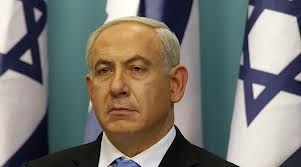
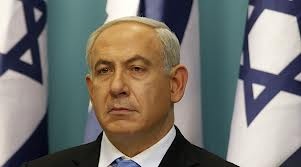
Israel se eerste minister, Benjamin Netanyahu, het ‘n ooreenkoms tussen Iran en ses wêreldmagte oor Iran se kernprogram veroordeel.
Volgens Netanyahu is dit ‘n “historiese fout” wat Iran in staat sal stel om kernwapens te vervaardig.
Israel is fel gekant teen die opheffing van sanksies teen Iran.
Netanyahu het aan sy kabinet gesê dat sy regering nie gebind word deur die ooreenkoms in Genève nie.
Hy het die dreigement van militêre optrede teen Iran herhaal.
Volgens die VSA het die ooreenkoms ‘n einde gemaak aan alle vordering aan Iran se kernprogram. Die ooreenkoms gaan ook blykbaar Iran se uraanvoorraad neutraliseer.
President Barack Obama het Netanyahu intussen geskakel, om hom te probeer paai oor gevoelens dat dié land Israel verraai het. Israel is afhanklik van Amerikaanse hulp. – RSG
Iran speel vir tyd. Hulle het tyd nodig om hul kernmateriaal te ontwikkel tot op `n vlak waar dit in `n kernwapen gebruik kan word. Obama weet dit – ek dink hy is nou besig om sy ware kleure te wys. Israel weet dit ook en hulle gaan dit nie toelaat nie. Ek dink hier kom `n konfrontasie wat moontlik die begin van `n oorlog in die Midde-Ooste kan ontketen.
Hoe bly is ek dat ons blanke kinders nie toelating mag kry vir die weermag nie – want Zuma gaan defnitief handjie bysit as – die – Afrika moontheid in Afrika!
WW3, want dit is reeds ‘n proxy war in die MO
Inleiding: In the wake of the historic P5+1 deal recognizing Iran’s right to enrich uranium, Netanyahu is showling that it was a “historic mistake” – and threatening that Israel will not be bound by the agreement. The whole world, except for Netanyahu and his assets in the US Congress, is cheering for peace. How will Netanyahu try to sabotage the deal and get his long-desired war with Iran? Here is Netanyahu’s list of his top ten ways to sabotage peace:
10. Marshal a rejectionist front consisting of Netanyahu and leading Warner Brothers cartoon characters, including Wile E. Coyote, Elmer Fudd, Ralph Wolf, Porky Pig, Tasmanian Devil, and Yosemite Sam.
9. Get a bunch of crazy settler rabbis drunk on Mogen-David kosher 20-20 wine and send them to smash wine bottles on the walls of the al-Aqsa mosque.
8. Order Mossad assets such as Andrew Adler of the Atlanta Jewish Times to publish more op-eds calling for the assassination of President Obama under the headline “This Time We Mean It!”
7. Order Mossad assets to send Obama to Dallas and lead the President’s motorcade into a “kill zone” of triangulated sniper fire. (Written across this proposal in Netanyahu’s handwriting: “Worked once, won’t work again.”)
6. Send thugs on motorbikes to assassinate P5+1 diplomats.
5. Use Stuxnet virus to wreck laptops of P5+1 diplomats.
4. Blow up New York skyscrapers, blame it on Muslims, and declare “War on Terror.” (Written across this proposal in Netanyahu’s handwriting: “Worked once, won’t work again.”)
3. Announce that earth is under invasion by aliens, and claim that Iran is on the side of the aliens.
2. Ask Bandar Bush to send al-Qaeda to invade Iran, offer to provide air cover.
1. Confess utter and complete impotence, take out frustrations on hapless Palestinians.
The vitriolic opposition by Israel has its opposition rooted in the old antiquated ideology of Zionism created in a pre-connected world of the 20th century buttressed by the mythical dogmatic fable of the Promise Land in the 5000 year old writings of anonymous storytellers (Hebrew Bible) who believed the world ended at the tail of the Nile river! Come on!
Sadly, while Israel continues to push antiquated non relevant policy for today’s new world, the USA and Iran are moving forward quickly into the new world where diplomacy trumps war and business deals that build bridges drown the old crusted failed voices of hatred and oppression.
Israeli Prime Minister Netanyahu calls this deal a “huge mistake” aligning himself clearly against his arch enemy (President Barack Obama and the American people) who are sick and tired of his war mongering mentally ill state
Die Saudi’s is ook ontstoke. Hulle dreig al klaar dat Iran se kop sal waai as hulle skeef trap. Bleikbaar het Obama om hulp by Iran gevra met die Sieriese probleem en dus vir Israel gewaarsku dat hulle nie aan Iran mag raak nie, omdat hulle nou n vennot van doe VSA is.
Riempies – oorlog in die Midde-Ooste sal beslis oorspoel hier na ons toe ook. Daar is baie kaders wat net wag vir so iets om te gebeur. Party van hulle dra rooi hoedjies. Jy is reg – ons kinders kry nie militêre opleiding nie.Die laaste van ons volksgenote wat militêr opgelei is, is al 40 jaar oud. Meeste van ons jongmense weet nie eers aan watter kant van `n geweer die koeël uitkom nie. Dink jy ons sal ons man kan staan?
Turkey
pushes crossroads politics
By Pepe Escobar
While everyone is concentrated on the possibility of a tectonic shift in
US-Iran relations, and while a solution may be found for the Syrian tragedy in
another upcoming set of negotiations in Geneva, Turkey is silently toiling in
the background. Let’s see what these sultans of swing are up to.
We start on the internal front. Abdul Mejid I, the 31st Ottoman sultan (in
power from 1839 to 1861) always dreamed of a submerged tunnel under the
Bosphorus linking Europe to Asia.
It took “Sultan” Erdogan, as in Prime Minister Recep Tayyip Erdogan,
to make it happen, when last month he inaugurated – on the 90th anniversary of
the founding of Ataturk’s Republic – the US$3 billion, 76-kilometer Marmaray
rail system which, in the hardly hyperbolic words of Mustafa Kara, mayor of
Istanbul’s Uskudar district (where the tunnel comes out), will “eventually
link London to Beijing, creating unimagined global connections”. [1]
It certainly helps that this technological marvel fits right into China’s
extremely ambitious New Silk Road(s) strategy which, just like the original
Silk Road, starts in Xian, and aims to cross to Europe via, where else,
Istanbul. [2]
So the fact remains that “Sultan” Erdogan simply has not been downed
by the Gezi Park protests last June. All the ruling party AKP’s mega-projects –
supported by millions in rural Anatolia, ignored for decades by the secular
elites in Istanbul – are alive and kicking.
By 2025, more than a million commuters will be using the Marmaray. The third
Bosphorus bridge, close to the Black Sea, is being built – despite Alevi fury
that it will be named after Selim The Grim, a sultan who ordered the slaughter
of thousands of Alevis. Same for the new six-runway airport northwest of
Istanbul. And then there’s the 50 km “crazy canal” (Erdogan’s own
definition), linking the Sea of Marmara to the Black Sea, so monstrous tanker
traffic may be diverted away from the Bosphorus. The Turkish green movement
insists this could destroy whole aquatic ecosystems, but Erdogan is unfazed.
That oily Kurdish factor
In the wider world, Turkish foreign policy is now on overdrive. And inevitably,
it’s all related to energy.
Foreign Minister Ahmet Davutoglu earlier this month hosted Iranian Foreign
Minister Javad Zarif in Ankara. Then he went to Baghdad and met Iraqi Prime
Minister Nouri al-Maliki.
Davutoglu also visited Washington; he wrote an editorial published by Foreign
Policy praising the US-Turkish “strategic partnership”, now facing
“an increasingly chaotic geopolitical environment”; and he made sure
to support US-Iran negotiations.
Earlier this week, Davutoglu teamed up with Erdogan for a high-level meeting
with Russian President Vladimir Putin and Foreign Minister Sergei Lavrov in St
Petersburg. Next week he’ll be in Tehran.
The question is what does Ankara want from Washington for so eagerly supporting
a US-Iran normalization?
The key is Iraqi Kurdistan. Ankara wants Washington’s blessing for the now
famously fractious 250,000 barrel-a-day oil pipeline from northern Iraq,
bypassing Baghdad. This pipeline would add to the perennially troubled
Kirkuk-Ceyhan, controlled (sort of) by Baghdad; currently operating at best at
one-fifth of its official capacity of 1.6 million barrels a day, bombed
virtually every week, and with zero maintenance.
It’s not as much about the oil (which Turkey badly needs) as a
political/economic alliance that ideally translates into more Kurdish votes for
the ruling AKP party in the 2014 Turkish elections.
The (insurmountable) problem is the Obama administration has no intention – at
the present negotiation junction – to provoke Tehran by allowing a Turkish
project that most of all provokes Iran’s ally Baghdad. That’s just another
instance that everything of consequence happening in Southwest Asia nowadays
involves Iran. [3]
So it all depends on how far the US-Iran rapprochement will go – leaving Ankara
unable to alienate Baghdad and Tehran at the same time. Ankara, though, is also
aware of huge potential benefits down the line. That would mean much more oil
and gas flowing from Iran than the current long-term annual contract for
natural gas via the Tabriz-Ankara pipeline if – and when – Western investment
start pumping again into Iran’s energy industry.
That Wahhabi-Likudnik axis
President Obama gets along very well with Turkish Prime Minister Erdogan. But
while Obama has nothing but praise for Erdogan, for the House of Saud the name
“Obama” is now worse than any plague. And Erdogan is not exactly that
much popular.
Erdogan enthusiastically supported Morsi and the Muslim Brotherhood in Egypt,
while the House of Saud’s hero is coup plotter General Sisi. In Syria, Erdogan
once again supports the Muslim Brotherhood-linked “rebels”, while the
Saudis, with Bandar Bush ahead of the pack, de facto finance and weaponize all
sorts of nasties including the al-Qaeda offshoot Islamic State of Iraq and the
Levant (ISIL). Erdogan has evolved an extremely fractious relationship with
Israel, while the Wahhabi-Likudnik anti-Iran/Syria axis has never been
stronger. [4]
It’s easy to forget an Ankara-Damascus-Tehran alliance was in place before the
foreign-imposed Syrian civil war. That was part of Davutoglu’s “zero
problems with our neighbors” doctrine, then morphed into “all kinds
of problems”. The House of Saud obviously did what it could to undermine
the former alliance with the carrot of more trade and investment in Turkey. It
worked for a while, when the myth of an “Arab Spring” still held
sway, and Turkey and the Saudis were even coordinating their support for
assorted Syrian “rebels”.
Now it’s a totally different configuration. Only in Turkey we find assorted
Islamists, secularists, the left and assorted liberals all in agreement that
the House of Saud is a pretty nasty bunch. And not by accident “Sultan
Erdogan” – who allegedly wants the return of the Caliphate – has been
derided non-stop all over pan-Arab media, which for all practical purposes is
90%-controlled by Saudis.
Ankara seems to have finally realized it must be very careful regarding its
Syria position. Not very far from its borders, Syrian Kurds are fighting
Saudi-supported jihadis.
Worse; scores of al-Qaeda-linked jihadis-to-be – a Mujahideen International –
are congregating in a network of safe houses in southern Turkey, including
Antakya, the capital of Hatay province, before being smuggled over the border
to mostly join the Islamic State of Iraq and the Levant (ISIL). Predictably,
NATO is not amused. [5]
It’s all about Pipelineistan
Turkey’s number one foreign policy aim is to position itself as a critical
energy crossroads for any oil and natural gas coming from Russia, the Caspian,
Central Asia and even the Middle East to Europe.
Yet Turkey has been squeezed by two conflicting Pipelineistan narratives. One
is the never-ending soap opera Nabucco, which basically means delivering
natural gas to Europe from just about anywhere (Azerbaijan, Turkmenistan, Iran,
Iraq, even Egypt) except Russia. And the other is the South Stream pipeline,
proposed by Russia and crossing the Black Sea.
Insisting in its role as a neutral bridge between East and West, Ankara hedged
its bets. But after the European financial crisis took over, Nabucco was, for
all practical purposes, doomed. What’s left now is the so-called Nabucco West –
a shorter, 1,300 km pipeline from Turkey to Central Europe – and the much
cheaper Trans-Adriatic Pipeline (TAP), just 500 km from Turkey across the
Balkans to Italy.
The consortium (including BP, Total and Azerbaijan’s SOCAR) developing the huge
Shah Deniz II field in Azerbaijan ended up choosing TAP. So Nabucco is now
virtually six feet under.
To say that’s been a nifty deal for Moscow is a huge understatement. TAP does
not threaten Gazprom’s hold on the European market. And besides, Moscow got
closer to Baku. Dick Cheney must adjust his pacemaker for another heart attack;
after all his elaborate energy plans, Moscow and Baku are nothing less than
discussing transporting Russian oil through the notorious Baku-Tbilisi-Ceyhan
(BTC) pipeline, which Dr Zbig Brzezinski dreamed up to exactly bypass Russia.
On top of it, they are also bound to reverse the Baku-Novorossiysk pipeline to
pump Russian oil into Azerbaijan.
Additionally, that’s the end of Turkish (and European) pipe dreams of having
wacky “gas republic” Turkmenistan supplying energy across the Caspian
through the Caucasus and Turkey to Europe. For Moscow, this is non-negotiable;
we control the transit of Central Asian energy to Europe. Moreover,
Turkmenistan already has better sturgeon to fry – via its ultra-profitable gas
pipeline to China.
The bottom line: Russia getting even more ascendant in the Caucasus equals Turkey
– which imports nearly all of its oil, coal and natural gas – becoming even
more energy dependent on Russia. Russia supplies nearly 60% of Turkey’s natural
gas – and rising. Iran supplies 20%. Moscow is sure Turkey will soon overtake
Germany as its biggest energy client.
That’s certainly what Erdogan was discussing in detail this past Wednesday in
Moscow. And then there is Turkey’s ambitious plan to build 23 nuclear power
plants by 2023. Guess who’s ahead? Moscow, of course. Not only as builder but also
as primary supplier of nuclear fuel. No package of Western sanctions seems to
be on the horizon.
So Ankara seems to be (silently) hectic on all fronts. Erdogan is carefully
cultivating his friend Obama – positioning himself as a privileged sort of messenger.
Erdogan supports Iran’s civilian nuclear program – which instantaneously placed
him as highly suspicious in the eyes of the Wahhabi-Likudnik axis of fear and
loathing. That’s the key reason for the widening estrangement between Ankara
and Riyadh.
Ankara’s desire to be a key actor in an eventual US-Iran rapprochement springs
out of a simple calculation. Faced with tremendous political, economic and
security barriers, Turkey may only fulfill its wish of becoming the privileged
East-West energy transit corridor with Iran by its side.
Notes:
1. Asia and Europe to get Bosphorus rail link as Marmaray
opens, Hurriyet Daily News, October 28, 2013.
2. New Silk Road starts with Xian, South China
Morning Post, October 29, 2013.
3. Deal or No Deal, Iran’s Stock Keeps Rising,
Al-Akhbar English, November 20, 2013.
4. The Wahhabi-Likudnik war of terror, Asia
Times Online, November 20, 2013.
5. The secret jihadi smuggling route through Turkey,
CNN, November 5, 2013.
“Hy het die dreigement van militêre optrede teen Iran herhaal”….teen Maart/April 2014??
Maart/April 2214.
more Jacob, siem ny vorige comment verwyder, wou net weet of jy verwys na armageddon (jou datum van 2214) of n midde ooste oorlog
lekker dag
In SA…….? Folks, we are being taken to the cleaners by a government and a bunch of bureaucrats who haven’t so much as run a lemonade stand, let alone understand the working of our free market economy. Those in power have a long history in Academia where tenure is a way of life, the military is generally loathed, and where never a profit or payroll has to be met. They run out of money, they just raise your taxes! If a publicly held company were to apply the loose accounting principles that the Government uses, the management would be either shot by the stockholders or imprisoned by the very government whose disdain for accountability is so blatantly obvious.
I found Press TV’s title here a bit strange as Kerry publicly gave Israel some major pay back. He said Israel had isolated itself from the whole world. which one might consider an historic mistake on it’s part.
Virtually nothing Israeli has said, or is saying about the threats it faces, have any validity whatsoever. The Zios are still locked into their Zionist time warp of “we don’t provide validation to anyone, on anything, because we don’t have to.”
A wonderful example of this has been the two decades of the Zios claiming Iran would have a bomb ‘soon’. Over and over the time period passed, and no bomb…only to be followed by a renewed claim that a nuke was just around the corner.
But they really gave up the ghost last week on the phony hidden bomb making facilities they claimed Iran had and wasted the IAEA’s time looking for. They had already been easing over to their new ‘break out’ PR pitch, that Iran could throw one together quickly, simply by adding a weekend shift to the bomb plant.
US-Iran:
The ever-spinning deal
By Pepe Escobar
The 34-year Wall of Mistrust between the US and Iran started tumbling down on
Sunday at 3 am local time in Geneva. Or has it?
It is, after all, only a mutually acknowledged “first step” – a deal
to start negotiating a real deal (see the full text here ) And the terms, for Iran, are harsh.
Iran will be allowed to trade again in gold, petrochemicals, car and plane
parts, and will have some US$4.2 billion in oil sales unfrozen. Yet a fortune
remains in permafrost – including $10 billion in European banks. And there is
still $50 billion with Iran’s Asian energy clients – China, India, Japan, South
Korea, Turkey – that still cannot be repatriated.
Over the next six months Iran must; stop enriching uranium above 5%; dilute its
stock of 20%-enriched uranium; install no more centrifuges; refrain from
fueling the heavy-water reactor in Arak; and accept a lot more International
Atomic Energy Agency (IAEA) inspections (which have unearthed no evidence
whatsoever uranium has been diverted to weaponization).
Predictably, the spin war unleashed the minute the deal was clinched in Geneva
centers on Iran’s right to enrich uranium. US Secretary of State John Kerry
said no; not implicit in the document. Iranian Foreign Minister Javad Zarif
said yes, implicit in the deal and in the nuclear Non-Proliferation Treaty
(NPT) itself.
In a Voltairean best of possible worlds, we’re just at the stage of a road map
for a definitive deal allowing Iran its rightful, peaceful nuclear program
(enrichment included) under non-stop IAEA monitoring and far away from breakout
nuclear capacity.
One of the key points of the deal is that the P5+1 (United States, Britain,
France, Russia and China plus Germany) will “not impose new
nuclear-related sanctions for six months, if Iran abides by its commitments
under this deal, to the extent permissible within their political
systems.”
Would it be then “permissible” for the US Congress – operating under
Israeli and Wahhabi petrodollar remote control – to come up with even more
sanctions and scotch a future deal for good? That’s a possibility. So it
depends on the Obama administration’s political capital to prevent it. Then,
ideally, by May 2014 we could have the building blocks for the end of the key
UN/US sanctions that constitute a de facto oil and banking blockade of Iran.
Now for the hysteria brigades
Perhaps the trillion-dollar enigma of the moment is this: Has the Obama
administration abandoned the notion of regime change in Tehran for good?
It may be too early to tell. A case can certainly be made of this being a
“lose-lose” proposition for Tehran. If Tehran follows every single
concession – as it will – and by May 2014 there are no actual major dividends,
there won’t be much incentive to discuss a definite deal.
And if the hardliners in Tehran regain the upper hand and Iran restarts
enriching uranium to 20% that will be branded as a deal-breaker. And yet
another nasty sanctions package will follow, not to mention the full
resurrection of the dogs of war. Iranian President Hassan Rouhani and his team
have repeatedly made it clear to US negotiators they only have a small window
of opportunity before hardliners of the Revolutionary Guards variety try to revert
to confrontational mode.
Immediately after the deal was signed, Rouhani once again stressed Tehran does
not want and will never build a nuclear weapon; one just needs to be reminded
of Supreme Leader Ayatollah Khamenei’s fatwas branding a nuclear weapon as
anti-Islamic.
And to think that all this could have happened 10 years ago, in early 2003,
when the Khatami administration in Tehran – via Swiss intermediation – offered
to put everything on the table; the nuclear program, Hezbollah, even normalization
with Israel.
Predictably, the neo-con cabal led by Dick, Rummy and Wolfie utterly rejected
negotiating with a certified member of the “axis of evil” (as in
George W Bush’s 2002 State of the Union address); the clueless neo-cons were
entertaining wet dreams of snuffing out Saddam Hussein and then embarking on
the next adventure, “real men go to Tehran”-style. Kerry couldn’t
help but invoke it in Geneva to add polish to what’s being spun as the major
foreign policy victory of two Obama administrations.
Predictably, the very restricted circle of those against even the idea of
Geneva completely freaked out. That starts with neo-cons and assorted
Republicans who have backed every demented horse in recent geopolitical
history, from the embryo of al-Qaeda in 1980s Afghanistan to the Contras in
Nicaragua, from the Mujahideen-e-Khalq “exiled” in Iraq to Bandar
Bush’s goons let loose in Syria.
In the Wahhabi petrodollar front, the House of Saud’s King Abdullah had already
met in extreme urgency with self-deposed emir of Qatar, Sheikh Hamad bin
Khalifa al-Thani and Kuwait’s Sheikh Sabah in Riyadh on the eve of the
breakthrough in Geneva.
And then there’s that sociopath posing as Israeli Prime Minister, Bibi
Netanyahu. Imagine his reaction when he read those finally unfrozen reports
about months of secret US-Iranian negotiations in Oman. [1] The bottom line:
Bibi was totally frozen out of the New Great Game in Eurasia by the Obama
administration.
In the US, dangerous nut jobs are bound to crank up the hysteria, calling for
Israel to bomb Iran. [2] As if a nuclear-armed-to-the-teeth nation – which
never signed the NPT and does not allow IAEA inspections – could attack a
non-nuclear nation, which has signed the NPT and allows a rash of intrusive
inspections. That will make it even more explicit to the whole planet that the
rogue state here is Israel.
Vigilance, though, remains essential. Desperate, isolated Likudniks will try
anything to derail Geneva, including a string of false flags.
Pivot to Persia or bust
Now for the grown-ups. In terms of Russian foreign policy, it’s now a string of
victories. Syria. Ukraine. And now Iran. Foreign Minister Sergey Lavrov is a
man who can do no wrong, especially in the developing world, as the absolute
majority of the Non-Aligned Movement (NAM) supports Iran’s legitimate nuclear
rights.
Russia and also China (in the usual, silent but imposing background) consider a
strong Iranian economy – as well as a stable Syria – matters of supreme
self-interest. Both abhor the possibility of Bandar Bush’s goons spreading out
from Syria towards the Caucasus and even Xinjiang. Both want an Iran normalized
with the West as a crucial stabilizing factor in Southwest Asia. The question
is whether the Western, financial Masters of the Universe will allow a
sovereign, independent Iran in the same league of Russia and China. That would
only solidify yet a new Asian integration victory in the New Great Game in
Eurasia.
The real test starts now. It should always be stressed that a practically full
Western blockade of Iran – financial and in oil sales – is still in effect.
Tehran is still confined to export only 1 million barrels of oil a day. Yet the
temptation may be great to sideline cynicism and bet on the Obama
administration realizing that everything of consequence in Southwest Asia
revolves around Iran. And once again I’ll go for broke; there can’t possibly be
a pivoting to Asia without a pivot to Persia.
Notes:
1. U.S., Iran held secret talks on march to nuclear deal,
Reuters, November 24, 2013.
2. Abject Surrender by the United States,
Weekly Standard, November 24, 2013.
My spesmaas is dat die Westerse kokkedore EN Israel die Kernarsinaal van Iran minder vrees as die Chemiese wapens van massavernietiging.wat op Israel se drempel lê by Damaskus.
Buitendien is Iran se olie nie meer so belangrik nie want Russiese olie gaan na Europa deur die South Stream pype via Georgie en Kosovo nogal nê?
Die Jode het nou hul eie olieveld suid van Ciprus ontdek in samewerking met Australie!!! Kan jy glo!!
Iran /Persie is die mede eienaars van Rossing uraanmyn in Namibia.
En hul maatjies in die ANC het beheer oor genoeg wapengraad uraan van dr Wally Grant in Pellindaba om 20 atoombomme te maak..??
Wat maak mens met ‘n kernbom as jy dit nie kan aflewer nie?
Nou vertel ‘n lugvaartingenieur vir my dat as jy ‘n bom sien afgaan in Damaskus op TV en dis so ‘n wit wolk met weerlig in die wolk – dan was dit ‘n klein kernbom.
Dis mos net ‘n kwessie van tyd voordat daai soort goed die chemiese aanlegte tref …..per geluk of aspres of per ongeluk en die hele Damaskus stad onbewoonbaar maak.
Israel behoort dit verseker te besef
Dis die ekonomie stupid.
Die Westerse wêreld is dit eens met ‘n ooreenkoms met Iran,
maar Netanyahu beweer Israel is nie verbind deur hierdie ooreenkoms nie. In ander woorde, Netanyahu is hierdie keer nie deel van die Weste se mags peile
nie. Zodoende isoleer hy Israel en is hy as sulks alleen in ‘n vyandige situasie.
Netanyahu loof gewoonlik die Weste as die Weste hom volg. As die Weste egter wyk
van sy amptelike Sionistiese / Talmoediese leer, dan is die Weste sy vyand.
Inderdaad ‘n skeinheilge leier van ‘n skynheilige nasie.
Die strydende onsamehangende Midde-Ooste het geen toekoms
nie. Maar ‘n verenigde Midde-Ooste, geskoei op die idees van vryheid en
geregtigheid in ‘n nuwe wêreld vir almal, is die enigste pad vorentoe. Israel is egter die trol in die drink water,
China met sy triljoen en meer in reserves is ‘n gevaarlike sake vennoot vir die Midde Ooste. China gaan vinnig beweeg as die gaping gebied word.
The US has been deceived by the Israeli spy agency Mossad’s fabricated documents. the UK has the most advanced electronic tapping post on the Mountainous Troodos region of Cyprus which monitors all radio, satellite and microwave traffic across the Middle East, ranging from Egypt and Eastern Libya right through the Caucasus, it has not picked up anything because
no such thing existed and Mossad has fabricated it.
It is therefore very strange, to say the least, that John Kerry claims to have access to communications intercepts of Syrian military and officials organizing chemical weapons attacks, which were not available to the British Joint Intelligence Committee.The listening post on Mount Troodos in Cyprus is arguably the most valued asset which the UK contributes to UK/US intelligence cooperation. Israel
has repeatedly been involved in the Syrian civil war, carrying out a number of
illegal bombings and missile strikes over many months. This absolutely illegal
activity by Israel- which has killed a great many civilians, including children
– has brought no condemnation at all from the West. Israel has now provided “intelligence” to the United States designed to allow the United States to join in with Israel’s bombing and missile campaign. Troodos is valued enormously by the NSA. Even almost all landline telephone communication in this region is routed through microwave links at some stage, picked up on Troodos.Troodos is highly effective – the jewel in the crown of British intelligence. Its capacity and efficiency, as well as its
reach, is staggering. The US does not have their own comparable facility for
the Middle East. On one level the explanation is simple. The intercept evidence was
provided to the USA by Mossad.
After feverishly trying to derail the international community’s nuclear deal with Iran in recent weeks, Israeli Prime Minister Benjamin Netanyahu now has little choice but to accept an agreement that he has derided as deeply flawed.
Iran deal
gains traction
By Jim Lobe
WASHINGTON – Despite strenuous objections by Israeli Prime Minister Benjamin
Netanyahu and mostly Republican lawmakers here, the new accord between the Iran
and the US and five other major powers on Tehran’s nuclear program appears to
be gaining support here and abroad.
Most of the US foreign policy establishment, including prominent
non-proliferation hawks who previously voiced skepticism over prospects for any
accord, have rallied behind the six-month deal announced early on Sunday in
Geneva after more than three days of intensive talks between Iran and the P5+1
(US, Britain, France, Russia, China plus Germany).
“The interim accord between Iran and the six world powers is a significant
accomplishment,” according to Richard Haass, the president of the influential
Council on Foreign Relations who also headed the State Department’s policy
planning office during most of former president George W Bush’s first term.
“Those who are opposing the interim accord for what it does not do are
asking too much,” he wrote in the Financial Times in an implicit criticism
of Netanyahu and his backers in Washington who have argued that any agreement
should, among other things, require Iran to halt all enrichment of uranium,
dismantle most of its 19,000 centrifuges, and begin to stop all work on – if
not abandon – its yet-to-be-completed Arak heavy-water facility at the very
least.
Similarly, David Albright, president of the Institute for Science and
International Security, who, in association with the neo-conservative
Foundation for Defense of Democracies, has favored increased sanctions against
Iran, praised the accord in a Washington Post op-ed as having
“accomplish[ed] a great deal”, particularly in lengthening the time
by at least one month that Iran would need to achieve “nuclear breakout”
and significantly increasing the frequency and scope of inspections of its
nuclear facilities by the International Atomic Energy Agency.
Like virtually all other commentators, including those who have long urged the
Barack Obama administration to use more carrots and fewer sticks in its
diplomacy with Tehran, Albright stressed that the US and its P5+1 partners
still face major challenges in negotiating a comprehensive agreement that would
effectively prevent Tehran from building a bomb if it chose to do so.
On the international front, Saudi Arabia, Iran’s regional arch-rival whose
strong opposition to Tehran’s nuclear program has been frequently cited in
recent months by Netanyahu, cautiously welcomed the deal, asserting that it
“could be a first step towards a comprehensive solution for Iran’s nuclear
program, if there are good intentions”.
Several other Gulf states, notably the United Arab Emirates, that have
generally followed Riyadh’s lead, also offered statements of support.
Their endorsement – however tentative – marked a major setback for Netanyahu,
who had spent much of the past several weeks denouncing any interim accord that
did not meet his minimum requirements as a “very bad deal”.
In addition to his other complaints, the Israeli premier and his top officials
have argued that even the relatively modest relief from tough US and
international economic sanctions provided by the deal – valued by the Obama
administration at less than US$10 billion over the next six months – will
inevitably lead to the collapse of the entire international sanctions regime,
thus removing the main source of pressure on Tehran to dismantle its programme.
The Obama administration, on the other hand, has strongly rejected this,
insisting that it will continue to vigorously enforce the financial and oil
sanctions that it says have forced Iran to agree to the constraints contained
in the deal, including, among other things, the elimination of its stockpile of
20% enriched uranium, a freeze on its 5% stockpile and on the installation of new
centrifuges, and an agreement not to fuel the Arak reactor, as well as the
enhanced inspection regime.
Nonetheless, just hours after the agreement was signed in Geneva, Netanyahu
came out swinging, calling it a “historic mistake” and suggesting, as
he has frequently in the past, that Israel was prepared to launch a unilateral
attack against Iran if it felt its security was threatened.
His defiant tone, which has been criticized by former senior Israeli national
security officials as counter-productive and potentially damaging to Israel’s
strategic ties to Washington, was echoed in the US by hard-line
neo-conservatives and other hawks who had championed the Iraq invasion 10 years
ago, as well as by a number of mostly Republican lawmakers.
Bush’s former ambassador to the United Nations, John Bolton of the American
Enterprise Institute, writing in in the neo-conservative Weekly Standard,
denounced the accord as “abject surrender by the United States” and
called for Netanyahu to follow through on his threats to take military action.
Insisting that Tehran, despite the much stricter international inspection
regime to which it agreed to submit under the accord, would “go to
extraordinary lengths” to follow North Korea’s path in building secret
bomb-making facilities, Bolton warned that “the more time that passes, the
harder it will be for Israel to deliver a blow that substantially retards the
Iranian program”.
“This agreement shows other rogue states that wish to go nuclear that you
can obfuscate, cheat, and lie for a decade, and eventually the United States
will tire and drop key demands,” said Florida Senator Marco Rubio, who
echoed Netanyahu and many of his colleagues in calling for Congressional
approval of new sanctions despite the deal. “Iran will likely use this
agreement – and any that follows that does not require any real concessions –
to obtain a nuclear weapons capability.”
Some Democrats close to the Israel lobby, notably New York Senator Chuck
Schumer and Senate Foreign Relations Committee chairman Robert Menendez, said
on Sunday they would also support swift enactment of new sanctions with the
caveat that they would take effect if Iran failed to comply with the deal or in
six months time, unless a comprehensive agreement was reached.
The administration has warned that any new sanctions legislation before the
six-month period would violate the Geneva accord so long as Iran was in
compliance.
Nonetheless, the powerful American-Israel Public Affairs Committee came out on
Monday in support of new sanctions. In addition to urging congress to press for
a comprehensive accord that would “prevent Iran from ever building nuclear
weapons”, it said “Congress must also legislate additional sanctions,
so that Iran will face immediate consequences should it renege on its
commitments or refuse to negotiate an acceptable final agreement.”
But the Senate’s Majority Leader, Harry Reid, who last week said that he, too,
would support additional sanctions as early as December 9 when congress returns
from its Thanksgiving recess, indicated on Monday that any sanctions measure
should first be considered in relevant committees rather than going directly to
the Senate floor. That could push new congressional action, if any, until after
the new year.
“I don’t think congress is going to overturn this agreement,” said
Gary Samore, a Harvard professor who served as a top proliferation official in
Obama’s first term and now heads the hawkish United Against a Nuclear Iran.
“I just don’t think they’re going to shoot the country in the foot,”
he told a teleconference sponsored by the Wilson Center on Monday, calling the
accord “good enough to get started on the process which is going to be
very challenging”.
He said Israel’s insistence on zero enrichment as an end-state in negotiations
was “not an achievable objective” and that the US and its allies
should instead focus on finding agreement on three specific issues: the
permissible level of enrichment; the fate of the Arak reactor; and the terms of
the final monitoring regime, particularly regarding its ability to detect any
covert facilities.
He expressed doubt that a comprehensive agreement could be reached in six
months. Instead, “I could imagine another interim deal” that would
include more limitations on Iran’s nuclear programme in exchange for more
sanctions relief, he said.
Tehran
accord designed to fail?
By Gareth Porter
WASHINGTON – The “first step” agreement between Iran and the United
States that was sealed in Geneva over the weekend is supposed to lead to the
negotiation of a “comprehensive settlement” of the nuclear issue over
the next six months, though the latter has gotten little attention.
But within hours of the agreement, there were already indications from senior
US officials that the Barack Obama administration is not fully committed to the
conclusion of a final pact, under which economic sanctions would be completely
lifted.
The administration has apparently developed reservations about such an
“end state” agreement despite concessions by the government of
President Hassan Rouhani that were more far-reaching than could have been
anticipated a few months ago.
The Rouhani government’s moves to reassure the West may have spurred hopes on
the part of senior officials of the Obama administration that the United States
can achieve its minimum aims in reducing Iran’s breakout capacity without
giving up its trump cards – the harsh sanctions on Iran’s oil expert and
banking sectors.
The signs of uncertain US commitment to the “end state” agreement
came in a background press briefing by unidentified senior US officials in
Geneva via a teleconference late on Saturday. The officials repeatedly
suggested that it was a question of “whether” there could be an
“end state” agreement rather than how it could be achieved.
“What we are going to explore with the Iranians and our P5+1 partners over
the next six months,” said one of the officials, “is whether there
can be an agreed upon comprehensive solution that assures us that the Iranian
program is peaceful.”
The same official prefaced that remark by stating, “In terms of the ‘end
state’, we do not recognize a right for Iran to enrich uranium.”
Later in the briefing, a senior official repeated the same point in slightly
different words. “What the next six months will determine is whether there
can be an agreement that … gives us assurance that the Iranian program is
peaceful.”
Three more times during the briefing the unnamed officials referred to the
negotiation of the “comprehensive solution” outlined in the deal
agreed to Sunday morning as an open-ended question rather than an objective of
US policy.
“We’ll see whether we can achieve an end state that allows for Iran to
have peaceful nuclear energy,” said one of the officials.
Those carefully formulated statements in the background briefing do not reflect
difficulties in identifying what arrangements would provide the necessary
assurances of a peaceful nuclear programme. Secretary of State John Kerry
declared at a press appearance in Geneva, “Folks, it is not hard to prove
peaceful intention if that’s what you want to do.”
The background briefing suggested that in next six months Iran would have to
“deal with” UN Security Council resolutions, which call for Iran to
suspend all enrichment activities as well as all work on its heavy reactor in
Arak.
Similarly, the unnamed officials said Iran “must come into compliance with
its obligations under the NPT and its obligations to the IAEA [International
Atomic Energy Agency].”
Those statements appeared to suggest that the administration would be insisting
on a complete end to all enrichment, at least temporarily, and an end to all
work on Arak.
The actual text of the agreement reached on Sunday states, however, that both
the six powers of the P5+1 (the United States, Britain, France, Russia, China
and Germany) and Iran “will be responsible for conclusion and
implementation of mutual near-term measures”, apparently referring to the
measures necessary to bring Security Council consideration of the Iran nuclear
issue to a conclusion.
The Obama administration has yet to release an official text of the
“first-step” agreement, although the official Iran Fars new agency
released a text over the weekend.
Iran has demonstrated its determination to achieve such an agreement by
effectively freezing and even partially reversing its nuclear program while
giving the IAEA daily access to Iran’s enrichment sites.
The Washington Post story on Sunday cited Western officials in Geneva as saying
that the Iranian concessions “not only halt Iran’s nuclear advances but
also make it virtually impossible for Tehran to build a nuclear weapon without
being detected”.
But since the early secret contacts with Iran in August and September, the
Obama administration has been revising its negotiating calculus in light of the
apparent Iranian eagerness to get a deal.
In mid-October, Bloomberg’s Jeffrey Goldberg reported that the White House and
State and Treasury departments were interested in an idea first proposed in
early October by Mark Dubowitz, the executive director of the Foundation for
the Defense of Democracies, who had lobbied the Obama administration
successfully for the sanctions aimed at cutting Iranian oil export revenues.
The Dubowitz proposal was to allow Iran access to some of its own money that
was sitting in frozen accounts abroad in return for “verified
concessions” that would reduce Iranian nuclear capabilities.
Meanwhile the United States and other powers would maintain the entire
structure of the sanctions regime, at least in the interim period, without any
change, Goldberg reported, “barring something like total
capitulation” by Iran.
The scheme would give greater rewards for dismantling all but a limited number
of safeguards than for lesser concessions, according to Goldberg’s report,
based on information from “several officials”. And if Iran refused,
the plan would call for even more punishing sanctions against Iran’s natural
gas sector.
That was essentially the policy that the Obama administration adopted in the
negotiations in Geneva. In the first step agreement, Iran agreed to stop all
enrichment to 20%, reduce the existing 20%-enriched stockpile to zero, convert
all low enriched uranium to a form that cannot be enriched to higher level and
allow IAEA inspectors daily access to enrichment sites.
In return for concessions representing many of its key negotiating chips, Iran
got no relief from sanctions and less than US$7 billion in benefits, according
to the official US estimate.
The Iranian concessions will hold only for six months, and Iran has made such
far-reaching concessions before in negotiations on a preliminary that
anticipated a later comprehensive agreement and then resumed the activities it
had suspended.
In the Paris Agreement of November 15, 2004, with the foreign ministers of the
UK, Germany, France, Iran agreed “on a voluntary basis, to continue and
extend an existing suspension of enrichment to include all enrichment related
and reprocessing activities”.
That meant that Iran was giving up all work on the manufacture, assembly,
installation and testing of centrifuges or their components. Supreme Leader
Ayatollah Ali Khamenei was under the impression it was an open-ended suspension
and initially opposed it.
Khamenei relented only after Hassan Rouhani, then the chief nuclear policy
coordinator and now president, and other officials, assured him that it was a
temporary measure that would endure only until an agreement was reached that
legitimized Iran’s enrichment or the determination that the Europeans were not
serious, according to Ambassador Hossein Mousavian’s nuclear memoirs.
After the Europeans refused to negotiate on an Iranian proposal for a
comprehensive settlement in March 2005 that would have provided assurances against
enrichment to weapons grade, Khamenei pulled the plug on the talks, and Iran
ended its suspension of enrichment-related activities.
The United States had long depended on its dominant military power to wage
“coercive diplomacy” with Tehran, with threat of an attack on Iran as
its trump card. But during the George W Bush administration, that threat began
to lose its credibility as it became clear that the US military was opposed to
war with Iran over its nuclear program.
Obama administration officials are now acting as though they believe the
sanctions represent a diplomatic trump card that is far more effective than the
“military option” that it had been lost.
Some news stories on the “first-step” agreement have referred to the
possibility that the negotiations on the final settlement could stall, and the
status quo might continue. The remarks by senior US officials suggest the
administration may be hoping for precisely such an outcome.
Following the interim agreement with Iran the next six months will tell us whether or not the American-led Zionist lobby and Zionism itself has played its last card and lost. If it does lose, President Obama will be free to use the leverage he has to try to cause Israel to be serious about peace on terms almost all Palestinians and most other Arabs and Muslims everywhere could accept (and which would not pose any threat to the wellbeing and security of those Jews now living in Palestine that became Israel and who wanted to stay). The stakes could not be higher. Israel is die gevaarlikste regime in die heelal.