
By nie-verloopte Afrikaners is die Skandinawiese lande berug vir die finansiële en morele steun wat hulle aan Suid-Afrikaanse terreurbendes gegee het. “The political leaders of the North have often served as the moral compass of the world” (Booth, bron hier onder, Kindle 2574). Toe ek Swede in 1970 besoek het, was daar net twee swart passasiers op die vlug. Op die lughawe in Stockholm is hulle dadelik eenkant geneem vir ondervraging deur die doeanebeamptes. Toe dink ek: Ja, julle bliksems, julle preek een ding maar doen ‘n ander.
Later sou ek agterkom dat dit juis in hierdie tyd was dat Swede begin het om immigrante uit die Derde Wêreld toe te laat. “Immigration didn’t really begin in this part of the world until the late 1960s” (Booth 5733). Sedertdien het die ander Skandinawiese lande weens dure ondervinding (bv misdaad en krotbuurte) probeer om sulke immigrante in groter mate buite te hou. Swede gaan egter halsstarrig voort met sy oorverligte immigrasiebeleid, al het dit reeds sy tradisionele inheemse kultuur ernstig aangetas. “Culture is not a big thing in Sweden” (Booth 5676).
Deesdae reken die Swede, ten minste wat amptelike beleid betref, steeds dat hulle die morele hoë grond beklee en word die ander Nordiese lande verwyt dat hulle polities nie verlig genoeg is nie. Soos in die nuwe Suid-Afrika, waar onwettige inkommers oogluikend toegelaat word, gee Swede voorkeur aan ‘n beleid wat duidelik nie in die landsbelang is nie. Dit is omdat tradisionele nasionalisme deur ideologiese oorwegings ondergrawe word. Die ideaal is voorbeeldige wêreldburgerskap waarin ook die Sweedse taal, wat betref woordeskat en sintaksis/sinsbou, toenemend verengels en selfs veramerikaans word. Plaaslik sit ons deesdae met Kengels, Kafrikaans en Kaaps. In Swede word ‘n soortgelyke verskynsel Swenglish genoem. Dit dui op ‘n groeiende gebrek aan volksgevoel en belemmerde selfrespek.
“The Swedes made a conscious, unified push towards the light, embracing technological and industrial progress, modernism, secularism and socially progressive politics, in the process becoming one of the most successful industrial nations of the post-war years, a manufacturing colossus, a paragon of what a modern, multicultural nation should be” (Booth 3105).
Na aanvanklike sukses het buitensporige sosialisme Swede se voorspoed egter al hoe meer afgeplat, sowel ekonomies as kultureel.
Uit die oogpunt van die blankedom is dit ‘n buitengewoon tragiese verskynsel. In die etnologie word die Noord-Europeërs, veral die Skandinawiërs, as die prototipe blankes beskou. Na die Tweede Wêreldoorlog, as ‘n weerslag van nazisme, was daar ‘n oordrewe neiging om die inherente waarde van blankheid te ontken, nasionalisme te verkleineer en selfs om blanke volksmoord (bv in die sin van die verswelging van blankes deur swartes) gelate te duld. Sedertdien, onder meer weens die ervaring met immigrante uit die Derde Wêreld in die Europese Unie, het daar ‘n kentering ingetree; nie soseer in Swede nie, maar eerder in die ander Nordiese lande.
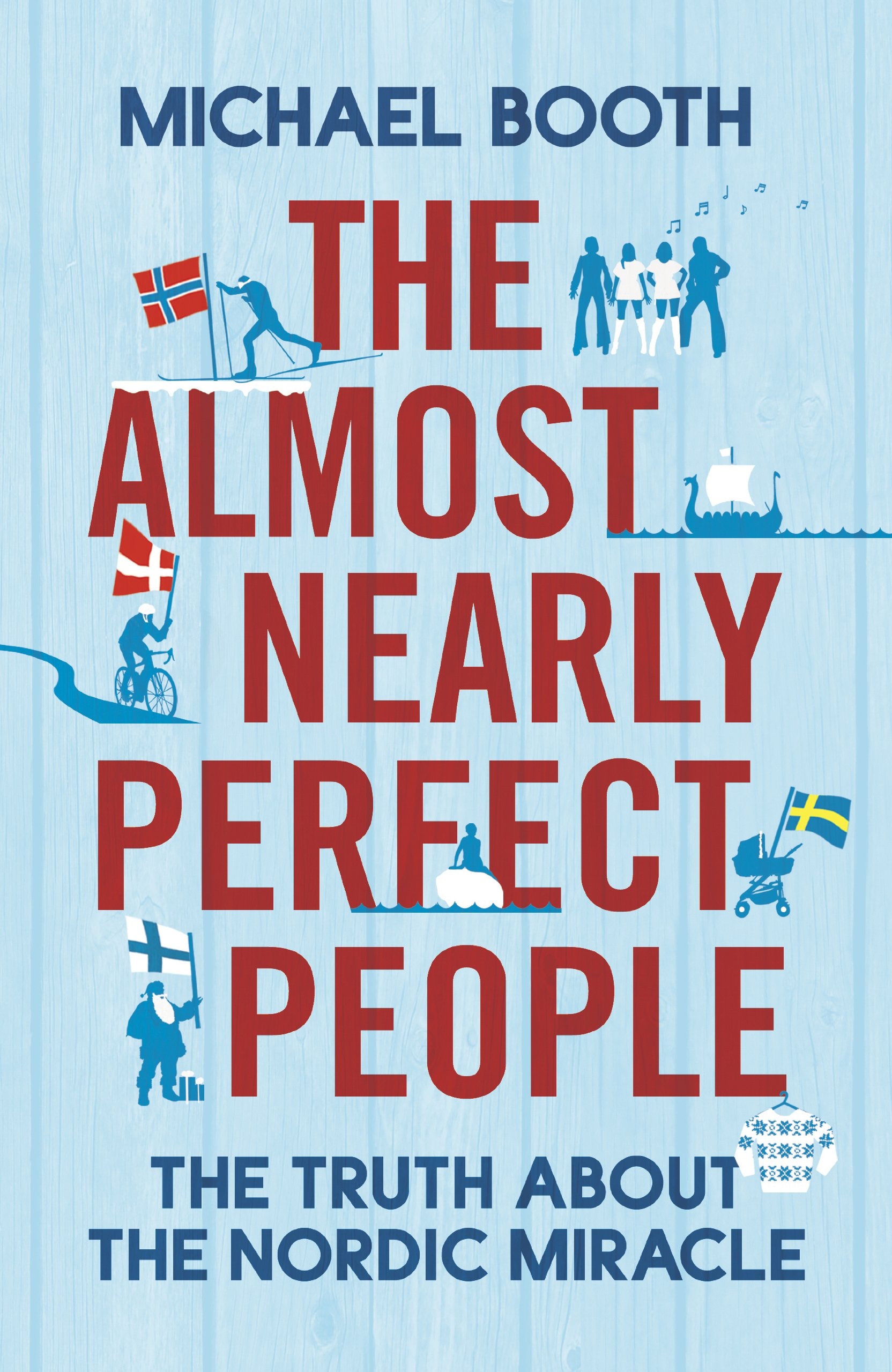 In die res van my skrywe verlaat ek my op Michael Booth se boek, The almost nearly perfect people: The truth about the Nordic miracle (London: Jonathan Cape, 2014, 418p; Amazon Kindle $13.67). Die boektitel sluit netjies aan by wat ek hierbo geskryf het. Booth is ‘n Brit wat met ‘n Deen getrou het en nou in Denemarke woon. “On first acquaintance the Danes seemed to me to be pretty much like Germans, but with better furniture” (3542). Dit is vir hom moontlik om met die nodige afstand na die Skandinawiërs te kyk en terselfdertyd op eerstehandse ervaring te steun. Hy poog om die “Nordic exceptionalism” te verstaan (35); hulle “claim to life-quality supremacy” (110); hulle gewaande “wellness, satisfaction and happiness” (114). Booth speur hierdie dinge na vanaf Nordiërs se vorige monokulturaliteit tot hulle huidige mate van multikulturaliteit. In dié proses word die Nordiërs se onvolmaaktheid duidelik.
Daar is ‘n populêre beeld in “die media” geskep. Hoë belasting maak dit vir hierdie welvaart- en welsynstate moontlik om ambisieuse beleide vir bv omgewingsbewaring deur te voer:
“The Scandinavians were not only the happiest and most contented people in the world, but also the most peaceful, tolerant, egalitarian, progressive, prosperous, modern, liberal, liberated, best-educated, most technologically advanced” (118). “If you wanted to know where to look for the definitive model of how to live a fulfilled, happy, well balanced, healthy and enlightened life, you should turn your gaze north of Germany, and just to the left of Russia” (122).
Aan die negatiewe kant is daar “racism and Islamophobia, the slow decline of social equality, the alcoholism, and the vast over-stretched public sectors” (253). “Over half of the Danish adult population – as much as two-thirds according to some estimates – either works in the public sector or is financially supported by it in the form of benefit payments” (1008). “The key to Sweden’s success is that it slashed taxes, greatly reduced its public sector, and underwent a massive privatisation programme in the 1990s” (1210). Die Nordiese owerhede is voorbeeldig korrupvry: “Transparency International’s annual Corruption Perception Index currently ranks Denmark and Finland as the least corrupt countries in the world, with Sweden and Norway following closely behind” (638).
Tot dusver is die terme “Nordies” en Skandinawies” gebruik. Daar is ook die naam “Viking” vir hulle voorvaders. Die gebied in en om Jutland, die Deense skiereiland, is die bakermat van die Teutone. Booth bespreek agtereenvolgens Denemarke, Ysland, Noorweë, Finland en Swede. “Technically speaking, neither the Finns nor the Icelanders were actually Scandinavians: that term refers to the people of the original Viking lands, Denmark, Sweden and Norway” (262). Die Yslanders en Finne “feel marginalised; we are out of the Scandinavian domain … Danes, Swedes and Norwegians can generally understand each other’s language, but Icelandic and Finnish stand apart” (2191). “Strictly speaking, if we are going to lump all five countries together we really ought to use the term ‘Nordic'”(262). “Nordiër: (Blonde) bewoner van Noord-Europa, veral Skandinawië en Finland” (HAT). “Much of the success of the Nordic countries has been ascribed to three key factors: their homogeneity, their egalitarianism, and their social cohesion” (2005). Dit is juis hierdie drie kenmerke wat sterk deur immigrante uit die Derde Wêreld ondergrawe word.
Ek gaan nie die inhoud van Booth se boek opsom nie, maar slegs enkele aspekte noem waarin Praag se lesers moontlik belangstel; in dieselfde volgorde as die hoofstukke. Booth het al hierdie lande besoek en onderhoude gevoer. Om die lengte van my teks te beperk, onderskei ek nie altyd tussen Booth se mening en dié van sy gespreksgenote nie.
Denemarke
As koloniale moondheid was Swede, Noorweë, Ysland, Estland, drie Wes-Indiese eilande en ‘n aantal handelsposte in Indië eens deel van die Deense ryk. Deesdae het net Groenland en die Faroër-eilande as selfregerende Deense gebiede oorgebly. Dene het op ‘n ander en sekerlik eerbaarder manier as Afrikaners politieke mag ingeboet, maar die resultaat is soortgelyk. “The territorial losses, sundry beatings and myriad humiliations forced the Danes to turn their gaze inward, instilling in them not only a fear of change and of external forces that abides to this day, but also a remarkable self-sufficiency and an appreciation of what little they had left” (384). By die Dene is daar ‘n “disproportionate satisfaction in small pleasures” (1765). “They were learning how to do what they still do best: to be grateful for, and make the most of, the resources available to them; to cherish the simple pleasures of community; to celebrate their Danishness; and, above all, avoid annoying the Germans” (405). (Suid van Jutland het die Dene eers Hanover en daarna Schleswig-Holstein aan die Duitsers afgestaan.)
In Afrikanergeledere is dit nie die Duitsers nie maar veral swart mag wat die steen des aanstoots is. Daar is ‘n veelseggende Deense gesegde: “What was lost without will be found within” (392). Booth noem dit sy “post-colonial ‘drawbridge theory'” (1515), naamlik “Danish xenophobia and racism … the Danes like to put up fences between themselves and the rest of the world and draw back and be comfortable and cosy” (1511) . Daar is ‘n Danish People’s Party wat glo xenofobies-nasionalisties gesind is (1580). Booth verwys na “the rise of the right wing” (1757). Die Dene is “in denial about the increasingly rampant gang criminality which has resulted in numerous shootings in Copenhagen suburbs; in denial about the realities of integration and of being part of a globalised world” (1798). Wat in die Dene oorgebly het, kan “humble pride” genoem word (420).
In 2001 die Danish People’s Party “became the third-party power broker in the Danish coalition government, and went on to use their position to get numerous draconian immigration proposals passed into law” (4936). Denemarke het immigrasie ingekort, “with different welfare provision for new arrivals, more stringent rules for applications … Denmark … in doing so has provoked outrage from human rights organisations, the EU and others, and suffered irrevocable damage to its international image” (4879). “When you read what is written about Denmark in the Swedish media … it is almost all about one topic – immigration: that we are racist or xenophobic, or how we have been criticised by the EU or UN” (4961). Daar het ‘n kentering in Denemarke gekom: “Even centrist parties routinely generalise negatively about immigrants and Muslims” (4992). Wat erken moet word, is: “The Danish People’s Party, and to a lesser extent the Sweden Democrats, do speak for a significant proportion of their respective populations” (4996). ‘n Waarnemer het gesê: “Immigration is perhaps the most important topic in Europe today” (4967).
Die Deense hoofstad, Kopenhagen, is dermate deur nie-Deense elemente ingeneem dat daar heelwat aan bv veiligheid ingeboet is. “There are … regular shootings and occasional riots in Denmark’s most ethnically diverse quater, Norrebro in Copenhagen; the Danes dismiss these as mere inter-gang warfare” (4757). “Out in the countryside, front doors, cars and bicycles are often left unsecured. If you drive around the country lanes you will find fruit and vegetables on sale in stalls to be paid for via honestry boxes … people do leave their kids sleeping in prams outside cafés and shops, even in the cities, and let their children commute to school alone” (667). Dit klink soos die salige, beskaafde Suid-Afrika van my jeug.
“As with the British comprehensive system, there is a growing concern that the schools tend to sacrifice the potential achievements of the higher-performing students for the better good of the middle and lower achievers: the level of instruction is brought down to include the least able, testing is frowned upon … there does seem to be a little too much emphasis on social skills at the expense of actual learning” (1122). Sommige hiervan is ook kenmerkend van die huidige Suid-Afrikaanse onderwys.
Ysland
In die hoofstad van Ysland, Reykjavik, is daar ‘n skerp toename in misdaad. “People are installing alarms” (1929). Ysland “has long been a model of gender equality” (1997). “The Icelanders buy more books per capita than anyone else in the world” (2001). By hulle is daar ‘n “inbred sense of superiority” (2062), maar “the Danes look down on them” (2148). “The Danes allowed the Icelanders to maintain their culture and language, in stark contrast to the Swedes’ treatment of the Finns during the same [colonial] period” (2178).
“Thursday, Friday, and Saturday … half the country appears to take it as a professional obligation to drink themselves into oblivion” (2071). Die Yslanders “have this myth about the Finnish male being depressed and drunk, and maybe we have some of that. Alcoholism is a growing issue” (2191). “Icelanders … don’t have a pub culture yet like the Danes do. They can’t have one drink on the way home from work: if you try that they look at you like you’re an idiot. They are bingers, like the Finns” (2195). “All the Scandinavians were broadly similar in their approach to intoxication: only Icelanders actively approved of drunkenness” (3606).
Noorweë
“The Norwegians seem to have the strongest bond of all [Nordics] with their natural surroundings; their scenery is the source of their fiercest patriotic fervour” (2780). Die Dene, wat ‘n “pathetic little flat country” (3154) met minder natuurskoon bewoon, word deur die Noorweërs van “mountain envy” beskuldig (2817). Denemarke en Swede is vorige heersers van Noorweë. Die Noorweërs is sterk nasionalisties, gevolglik is daar ‘n neiging tot regsgesindheid (2430). “Nordic national romanticism still prompts uncomfortable memories of the Swedes’ dalliances with the Nazis during the Second World War. The Norwegians, on the other hand, fought more determinedly against the Germans than any of their Scandinavian siblings” (2477).
‘n Optog van kinders in Oslo, die Noorweegse hoofstad, toon dat “a good number of them ethnically non-Norwegian” is (2498); “Somali, Turkish, Iraqi and Pakistani kids” (2506). “Oslo schools with large numbers of children of non-Western backgrounds who had wanted to march on 17 May [Grondwetdag] had been the target of bomb threats and demonstrations by the same species of right-wing thug. In response, there had been a conscious effort by local authorities and civic groups to make 17 May an actively multicultural, inclusive event” (2511). Booth maak deurgaans seker dat sy lesers deeglik van sy polities korrekte verligtheid bewus is. “I am a great enthusiast for political correctness” (4727). “I find the Nordic Right’s bigotry and falsehoods as distasteful as anyone” (4940). Anders Behring Breivik se aanvalle op “non-Western immigrants” (2570) in 2011, waarin 77 mense gedood is, gee aan Booth ruim geleentheid vir politieke korrektheid. Breivik “held them responsible for most of the violent crime in Norway” (2570).
‘n Norweegse kommentator het oor die Breivik-gebeure gesê:
“It’s much less far from the mainstream than many are willing to accept – whilste most Norwegians are not racist, some hold deeply troubling views … Prior to 22/7, as the attacks are more commonly referred to in Norway, the country had the strongest mainstream right-wing party in all of the region, and one of the strongest in Europe: the Fremskrittsparti, or Progress Party. Though its popularity dipped following Breivik’s attacks, in the last parliamentary election to take place in Norway, in September 2013, the Progress Party, led by the pugnacious blond Siv Jensen, won 16.3 per cent of the vote … this electoral triumph was enough to make it a partner in the new centre-right coalition government for the first time in its history” (2612). “Norway has accepted far fewer immigrants than either Denmark or Sweden, for instance, and has recently taken to repatriating denied asylum seekers at a rate of 1 500 or so a year. Coverage of the Breivik attacks had also mentioned numerous right-wing Norwegian organisations, activists and bloggers, highlighting what appeared to be a disturbing sub-culture of Islamophobia in the country” (2624). Omtrent 3% van die Noorweegse bevolking is Moslems (2658).
“I was still routinely shocked by a fairly widespread brand of casual racism from the kinds of sources that should know better, not just in Norway, but in Denmark, and I’d seen it in Iceland too: broadsheet newspaper cartoons depicting Africans in tribal costume with exaggerated lips and bones through their noses, for instance; Asians with buck teeth and narrow eyes; comedy shows that mock immigrants’ language skills; and the use of the word neger, meaning ‘black person’ and, for me (and, I know, for some black visitors to the Nordic region, too), incomfortably close to ‘negro’, or even ‘nigger'” (2706).
Dan kom Booth by die Sami, voorheen die “Lappe” van Lapland, maar deesdae is dit glo ‘n rassistiese term – soos die Sigeuners (“Gypsies” – van Indiese oorsprong) wat nou Roma genoem word. Toe nog 200 Roma in Oslo aankom tydens die Breivik-verhoor is hulle as “rats” en “inhuman” bestempel (3181). Die Sami is nomades in die noorde van Noorweë, Swede, Finland en noord-wes Rusland, wat al agter hulle rendiere aan trek. Booth noem die Sami die Nordiese “oppressed indigenous minority” (2763).
Finland
“75 per cent of Finland is forest wilderness, with another 10 per cent frigid lakes” (3530). “200 000 lakes, and winters that last for eight months” (4034). Finland is geografies in die onbenydingswaardige posisie dat hy voorheen deur sy bure, Swede (tot 1809) en Rusland (tot 1917), oorheers is. In die Winter-oorlog met Rusland in 1947 is 26 000 Finne en 127 000 Russe dood (3928). In die ooste moes Finland 10% van sy grondgebied aan Rusland afstaan; “losing valuable agricultural land and prosperous towns” (3635). Veral die hawestad Vyborg was ‘n gevoelige verlies (3966). Die beroemde komponis, Jean Sibelius (1865-1957), ‘n Sweedse Finn, het oor hierdie landstreek sy Karelia-suite (opus 11) gekomponeer.
“Sibelius was renowned for his three- or four-day drinking binges” (3593). Die Finne word gestereotipeer as teruggetrokke dronkaards. “The Finns are bingers, or ‘episodic’ drinkers: they get more heavily drunk more often than almost anyone else in Europe” (3647). “Alcohol is now the leading cause of death for Finnish men … and the second leading cause for women” (3681). Die geweld-, misdaad- en selfmoordkoers is besonder hoog. “The Finns are also the most courteous of all the Nordic people” (3249). “Finns are warm-hearted people, but they have a desire for solitude” (3794). Hulle “endurance, stamina and manliness” word bewonder (3694). Kenmerkend is ook die “prominent role women have played in Finnish society since the Second World War” (3702).
Daar word dikwels beweer dat Finland die beste onderwysstelsel en geletterdheidskoers het. Redes hiervoor is Finland se “extreme homogeneity and comparative lack of immigration” (4067) en “teaching has been seen as a prestigious career since the earliest days” (4092). In die onderwys het dit gegaan om “mind-building, identity-building” (4096). “Ever since 1970, all Finnish teachers have been required to study to master’s level with state support. All Finnish teachers have a research-based approach to their training. They are not just taught how to teach, they are taught to think critically about what they do” (4105). “The trick is to select the best possible students and fund them instead of using a hell of a lot of effort to train those who aren’t so good and don’t have the potential” (4114). Vergelyk dit met Suid-Afrika waar baie onderwysers nie matriek geslaag het nie en omgangsinspekteurs nie meer toegelaat word nie, ens.
“Most Finns speak Swedish, but few Swedes speak Finnish” (3310). Die kontak tussen die Finne en Swede het by die Aland-eilande in die suid-weste van Finland begin, “which was about the only habitable part of the country for many millennia” (3815). Deesdae is daar steeds ongeveer 300 000 Swede in veral die weste van Finland. Die paragraaf wat hier volg, is myns insiens van besondere belang vir Afrikaners.
“Swedish Finns have their own national assembly, the Folketinget; their own political party, the Swedish People’s Party, which usually has a minister in the government; … they even have their own flag, a yellow cross on a red background. Swedish remains an official language in Finland and is compulsory in schools. If a region has more than 8 per cent Swedish speakers, it must operate on a bilingual basis. Though only 6 per cent of Finland’s population are Swedish Finns, there are still some places on the coast in southern and western Finland where they make up the majority, notably the self-governing, Swedish-speaking – but technically Finnish – Aland Islands … By law, in these Swedish-speaking parts of the country even the street signs have to be in Swedish first and Finnish second” (3832).
“Finland has very little ethnic diversity (only 2.5 per cent of the population are immigrants, compared with over a third in neighbouring Sweden” (3492). “The special treatment of the Swedish Finns particularly rankles with the fast-rising, right-wing True Finn Party, which rocketed from 4 per cent to over 19 per cent in the polls in recent years and which, as I write, is the third largest political party in the country. As well as the usual anti-immigrant rhetoric (a key element of their success, despite the fact that Finland has even fewer immigrants than the other Nordic countries), the party also wants to eradicate the Swedish influence in Finland” (3853). Die grief is: “Sweden did little to support its former territory during its conflicts with Russia, and even prevented the League of Nations and the Allies coming to Finland’s aid” (3937). Die bedreiging wat Rusland inhou – “our independence depended on Moscow” (4017) – onderskraag die anti-kommuniste en regses. “In the seventies the lefties were thought of as actually extremely unpatriotic – they would have sold the country to Moscow if they had the chance” (3920).
“It will be interesting to see what effect the rise of the nationalistic True Finn Party will have on Finland’s relationships with its neighbours in the coming years. The party wants to sever ties with Europe; it also has a clear fellowship with the right-wing parties in Norway, Sweden and Denmark and no great affection for Russia, so perhaps Finland will embrace its Nordic-ness to a greater extent in the future” (4273).
Swede
Swede is “the country which has done more than any other to define how the rest of the world sees Scandinavia: as modern, liberal, collectivist … the largest, most populated (9.3 million), by just about every measure the most successful, and undoubtedly the most influential country of them all” (4316). “The accomplishments of twentieth-century Sweden are legion and, mostly, noble: from its rationalist, respectful, secularism, to its industrial might and economic success and, of course, its compassionate, all-embracing, shining beacon of a welfare state” (4333).
“Sweden was a paragon of progressive social policies” (4393). “The boldest of Sweden’s recent social experiments has been in the field of multiculturalism. Over the last forty years Schandinavia’s largest country has welcomed more immigrants than any other European land. Today, almost 15 per cent of the Swedish population was born outside of Sweden (compared with just over 6 per cent in Denmark, the next-largest immigrant population in the North), and if you include the next generation, almost a third of the population was born outside of the country” (4345).
“Swedish companies tend to have a flat structure with little overt hierarchy. Everyone can have their say; management and workers consider each other equals; democracy and equality rule” (4471). “Youth unemployment is far higher than in any other Nordic country (approaching 30 per cent)” (4370). Vreemdelingehaat het ook sy kop uitgesteek. Nie-wit immigrante “face prejudice among potential employers and society in general” (4870). “In Sweden over the past two decades, average household incomes for non-European immigrants have actually declined compared with those of native-born Swedes” (5729). “The system creates convenient ghettoes for their ongoing ‘clientification’ (as the process of making new arrivals wholly dependent on welfare provision is known). This is in stark contrast to the US, for instance, where immigrants generally have to work hard to survive and, in doing so, create lives and businesses with little state support” (4874). “They are here, so we are going to have to get on with it … what we need is a system for working immigrants” (4917).
“Sweden did clamp down on immigration in the wake of its economic problems in the early 1990s, but it has still been running at record levels (roughly 100 000 new arrivals every year), above even 1970s figures. The country has also taken in around 30 000 asylum seekers each year, compared with 3 000-5 000 in Denmark” (4883). Uitgebreide familie, dus “close-to-kin immigration … is one of the biggest groups coming in today” (5006). In ‘n opname in 2004 het 41% van die respondente die volgende mening gehuldig: “Yes, I don’t like to be together with people who are different from me” (4891). “In terms of immigration … there is this idea that we are a modern society, a modern people, we don’t have prejudices, we are forward-looking” (4900). Wat hou die toekoms in? “The world will be more and more international with mixed populations” (4896).
Die berugste krotwoonbuurt is die immigrantewoongebied Rosengard in Malmö in die suidweste van Swede. “Rosengard is known thoughout Scandinavia for its social problems, racial tension, squalor and violence … the lawlessness, the Islamic extremism, the shootings, the arson” (4740). Die immigrante is “more aggressive. They are more prone to violence than the Swedes” (5014). “In the eyes of Danish right-wingers, Rosengard and its near 90 per cent immigrant population have come to symbolise all that is wrong with Sweden’s open-door immigration policy. If you believe the rumours, it is a crime-ridden hellhole, a sink-estate-of-no-hope where the country herds its Somali, Iraqi and Afghani immigrants” (4749). “Norway’s Progress Party and their Swedish equivalent, Sverigedemokraterna (the Sweden Democrats – slogan: ‘Security and Tradition’) cite Rosengard as evidence that the people of a hundred or more different faiths, races and nationalities who live there cannot cohabit harmoniously with ethnic Swedes” (4753). In “Rosengard’s most notorious group of apartment blocks, Herregarden … unemployment runs at 90 per cent” (4803). Langsaan is “Almgarden, a predominently white, working-class housing complex which has one of the largest proportions of voters for the anti-immigration Sweden Democrats. The party polled 36 per cent of the votes cast in Almgarden in the last election, compared with just under 6 per cent nationally” (4808). “The party was more successful than ever at the last election, scoring 5.7 per cent of the votes, enough to win them twenty seats in parliament” (5001). Teen die middel van 2013 die party se gewildheid was “approaching the 10 per cent mark” (5046).
“Malmö sniper Peter Mangs [was] on trial as I write for shooting dead three people injuring twelve others in a series of attacks on immigrants” (4837). Booth het in die dag besoek aan Rosengard en Almgarden gebring en gedink toestande is nie sleg nie, maar dan erken hy tog: “The awkward truth for Sweden’s multiculuralists is that immigrants and asylum seekers do appear to be responsible for a disproportionate amount of crime in the country, particularly violent crime, and particularly rape” (4861). “It is one of the known unspeakables of Swedish life that the crime rate among immigrants and their descendants is at least double that in the native population … Immigrants are more than four times as likely as Swedes to commit a murder, and more than five times as likely to commit a rape” (4865). “In recent years Sweden has seen the highest number of reported rapes per capita in Europe” (5655).
Die Sweedse Demokrate word polities korrek behandel: “The major newspapers had refused to run their campaign adverts, and some of the TV political discussion shows had not invited the party’s representatives to participate” (4928). Booth beskuldig die Swede van “infringing on freedom of speech” (4944). Dit is ‘n geval van “journalists ‘promoting’ the news. Weren’t we supposed to report stuff, reflect society, tell people what was happening?” (4949). “By supressing discussion about immigration and not allowing the Sweden Democrats their say, the Swedes were making the subject taboo and inadvertently fuelling extremism” (4957). ‘n Sweed sê: “Sweden got this reputation as the conscience of the world, and I think that ideology has a real effect on the ideology of Swedes towards people who are different from them. It created a climate of tolerance and curiosity, and certainly a sense of being in a position of privilege, which brings a kind of responsibility to help. Integration has worked better in Sweden because we have had this powerful idea of internationalism” (4971). ‘n Waarnemer sê: “There is a creeping totalitarianism which is defined as conforming, to do like others. Nobody really questions the kind of society we have, that’s what I dislike so much about Sweden. Indoctrination is what you would call it” (5151).
Gelykheid en wesenlike eendersheid, die ontkenning van werklike verskille, kenmerk nie net die deursnee Sweed se benadering tot etnisiteit nie, maar ook tot geslagtelikheid. “Almost half of Sweden’s MPs and currently more than half of government ministers are women” (5370). Soos in die nuwe Suid-Afrika is die gebruik van “u” in Sweeds met “jy” vervang. In woordgebruik eer jy nie meer jou meerderes nie, want meerderwaardigheid word ontken. ‘n Sweed sê: “I think we are very good at hiding inequalities. For example, abolishing the formal and informal ways of addressing people – that’s a way to hide inequalities” (5570). “Gender-specific pronouns”, soos “hy” en “sy”, word “ons” (5101). Dit is ook waarom die onderskeid tussen bv “skrywer” en “skryfster” en tussen “onderwyser” en “onderwyseres” nie meer getref word nie.
Tot watter belaglike uiterstes geslagsgelykheid gevoer kan word, blyk uit die volgende. Daar was ‘n “Ministry of Gender Equality” wat wou hê “that every advert for cleaning products featured a man with a mop and a bucket rather than a woman” (5357). “Members of Sörmland County Council had passed a motion, so to speak, to insist that men working for the local council should urinate sitting down, with the ultimate aim of making their public toilets genderless” (5106). Watter maatreëls getref word om te verseker dat sowel mans as vroue geboorte gee, word nie genoem nie. ‘n Mej Swede in ‘n koerantonderhoud “described Sweden’s ‘velvet dads’ – those stay-at-home fathers identifiable by the baby sick down their fronts and whip marks on their backs – as ‘nappy-changing sissies’. She believes Swedish men could benefit from rediscovering some of their Viking forefathers’ machismo” (5374). Booth: “In my experience old-fashioned chivalry is about as welcome among Scandinavian women as chastity belts … ‘Don’t you oppress me with your gallantry!'” (5386).
Gedurende die Tweede Wêreldoorlog (1939-1945) was Swede amptelik neutraal, maar het Duitsland in baie opsigte gesteun: “Neutral, firmly on the Nazi side” (5205). Yster is deurgaans aan Duitsland gelewer: “An extension of Germany’s war industry” (5209). “German troops and supplies were allowed to transit the Swedish railway system. After Stalingrad [1943], Sweden was decisively neutral on the winning side” (5205). Twee van die gunstige gevolge van hierdie “neutraliteit” was dat die land ongeskonde uit die oorlog gekom het en sy nywerhede tydens die oorlog en veral daarna ‘n hupstoot gekry het. “Sweden’s neutrality left it unscathed, placing it in a prime position to exploit Europe’s rapid, Marshall Plan-fuelled growth” (5213).
In buurlande word die Swede gevolglik as skynheilig en onbetroubaar beskou: “Their betrayal of their Nordic neighbours during the Second World War” (5217); hulle “brazen hypocrisy … a huge commitment to peace and neutrality while at the same time fostering a huge arms industry” (5221). “The Swedes’ ostentatious political correctness, in particular with regard to their openness to immigration and multiculturalism, was a manifestation of this repressed guilt” (5226). Die mate waarin Swede Nazi-gesind was, blyk uit die volgende: “Sixty thousand Swedish women – mostly working-class – … were forcibly sterilised or coerced into being sterilised between 1935 and 1976 [!] during the country’s unfortunate eugenics misadventure” (5239).
In sy epiloog kom Booth tot die volgende gevolgtrekking:
“To achieve authentic, sustained happiness, above all else you need to be in charge of your life, to be in control of who you want to be, and be able to make the appropriate changes if you are not” (5712).
Dankie dr Dan. Persoonlik sou ek my tot die frasetjie “walglike boel” beperk het, maar u sê ongeveer dieselfde op ‘n besadigde en beredeneerde manier, soos dit hoort.
And here’s why: http://www.mosaisk.com/Torben-Lund/Bonnier-Hjorne-Klein-Jewish-Media-Scandinavia.php
Here is the root cause for Swedish suicide: the media influence. The same can be seen in South Africa with Naspers. The largest daily newspapers in Sweden:
1. Aftonbladet (Schibsted)
2. Dagens Nyheter (Bonnier)
3. Expressen (Bonnier)
4. Göteborgs-Posten (Stampen)
5. Svenska Dagbladet (Schibsted)
6. Sydsvenskan (Bonnier)
7. Dagens Industri (Bonnier)
As you can see, Bonnier owns or controls four of them, Schibsted two, and Stampen one. Together, they control all of the largest daily newspapers. Bonnier is owned by the Jewish family Bonnier, and Stampen is owned by the Jewish family Hjörne. Both families are known to be engaged in Jewish causes.
Schibsted is owned by major Jewish international banks such as Goldman Sachs, JP Morgan and Bank of New York Mellon. However, this is not merely about ownership and financial interests.
The Schibsted-owned newspaper Aftonbladet (the largest in Sweden) recently admitted that the management of Schibsted when needed consults with their Jewish masters. Aftonbladet says the banks’ power over Schibsted is “both direct and indirect”.
We could go on about smaller newspapers, TV channels, and so on, and the pattern is similar. Jews also sit on key positions in these companies – for instance, the Jew Peter Wolodarski is editor-in-chief of the Bonnier-owned Dagens Nyheter.
A tiny group of parasites – there are only about 20,000 of them in Sweden – control all of the country’s media, directly and indirectly.
Dankie Leon vir die insae wat jy weereens lewer met hierdie skrywe. Ek is geensins verloop of verlig nie. Maar ek sien myself nie as “superieur” of as meerderwaardig teenoor swart mense nie. Ek sien myself wel as ‘n “opbouer / instandhouer” van wet en orde ens. (sonder geweld en barbarisme) en ek kan nie dieselfde standpunt oor die swart bevolking huldig nie. Ons as blanke Afrikaners is net anders, ons waardes, ons kultuur, ons tradisies, ons godsdiens, ons benadering tot alles, samevattend maak al die dinge ons noodwending net anders as swartes. Daarom kan ek my glad nie vereenselwig met die hedendaagse liberale multikulturele, “transformerende one fits all” korrupte politiek wat my etiketeer as ‘n rassis oor my andersheid. Jou inligting oor Skandinawie bevestig net weer dat wereldwyd in Westerse lande en hier ter plaatse, die (meerderheid) politieke drek in ons kele afgedruk word.
Hoe kan dit ooit demokraties wees??
en toch, Vrystaat, ziet de quasi verlichte linkse wereldburger u of uw soort wel als meerderwaardig. Daarom mag u of uw soort of ras wereldwijd zwaarder en zwaarder belast worden via al het denkbare in verplichte ‘collectieve systemen’, terwijl socialistische elementen hun zakken vullen aan ‘rechtvaardige verdeling’ en daarin maar zo direct (volks)moord op de koop (laten(toenemen.
Dag Hans. Ja ons as blankes word oorrompel van alle kante af, selfs in Europa. Wat staan ons te doen?
Behou julle posisies terwyl ander hergroepeer op Orania byvoorbeeld en elders.
Daar is niks so erg dat dit nie sal oorgaan nie
Geestelike herbewapening is die kern saak.
Daarom moet ons van die koekoek kuikens en vlooie in ons Volksnes ontslae raak.
Jy haal die woorde so uit my mond!
Dag Rooikop,hoe de heng stop ons die hele storie? Of moet ons onsself net nie daaraan steur nie. Ek is keelvol. Net vanoggend hoor ek oor die radio ons verskoning vir ‘n president se:
” We created a model democratic state”. Asseblief!
My pa noem hierdie al vir baie jare ‘n “demockery” – Die klomp verstaan nie wat ‘n demokrasie is nie. Wat hier gebeur het is dat ‘n gepeupel dit reggerkry het om hulle korrupte leiers aan bewind te kry. Hierdie spul sorg dan dat hulle aan bewind blydeur die regte toegifte aan seker mense te maak. Dit is wat hulle onder demokrasie verstaan.
Ek dink nie daar is ‘n regeringsvorm wat op hierdie stadium in die wêreld werk nie. Nie eers in die VSA is daar werklik demokrasie nie – Die rakkers wat sake beinvloed speel vir beide spanne. Hier by ons ook maar – die besluitnemers/raadgewers speel “musical parties”
Hier gaan dit ook so – die een dag by die DA, die volgende by die ANC en so ploeter dit aan. Dis maar eintlik die najaag van mag. Dit is maar deel van die mensdom se toestand.
Ja die hele wereld is maar in ‘n gemors. Ons is besig om weer Babel van voor af te beleef.
Ek reken dit is die menslike natuur wat hom/haar tot hierdie dinge dwing – babel en ook babilonië van voor af.
Interessante stuk werk Leon.
De Denen hebben zich kunnen vrijwaren van de € ,ondanks dat ‘Europa’, nadrukkelijk ZONDER Rusland, moet concurreren met China ;-), en stellen nog enige eis aan de ‘migrante’ die nog enige bijdragende waarde beoogd. Terwijl half moslim Turkije ion fiete al wel in de EU zit !!
IJsland lijkt het ondanks z’n Icesafe debakel toch te kunnen redden gezien z’n voor NAVO strategische ligging. Maar als men niet te veel huizen met kachel vrij laat zal de ‘migrant’ wegblijven.
In Zweden kan men nou in landelijke gebieden landerijen met huizen kopen voor € 30000,- omdat vele betere Zweden zijn vertrokken. Wel even oppassen dat de linkse Zweedse staat u niet waanzinnige verplichtingen oplegt na de aankoop om hun plan tot doorvoeren van bevoordelen van ‘niet blanke migrante’ te financieren.
Noorwegen was voor en tijdens WO II al vergaand onder Engelse of vriendelijk omzeilend gesteld ‘cosmopolitische’ invloedsfeer wat hun houding t.o.v. Duitsland, en dus evt. verwijten jegens de buren, bepaalde.
Hoe het met de bekende en verplicht te aanvaarden onderscheid tussen ‘migrante’ en blanke autochtonen zit in criminaliteit(ondanks ‘migrant vriendelijke’ witte handschoentjes van linkse rechtbanken), fraude(ondanks ‘migrant vriendelijke’ witte handschoentjes in wetgeving , werkloosheid(ondanks ‘migrant vriendelijke quasi jobs) etc., zit, moge duidelijk zijn.(al mag dat niet in de ‘vrije landen’)
In alle genoemde landen (on)natuurlijk hogere geboortecijfers voor de ‘nieuwe niet blanke burgers’.
de zogenaamde dure ‘vergrijzing'(stijging gem. leeftijd door ouder woren en minder geboorte) van de blanke bevolkingen in Europa is een gevolg van ‘immigratie’.
“The world will be more and more international with mixed populations” . Tell that to Japan with it’s 98 % Japanese population and Korea with it’s almost 100 % Korean population . It’s ONLY White countries that are being flooded with people from the 3rd world . It’s social engineering and it can be re-engineered which I believe will happen .
not too many black African pearls, fleeing trough several countries, in the former SU, place enough in Jakoetsk, and China or Poland either. Most black and muslim ‘refugees’ prefer Sweden and Germany and Holland etc. above the countries where they enter Europe.
I am struggling to get this posted on Praag . Ahh , here we go .
I have posted this a couple of times on other sites . This book was published 4 weeks ago . I believe that as information become more known to the general public on how very different the races are from each other , change will be inevitable .
Diversity is not working . Robert D. Putnam, a Harvard political scientist explain in his book : Our kids : The American dream in crises .
The core message of the research was that, “in the presence of diversity, we hunker down,” he said. “We act like turtles. The effect of diversity is worse than had been
imagined. And it’s not just that we don’t trust people who are not like us. In diverse communities, we don’ trust people who do look like us.” Prof. Putnam found trust was lowest in Los Angeles, “the most diverse human habitation in human history” … the more people of different races lived in the same community, the greater the
loss of trust. “They don’t trust the local mayor, they don’t trust the local paper, they
don’t trust other people and they don’t trust institutions,” said Prof.Putnam. “The only thing there’s more of is protest marches and TV watching.”Putnam admitted to Financial Times columnist John Lloyd that he had socked away for a half decade the
results of his huge survey of American communities while he tried to figure out how to spin its finding that ethnic diversity was disastrous .The community-sapping downsides of diversity have been socially constructed, and can be socially reconstructed. … We should construct a new us .
Dit klink na ‘n blink idee!
Ek het die moontlike uitwissing van die blankedom bespreek na aanleiding van die boeke van Arthur Kemp (Praag 4 April) en Lothrop Stoddard (Praag 28 Februarie). Daar is geen sprake dat die Chinese, Indiers of swart Afrikane se voortbestaan bedreig word nie. In Amerika en Europa (om van Afrika, insluitende Suid-Afrika, nie te praat nie) word die blankes met verswelging bedreig. Daar kan ‘n kentering (bv in regeringsbeleid) kom, maar dit kan te laat wees.
Ek het ongeveer ‘n jaar gelede van mense soos Charles Murray en Phillip Rushton bewus geword nadat ek toevallig op videos van hulle afgekom het op youtube . Ek was soos die oorgrote meerderheid van witmense onbewus van die gentiese verskille tussen die verskillende rasse buiten die steriotipe wat ‘n mens van swartes het . Daar is baie websites soos Praag en Amren wat ons inlig oor gebeure wat nie in die hoofstroom media gewys word nie maar ek glo ons moet ‘n nuwe strategie volg en mense met kort videos van 3 – 5 min lank , soos Prager University op youtube , inlig / opvoed oor hoe samelewings op familiariteit gebou word sosiale kohesie in homogene samelewings en dan rasverskille . As die meerderheid witmense bewus is van die inligting wat ek persoonlik van bewus geword het die afgelope jaar en hoe dit my wêreldbeskouing verander het kan ek nie anders as om te glo dat daar verandering sal plaasvind nie .
Die ding wat my grooot kommernis is is genetika:
Sodra ‘n gemeenskap se genetiese poel te klein word dan is dit ‘n bedreigde spesie. Alle tekens is van inteling is reeds sigbaar onder die Afrikaner volkie.[Verg die Menninite se tragedie]
Ons het 40 jaar – een geslag – van inteling agter die rug soort van…. Plus die wetenskaplike seksuele bevryding van die vrou en verval van die huwelik Gevolglik is daar nou net een seker ding onder die witmense en dit is wie jou ma is – met al die seksuele vryhede en perversie ens
Stam boeke en familie registers het dagga drome geword maar vaderskap toetse is 99 .99 % akkuraat – net vrek duur — onprakties ???
Ons volk sal desnoods moet oorskakel na ‘n Matrigale stelsel wil dit vir my lyk.
terwijl de zwartman toch ook niet vies is van het grijpen van een kind van de zus of de zus zelf, maar dat wordt weggespoeld met de grote onbeheersbare aantallen van ‘die komen en gaan met een hoge snelheid’, Jan ?
As ek droom van ‘n Volkstaat en dit realiseer , sal ek baie immigrante toelaat van Europese afkoms . Ek weet daar is praktiese probleme met dit veral omdat Afrikaans ‘n baie klein taal is maar ons sal geen ander keuse hê nie omdat ons alreeds so baie van ons eie en hoogs opgeleide verloor het weens immigrasie ‘en wat dan ons genepoel sal vergroot .
Ek het onlangs ‘n artikel gelees , vergeet waar , oor Hongarye wat stadig maar seker die proses omkeer. Dit is moontlik om dit te doen . Die feit is dat studie na studie wys dat dit in die beste belang van ‘n kind is om in ‘n stabiele twee ouer huis groot te word .
‘n Paar van ststistieke wat ek van die artikel kan onthou is dat in Hongarye is aborsie op laagste nog sedert 1950’s , kinders per vrou is steeds laag op ek dink 1,4 per vrou maar diss hoogste in ‘n dekade en getroude pare het tougeneem . Daar is hoop .
mede daarom ligt Hongarije onder vuur van de buur
Ek sal kyk of ek kan onthou waar ek dit gelees het , dan sal ek link plaas .
Jan vandat familiename as agterlik – iets om mee te spot en
obsoluut geword het – is daar oneindig skade asook bv. oorerflikheid ens. aan
die Afrikanervolk gedoen.. Sedeloosheid en beginselloosheid het ons volk gekelder en gedegradeer tot slawe in ons eie land. Ek onthou nog die goeie ou dae toe vreemdelinge sommer n gesprek kon begin “maar Jan van der Walt – is jy familie van oom Jan van der Walt van Noupoortjie wat die halstarrige jongbees eiehandig omgekeer het?” – toe het ons volk se mense nog n identiteit met n familiegeskiedenis en volkstrots gehad.
Maar natuurlik, dit is die blanke wat ‘n gevaar vir die heersers van die duisternis van hierdie eeu is.
Die Sweedse man is sekerlik die mees jammerlike en veragtelike kreatuur in die helaal. Die feministiese Sweedse wyfie het vir hom behoorlik ore aangesit, tot op die punt dat die Sweedse betamannetjies deesdae almal maande lank, onder dwang van die feministe, saam met hul vrouens, kraamverlof neem. Die Wikings moet hulself skaam vir hul ruggraatlose nasate daar vanuit Valhalla. Geen wonder die selfmoordkoers onder Skandinawiese betamannetjies is hemelhoog nie. Ek skaam my namens hulle.
Besonder insiggewend.
Leon Lemmer mag jou stem nooit stil raak op Praag nie.
Uit jou rubriek het ek n ander geheelbeeld gekry van die verskriklike toestand van die wereld. M.i.
is die belangrikste teenvoeter vir hierdie kranksinnigheid waarin die wereld
verval het, is dat die mans opstaan en weer hulle regmatige plek inneem deur te lei en te regeer en vroue weer terugkeer na waarvoor hulle geskape is, as hulp vir die man. Dit is die oorsaak van die wêreld se kranksinnige wanbalans – mannetjiesagtige vroue en verwyfde mans.
The problem is clearly worse in the north of Europe—Sweden is a paradigmatic case. http: /www.theoccidentalobserver.net/2015/04/christianity-and-the-ethnic-suicide-of-the-west/#more-27588