
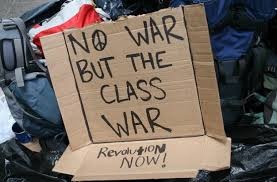
 Die ANC verdeel die werkersklas, volgens Cosatu se geskorsde sekretaris-generaal, Zwelinzima Vavi, het The Star Woensdag berig.
“Dit is duidelik dat die post-apartheid-staat ‘n kapitalistiese staat is,” het Vavi glo Dinsdag gesê.
“Is dit nie die tyd om … ‘n beweging vir sosialisme, ‘n breë anti-kapitalistiese front te bou nie?”
Vavi het ook na bewering Numsa se bewerings ondersteun dat hulle geteiken word om politieke redes .
“Die korrupte en selfsugtige oligarge sal ons altyd sien as ‘n irritasie en sal nie huiwer om rampokkers te huur om ons te vermoor nie,” het hy gesê.
Oor die naweek, het die Suid-Afrikaanse Kommunistiese Party ( SAKP ) se sekretaris-generaal Blade Nzimande glo gevra vir leefstyl-oudits oor Numsa se hoofsekretaris Irvin Jim en sy adjunk Karl Cloete .
Numsa het op sy beurt vir leefstyl-oudits op die lede van die ANC se nasionale uitvoerende komitee, waaronder Nzimande, gevra.
Hulle beskuldig Nzimande en sy adjunk Jeremy Cronin dat hulle die SAKP in ‘n “magtelose” en “hol monopolie-kapitaal front” verander het.
Ek wens die langbeloofde skeur wil nou plaasvind. My maggies. Dit is besig om ons almal op te hou.
LOL! Ek wag weer vir daardie diepe ras broederskap wat gaan vorm as die oligarge besef hulle beskerming lê daarin
Vavi kort ‘n lessie in Sosialisme
Hulle soek volledig kommunisme – dit is ‘n diktatoriale staatsbestel waar die in beheer die mense volledig kan uitbuit en hulleself volledig kan verryk.
de massa heeft Malema met een Ipad en een Breitling zien lopen en moet dus ‘denken’ dat dergelijke artikelen aan een ieder zullen worden verstrekt, incluis onderhoudscontracten, zodra de corrupte toppers de macht hebben. (de misdaad loont boodschap in Suid Afrika). Het is triest maar bovenal gevaarlijk dat er nog steeds ruimte voor dit soort volksverlakkers blijft die opzoek zijn naar kraaltjes en spiegeltjes. Daar ligt, wellicht ten overvloede, een oorzakelijk verband met totaal buiten controle geraakte dagelijkse misdaden.
Du moment dat er een zijtak van de anc uit de gratie raakt is er uit zo’n hoek en de geraakte voormannen (too little too late) alle aandacht voor het egoïstische anc kader.
Maar wat houdt die schijnheilige doorgewinterde slopers en charlatans Pieterse en Ehrenreich nog overeind ?
De onderdrukkende anc eigenschappen als identiteit houden overigens elk mogelijk verstandiger persoon weg.
Het door massamoordenaar Slovo gekweekte en aangewakkerde disrespect voor het moeizaam opgebouwde bestaan en toegevoegde waarde in SA gaat in boosaardigheid verder dan wat er eerder in de geschiedenis plaatsvond uit die idealistische hoek.
Jy het werklik insig in ons omstandigehede. Ek wil ook vir jou vra of jy n idee het wat die algemene gesindheid van die Nederlanders is teenoor ons Afrikanervolk hier in Suid Afrika. Sou jy dink dat hulle begin besef waardeur ons hier onder die ANC regering gaan of nie?
de ‘Gutmenschen’ van de huichelachtige en ronduit onderdrukkende radicale anti-apartheidbeweging hullen zich uiteraard al enige tijd toenemend in stilzwijgen.
De gehele nederlandse politiek was de afgelopen 50 jaar HELAAS links zogenaamd ‘sociaal’ te noemen.
Onder de verslechterende economische maar realistische omstandigheden verschuiven de politieke verhoudingen in Nederland. Er ligt nog een vracht werk o.a. in informatievoorziening, Riempies. Het is al een hele mijlpaal dat er wat rationeler naar de situatie kan worden gekeken, en her en der op beduidender plekken zelfs actief wordt gewerkt.
Het zal u niet ontgaan zijn dat bijvoorbeeld de ‘racisme discussie’ massaal andere vormen aanneemt. Daar ligt natuurlijk een verband de door u gestelde vraag.
Ondertussen gaan we keihard(kliphard ?) door.
Liewe Hans, ek het dit al by geleentheid gese, en ek gaan weer, baie dankie vir jou omgee vir ons Blankes van Suid-Afrika en dat jy steeds, nie net in jou land nie, maar ander lande ook, die moord op ons Blankes versprei.
NS: Ek het intussen met ten minste nog 3 mense van Nederland vriende geword, en hulle deel ook ons sentimente.
BAIE DANKIE !!!
Trip het is heel goed dat er mensen met ervaring uit de eigen praktijk, dus anders als kranten en tv, informatie delen en verspreiden. Dat geeft een representatiever soms fijnzinniger beeld van wat er leeft en helaas ook doodgaat.
Ik ben daarom blij en dankbaar hier op verschillende plekken wat mee te kunnen draaien en te lezen.
Als je onduidelijkheden of problemen tegenkomt in de communicatie of wat dan ook, weet je de weg.
Zo kunnen we elkaar een handje bijsteken.
Ken je de uitdrukking : ” wie het kleine niet eert, is het grote niet weerd” ?
Geen probleem om jou te verstaan.
Hans, in alle eerlikheid, ek ken nie die uitdrukking, maar sal dit defnitief nie vergeet nie.
Weklom terug, Trip. Waar was jy heeltyd?
Dankie Gawie, kom ek stel dit so “places to go, people to see” ! Dit was soos my dag verloop het.
Ja waa was jy!!! Los ons hier alleen!
ongetwijfeld is er een Afrikaans gezegde wat ongeveer hetzelfde betekent. (weerd = waard)
Tog n bietjie lig (goeienuus) in die donker tonnel – baie dankie vir jou hardewerk vir ons daar in Nederland ons waardeer jou
insette opreg.
…ek neem dit ook so waar!
How could Cyril Ramaphosa exercise such influence over
Lonmin’s Executive Board to be able to effectively bend it, and potentially the
Board of Xstrata too, to do his bidding? And what truth could the South African
government have been so desperate to hide that it was judged better to risk
everything and open fire on its own people, rather than let it see the light. The
answer lies at the heart of the bitter fallacy of the South African commodities
boom and the emerging markets paradigm which we have lived in the last 15
years. The sad truth is that nothing has changed, nothing
has improved. In the past there was one oligarch, Harry Oppenheimer, who
controlled Anglo American. Mr Oppenheimer officially opposed the apartheid
regime and was a liberal but conveniently continued to export gold and diamonds
from South Africa up to and beyond 1994. Today there are five to ten oligarchs.
They are black and they are African. They too oppose apartheid and they too are
exporting all of South Africa’s gold and diamonds at the present time. The
reason Cyril Ramaphosa could ransack Lonmin in the way he has, is because he
effectively is Lonmin. Lonmin exists in many ways to serve his interests and
its foreign shareholders would do well to understand this. The whole debate
about nationalisation is therefore completely moot. South Africa’s mines have
already been nationalised and given over to a ruthless tyranny, signed, sealed
and delivered by the many cheerleaders of the ANC overseas.
Drink jou pille Matt.
En nou? Waar is my bydrae? Daar is net ‘n stippellyn wat flikker. Al vir 13 minute.
Gaan uit en probeer weer. Was daar nie dalk n vangwoord in gewees nie?
haha, en wij nou al 34 minuten op de heer Velskoen wachten……
Het maar geskryf dié oligargie waaroor Vavi so bekommerd is, is ou jakkalse en dat hy wat Vavi is maar moet lig loop. Ook dat daar in die politiek soos in die varsproduktemark ‘n gesette tye is, dink maar aan appeltyd en waatlemoentyd. Jy kry dus “kommunisme”-tyd en “sosialisme”-tyd, en Vavi moet maar net ‘n bietjie geduld aan die dag lê, “waatlemoen”-tyd (die sosialisme” waarvoor hy ‘n voorkeur toon?), sal weer aanbreek, die wêreldwye oligargie sorg daarvoor. So ook sal kommunisme weer sy beurt kry en ‘n yster- en ‘n bamboesgordyn kan maar weer oor die wêreld sak. Dis nou in ‘n neutedop wat ek geskryf het. En nou is ek deur de hele varsprododukte- en ideologiemark. O, ja, ek ook iets geskryf van wanneer “die sardientjies loop” en dat Vavi dan spesiaal op sy hoede moet wees. Want op die spoor van die sardjientjies kom die haaie. So, daar het julle ook die vismark by.
Ai die eerstewereld politiek – niemand daar verstaan dit
tog nie plaas en kry hulle eers die land reg dat daar regte politiek gepleeg kan word.
Gert dieselfde het netnou met my gebeur. Ek moes dit weer plaas sodat dit verskyn. Ek het nou al geleer om dit te kopieer voor ek dit stuur, net vir ingeval. Die ander ding is dat daar skielik ‘n “Gas” is op ‘n ander draad wat nie ek is nie maar voorgee om my te wees, met dieselfde frases wat ek gebruik het. Ek dink daar is duidelik ‘n doelbewuste poging om PRAAG te saboteer
Ek dink daar is ‘n meer doelbewuste poging van jou om mense op die forum om die bos te ly Mnr. Willy Posman. Probeer nou die aandag p die sogenoemde “SABOTEURS” plaas. Mooi probeer, probeer weer.
Nee, Die adres van hierdie Gas verskil van die ander een
Praag hoe sien mens dit?
stres jy? Ons sien mos lankal wat aangaan.
Ou Willy jy werk in die afdeling van TELKOM wat toegang het tot mense se IP adresse. Pasop wat jy doen. dit kan tronk sake raak en jou jou werk kos.
http://af.wikipedia.org/wiki/IP-adres
Ek het n gaaitjie in die sand gemaak soos die
woestynspinnekoppie en daar het al reeds een prooi ingeval 😉
Pragtig. Hou hom daar en dinge sal normaal wees.
Wat verhoed u om n beleid van ‘name & shame’ daar te stel? As blixems op geveinsde wyse kan skuil onder die vaandel van anonimiteit slegs om die die pot te roer – glo ek dis niks minder as reg nie?
Sal aspirant / soorgelyke- shysters insgelyks 2x keer laat dink.
achter het toneel is weer een toneel achter een toneel enz. Und das ist auch gut so, zeker als er cirkelvormige bewegingen inzitten. Om maar in termen van der Richter und sein Henker te blijven. Het zou wat worden als local hero’s als de NIA niet ‘in de gaten gehouden’ zouden worden Daniel. Om maar even in termen van der Richter und sein Henker (Dürrenmatt) te blijven. Disqus staat niet bovenaan de voedselketen.
Zolang deze rechter niet een nevenfunctie of alterego van de niet benijdenswaardige Jordaan is lijkt de Suid Afrikaanse kust veilig.
NIA bloubaadjies kruip beslis in die gate van Praag rond. Die vlak van sofistikasie is opmerklik. Lees maar so deur, die wit geel puisies dop voortdunend uit .Daar is mos darem goed soos ‘stink Afrikaners’ en ‘blou afrikaanses’ ook…….hulle het in 1901 plase help brand…..hoekom sal dit nou anders wees in 2013. Praag het mos die kennis…….lig die NIA ‘hits’ per dag uit….kan interessant raak !!!!!!!!!
Sou dit ook een en dieselfde person wees wat my e-posse onderskep en ook blokeer en saboteur ?
Maak die gat groter!!!!
Die enigste rede waarom die adres verskil, is omdat die persoon van ‘n selfoon af werk en vanaf ‘n rekenaar. Twee verskillende IP-adresse.
Die kommunis haat die kapitalis, maar is baie lief vir die kapitaal.
Vavi is in die kol: “Once Mandela was released from prison in 1990, the ANC’s “unbreakable promise” to take over monopoly capital was seldom heard again. On
his triumphant tour of the US, Mandela said in New York: “The ANC
will re-introduce the market to South Africa.” When I interviewed
Mandela in 1997 – he was then president – and reminded him of the
unbreakable promise, I was told in no uncertain terms that “the
policy of the ANC is privatisation”.
John
Pilger, Global Research, 20 Sept. 2012
The
murder of 34 miners by the South African police, most of them shot in
the back, puts paid to the illusion of post-apartheid democracy and
illuminates the new worldwide apartheid of which South Africa is both
an historic and contemporary model.
In
1894, long before the infamous Afrikaans word foretold “separate
development” for the majority people of South Africa, an
Englishman, Cecil John Rhodes, oversaw the Glen Grey Act in what was
then the Cape Colony. This was designed to force blacks from
agriculture into an army of cheap labour, principally for the mining
of newly discovered gold and other precious minerals. As a result of
this social Darwinism, Rhodes’ own De Beers company quickly
developed into a world monopoly, making him fabulously rich. In
keeping with liberalism in Britain and the United States, he was
celebrated as a philanthropist supporting high-minded causes.
Today,
the Rhodes scholarship at Oxford University is prized among liberal
elites. Successful Rhodes scholars must demonstrate “moral force of
character” and “sympathy for and protection of the weak, and
unselfishness, kindliness and fellowship”. The former president
Bill Clinton is one, General Wesley Clark, who led the NATO attack on
Yugoslavia, is another. The wall known as apartheid was built for the
benefit of the few, not least the most ambitious of the bourgeoisie.
This
was something of a taboo during the years of racial apartheid. South
Africans of British descent could indulge an apparent opposition to
the Boers’ obsession with race, and their contempt for the Boers
themselves, while providing the facades behind which an inhumane
system guaranteed privileges based on race and, more importantly, on
class.
The
new black elite in South Africa, whose numbers and influence had been
growing steadily during the latter racial apartheid years, understood
the part they would play following “liberation”. Their “historic
mission”, wrote Frantz Fanon in his prescient classic The
Wretched of the Earth,
“has nothing to do with transforming the nation: it consists,
prosaically, of being the transmission line between the nation and a
capitalism rampant though camouflaged”.
This
applied to leading figures in the African National Congress, such as
Cyril Ramaphosa, head of the National Union of Mineworkers, now a
corporate multi-millionaire, who negotiated a power-sharing “deal”
with the regime of de F.W. Klerk, and Nelson Mandela himself, whose
devotion to an “historic compromise” meant that freedom for the
majority from poverty and inequity was a freedom too far. This became
clear as early as 1985 when a group of South African industrialists
led by Gavin Reilly, chairman of the Anglo-American mining company,
met prominent ANC officials in Zambia and both sides agreed, in
effect, that racial apartheid would be replaced by economic
apartheid, known as the “free market”.
Secret
meetings subsequently took place in a stately
home in England, Mells Park House, at which a future president of
liberated South Africa, Tabo Mbeki, supped malt whisky with the heads
of corporations that had shored up racial apartheid. The British
giant Consolidated Goldfields supplied the venue and the whisky. The
aim was to divide the “moderates” – the likes of Mbeki and
Mandela – from an increasingly revolutionary multitude in the
townships who evoked memories of uprisings following the Sharpeville
Massacre in 1960 and at Soweto in 1976 – without ANC help.
Once
Mandela was released from prison in 1990, the ANC’s “unbreakable
promise” to take over monopoly capital was seldom heard again. On
his triumphant tour of the US, Mandela said in New York: “The ANC
will re-introduce the market to South Africa.” When I interviewed
Mandela in 1997 – he was then president – and reminded him of the
unbreakable promise, I was told in no uncertain terms that “the
policy of the ANC is privatisation”.
Enveloped
in the hot air of corporate-speak, the Mandela and Mbeki governments
took their cues from the World Bank and the International Monetary
Fund. While the gap between the majority living beneath tin roofs
without running water and the newly wealthy black elite in their
gated estates became a chasm, finance minister Trevor Manuel was
lauded in Washington for his “macro-economic achievements”. South
Africa, noted George Soros in 2001, had been delivered into “the
hands of international capital”.
Shortly
before the massacre of miners employed for a pittance in a dangerous,
British-registered platinum mine, the erosion of South Africa’s
economic independence was demonstrated when the ANC government of
Jacob Zuma stopped importing 42 per cent of its oil from Iran under
intense pressure from Washington. The price of petrol has already
risen sharply, further impoverishing people.
This
economic apartheid is now replicated across the world as poor
countries comply with the demands of western “interests” as
opposed to their own. The arrival of China as a contender for the
resources of Africa, though without the economic and military threats
of America, has provided further excuse for American military
expansion, and the possibility of world war, as demonstrated by
President Barack Obama’s recent arms and military budget of $737.5
billion, the biggest ever. The first African-American president of
the land of slavery presides over a perpetual war economy, mass
unemployment and abandoned civil liberties: a system that has no
objection to black or brown people as long as they serve the right
class. Those who do not comply are likely to be incarcerated.
This
is the South African and American way, of which Obama, son of Africa,
is the embodiment. Liberal hysteria that the Republican presidential
candidate Mitt Romney is more extreme than Obama is no more than a
familiar promotion of “lesser evilism” and changes nothing.
Ironically, the election of Romney to the White House is likely to
reawaken mass dissent in the US, whose demise is Obama’s singular
achievement.
Although
Mandela and Obama cannot be compared – one is a figure of personal
strength and courage, the other a pseudo political creation –
the illusion that both beckoned a new world of social justice is
similar. It belongs to a grand illusion that relegates all human
endeavour to a material value, and confuses media with information
and military conquest with humanitarian purpose. Only when we
surrender these fantasies shall we begin to end apartheid across the
world.
Vir ‘n liberaal kan John Pilger nogal die dinge raaksien. Dat jy sover gaan, maar nie die Joodse konneksie raaksien nie of nie wil noem nie, is al probleem.
Sy boeke (soos Chomsky s’n) geniet redelik erkenning, so dalk lei hulle ook maar ‘die opposisie” op daardie front.
Jou opmerking bring my by ‘n webbladsy soos Global Research. Jy vind die raakste samevattings daar. Soos dié een van Pilger. En dan het hulle daardie wollerige goed tussenin wat nie kop of stert van uitgemaak kan word nie (iets soos die fuzzy logic waaroor Christo Viljoen nou die dag geskryf het): Daar is vele “grate” tussen Pilger se “vis”, tog dui hy die spoor aan wat die hiënas langs sluip tot binne-in die hoofindoena se stroois. Laat ons nietemin maar katvoet loop vir Pilger. En vir Global Research.
Dis nou ‘n goeie voorbeeld van ‘leiding van die opposisie”. So kry jy Jode soos Jeremy Cronin wat internasionale kapitalisme (wat deur sy stamgenote gevoer word) beskerm en uitbou… terwyl dit op die oog af moet lyk of hy hul aards-opposisie is.
As hierdie mense eers die mag geproe het dan raak hulle soos wilde diere.Kyk maar na Afrika. Die sogenaamde “leiers” dink net aan huule self. Die massas is lankal vergete.Die hele spulletjie walg my. In hulle magsbeheptheid en self verryking vernietig hulle die land.
So het die Broederbond ook maar die omkoopgeld van Harry Oppenheimer gevat.. met self verryking en magsbeheptheid het hul die Afrikaner saak vernietig.
Dit is maar net instinktiewe getrouheid aan die natuur – die sterkste kry die beste (lees alles) en die res moet maar kry so op die rangorde van sterkte en die balans gaan maar dood van hongerte. So nou en dan ontwikkel daar nuwe sterkes wat die sterkstes uitdaag in n meedoonlose geveg tot die dood. Niks wat ek en jy daaraan kan doen nie.