
Kerstyd word met mooi en aangename dinge soos geluk en vrede geassosieer. ‘n Mens kan jouself afvra in hoeverre sulke mooiheid nog in ons brutale en hoogs ontaarde samelewing moontlik is; seker hoofsaaklik in gesinsverband. Ek onthou hoe Swart Piet in die goeie ou dae sonder om te mor of te kla vir Kersvader onbaatsugtig bygestaan het deur die rendiere te versorg en die skoorstene skoon te maak. In die nuwe Suid-Afrika het Swart Piet spoorloos verdwyn. Skynbaar het die breuk gekom toe hy op gelyke status met Kersvader aangedring het. Daar word beweer dat Swart Piet by ‘n vakbond aangesluit en trekarbeid veroordeel het. Hy is laas gesien toe hy in ‘n onpadwaardige minibus vertrek het. Daar is darem nog ‘n Swart Piet in Nederland maar polities korrek is hy deesdae wit. In die hedendaagse samelewing is blankes die enigstes wat sonder bohaai ‘n onderdanige rol vervul.
Tradisioneel was Kersfees op mooi dinge ingestel. Die wysgerige studie van kuns en skoonheid (“beauty”) staan as estetika bekend. Dit is deel van waardefilosofie of aksiologie. Iets, bv ‘n voorwerp of handeling, is waardevol as dit bv nodig is of verkies word. Waarde word toegeken ingevolge goed of sleg, reg of verkeerd, mooi of lelik, verhewe of banaal, vry of gebonde, ens. Waardes vind aansluiting by kennis, betekenis, waar- en valsheid, heiligheid en onheiligheid, ens. Naas waardefilosofie is daar dus ander wysgerige dissiplines soos logika, kennisleer (of epistemologie) en metafisika. Naas estetika is etiek ‘n belangrike deel van waardefilosofie. In estetika is skoonheid ‘n belangrike soort waarde, maar dit gaan nie net om skoonheid by mense en hulle skeppings (bv geboue, motors) nie. Die natuur (bv blomme, ‘n sonsondergang) kan ook mooi wees. Etiek, daarenteen, is uitsluitlik op menslike gedrag of handeling ingestel; wat mense doen of nie doen nie (bv die kwessie van behoort/”ought”) maar etiket en goeie maniere word uitgesluit. Daardie handelinge of gebrek aan handeling word geëvalueer as goed of sleg, reg of verkeerd, wenslik of onwenslik, deugdelik of ondeugdelik, ens. Naas estetika en etiek is daar algemene waardefilosofie omdat bv die weer of ‘n gebou bv goed of sleg kan wees.
Waarde kan enersyds intrinsiek (dus wesenlik) of inherent (dus eie aan) en andersyds bv relasioneel, instrumenteel of bydraend wees. Ek gaan my aandag voortaan tot estetika beperk. Om duidelikheid oor sekere sake te verkry, is dit wenslik dat ons die aandag verder tot die skone of hoë kunste (“fine arts”) beperk; dus, blote kundigheid of bedrewenheid (“skill”), soos by ambagsmanne (“artisans, craftsmen”), word uitgesluit. Beoefenaars van die skone kunste moet naas kundigheid ook oor bv verbeelding of intuïsie en skeppingsvermoë of kreatiwiteit (dus oorspronklikheid) beskik. Dit bring die kwessie van smaak (“taste”) ter sprake en ook elegansie en styl. In kuns speel die sintuie, dus waarneming of persepsie, ‘n rol, maar ook die intellek en sekerlik ook emosie of gevoel.
In die skilderkuns was voorstellingsvermoë (“representation”) aanvanklik van deurslaggewende belang. Skilders moes in staat wees om wat hulle in die sintuiglike werklikheid waarneem so getrou moontlik weer te gee. Dit word realistiese of figuratiewe kuns genoem. Veral na die uitvinding van fotografie kom nie-figuratiewe kuns algemeen voor, bv verwringing van die werklikheid en abstrakte kuns. In nie-figuratiewe kuns word daar nie gepoog om die sintuiglike of natuurlike werklikheid (getrou) na te boots nie, al slaag nie-figuratiewe en selfs abstrakte kunswerke soms juis vanweë die mate waarin assosiasie met die natuurlike werklikheid behoue gebly het. Baie klem word deesdae op moontlike verskille tussen die bedoeling of intensie van die skilder en die reaksie of respons van kykers gelê.
Estetika is ‘n buitengewoon problematiese studieterrein. “I find aesthetics to be at the same time one of the most interesting and one of the most pointless branches of philosophy. Interesting because it helps us to attend to the various ways in which art matters; pointless because art is too varied for there to be any hope of defining what it is or what gives it value. Nevertheless, much of philosophy’s value derives not from its ability to deliver neat answers, but in its power to make us attend to what matters, what we might otherwise have missed. If, at best, aesthetics can come up with a menu of possibilities, some of which apply to some works of art, some of which to others, that is not a worthless achievement” (Julian Baggini, Philosophy: All that matters, London: Hodder Education, 2012, p 97; Amazon Kindle $7,10).
Wat ek tot dusver geskryf het, is sterk veralgemenend maar kan die tradisionele benadering tot die skone kunste genoem word; dus voordat die hedendaagse ontaarding plaasgevind het. Van deurslaggewende belang vir die doeleindes van hierdie rubriek is verskille in benadering tot kuns, hetsy uit die oogpunt van die kunstenaar of die waarnemers. Daar is onder meer hierdie twee moontlikhede. Enersyds kan kuns (primêr) om kunsonthalwe (“art for art’s sake”) beoefen word, dus om sigself (“disinterested”), as iets wat selfgeldend (“self-justifying”) is; dus kuns as iets wat begeer word of die moeite werd is omdat dit aan bv die skilder en die kykers bv emosionele en/of intellektuele bevrediging en plesier verskaf. Andersyds kan kuns (primêr) om nie-estetiese, bv instrumentele, redes beoefen word, bv om geld te maak of propaganda te versprei. Dit bring hierdie rubriek by ‘n punt waarby uitgekom moes word.
Tot dusver is wat ek geskryf het veral met die skilderkuns in verband gebring. Daar is egter baie ander soorte skone kuns. Byvoorbeeld, letterkunde is ook ‘n kunssoort. ‘n Skrywer kan bv ‘n roman of gedig om bv kuns- of propaganda-onthalwe skryf. Plaaslik het skrywers soos André P Brink en Antjie Krog geen geheim daarvan gemaak nie dat hulle (onder meer) om politieke redes skryf. Dit is soortgelyk aan die sosialistiese realisme of materialisme van die marxiste, wat ‘n didaktiese funksie aan kunstenaars opdring, wat op sy beurt vrye selfuitdrukking en individualiteit aan bande lê. Materiële en omgewingsfaktore, bv ekonomiese omstandighede, beïnvloed of bepaal glo kulturele (insluitende kuns-) uitdrukking. Ingevolge sosialistiese realisme moet bv leidende kommuniste tot helde verhef word en ‘n blink toekoms optimisties en entoesiasties aan die inwoners van kommunistiese lande voorgehou word. Deesdae vind sosialistiese realisme in nie-kommunistiese lande uitdrukking in kulturele marxisme. Kulturele marxisme vind uitdrukking in bv multikulturaliteit, politieke korrektheid en die verheerliking van homoseksualiteit. (Terloops, Jakes Gerwel, ‘n self-erkende marxis, het toe hy ‘n Afrikaansdosent was graag gesê dat hy nie Afrikaans doseer nie maar literatuursosiologie. Onder die dekmantel van Afrikaanse letterkunde het hy marxistiese ideologie gepropageer. Om die voorstanders van Standaardafrikaans te tart, verkies Krog die woord “beautiful” bo “mooi”.)
Sohrab Ahmari het onlangs* ‘n boek oor politieke korrektheid in die skone kunste gepubliseer: The New Philistines: How identity politics disfigure the arts (London: Biteback Publishing, 2016, 144p; Amazon Kindle $5,26). Die Filistyne is die mense wat in die bybelse tyd oorlog teen die Israeliete gevoer het. Daar word egter ook ander betekenisse aan die woord geheg. Filistyn: “Lid van ‘n vyandige groep mense” en “Bekrompe, kleingeestige persoon; kultuurlose mens” (HAT). Byvoorbeeld, die kritikus Matthew Arnold (1822-1888) was voortdurend in ‘n stryd met die Filistyne gewikkel. Arnold het hom daarvoor beywer om ‘n nuwe kultuur gebaseer op artistieke en intellektuele waardes in victoriaanse Engeland tot stand te bring. [* ‘n Vroeëre boek oor dieselfde onderwerp is Roger Kimball se The rape of the masters: How political correctness sabotages art (Encounter Books, 2005, 225p; Amazon Kindle $11,39).]
In die boektitel word daar ook na “identity politics” verwys. ‘n Mens se identiteit is wat jy individueel en groepgewys is. In die hedendaagse (veral Westerse) wêreld word identiteit verideologiseer en veral verpolitiseer. Mense se identiteit word tot enkele kenmerke gereduseer: veral etnisiteit/velkleur, geslag (manlik of vroulik) en seksualiteit.* Met die oog op bevoordeling word daardie kenmerke dan deur aktiviste selektief oorbeklemtoon. Dit gaan vir hulle nie om alle mense nie, maar om nie-wit en veral swart mense. Dit gaan nie om mans nie, maar om vroue. Dit gaan nie om heteroseksuele nie, maar om homoseksuele. Hierdie groepe word uitgelig omdat hulle na bewering benadeel is en nou bevoordeel moet word. Die nuwe uitgeworpenes is heteroseksuele, blanke, Westerse mans. Omdat laasgenoemdes tot skurke verklaar is, moet die “Western artistic canon” waarin veral hulle kunswerke erkenning kry, glo hersien word. “The things we hold dearest are trampled and desecrated” (Kindle 81). ‘n Soortgelyke gees vind plaaslik uitdrukking in die studente-onrus. [* Al hoe meer soorte homo- en/of andersoortige seksualiteit word by “gender dissidents” onderskei. Ahmari verskaf hierdie beginletters: LGBTTQQFAGPBDSM. As dalk oor die F gewonder word, dit beteken “Flexual” (402).]
Ingevolge identiteitspolitiek kan ‘n mens dubbel benadeel wees, bv as jy ‘n swart vrou is. As jy daarby ook lesbies is, kan jy op drievoudige benadeling en dus drievoudige bevoordeling aanspraak maak. Hierdie onderlinge versterking van twee of drie benadelingskategorieë word interseksionaliteit genoem. Diegene wat (militante) feminisme dryf, is dikwels lesbiërs, dus mense wat op dubbele benadeling en dubbele bevoordeling aanspraak kan maak. In identiteitspolitiek is burgerlike en menseregte hoog op die agenda. Aan veral Amerikaanse universiteite word kursusse in identiteitspolitiek aangebied, bv Black Studies, Women’s Studies, Queer Studies, ens.
‘n Ander woord in die boektitel waarop ek die aandag wil vestig, is “disfigure”. Dit is duidelik iets anders as die tradisionele figuratiewe en nie-fuguratiewe kuns waarna ek hierbo verwys het. Hierdie soort verwringing is ‘n skending van skone kuns omdat dit skoonheid inkort en selfs ignoreer. In die opdrag voor in die boek verwys die outeur na Spreuke 5:18: “Sing die lof van jou eie fontein, verheug jou oor jou eie vrou,” waarmee hy seker probeer sê: Wees jou normale self; moenie toelaat dat verdorwe byderwetsheid jou mislei nie. Om sake te vereenvoudig, het ek hierbo veral na skilderkuns verwys. Ahmari span sy net wyer en betrek ook ander skone kunste: “The book ranges freely over the visual, performing and literary arts, drawing examples from dance, film, painting, theatre and the novel, as well as newer forms such as installation, performance art and video. The emphasis is on high art, the kind on display at museums, art institutes and serious galleries” (43).
Sohrab Ahmari is ‘n Rooms-Katolieke Irannees wat Amerikaanse burgerskap verkry het en as joernalis vir die Wall Street Journal in Londen werk. Hy is van huis uit afwysend teenoor verdorwe kuns en onthuts oor die ontaarding van Westerse kultuur. In sy boek wek hy die indruk van ‘n belese esteet wat die moed het om tradisionele estetiese en morele waardes te bepleit, al maak dit hom ongewild by progressiewe Bohemers.
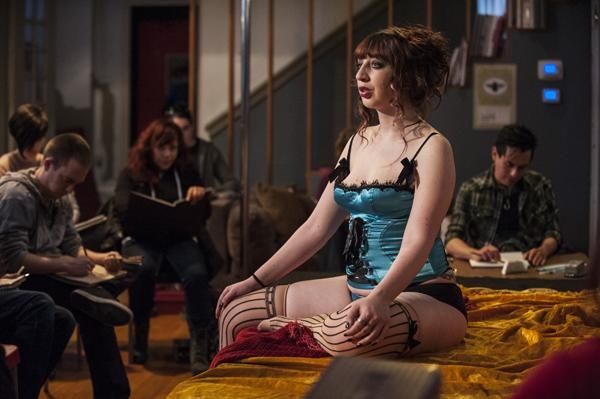
Hy skryf oor die hedendaagse kunswêreld soos hy dit eerstehands in veral Londen ervaar, bv in kunsgalerye, kunsmuseums en teateropvoerings. “The word ‘beauty’ isn’t part of its lexicon. Sincerity, formal rigour and cohesion, the quest for truth, the sacred and the trancendent – none of these concerns, once thought timeless, is on the radar among the artists and critics who rule the contemporary art scene. These ideals have all been thrust aside to make room for the art world’s one totem, its alpha and omega: identity politics” (28). “The identitarians think they already have the answers: a set of all-purpose formulas about race, gender, class and sexuality, on one hand, and power and privilege, on the other” (35).
“This degree of politisation means that Western art no longer fulfils its central role, to serve as a mirror and repository of the human spirit. The state of affairs should worry not just artists and art lovers, but anyone who cares about the future of Western civilisation” (35). “Identity politics came to disfigure our culture … [and] shapes popular culture … compliance with its edicts is increasingly the measure by which we judge movies and TV” (43). Die outeur besef dat identiteitspolitiek nie die enigste sondaar is nie. Daar is ook “the wider collapse of critical standards, the deleterious effects of social media on our attention spans, the sense that art has no new frontiers left to cross” (43), ens.
Identiteitspolitiek is een van die euwels wat Westerse kuns onvry maak. “Much of our art is so doctrinaire, so incapable of conveying any meaning other than the imperatives of identity politics” (58). “Throughout the book, I write of beauty and truth to which all art should aspire” (58). Hy besef dat skoonheid en waarheid ingewikkelde begrippe is maar wil nie daaroor uitwei nie. Skoonheid en waarheid word in die wysbegeerte in veral twee dissiplines, estetika en kennisleer, aangespreek. “Contemporary identitarian art rejects the very possibility of objective, universally accessible beauty and truth … So long as you reject the rejection of universal truth and objective beauty, you are in my camp” (66). Daar is kunswerke wat tydlose skoonheid het en hulle status as meesterstukke verdien. Ons hoef nie altyd saam te stem oor wat mooi is nie, maar dit is objektief (dus sonder bv ideologiese oorwegings) waar dat bv die huise in Constantia mooier as dié in Khayelitsha is.
In die Globe-teater, waar Shakespeare-werke opgevoer word, word daar polities korrek gestrewe na “50/50 gender parity among actors onstage, regardless of the ramifications for storytelling, performance or meaning” (133). Dit is soortgelyk aan die plaaslike sportkwotas wat voorskryf hoeveel spelers nie-wit moet wees en hoeveel van die nie-wittes swart moet wees. Emma Rice, die artistieke direktrise van die Globe sê: “It’s the next stage for feminism and it’s the next stage for society to smash down the last pillars that are against us. Also, my generation have come of age and come into positions of power and we have to use it for good. That’s certainly what I intend to do” (141). “For Rice, directing on Shakespeare’s stage would be a fundamentally political enterprise. It would be about winning and using ‘power’ to promote feminist ends and ‘smash down’ opponents, including the Bard [Shakespeare] himself” (148).
Nog ‘n voorskrif van Rice is: “The plays would have to be made more ‘relevant’ … she finds the Bard tedious and inaccessible … ‘He was writing 400 years ago, there is no way in the world every line can still be relevant.’ The plays are too long, the language too archaic” (148). “‘Relevant’ in 2016, aesthetically and politically, meant the production lost sight completely of Shakespeare’s timeless genius … Relevance meant rewriting the play – and not just rewriting, but bad rewriting” (179). Plekverwysings is na Londen, “a cheap wink at a London audience. Worse was the vulgar contemporary slang marring the dialogue … Relevance also meant punctuating scenes with song-and-dance routines … The entire action, moreover, was accompanied by Indian music” (179). Die polities korrekte bedoeling was “to bash the ‘dominant’ culture … opposing the ‘oppressive’ mainstream” (194).
Daar was bv “fairies as Versailles coutiers-turned-transvestite-zombies with nipple tassels and grotesquely elongated forehead masks” (194). Die hedendaagse dwelm- en verkragtingskultuur word ook bygesleep; dinge wat vreemd aan Shakespeare se werke is (202). “Helena was Helenus, a gay man” (210) gevolglik word ‘n “gay relationship” uitgebeeld (217). “It is Pohypnol that drags Demetrius out of the closet, reconciling him with his homosexuality and his repressed love for Helenus” (217). Die outeur noem hierdie aanpassings van Shapespeare “P[olitically] C[orrect] cant” (210). Die Shakespeare-teks word in Rice se vertolking “just another ‘contemporary issue to explore'” (225).
“This last is identitarian art’s greatest injustice against the culture since social power dynamics and collective identity are all that such art knows and cares about, its practitioners can’t grapple with individuality, with things of the soul, with the inner life – the very things that draw most of us to art in the first place” (225). Dit is hierdie kenmerke wat Shakespeare se werke “timeless and universal” maak (225). Maar identiteitspolitiek breek dit af. “Identity politics now pervade every medium and mode of art, from architecture to dance to film to painting to theatre to video, from the highest avant-garde to the lowest schlock” (233).
“What unites the identitarians who lord over the art world is the belief that art is primarily, even solely, a political enterprise. That was also the premise of Socialist Realism” (233). “Today’s identitarian art puts a high premium on shock value and ironic subversion … the revered subjects are women, racial and sexual minorities victimised by and/or bravely resisting patriarchy, heteronormality and other Western depredations … these groups … become political types, stand-ins for ideological causes, almost always left wing, rather than individual souls” (240).
“Identitarian art finds justification in the work of a new class of hyper-ideological critics, much as the old Soviet hatchet-men upheld Socialist Realism. Today it is a new generation of journalists, academics and social-media personalities who defend the primacy of group identity in art … [They] care little for art history and aesthetics. What they are blessed with is lots of opinions about everything – all of which invariably revolve around race, gender and class, power and privilege. Call them the New Philistines” (250).
“Artforum is the leading US contemporary arts magazine and the intellectual home of America’s tenured avant-garde” (258). “For its editors and contributors, art is mainly a vehicle for advancing an ideological agenda: a heady mix of radical feminism, racial grievance, anti-capitalism and queer theory” (265). “‘Queer’ is as much an identity as an activity aimed at disrupting stable identity. You can be queer, but it is also something you do. ‘It’s a verb,’ as one of the contributors to Artforum’s identity issue put it. You can queer places where gender norms are performed: the family, the strip club or the church. Or you can queer places where artistic norms are performed: the art gallery, the museum, the literary text or the theatre” (265).
“To ‘queer art’ means to disavow aesthetic achievement as a primary aim of the artist. Traditional criticism, formal criteria, even the way artists, curators and viewers interact in the white cube – all of these things are extensions of the institutional and ‘discursive’ structures that oppress us, according to queer theorists. Beauty itself is suspect. After all, if something as fundamental as gender has no basis in biology or human nature but is just a script imposed by power relations, if there is nothing essentially masculine or feminine, as queer theorists believe, then beauty’s status is even more precarious. ‘Beauty’ is whatever those in power – straight, wealthy white men, basically – say it is. Nothing is inherently or objectively beautiful. The British artist Grayson Perry summed this up nicely: … ‘To judge a work on its aesthetic merit is to buy into some discredited, fusty hierarchy, tainted with sexism, racism, colonialism and class privilege’ … It is hard to overstate the awful influence of these ideas on contemporary art. Queer theory treats judgements about beauty, quality and form as impositions of power. And of course to speak of a ‘soul’ or the inner life is nonsensical … Queering art means, in short, the subjugation of art to ideology … The identitarians of Artforum, however, see themselves pursuing social justice, a cause that overrides the passé demands of form, aesthetics and self-expression” (273).
In Artforum word ineengestrengelde taal gebruik, dikwels “Foucauldian* lingo” (318), sodat die presiese betekenis moeilik agterhaalbaar is. In hierdie konteks verwys die outeur na George Orwell wat gewaarsku het dat taal “becomes ugly and inaccurate because our thoughts are foolish, but the slovenliness of our language makes it easier for us to have foolish thoughts” (288). Orwell se opstel, “Politics and the English language” (1946), is myns insiens een van die bestes wat ooit oor Engels en taal in die algemeen geskryf is. Hy was eintlik ‘n voorloper van die grootliks Britse linguistiese wysbegeerte. Daar is baie meer substansie in Orwell se nalatenskap as bloot Animal Farm en Nineteen Eighty-Four. [* Eintlik “Foucaultian”. Michel Foucault (1926-1984) was ‘n linksgesinde Franse filosoof, anargis en homoseksueel wat aan vigs dood is en baie oor bv magsdinamika te sê gehad het.]
“Discussions among in-the-know artists, academics en critics … all agree about nearly everything: everyone knows that ‘neoliberalism’ is something bad; that liberal democracy is merely a more subtle form of tyranny; that Western societies are racist and sexist by design” (295). Nêrens ontleed die outeur liberalisme en demokrasie nie. ‘n Myns insiens ernstige gebrek in sy boek is dat hy hierdie twee verskynsels sonder meer as goed omarm; heel moontlik omdat hy uit die onderdrukkende teokrasie in Iran ontsnap het. Dit is nie prakties om hierdie saak hier verder te bespreek nie. Die beste is om bloot in gedagte te hou dat vryheid vir die ware kunstenaar belangrik is; dat sy skeppingsvermoë nie ten beste kan gedy in ‘n korset soos sosialistiese realisme of identiteitspolitiek nie.
“Arguments aren’t presented in point-counterpoint fashion … or in any logical sequence. Identitarian theory provides a common grammar or set of rules, and the point of the game is to signal political correctness. You can dip in and out of the stream of jargon as you please; it always flows in the same direction” (303). Huey Copeland het dit teen bv “homophobia, antiblackness, sexism, misogyny” wat hy “forms of violence” noem (303). Kobena Mercer praat in hierdie konteks van “culture wars” (310). “Copeland worried, the wider culture has yet to be fully transformed. We still aren’t nearly identitarian enough … the real crux of the matter [is]: What is art’s role in this political project? … the abstruse language disguised something very raw and simple – the desire for political mastery” (318).
“As with Emma Rice at Shakespeare’s Globe, here again it became clear that political power is the purpose and true measure of art in the identitarian mind. The question is never, ‘Does this piece of art express something true, beautiful or good?’ or even, ‘Do I enjoy this?’ … the criteria identitarians apply to art all have to do with power dynamics. The most important of these are intersectionality, visibility, individualism and legibility. To define these concepts is to expose the illiberalism of the ideas behind them” (325). Die rol wat politieke mag (“power”) hier speel, toon duidelik dat identiteitspolitiek ‘n manifestasie van kulturele marxisme is. (Aan die Universiteit Stellenbosch het sowel Russel Botman as Wim de Villiers te kenne gegee dat hulle die samelewing wil verander – glad nie noodwendig verbeter nie – klaarblyklik ooreenkomstig die wense van die marxisties-deurweekte ANC.)
Hier bo het ek reeds na interseksionaliteit verwys. “Intersectionality describes a method of investigating various social situations to determine which group is more oppressed and therefore has the better moral claim. As [Michelle] Kuo defined it, intersectionality ‘addresses the ways in which different kinds of discrimination overlap – how we never experience racism or gender bias in isolation – and treats identities as inseparable from institutional power.’ Think of it as a sort of grievance Olympics” (325). Gestel daar is in ‘n Franse klaskamer konflik tussen ‘n dosent wat ‘n vrou en gay is en ‘n student wat ‘n Moslem en Arabier is. Ingevolge magsdinamiek is die student vanweë bv kolonialisme en kapitalisme glo die mees benadeelde (333). “It is on account of intersectionality that identitarians insist that only whites can be racist” (333).
“Identitarian art devotes a great deal of energy to intersectionality, especially when it tries to uncover the racism, colonialism, sexism, transphobia, heteronormativity etc etc that are allegedly embedded in the art world itself: in the museums, in the collectors’ markets, in curatorial decisions and so on. Intersectionality provides the political script for these inquisitions, and if you know the oppression hierarchy among various group identities, you can easily figure out what the artist is trying to say … intersectionality … is one of the main culprits behind the sheer predictability of identitarian art” (341).
Oor sigbaarheid (“visibility”) word daar soos volg in identiteitspolitiek geredeneer: “Hitherto, certain groups of people have been marginalised or excluded from the culture on account of their race, sex, class and so on, and the injustices committed against them have likewise remained hidden” (348). Dit is die rede waarom hierdie groepe hulle deesdae alewig op die voorgrond dring. Dit help ‘n mens om te verstaan waarom die Afrikaanse Taalmuseum en -monument (ATM) nie die Genootskap van Regte Afrikaners en die twee mense wat die ontwerp van die Taalmonument beïnvloed het (CJ Langenhoven en NP van Wyk Louw) huldig nie maar onlangs verkies het om eerder ‘n byeenkoms oor die destydse slawerny te hou en jaarliks ‘n rieldanskompetisie aan te bied. Die ATM doen alles moontlik om bruin mense te betrek. Terselfdertyd word geen spesiale poging aangewend om die museum of monument of Afrikaans as Afrikanernalatenskap en -prestasie te bemark nie. Afrikaners se eiendomsreg op Afrikaans en op die Taalmonument behoort erken te word, nie net in die onderwerpe van die voordragte wat aangebied word nie, maar ook in gereelde bv boeremusiek-, volkspele- en jukskeibyeenkomste. Wat doen die ATM vir die Voortrekkerbeweging? Die ATKV borg die rieldanskompetisie. Waarom nie ook Afrikanerbyeenkomste nie?
“In the 1980s and ’90s the identitarians adopted visibility as a goal … Nav Haq has written, ‘For artists, there was a deep desire to be made visible – identifiable – exactly for who they were. Subsequently, it could be said that they were offered the conditions to position the defining factor of their marginalisation – ie their race, gender, sexuality – as being something intrinsic to their art'” (387). Ron Karenga van die Black Arts Movement skryf: “Black Art must be for the people, by the people and from the people … all art that does not discuss or contribute to revolutionary change is invalid” (394).
“Identitarian art … has little patience for individualism … This … is another facet of identitarian art’s illiberalism” (441). Hannah Black skryf: “Art is not a space of pure self-expression” (441). MaarAhmari redeneer tereg: “Liberal culture insists there is something in each of us, something unique and immutable, that can’t be reduced to group identities such as race, nationality, gender, sexuality – in short, to collectivity” (448).
Identiteitspolitiek verafsku kuns wat universeel en tydloos verstaanbaar is, dus leesbaarheid (“legibility”) het (456, 510). Hieroor skryf Ahmari: Hedendaagse kuns is soms onleesbaar “owing to the loss of technical mastery and the erosion of standards. To be clear, legible art doesn’t have to be simple, populist, or conventionally beautiful. Such art doesn’t even need to be figurative or narrative-driven. I am not crying out for idyllic landscapes with ducks and geese (though these things have their rightful place) … But art shouldn’t be inept or ugly, and too often today outré politics justify plainly inept art” (471). Die ware kunstenaar “wrestles with the timeless and transcendent things in the world. The identitarians know, too, that their ideology can’t supplant the pure joy we take in the energetic brushstroke, in the playful line, in shape and colour, in the nobility of the human form, in the ecstasies of the human body in motion, in self-expression unbound – both for their own sake and for the deeper things they say about our love of beauty” (510).
In sy voorlaaste hoofstuk skryf Ahmari onder meer oor ‘n Acosta. In ‘n onlangse opvoering “he lies seductively on the floor and asks a mostly white audience to count as he twerks more than a thousand times – one twerk for every African-American killed by the police in the US in 2015” (746). “The twerk … is a hip-hop dance, in which the dancer squats low to the ground and rapidly thrusts and gyrates the derrière” (684). Sou ‘n blanke akteur toegelaat word om dieselfde oor bv plaasmoorde voor ‘n swart gehoor te doen?
In die laaste hoofstuk skryf Ahmari: “For many people in the West, all thinking about culture has been reduced to a single mental reflex: art is worthwhile if it validates the narratives, identities and feelings of ‘maginalised’ groups or, conversely, lays bare the injustices of the ‘mainstream'” (795). Na aanleiding van die voorafgaande vra hy: “Is it any wonder … that Americans and Europeans are increasingly embracing nationalist parties and illiberal movements – or why Donald Trump, Marine Le Pen, Viktor Orbán and their like are making significant gains at the ballot box?” (819). “They can do identity politics, too: it’s called white nationalism” (830).
Jare gelede toe Marilyn Martin die direkteur van die Nasionale Kunsmuseum in Kaapstad was, was sy gaande oor die skilderye van wat sy as dié van ‘n onbekende swart kunstenaar beskou het. Daarna het dit geblyk dat dit die werk van ‘n miskende blanke skilder is wat ‘n swart naam en van op sy skilderye aangebring het om te toets of die keuring ingevolge kuns of politiek gedoen word. Wat ons hier en in Ahmari se boek mee te make het, is simptomaties van ‘n kultureel siek samelewing.
Gelukkig geld dit nie almal in die samelewing nie. Konserwatiewe, tradisievaste burgers, soos in regse geledere aangetref word, is goed teen skadelike ideologie verskans. Maar hulle moet desnieteenstaande waaksaam wees, want hulle word in die massamedia (pers, radio, rolprent, televisie, internet) en elders, bv by opvoerings, “kunstefeeste” en self by die Afrikaanse Taalmonument, dikwels blootgestel aan politieke korrektheid en verwante hedendaagse ideologiese euwels. Gelukkig is daar steeds kunstenaars, soos skilders, wat in hulle ateljees ongesteurd voortgaan om kuns om kunsonthalwe te beoefen en daar is gelukkig ook kopers vir wie mooi steeds mooi en nie-ideologies is.
Uitstekende voorbeeld van dit wat deesdae as kuns deurgaan: Onaantreklike verslaafde wat skynbaar haar hare verloor agv te veel dwelms, skree obsene woorde teen Trump op verhoog. (Hoekom is die meeste van hierdie SJW’s so besonder onaantreklik, of is dit juis die rede: Dis al manier om aandag te kry?)
http://www.breitbart.com/big-hollywood/2016/12/19/fiona-apple-yells-donald-trump-fck-standing-rock-benefit/?utm_source=facebook&utm_medium=social
Jared, dis jammer dat ons nie n Afrikaanse Breitbart het nie, Leon Lemmer se skrywes is uitstekend.
Instead you have an Afrikaans Puffington Host from which leeches are to be attached forthwith. Read: “How a Reporter’s Clueless Report on ‘Rubber Bullets’ Made the Internet Explode in Hilarious Ridicule” to understand the depth of stupidity: http://ijr.com/2014/08/169042-reporters-clueless-tweet-made-internet-explode-hilarious-ridicule/
Hy wou by Nuus24 werk, maar kon nie, want hy was te slim.
Enige iets waaraan die eensellige groepsdenker Semiet raak verander in ‘n kakstorie.
Is dit nou ‘n Arabier of ‘n jood? Hulle is altwee semieties.
Zolang de fiscus, als deel van ongekend vergaande staatsbemoeienis maar kan graaien, kan het ook nog betaald worden.
In bijgaande film of beeldende kunst, wordt Friedrich der Große(1712-1786) uitgebeeld als vrouw.
https://www.youtube.com/watch?v=QHLVVSLg60U
Hitler wilde zich wel identificeren met Friedrich !
Voor het DDR regiem was dat ongemakkelijker en men ging met het ‘Denkmal’ aan ‘unter den Linden in Berlijn, aan de haal. (foto onder)
Onder het merkel bewind in zogenaamd verenigd Duitsland wordt de Pruisische koning getolereerd, maar is nog steeds een onderschoven kindje. Ondanks mogelijke homofiele neiging. Vervanging van het standbeeld voor ‘de vluchteling’ hangt in de lucht. Als dat maar weer een ondergeschoven kindje blijft bij de grijze betonnen vlakte van het holocaust monument naast de Brandenburger Tor.
‘Baas boven baas’ ook bij de ‘voorheen benadeeldes’ van de boze blanke man. Consequent verdelend en opleggend, tot het einde der tijden.
https://uploads.disquscdn.com/images/9e66b824f460a686053b184ca4e10193c3d8c306b19c346c26be21096665b7dc.jpg
http://www.biznews.com/africa/2016/12/22/south-africa-will-finally-be-an-african-country/
Nog ‘n werk deur ‘n miskende blanke skilder … https://uploads.disquscdn.com/images/11d6c193b12898195f4b3b3bc615b0645b939d153a7f17ec97bdec6855bae1c7.jpg
de schreeuw of schrik van Vince door Vince en voor Vince ?
Einste!
Hans, hierdie is seker nie die regte plek om hierdie interessantheid uit te lig nie, maar doen gerus ‘n Google soektog vir “Vincent van Gogh screaming” … en kyk watter “image” Google vir jou gee!
Net vreemd is dat dit nie ‘n skildery van Vincent van Gogh is nie, maar van Edvard Munch …
The original German title given by Munch to his work was Der Schrei der Natur (“The Scream of Nature”). The Norwegian word skrik usually is translated as “scream”, but is cognate with the English “shriek”. Occasionally, the painting also has been called The Cry.
Tydens die huidige jaarlikse Sinterklaas fees word die blanke Sinterklaas omring/gevolg deur ‘n aantal ‘knegte’, met swart geverfde gesigte. Die Swarte Piete versinnebeeld die dood uit die Onderwêreld, daarom is die figure swart.
Sinterklaas ry op ’n wit skimmel met die naam Americo, en nie met ‘n slee nie.
Kunstenaars is die hoëpriesters in die keek van liberalisme