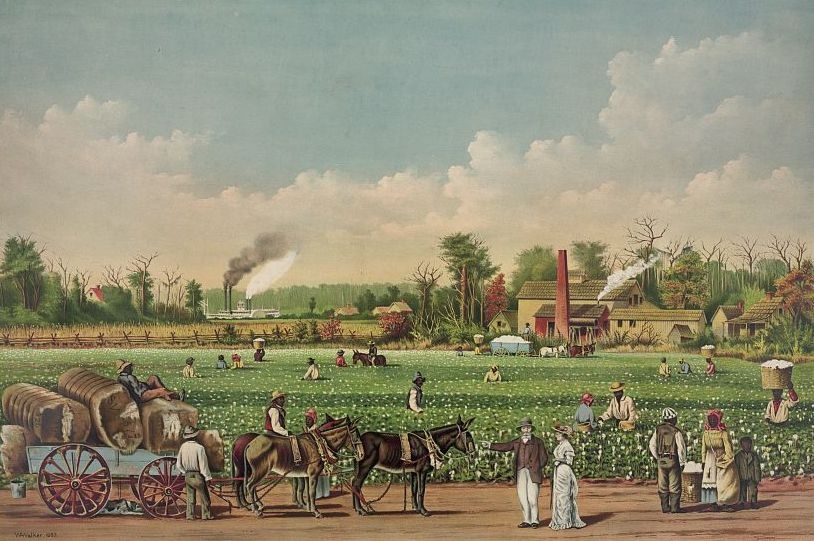
Daar is ‘n literêre werk wat deur Edmund Wilson (1895-1972) bestempel is as die belangrikste boek wat in die Amerikaanse Konfederasie geskryf is. Hy verwys na Mary Boykin Chesnut (1823-1886) se Diary (edited by Isabella D Martin and Myrta Lockett Avary, Digireads, 1905/2014, 214p; Amazon Kindle $1,13). Chesnut se pa, Stephan Miller (1788-1838), was die goewerneur van Suid-Carolina en later ‘n senator in Washington DC. Haar man, James Chesnut (1815-1885), was voor die uitbreek die die Amerikaanse Burgeroorlog (1861-1865) eweneens ‘n senator en daarna ‘n adjudant vir die president van die Konfederasie, Jefferson Davis (1808-1889), en ‘n generaal in die konfederale leër. “It was always his luck to arrive in the nick of time and be present at a great battle” (Kindle 2451).
Die Konfederasie verwys na die sewe (later elf) suidelike Amerikaanse state wat van die Unie weggebreek en Richmond, Virginia, as hoofstad gehad het. In hierdie suidelike state is geredeneer dat hulle vrywillig by die Unie aangesluit het, dat die sentrale regering in Washington DC net beperkte gesag oor hulle in ‘n aantal duidelik omskrewe sake het en dat iedere staat die vryheid het om van die Unie weg te breek. Daarenteen was die president van die VSA, Abraham Lincoln (1809-1865, president 1861-1865), van mening dat die Unie ten alle koste behoue moet bly; dat daar ‘n sterk sentrale regering en ‘n enkele Amerikaanse nasie moet wees. Toe sommige van die suidelike state van die Unie wegbreek, het die Burgeroorlog gevolg.
Mary Chesnut het in die hoogste politieke kringe in die Konfederasie beweeg. Sy en haar man en die presidensiële Davis-egpaar was huisvriende. Hulle was baie patrioties en het dwarsdeur die oorlog bly glo dat hulle saak reg is. “The real ammunition of our war is faith in ourselves and enthusiasm in our cause” (2504). “Our people are brave, our cause is just; our spirit and our patient endurance beyond reproach” (2622).”I would rather live in Siberia, worse still, in Sahara, than live in a country surrendered to Yankees” (2253). Yankees is die naam vir die inwoners van die noordelike state. Die suidelike state het bloot op hulle vryheid, hulle reg om alleen gelaat te word, aangedring terwyl die Unie, met Lincoln aan die spits, ‘n oorlog ter verowering teen hulle gevoer het.
“Madame, your country is invaded” (620). “If we could only separate … and not have a horrid fight for divorce” (468). “We would be only too grateful to be left alone” (1580). Suid-Carolina is ‘n “poor, little, hot-blooded, headstrong, rash, and troublesome sister State” genoem (730). Die suidelike state was landbou-georiënteerd en afhanklik van slawe-arbeid; iets wat nie in dieselfde mate vir die noordelike state met hulle nywerhede gegeld het nie. Slawerny was nie die oorsaak van die Burgeroorlog nie, maar Lincoln het die slawe in die Konfederasie enersyds tot opstand aangehits en hulle andersyds aangemoedig om na die noorde te dros sodat hy hulle onder meer teen die konfederale soldate kon gebruik. In die dagboek word daar verwys na ‘n “black regiment” (4218). Vir die suidelike state was dit ‘n geval van “Yankees in front and negroes in the rear” (627). Lincoln het hom, soos FW de Klerk meer as ‘n eeu later, in so ‘n mate vasgeverf met sy uitlatings oor die swartes dat die slawe na die Burgeroorlog as vrye wesens oor die land losgelaat is.
Die outeur blyk ‘n goed ingeligte, intelligente persoon te wees wat sowel Frans as Duits magtig was. Sy was ‘n fyn waarnemer. “I am a tolerably close observer, a faithful watcher have I been from my youth upward of men and manners. Society has been for me only an enlarged field for character study” (4717). Hoewel Chesnut gelowig was, was sy nie eng godsdienstig nie. Sy was teen slawerny gekant. “Slavery has to go, of course, and joy go with it” (1151). Hulle huwelik was kinderloos. “Women have such a contempt for a childless wife” (2030). “Of course, I know nothing of children: in point of fact, am awfully afraid of them” (3541). Daar is tekens van feminisme by haar te bespeur.
Die dagboek is goed geskryf en die lesers leer haar ken as iemand wat maklik lag. “The reason I can not bear Mrs Chesnut is that she laughs at everything and at everybody” (2720). “If I laugh at any mortal thing it is that I may not weep” (4762). Sy was dikwels depressief en siek en het maklik gehuil. “I cried with a will” (5570). “This woman cries with her whole heart, just as she laughs” (4887). Die dagboekinskrywings dek die tydperk 8 November 1860 tot 2 Augustus 1865. “For the first time in my life no books can interest me. Life is so real, so utterly earnest, that fiction is flat” (2491). “I write daily for my own diversion. These mémoires pour servir may at some future day afford facts about these times and prove useful to more important people than I am” (1984).
Die Chesnut-egpaar het as welvarende plaaseienaars die oorlog binnegegaan maar na die oorlog as verarmdes gespook om te oorleef. Inflasie het sy tol geëis. “You take your money to market in the market basket, and bring home what you buy in your pocket-book” (3974). “The loss of our private fortune the smallest part” (3798). “Our best and bravest are under the sod” (4672). “All that pleasant company are dead, and our world, the only world we cared for, literally kicked to pieces” (3342). “Hearts do break in silence, without a word or a sigh” (4404). Van party gewonde soldate het min ledemate, ens, oorgebly. Van een van hulle is gesê: “He has body enough left to hold his soul” (3941). “They were awfully smashed-up, objects of misery, wounded, maimed, diseased” (4482). “War leads to love-making … the farce is ‘Cupid on Crutches’” (4040).
Die Konfederasie het tevergeefs op buitelandse steun gehoop. “From the outside no help indeed cometh to this beleaguered land” (1969). Die aanvoerder van die Unie-magte, William Sherman (1820-1891), word in die noordelike state geloof, maar hy het ‘n beleid van verskroeide aarde in die Konfederasie gevolg. Chesnut noem hom “vandal Sherman” (4952). “My husband said Nature is a wonderful renovator” (5385). “Nature is so luxuriant here, she soon covers the ravages of savages” (5392).
In die Konfederasie was daar een opsie wat nooit oorweeg sou word nie, naamlik Britse herkolonisering. “The British are the most conceited nation in the world, the most self-sufficient, self-satisfied, and arrogant. But each individual man does not blow his own penny whistle; they brag wholesale” (1862). “It is a crowning misdemeanor for us to hold still in slavery those Africans whom they [the British] brought here from Africa, or sold to us when they found it did not pay to own them themselves. Gradually, they slid or sold them off down here; or freed them prospectively, giving themselves years in which to get rid of them in a remunerative way” (1882). Tydens die Burgeroorlog moes die suiderlinge William Howard Russell (1820-1907) as joernalis van die Londense koerant, The Times, verduur. Hy het met “three P’s – pen, paper, prejudices” – gekom (970).
Die heel eerste dagboekinskrywing noem dat Lincoln tot Amerikaanse president verkies is. Iemand het gesê: “Now that the black radical Republicans have the power I suppose they will Brown us all” (232). Die Republikeinse Party was teen slawerny gekant en in daardie sin pro-swart. “Brown” verwys na John Brown (1850-1859) wat slawerny wou afskaf deur opstande te stook. “Now if slavery is as disagreeable to negroes as we think it, why don’t they all march over the border where they would be received with open arms? It amazes me. I am always studying these creatures. They are to me inscrutable in their way and past finding out. Our negroes were not ripe for John Brown” (1391).
Die outeur het gesien hoe ‘n swart slavin opgeveil word. “She seemed delighted with it all” (375). Oor ‘n slaaf: “He is awfully grateful to us for buying him” (3535). Daar is verwag dat die slawe tydens die Burgeroorlog in algehele opstand sou kom, maar “not by one word or look can we detect any change in the demeanor of these negro servants” (696). “They don’t go to the enemy, because they are comfortable as they are, and expect to be free anyway” (3163). ‘n Slavin het gesê: “We were comfortable every way — good house, everything” (783). ‘n Slaaf het in lewensgevaar vir sy eienaar “a bucket of ham and rice,” wat hy gekook het, op die slagveld geneem (1378).
“The best way to take negroes to your heart is to get as far away from them as possible. As far as I can see, Southern women do all that missionaries could do to prevent and alleviate evils. The social evil has not been suppressed in old England or in New England, in London or in Boston. People in those places expect more virtue from a plantation African than they can insure in practise among themselves with their own high moral surroundings … The Northern men and women who came here were always hardest, for they expect an African to work and behave as a white man. We do not” (2044).
“Mrs Preston and I were talking of negroes and cows. A negro, no matter how sensible he is on any other subject, can never be convinced that there is any necessity to feed a cow. ‘Turn ’em out, and let ’em grass. Grass good nuff for cow’” (2583). “Evas are mostly in the heaven of Mrs [Harriet Beecher] Stowe’s [1811-1896, Uncle Tom’s Cabin, 1852] imagination. People can’t love things dirty, ugly, and repulsive, simply because they ought to do so, but they can be good to them at a distance; that’s easy. You see, I can not rise very high; I can only judge by what I see” (2057).
Teen die einde van die oorlog het die aanslag op die konfederale hoofstad, Richmond, begin. “Am I the same poor soul who fell on her knees and prayed, and wept, and fainted, as the first gun boomed from Fort Sumter? Once more we have repulsed the enemy. But it is humiliating, indeed, that he can come and threaten us at our very gates whenever he so pleases. If a forlorn negro had not led them astray (and they hanged him for it) on Tuesday night, unmolested, they would have walked into Richmond” (4107).
Na die oorlog skryf Chesnut: “These negroes are unchanged” (5345). “The fidelity of the negroes is the principal topic. There seems to be not a single case of a negro who betrayed his master, and yet they showed a natural and exultant joy at being free. After we left Winnsboro negroes were seen in the fields plowing and hoeing corn, just as in antebellum times. The fields in that respect looked quite cheerful. We did not pass in the line of Sherman’s savages, and so saw some houses standing” (5398). “Nothing is left to us now but the bare land, and the debts contracted for the support of hundreds of negroes during the war … The negroes would be a good riddance. A hired man would be a good deal cheaper than a man whose father and mother, wife and twelve children have to be fed, clothed, housed, and nursed, their taxes paid, and their doctor’s bills, all for his half-done, slovenly, lazy work. For years we have thought negroes a nuisance that did not pay. They pretend exuberant loyalty to us now. Only one man of Mr Chesnut’s left the plantation with the Yankees” (5431).
“The negroes have flocked to the Yankee squad which has recently come, but they were snubbed, the rampant freedmen. ‘Stay where you are,’ say the Yanks. ‘We have nothing for you.’ And they sadly ‘peruse’ their way. Now that they have picked up that word ‘peruse,’ they use it in season and out. When we met Mrs Preston’s William we asked, ‘Where are you going?’ ‘Perusing my way to Columbia,’ he answered. When the Yanks said they had no rations for idle negroes, John Walker answered mildly, ‘This is not at all what we expected.’ The colored women, dressed in their gaudiest array, carried bouquets to the Yankees, making the day a jubilee. But in this house there is not the slightest change. Every negro has known for months that he or she was free, but I do not see one particle of change in their manner. They are, perhaps, more circumspect, polite, and quiet, but that is all. Otherwise all goes on in antebellum status quo. Every day I expect to miss some familiar face, but so far have been disappointed” (5516).
“Went to our plantation, the Hermitage, yesterday. Saw no change; not a soul was absent from his or her post. I said, ‘Good colored folks, when are you going to kick off the traces and be free?’ In their furious emotional way, they swore devotion to us all to their dying day … ‘Well, William, what do you want?’ asked my husband. ‘Only to look at you, master; it does me good” (5542). Hedendaagse Amerikaanse swartes stel slawerny heeltemal anders voor as in Chesnut se eerstehandse verslag; dermate dat hulle op kompensasie aandring. Insgelyks stel Suid-Afrikaanse swartes apartheid so wreedaardig en verontmenslikend moontlik voor ten einde soveel moontlik bevoordeel te word.
Chesnut wek die indruk dat slawerny ‘n parasitiese stelsel ten koste van slawe-eienaars was. Hedendaagse Amerikaanse swartes, daarenteen, stel slawerny voor as ‘n uitbuitende opset waarin hulle voorgeslagte nie na behore vir hulle arbeid vergoed is nie. Daar word dan met vergesogte eise gekom waarvolgens huidige vrygebore swartes vir die beweerde benadeling van slawe vergoed moet word. Sonder dat individuele swartes iets hoef te doen, maak groeplidmaatskap hulle glo geregtig op terugbetaling. Dié geld moet opgedok word deur ander mense as die (veral blanke) dooies wat glo destyds onregmatig deur slawerny bevoordeel is.
Lank na emansipasie in 1865 het Amerikaanse swartes op groot skaal begin koerskies uit die suide na die noorde en weste van Amerika. Hulle het ten minste aanvanklik vryelik die sekuriteit van kos, huisvesting, ens, in ruil vir hulle arbeid verkies. Hierdie etniese groep het klaarblyklik nie in dieselfde mate as blankes waarde aan vryheid geheg nie. In Afrika is na bewering tradisioneel net sowat ‘n kwart van die swart bevolking nie deur hulle medeswartes verslaaf nie (Hinton Rowan Helper, The negroes in Negroland, New York: GW Carleton, 1868, 225p; Amazon Kindle $1,13, 541, 560, 1745). “Slavery in Africa as a national institution … seems to have existed always” (655).
“The liability to fall into a condition of servitude is not so frightful in Africa as it is where there is a higher appreciation of personal liberty; nor does the same odium attach to the term slave as is attached to it among civilized men. The African sees very little difference between the authority exercised over him by one whom he acknowledges as his master and the petty tyranny which is exercised by most African chiefs over their subjects; and so long as he is worked moderately, and treated kindly, he has but little cause for dissatisfaction, and not infrequently by his own choice places himself in this condition” (570). Die voorafgaande twee sinne is heeltemal in ooreenstemming met Chesnut se standpunt.
Slawerny het voor- en nadele gehad. Ek mik na ‘n konstruktiewe aanwending van die positiewe aspekte in die hedendaagse Suid-Afrika. Naas Helper se boek is daar ‘n ander bron waarna ek by ‘n vorige geleentheid verwys het. William Buckley “proposed, several years before Governor Reagan offered his hard-nosed welfare-reform program in California, that all welfare recipients be required to do ‘street cleaning and general prettification work’ for the city. Here was the first conservative enunciation of the workfare principle, or as Buckley put it rather crudely, ‘No workee, no dolee’” (Lee Edwards, William F Buckley Jr: The maker of a movement, Wilmington: Intercollegiate Studies Insitute, 2014, 208p; Amazon Kindle $11,39, 1249).
In Suid-Afrika word protes, wat dikwels gewelddadige afmetings aanneem, as ‘n fundamentele mensereg beskou, seker omdat geweld in die DNS van die ANC is. Dit misken ‘n fundamenteler beginsel: dat iets in ruil vir niks ‘n onding is. Diegene wat nie vir dienste betaal nie behoort geen reg te hê om oor gebrekkige of geen dienste te betoog nie. Nie-betalers behoort verplig te word om iets in ruil vir dienste, huisvesting, ens, te doen, bv strate te vee, rommel op te tel en plante te versorg.
Deesdae is die Amerikaanse middestede die nuwe plantasies waar swartes aangetref word. “Under slavery, blacks had to work; today’s blacks don’t have to work to inhabit the progressive plantation” (Dinesh D’Souza, Hillary’s America, Washington: Regnery Publishing, 2016, 256p; Amazon Kindle $19,24, 366). Die verskil tussen enersyds die hedendaagse werkloosheidstoelae en andersyds vergoeding vir werk is so klein dat baie mense verkies om nie te werk nie. Staatstoelaes aan gestremdes en bejaardes kan geregverdig word, maar nie oorkompensasie aan diegene wat nie (wil) werk nie. In Suid-Afrika is die wanverhouding tussen diegene wat ‘n bate vir die samelewing is en diegene wat ‘n (finansiële) las vir die land is veel groter as in Amerika. Hierdie situasie versleg eksponensieel. Die huidige beleid van staatsaalmoese is nie volhoubaar nie.
Nelson Mandela het graag beweer dat Suid-Afrika se mense die land se grootste bate is. Hy het dit gedoen om populêr te wees en natuurlik ook omdat hy en sy politieke party meerderheidsteun geniet het. Maar in ‘n land waarin die meeste mense onproduktief is en baie van hulle roofbou toepas, dus afbreek pleks van opbou, is ruim die helfte van die inwoners eerder ‘n ekonomiese las as ‘n bate. Maniere moet gevind word om die onproduktiewes en sosiaal skadelikes tot ‘n voorbeeldige leefwyse te transformeer. Dit kan gedoen word deur minder rojaal enersyds met staatstoelaes en andersyds met bv minimum vergoeding te wees. Die nie-produktiewes is soos die spoorwegnetwerke: hulle is daar maar hulle word nie na behore benut nie.
Onder diegene wat in die nuwe Suid-Afrika as politieke leiers ontpop het, is daar ‘n hele aantal tronkvoëls wat oorsimpatiek jeens misdadigers is. Anders as in sommige beskaafde lande is sake in die nuwe Suid-Afrika so bewimpel dat prisoniers niks in ruil vir hulle onderhoud hoef te doen nie en hulle boonop stemreg het. In die goeie ou dae kon dikwels gesien word hoe bandiete op paaie of plase werk. ‘n Bewaarder het hulle opgepas en hy het die reg gehad om enigeen wat probeer ontsnap, te skiet. Toe was dit nie nodig dat daardie bewaarders superbewaarders moes hê om oor hulle toesig te hou nie. Ontsnappings het selde indien ooit plaasgevind. Prisoniers en onwettige immigrante behoort verplig te word om werk in ruil vir hulle onderhoud te doen, of daar behoort ten minste sodanige opsie te wees, wat dalk vir baie van hulle aanvaarbaar sal wees.
Weens die huidige preokkupasie met menseregte, bv vryheid, kan slawerny kwalik in sy oorspronklike vorm teruggebring word. Maar dit is moontlik dat baie werkloses die sekuriteit van ‘n werk en ‘n inkomste sal verkies bo die kreperende vryheid van leeglê. Dit het sielkundig groot voordele om eerder ‘n nuttige burger as ‘n oorlas te wees. Daarmee word selfrespek teruggewen. As staatstoelaes ingekort word, moet leeglêers eerder tot werk as misdaad verplig word. Dit kan deur strenger en doeltreffender wetstoepassing bewerkstellig word.
Wanneer die ANC iets doen wat weersin by sommige wek, word ‘n mooi klinkende naam daarvoor uitgedink. Vandale en terroriste word “vryheidsvegters” genoem. Swart oorheersing word “demokrasie” genoem. “Demografies verteenwoordigend” beteken minstens 80% swart. Die akademiese agteruitgang van universiteite word “transformasie” genoem. Rassediskriminasie teen en benadeling van blankes word “regstellende aksie”, “bemagtiging”, ens, genoem. ‘n Stelsel wat werkloses tot werk verplig of selfs net aanmoedig, sal deur liberaliste afgeskiet word. Dit sou onvanpas en dalk selfteenstrydig wees om dit “liberale arbeid” te noem. Maar “progressiewe arbeid” klink vir my na ‘n gepaste benaming. Werkkolonies behoort geskep te word waar werkloses vir ‘n bepaalde tydperk en teen vasgestelde vergoeding gekontrakteer word. Nuttige werk, soos die herstel van paaie, kan deur hulle onderneem word. Daar moet liewer in landsbelang gedink word en nie ingevolge oordrewe menseregte, soos vryheid sonder verantwoordelikheid, nie.
In propaganda word ons wysgemaak dat “vryheidsvegters” vir ons die salige staat van demokrasie, in die vorm van swart oorheersing, besorg het. Isaiah Berlin (1909-1997) het vryheid as die afwesigheid van inmenging gedefinieer. Philip Pettit het vryheid as nie-dominansie herdefinieer (Jason Brennan, Against democracy, Princeton University Press, 2016; 304p; Amazon Kindle $18,43, 1745). Die waarheid is dat die belange van blankes in die nuwe Suid-Afrika nie net aan voortdurende inmenging deur die swart regering blootgestel is nie, maar ook aan naakte dominansie. Vir blankes is die nuwe Suid-Afrika ‘n era van onvryheid, dus in daardie opsig soos slawerny. Dink aan hoe blanke sakemanne en boere verplig word om van hulle eiendom, sonder enige teenprestasie van swartes, aan swartes af te staan. Vryheid vereis regte wat ons vrywaar teen inmenging en dominansie. Sodanige regte bestaan nie. Maar dan kom mense soos FW de Klerk en Leon Wessels en vertel herhaaldelik dat ons in ons noppies met die grondwet moet wees.


Leave a Reply
You must be logged in to post a comment.