Ná die skrywer Christopher Hope se besoek aan die ou Suid-Afrika in 1987 (Praag 5.09.2020), het hy in 2017 na sy geboorteland, maar ‘n nuwe Suid-Afrika, teruggekeer en in ‘n boek verslag oor sy waarnemings gedoen: The Café de Move-on blues: In search of the new South Africa (London: Atlantic Books, 2018, 336p; Amazon Kindle $12,06). Die onelegante hooftitel van die boek verwys na nieblanke ondernemings wat op kort kennisgewing moes skuif as die “apartheidsregime” toeslaan (Kindle 417). Die teks neem die vorm aan van ‘n reis deur Suid-Afrika, met as saambindende tema die kwessie van die behoud al dan nie van veral standbeelde.
Sedert 1994 het Suid-Afrika nie net staatkundig revolusionêr verander nie. Instansies in die land het onherkenbaar getransformeer. Byvoorbeeld, die Universiteit Stellenbosch (US), wat deesdae eerder Stellenbosch University wil wees, het sy tradisionele beeld as ‘n bastion van die Afrikanerdom en Afrikaans afgeskud en ontaard in ‘n kompromislose ANC-gunssoeker. Dit kom dus eintlik nie as ‘n verrassing nie om die volgende in Hope se bedankings te lees: “I am most grateful for my three-month residency, in early 2017, as a Fellow of STIAS, the Institute for Advanced Study, at Stellenbosch University” (3669). Wat Hope oor bv sy 1987-besoek aan Suid-Afrika geskryf het, moes ongetwyfeld gehelp het om hierdie finansiële meevaller te verseker. Wat hy hierdie rondte kwytraak, kom dus met die komplimente van die nuwe US.
Hope noem dat hy Bill Nasson by die US as geesgenoot gehad het. Hierdie historikus is, soos Hope, berug vir sy vyandigheid jeens Afrikaners. Byvoorbeeld, Naspers/Media24 het Nasson met voorbedagte rade gevra om ‘n boek oor Hendrik Verwoerd te resenseer (Netwerk24, 10.06.2018). Nasson het hom gate uit geniet. Hy is immers in daardie deel van die spektrum waar hy vrygestel is van die las van objektiewe beoordeling. Nasson noem Verwoerd ‘n “aanstootlike anachronisme” en hy verwys na “Afrikanernasionalistiese dinosourusse.” Dit is te betwyfel of hy ‘n teks wat glo “onverteerbaar” en “behep met kleur” is, self van voor tot agter gelees het, of, soos hy dit stel, deur die 700 bladsye “gewaad” het. Hy het immers vooraf geweet wat hy van Verwoerd dink en bevestig in sy resensie dat sy siening van hierdie groot Afrikaner en intellektueel nie vleiend is nie.
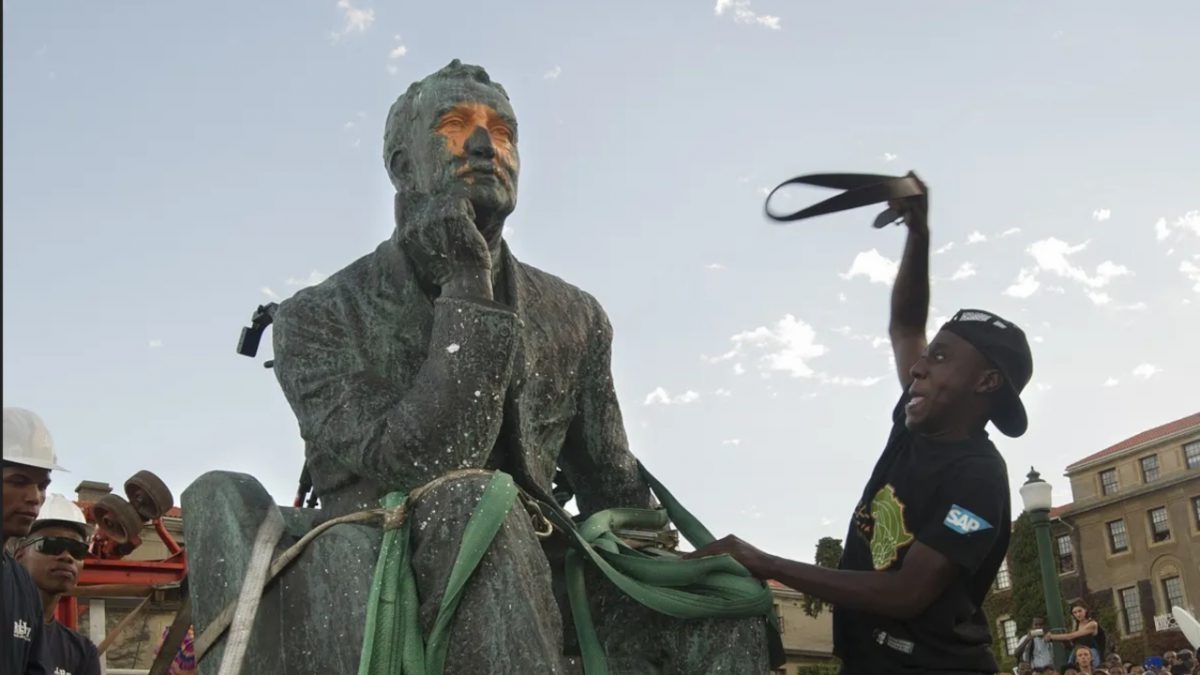
Die aanslag op standbeelde in Suid-Afrika het in April 2015 begin met ‘n aanval op Cecil Rhodes se standbeeld op die kampus van die Universiteit Kaapstad. Hierdie standbeeld “[was] trundled away to some retirement home for redundant idols” (344). Spoedig het dit geblyk dat dit wesenlik gaan om aanvalle op die standbeelde van blankes deur swartes, dus om die uitdrukking van rassisme, gekamoefleer as ongelukkigheid oor bv kolonialisme, imperialisme en apartheid. Hope verdoesel hierdie feit deur te meld dat daar (hoë) uitsonderings is. “Many, but not all, of the iconoclasts were Black and most, but by no means all, of the statues assaulted depicted Whites” (60). Hy het deur die land gereis om inligting oor veral hierdie onderwerp in te samel. Hy misbruik hierdie aanleiding egter tot die uiterste om vrye teuels aan sy radikaal linkse politiek te gee. Daar was diegene wat deur hom ondervra is, wat hom wyslik nie vertrou het nie; wat hom as “an inappropriate repository” beskou het vir die inligting waaroor hulle beskik (74).
Hope herhaal die bekende valsheid dat Oliver Thambo en Nelson Mandela ‘n Suid-Afrika sonder rassediskriminasie begeer het (80). Wat albei as ononderhandelbaar beskou het, was swart meerderheidsregering; iets wat onmoontlik is sonder oorheersing deur ‘n bepaalde ras, kleur of kultuur. Nietemin, Hope kom tot die gevolgtrekking dat hierdie (onhaalbare) ideaal van ‘n Suid-Afrika sonder rassediskriminasie in 2017 iets van die verlede was (80). “South Africans have always had a fondness for lying about race” (432). ‘n Nie-rassige Suid-Afrika was nooit ‘n werklikheid nie. Die 1996-Grondwet laat rassediskriminasie toe; beskou dit selfs as noodsaaklik. Dit is blankes wat sedertdien in die visier is. “This time around, it was Whites who would be moving” (432). “Race … was now more ubiquitous than it had been in the old days of apartheid” (197). “The obsession with race and all that went with it was one of the very few things that in the new South Africa had not changed at all” (201).
In 2017 “I found race and colour to be more divisive than ever. The war of words had never felt more violent. Black people were more and more unforgiving. Whites were angry and baffled, redundant or demonized, their choices narrowing to psychic withdrawal, or the Great Trek in reverse, as they faced up to loss not just of power but of meaning and substance, of being slowly but surely moved on, and out” (84). Hope betreur dit geensins nie en hy neem die swartes ook nie kwalik vir bv hulle onerkentlikheid, ondankbaarheid, hartvogtigheid en onverdraagsaamheid teenoor blankes nie. “We had now a proxy war, where each side attacked the other’s sacred idols because these were next best to the real thing. It was a way of getting at those you wanted removed” (84).
“Our statue wars, I believed, were a result of our intense but lonely obsession with graven images of colonial, imperial and, above all, ‘White’ oppression. Ours had been a long hard night of racial madness where every waking hour was spent reinforcing ethnic difference and distance, ethnic exclusivity, tribalism, partition, separation and apartness.* Over decades we built walls and fences and frontiers with the sole aim of keeping others out or ourselves in. But then, surely, we had been crazy – and more than crazy? The old fascination the Nazis held for some of our rulers had been not just horribly cruel, it was so embarrassingly passé. Other people, in other saner countries, would never succumb to such antediluvian racial dementia” (89). Die gebruik van “we” en “our” in die teks is uiters irriterend en misleidend omdat die beterweter Hope hom reeds in 1974 in die buiteland gevestig het en hom distansieer van verantwoordelikheid vir wat vóór 1994 en sedertdien plaaslik gebeur het. As die arme drommel op ‘n keer lank genoeg hier kom bly, kan hy gerus toets hoe lank hy sonder veiligheidsmaatreëls oorleef.
[* Volgens Hope is ‘n voorbeeld hiervan die swart tuinwerker wat hom as kind soms in Johannesburg opgepas het. “He was able to speak only when spoken to but even then, no one was ready to listen to anything he said” (334). Dit is die soort twak wat sommige van sy buitelandse lesers sal glo.]
“In South Africa, weird was where we began from, and what started out as crazy often became the new normal” (129). Ons kan dus nie verwag dat die nuwe Suid-Afrika ‘n verbetering op die oue gaan wees nie. Dit is deel van “the tragedy of South Africa” (129). By Hope is daar geen begrip of waardering vir wat ‘n klein groepie blankes hier, ver van Europa, oor eeue uit die grond opgebou het nie. “What is beyond doubt is that the arrival of White settlers in the Cape was a catastrophe for indigenous people” (611). “The San and the Khoi of the Cape were decimated by European settlers” (626). Soos in sy vorige boek neul hy oor bv die opruiming van Distrik Ses, wat hoogs oordrewe gekarateriseer word as “one of its [the apartheid regime’s] manic spasms of ethnic cleansing” (134). Wat nogal verfrissend is, is sy gebruik van die woord “incomers” vir die swartes wat in hordes veral uit die Oos-Kaap na die Wes-Kaap migreer. Helen Zille het hulle “vlugtelinge” genoem. In sy jongste boek gee Frans Cronje haar gelyk.
Ek weerhou my daarvan om telkens op Hope se onverkwiklike dwaas- en valshede te wys omdat hulle voor die hand liggend is. Let bv op die volgende louter bog: “Cape Town was always a city of illusions, a town with form, as well as a string of aliases; it once called itself the ‘Taverns of the Seas’, and the ‘Fairest Cape’ [Francis Drake] – none of these disguises were convincing, except one of the oldest, which is not used any longer: ‘The Cape of Slaves’. That last name stung too much to stick for long and it was not to be mentioned in polite company. But that was truly Cape Town, during the great slave period from 1652 [1658], with the arrival of the first White colonists, until 1834, when to the consternation of slave-owning colonists, the practice was abolished by the British” (143). In werklikheid word die hedendaagse plaaslike blankes, soos in Amerika, deesdae kort-kort verwyt oor die destydse slawerny, terwyl die grootskaalse slawerny wat deur swartes en Arabiere bedryf is, verswyg word. Let ook op hierdie fundamentele mislikheid oor Tafelberg: “I had fallen among fundamentalists, hill worshippers so proud of ‘their’ mountain that to hear them talk you’d think they had built it. Their belief, unstated but pervasive, was that here was God’s own capital, together with His holy mountain” (158).
Hope skryf van “a festival of ignorance” (197), asook ‘n “empire of dreams,” wanneer hy na die era van blanke politieke bewind verwys. “In a land where words had been corrupted and emptied of meaning by the linguistic vandals of the former regime … lyrical lift was welcome. And ’empire of dreams’ was apt because it caught the vast, mad vision of Rhodes” (209). “Rhodes was ingrained in us, a way of seeing things, a point of view; he was the mirror we looked into and saw ourselves” (224). Werklik? “Rhodes was found to be a monster – but denial and amnesia have been traditional refuges for English South Africans. For a long time Rhodes, the irrepressible racist, was glossed over” (233).
“He was to show himself an exuberant racist, even by the standards of the times, backing laws forbidding Africans to move freely, restricting what land they might own, regarding them as not quite human. Rhodes laid the foundation of apartheid, and his messianic belief in White superiority was built on by successive regimes, well into the late twentieth century” (249). Die Boere was glo, soos Rhodes, “never shy about walloping their workers” (249). “Rhodes was not the first settler to exhibit this dementia but he took it to a new level. In the history of European settlement in Africa, nothing stands out so clearly as this characteristic insanity” (254). Volgens Hope het die Boere/Afrikaners, bv “the stubborn, absurd figure of Paul Kruger and his deeply backward Boers” (274), daardie kranksinnigheid verder uitgebou.
Wat Hope deurgaans probeer invryf, is hoe uiters sleg – moreel en andersins – die plaaslike blankes was en is. “The fashion in which many South Africans moved through much of the twentieth century required that as many people as possible knew as little as possible for as long as possible. Cruelty blended with muscular stupidity formed the policy many whites wholeheartedly supported or in which most were enthusiastically complicit. But its foundation was always ignorance, proudly encouraged. It was a land where what was on offer was never [!] logic or truth or consistency, values to which for sentimental reasons I attached enormous importance” (314). Hoeveel waarheid is daar in hierdie boek van Hope en die een wat ek die vorige keer bespreek het?
“Apartheid had locked us into the prison of our skins” (372). “The vaunted power of the apartheid state was for me a gigantic bluff – cruel, stupid and ugly, certainly, but a weakness, not a strength, a desparate attempt to reinforce the illusion that Whites were on a roll when they were actually on the skids” (377). “Isolation intensified delusion. South Africans lived not just in another country but in a separate universe where extraterrestrial rules operated. The country and its rulers believed in their own rhetoric. Hubris mixed with ignorance, made a heady brew and South Africans swallowed the stuff eagerly” (387). Wat Hope te kenne gee, is dat ons ‘n onnosel klomp is en gelukkig is om so ‘n wyse mens soos hy te hê wat ons foute vir ons uitwys.
Maar hy kom nooit daarby uit om te sê wat ‘n beter opset vóór of ná 1994 sou gewees het nie. Om in 1994 in Suid-Afrika met demokrasie, gebaseer op een mens, een stem, te begin was myns insiens gewoon dwaas; nie net omdat ‘n groot persentasie van die bevolking ongeletterd en oningelig is nie, maar ook omdat demokrasie nie meer sonder meer as ‘n voortreflike staatsvorm beskou word nie. Meer outoritêre regeringsvorme is besig om guns in die oë van baie Westerlinge te vind, bv as teenhanger vir ongebreidelde vryheid en chaos. As groter swart mag in die hande van nog minder kamerade sou setel, sou dit egter ons nag in Suid-Afrika verder verduister.
“The more public statues I saw, as I travelled the country, the odder they began to look … They may begin as reminders but they finish as reproaches” (473). “An idol that has had its day is more than redundant, it is embarrassing and there is relief when it is carted away. But where to hide it? Fallen statues, effigies in retirement say so much. They may have began as heroes and ended as villians” (478). Hope dink seker dat hy hier diep gedagtes uiter, maar hy is eintlik besig om hom te verlustig in die vernietiging van die standbeelde van blankes, veral Afrikaners vir wie hy nooit ‘n goeie woord het nie.
Hy hou ook nie van die plaaslike blanke Engelssprekendes nie. “English-speaking South Africans were, inevitably, a disconnected lot, never joined by their heartstrings to the country … English South Africans were perpetual arrivistes and unreliable patriots” (1497). “We may have belonged to different language groups but we had our lingua franca, racism, and spoke it fluently” (1750). Die Britte wat hierheen gekom het se siening van Afrika was “as the sort of place where gentlemen went for a little hunting, shooting and fishing and where Black chaps did the work” (2062).
Dalk is daar tog iets ten gunste van sulke standbeelde te sê. “Much South African history has been bogus but it helped to be reminded how we were deceived and how description sometimes encouraged deception. History and memory were weapons to be manipulated in a war of possession, where monuments, statues, dams, universities, airports, streets, mountains and rivers were named not for the comvenience of cartographers, but because they was how you took hostage people and places, as well as ideas and histories” (495). Hierdie verwyte word primêr aan die blanke politieke bewind gerig terwyl dit in dieselfde of meerdere mate vir die ANC-regime geld. Die ANC/SAKP-mentaliteit sal nooit by die punt kom dat daar bv genoeg standbeelde vir Nelson Mandela, ‘n hoogs onvolmaakte ikoon, opgerig is of dat hy in ander opsigte genoeg vereer is nie.
Later gee Hope te kenne dat sowel die blanke as die swart bewind in hierdie opsig ewe dwaas is. Hope, die enkeling met die gewaande insig, weet wat verkeerd geloop het. “When on top, you might do as you liked; but when down, you did as you were told. This depressing formula held sway from the first Dutch colonists to the British imperialists; from the old White race-obsessed nationalists to their race-obsessed counterparts. When power was yours you named avenues, airports and police stations after your leaders, yourselves or your fiends. Once power was lost, the winners took away your names and wrote you out of the history books” (551)
Hope vervolg ietwat meer sober: “If reliable old heroes were now the new villians, could one redress past injustice by airbrushing such figures from the record? … You might forget Rhodes, but his ghost might not forget you” (502). Hope verskuif dan die aandag na Rhodesië, wat eens Rhodes-besit was. “Even the name [Rhodesia] itself had become shorthand for removal and dispossession of Whites” (502). Hierteen spreek Hope hom nie uit nie. Hy hou eerder daarvan. Die blankes was volgens hom, in die woorde van die digter Alfred Tennyson (1809-1892), – woorde waarop Hope dikwels sinspeel – “sleepwalking towards disaster” (507). Met ander woorde, dat die Rhodesiese/Zimbabwiese blankes hulle eiendom verloor en uit die land geskop is, is eerder hulle eie skuld as die resultaat van Robert Mugabe se rassistiese haatdraendheid.
“South Africa is not Zimbabwe, at least not yet, although the parallels are troubling. What the fall of Rhodes revealed was that the hunt was on for someone to blame. President Jacob Zuma was the cause of noisy argument when he charged that ‘the trouble’ originated long before Rhodes. It all began when a Dutch official named Jan van Riebeeck arrived in the Cape in 1652, and began shooting the indigenous locals, starting wars and stealing land” (536) – ‘n buitensporig oordrewe formulering. “Van Riebeeck was fingered by the president as the ur-villian” (545). Wat het hieruit en hierop in April 2015 gevolg? “The monument to Jan van Riebeeck that had stood unmolested for decades in the centre of Cape Town was daubed with paint and a banner hung around its neck, declaring: ‘I stole your land. So what?’” (545).
Hope voeg verdere slegsê by: “The Dutch burghers who accompanied van Riebeeck when he arrived in 1652 were presented by the propagandists of apartheid as puritan pilgrims who brought civilization to a benighted Africa. In fact they were freebooters, mountebanks, scrougers and slave-dealers who diddled their compatriots and regarded the native peoples of the Cape with fear and loathing” (582). Dus, van die begin af was die blankes heluit sleg. Van Riebeeck “and his men inclined not to gardening but to smash and grab. The pattern was established and endures into the present day. The only consistent operating principle of those who colonized the Cape and, later, the country was that you helped yourself to just about anything that wasn’t nailed down because it all belonged to you” (592).
Wat die bliksem hier doen, is om die steelsug waarteen die blankes dikwels tevergeefs voorsorg tref en die endemiese korrupsie wat kenmerkend van die ANC-regime is, voor te stel as bloot ‘n voortsetting van die voorbeeld wat die blankes eeue lank gestel het. Daar was sekerlik ten minste ‘n graadverskil. “The idea that you measured your freedom in the number of slaves, servants or indentured labourers you possessed has blighted the country ever since. The Trek-Boers took whatever territory they managed to wrestle from the people they found there, resisting fiercely any idea of developing the land or the people they imposed themselves on, took it for themselves, and saw it not as theft but as their God-given duty” (597).
“South African history is difficult to explore as a chronicle of past events because it is more like analysing a crime scene; often a rather nasty homocide or an exuberant massacre. There were cover-ups, frightened witnesses, tainted evidence, and testimonies are riddled with subterfuge and deception” (663). “Almost everything we were taught about the early White settlers was wrong” (3434). “The founding fraud [is] at the heart of our history” (3439). “Deceit and delusion … was the stock in trade of some South African historians” (3444). “People in power bend the truth to suit their needs and insist that everyone else believe it” (3449).
Hoe min Hope van ons ontstaansgeskiedenis weet, blyk uit sy opmerking dat Van Riebeeck in 1662 van die Kaap na “what is now Malaysia” verplaas is. Hy weet nie dat Van Riebeeck se bestemming Batavia (Jakarta) op Java in Indonesië was nie. Maar hy sal seker die “apartheidsregime” vir sy gebrekkige kennis van die geskiedenis verwyt. “Under the old regime all history was alarming unless well policed. As little history as possible was taught and then only when heavily slanted to serve official apartheid ideology” (2221). “The essence of much life in this country has been not about what you wished to find out but how much you were able to hide” (2225).
In een opsig was die (meer behoudende) blanke politieke bewinde blykbaar darem beter as die destruktiewe ANC-regime. “Previous regimes, no matter who it was that the monuments remembered, or offended, preferred to let statues stand. But the fall of Rhodes signalled that it was now open season because it soon became clear that this was a game anyone could play” (522).
In Hope se boek wat ek die vorige keer bespreek het, het hy beweer dat hy sy militêre diens in die vloot in Simonstad gedoen het. In hierdie boek verplaas hy dit na Saldanhabaai. “Our military training exploited a familiar South African trait: dressing up the past and calling it the future. The real conflict was not new, it was old; it did not lie ahead, it was here and now, and it was not really a fight against a shadowy Red menace or Black guerrillas. Instead, we were being readied to fight each other, this was really the Boer War all over again” (693). Dit is deurlopend die patroon in Hope se voorstellings: dat die hede soos (of soortgelyk aan) die verlede is. Dit is louter twak om te beweer dat die Boere-oorlog eintlik ‘n burgeroorlog was. Die Boere-oorlog verskil ook fundamenteel van die blankes se stryd teen terroriste (1961-1994).
“Too little has changed” (803). Hope verskaf die volgende voorbeeld. “‘Cadre deployment’ is as old as the hills in South Africa. Everyone from van Riebeeck to Rhodes and Paul Kruger would have recognized its contemporary version: it has been adopted by successive regimes of every stripe and colour as the tried and tested way of dunning the poor and plumping your purse … Boer officials … of Paul Kruger were mocked as dizzyingly corrupt. They made fortunes for themselves and their favourites from monopolies in dynamite and gunpowder” (807). Wat Hope oor Kruger skryf is korrek, maar ook in hierdie geval is daar ‘n reusagtige verskil in graad vergeleke met die ANC-regime, waar kaderontplooiing en grootskaalse korrupsie die hele land ernstig benadeel.
Hope verkies egter die voorstelling dat wat ons tans ervaar bloot ‘n voortsetting is van hoe sake voorheen bedryf is. “Questions of who owned the vast wealth from mines, and who bought and sold them, became all-consuming and corruption so ubiquitous as to be pratically obligatory, and it was increasingly accepted then, as now, as the traditional way of doing things” (1246). “One cannot speak of wealth in South Africa without also talking of weapons. Or theft” (1251). Die Suid-Afrikaanse geskiedenis is glo ‘n “chronicle of theft” (1384). Dus, (blanke) Suid-Afrikaners is gewelddadige diewe in “the tragic human comedy of South Africa” (1256).
Nêrens loof Hope die blankes wat meer as enige ander rasgroep tot die ontwikkeling van die land bygedra het nie. Pleks daarvan maak hy gewag van “Black labourers who were, and still are, the backbone of the country” (841). ‘n Blanke, daarenteen, word gekarateriseer as “the idle heir to a long tradition, so natural to generations of settlers” (841). Let op die woord “settlers”, waarvan Hope dertig jaar lank een was. Hy is in so ‘n mate bevooroordeeld dat hy kwalik werklik kan glo wat hy skryf, maar hy doen dit in die waan dat dit hom aansien en veral in die buiteland ‘n afset vir sy boeke sal gee. Dit is waarom hy teen sy beterwete bv hoogs oordrewe skryf: “the state-sponsored ethnic cleansing we call apartheid” (994). Oor sy besoek aan Fraserburg verwys hy na “the /Xam bushmen, whom the first White farmers … hunted to extinction” (1064) en “hard-drinking sheep farmers who had been known to assault each other” (1004). Hoeveel keer het dit gebeur? Waarom skryf die bliksem nie oor die geweld wat in veel groter mate onder swartes hoogty vier nie?
Volgens Hope is almal in Suid-Afrika basters. “Nothing and no one in South Africa was solely one thing, or one race, despite the decades when this foolish pretence was enforced” (1112). Nog bog: “Today … van Riebeeck was a symbol of everything many Whites wish to forget. To associate yourself with van Riebeeck now was to be found guilty by association with the Dutch governor and his ‘gangsters’ who robbed the locals blind” (1161). Van Riebeeck en sy geselskap, “portrayed by the apartheid ideologues as lily-white, pure and pious Dutchmen,” was glo eerder “a shipload of low-lifes from the Low Countries” (1271). Hope se uitlatings laat gewoon geen ruimte vir iets goeds by die eerste blankes en hulle nageslag wat hulle in Suidelike Afrika gevestig het nie. “They are not African people. They are invaders – they are foreigners” (1176). Op grond hiervan loof Hope die “irreversible change of power” in 1994 (1197).
Dit behoort vir die lesers duidelik te wees dat daar ‘n groot skroef by Hope los is, maar dan is dit hy wat ons van geesteskrankheid beskuldig. Ek het tot dusver slegs oor die eerste derde van sy boek geskryf. Ek het nou genoeg van sy dwaasheid gehad en seker baie van die lesers ook. Die res van die boek gaan ek baie oorsigtelik behandel. Maar hou deurgaans in gedagte dat die Universiteit Stellenbosch dit vir Hope finansieel moontlik gemaak het om deur die land te reis en hierdie skewe siening van Suid-Afrika die wêreld in te dra. Hy bly hamer op die harteloosheid van die rasseskeiding tydens apartheid. Die prominentste opsig waarin die bevolkingsregistrasie jaar na jaar deur ‘n genadige NP-regering aangepas is, is die groot getal bruin mense wat blank verklaar is. Dít is ‘n feit wat Hope nie noem nie, dalk nie weet nie en in elk geval nie wil erken nie. Hoe radikaal die Universiteit Stellenbosch ontaard het, blyk uit die volgende: “The idea of burning down buildings had been presented, even by those in charge of Stellenbosch, not as a crime but as part of the political conversation” (3378).
Die Voortrekkers word beskryf as “Boer ancestors who had trekked north from the Cape, into the Karoo, and shot their way through obstacles and, for that matter, any people who stood in their way” (1305). Nader aan die waarheid is die volgende stelling: “British imperialists, in their ineffable condescension, regarded the Boers as scarcely human” (1310). Dit sou heel moontlik selfs in groter mate vir die swartes geld. ‘n (Fiktiewe) boer/Boer, Theo, beweer in ‘n gesprek met Hope “that ‘his people’ had opened the country” (1310). Dit gee aanleiding tot die volgende tirade:
“I disagreed. I said that when Theo’s people at last took complete power in the mid-twentieth century, far from opening anything at all they shut down whatever and whoever they saw as a threat to their control. They set their faces against variety, reason, forbearance, love, toleration, imagination and humour. They closed schools, churches, universities and libraries. They banned books, films, plays; they expelled clerics and academics, and deported, banned, jailed or killed many who disagreed with them. During their half-century rule they put in place a system of racial intolerance so cruel, so pervasive and so murderously stupid that it blighted whatever it touched” (1316).
“It was a programme so destructive that only those who lived through the years of the pathological condition that we call apartheid could understand how systematized violence seeded itself into every aspect of everyone’s lives” (1320). “Half a century of punitive racial separation [was] so fierce [that] it counted as a war in itself” (1456). Hiermee probeer hy om die veel groter gewelddadigheid van die ANC/SAKP se terrorisme en die voorgesette geweld wat so kenmerkend van die nuwe Suid-Afrika is, nie net te versuiker nie, maar die skuld daarvoor op die blankes te pak. Wanneer Hope na “hands … covered in blood and gravy” verwys, is dit dié van die blankes; nie dié van die swartes nie (1331).
Hope gee sy siening van die “Boer War”: Daar was “the surreal belief on both sides that this was a White man’s war waged in a White man’s country. It was an illusion that prevailed. By an extraordinary sleight of mind, Whites persuaded themselves that Africans, though they were overwhelmingly preponderate, did not actually exist, except as a problem to be solved and as a reservoir of labour. That has always been the clue that gave the game away. Africans were suddenly essential only when someone had to do the work” (1452).
“South Africa was anything but normal, it was never much of a mother [country] … When you looked hard at the map, it seemed to be a matter not of geography but of guns. What you meant when you said ‘South Africa’ depended on your skin colour and your politics” (1512). “Perhaps that was why I had the feeling, early on, that there were no ‘real’ South Africans. Whites offered at best a shaky impersonation of the real thing – Blacks were refused permission to be anything of the sort. This dislocation started under the British, who established that all genuine South Africans must be White” (1517).
“[In] the mid-twentieth century … a deluded cabal of White Afrikaner tribalists, obsessed with preserving racial purity, took over the country and drove a stake through its befuddled heart … European settlement in Africa has been a long game of make-believe. Whites had to pretend, and it was a hard trick to master, that being a European was your vocation and yet Africa was your home” (1522). Die blankes het myns insiens die voor die hand liggende maar ambisieuse/onmoontlike ding probeer doen, naamlik om Suidelike Afrika te probeer vereuropa of verwesters. Hulle ideaal behoort eerder bewondering as verguising te ontlok.
In 2017 is Hope nie net in Suid-Afrika toegelaat nie; hy het ook Orania besoek – “a type of Boer kibbutz” (1998) met standbeelde as “a retirement home for fallen idols” (2008). “In Orania people have made memory their mission, set up monuments, collected statues and constantly reminded themselves that their destiny was to survive. They contemplated not just their superfluity in the South Africa that came into being after 1994, but their probable extinction, and took steps to resist. Their model would be the Israelites whom Moses led out of Egypt; they would gather all those faithful to the tribe, language and culture and trek into the desert. They would create for themselves what they once insisted everyone should have and live in – an ethnic enclave, what might be called an ‘Afrikanerstan’. What they have made in Orania is real enough but it is also a place that feels as insubstantial as a dream” (1849).
“Orania reminds me of what I saw in ex-Yugoslavia. During the wars of the nineties, when the country split into tribal reservations, ethnic islands” (1874). Wat is verkeerd daarmee? Die huidige opset daar is baie beter as die vorige konglomerasie, terwyl die huidige plaaslike opset ‘n terugwaartse, eintlik fatale, stap was. Die stigter van Orania, Carel Boshoff (Praag 19.12.2015), “dreamt of a homeland where the culture, faith and language of the Afrikaner volk would be preserved. The idea assumed you might redeem the past by deft retrospective surgery, slicing off bad bits, sewing on others, and serving it up as the future” (1884) – “a rearguard action against history” (1902). “It was a view at once familiar and dispiriting because so very South African; a destiny always defined by race, and skin colour, always announcing a revolutionary future that looked, on examination, very like a reactionary and racist past” (1923).
Teen hierdie tyd behoort dit duidelik te wees dat Hope se beperkte intellektuele register hoofsaaklik twee idees bevat: dat die blankes, veral Afrikaners, die toekoms in die verlede soek en dat die onverkwiklike hede in Suid-Afrika eintlik ‘n voortsetting van die verlede is en die skuld daarvoor gevolglik op die blankes geplaas word. Die swartes kom skotvry daarvan af. Hope is oorbewus van velkleur. Hy verstaan nie kultuur en kultuurverskille nie. Hy gebruik feitlik nooit die woord “culture” nie. Dit kan op sy ongekultiveerdheid dui.
Ingevolge sy uiterste, militante liberalisme soek Hope alewig eendershede waar daar nie is nie. Met verwysing na hulle destydse swart tuinwerker, George, in Johannesburg, skryf Hope (let op die onderliggende oneerbiedigheid jeens Verwoerd se tragiese einde): “Would he [George] have considered how one very odd individual may turn out to be the grotesque reflection of another? Would he have been alarmed or amused by the eerie similarity between Dimitri Tsafendas, a Greek immigrant of mixed race, obsessed by what he believed to be a gaint, talking tapeworm in his gut that gave him orders; and Hendrik Verwoerd, a Dutch immigrant consumed by his mission to keep the tribe from contamination, and who took his orders from the Almighty? (2202). “Both men were subject to dangerous and deadly delusions” (2212).
“South Africans are a traumatized people. Apartheid replaced compassion and civility with fear and loathing. And this was never seen as aberrant behaviour; the system required it – brutality was enforced, hate encouraged, violence applauded and, it must be said, even enjoyed. Apartheid may have gone but not the violence it engendered” (2240). “Happiness was always discouraged” (2450). Dus weer eens: Die gewelddadige nuwe Suid-Afrika is na bewering te wyte aan die blankes; dus nie weens Nelson Mandela en sy MK-terroriste en hulle navolgers se misdade nie. “Under the old apartheid regime murder moved from being a freely available option to something close to an obligation” (2669).
Wie het die meeste swartes tydens die “bevrydingstryd” gedood, die blankes of die swartes? Hoeveel moorde was daar per jaar tydens apartheid en, in vergelyking daarmee, hoeveel jaarliks sedert 1994? “White farmers are four times more likely to be murdered than anyone else” (2861). Maar kyk hoe plooi Hope dit onmiddellik daarna: “Black farm workers, too, are attacked and murdered, sometimes by White farmers, who have earned a reputation for brutality that goes back centuries” (2871). Moord word in veel groter mate deur swartes as deur blankes gepleeg.
Volgens Hope was alles tydens apartheid sleg. “The country was a giant menagerie where zoo keepers who claimed to be divinely appointed presided over less-than-human others, who were locked into the prisons of their skins” (2773). ‘n Sebra word beskryf as “an animal that could not change its stripes, an animal that would have served perfectly as an emblem of the old apartheid state: two exclusionary zones, one Black, one White, and never the twain shall meet” (2950).
“Rewriting history required time and effort but remaking images needed only a can of paint, a hammer or a smelter, at the whim of some functionary who did not like what he saw” (2984). Hope kon die naaste aan regsinnigheid in die volgende aanhaling, hoewel dit nie sonder vals note is nie. “It is wrong to imagine that by overturning idols, we can prevent the past from haunting the present. Because without useful, though painful, reminders of where we came from, how are we to begin even to have any idea of where we wish to go? Deeply repressive societies, in the Soviet Union or Eastern Europe, have been ardent about re-engineering the past but failed. No amount of name-calling or name-changing gets rid of the past. Re-education of the transgressing classes, however expertly and forcefully administered, will not do the trick. Even state-sponsored ignorance, so popular in the old South Africa, is no protection against returning demons. Effigies and idols, after they have been forcibly ‘disappeared’, have ways of reappearing to remind us they were once intimate, if embarrassing, members of the family. Rather than covering them up or trucking them off to the scrap heap, it seems to me that they have something to tell us, and it pays to hear them out” (3088).
“The assault on statues has moved from low priority crime to high priority protest” (3102). “The hunt for past oppressors gathers pace” (3112). “[The] weapons were aimed in the wrong direction – at libraries, lecture theatres, statues, paintings” (3309). Hope het sy boek begin met verwysing na die verwydering van die Rhodes-standbeeld van die kampus van die Universiteit Kaapstad. Hy sluit sy boek af met ‘n beskrywing van sy besoek aan die Rhodes-borsbeeld, wat deel is van die Rhodes-gedenkteken aan die hang van Tafelberg. “The first thing I noticed was the hole where his nose had been. It had been cleanly removed, leaving a perfectly shaped nasal aperture. Hostile graffiti writers had been busy … The assault seemed a half-hearted, unfinished job … If this was the worst angry young South Africans could do to one of the few really world-class villians, you had to wonder if they deserved to have any ” (3589).
Oudergewoonte, as hy iets misdadigs teëkom, plooi Hope die skending van hierdie Rhodes-standbeeld asof dit die skuld van die blankes is. “I hope the noseless Rhodes survives … The scar left on the landscape, and the soul, when District Six was ‘removed’ says all that is needed about, not only the cruelty, but the stupidity of apartheid, based as it was on the belief that by knocking down people’s homes and demanding they live out of sight, at least by night, you could re-engineer reality. It was an idea even more foolish than claiming that by toppling effigies you did not like you could rewrite history. We should preserve embarrassing monuments – bad memories can be a precious resource” (3619).
Die “unfinished job” waarvan Hope gewag maak, is intussen voltooi. Die kop van Rhodes se borsbeeld is onlangs verwyder (Netwerk24, 15.07.2020). Terselfdertyd het Afrikanerinstansies, bv die FAK, ná die verwydering van MT Steyn se standbeeld van die kampus van Free State University, voorbrand begin maak vir die verskuiwing van die standbeeld van Paul Kruger en sy vier krygsmanne vanaf Kerkplein in Pretoria. Daar is so min ruggraat in Afrikanerinstansies oor dat hulle oorgee voordat hulle hulle tot enige daadwerklike verset teen sulke dwaasheid en onbeskaafdheid gewend het. Die gevolg is dat alle Afrikanerstandbeelde – ook -monumente, ens – al hoe meer in die gedrang is.
Tans is daar weer koerantberigte oor monumente uit die verlede wat glo aanstoot gee en volgens die ANC-regime na “temaparke” verwyder behoort te word. Wat nooit genoem word nie, is dat daar talle monumente opgerig sedert 1994 is wat misdadigers, bv terroriste, vereer en vir my en sekerlik ook ander Afrikaners uiters afstootlik is. Wat Afrikaners begeer, word sonder meer deur die regime geïgnoreer omdat daar plaaslik, anders as in bv Amerika, hoegenaamd geen minderheidsregte bestaan nie.
Stellenbosch University is aktief besig met die formulering van ‘n program van “visuele regstelling”, wat deel van hulle oordrewe transformasie is. Daar is myns insiens geen moontlikheid dat die huidige US-bestuur, met Wim de Villiers aan die spits, enige beswaar teen die verwydering van Jan Marais se standbeeld van die kampus sal opper nie. Marais se stigtingsvoorwaarde, dat Afrikaans nie ‘n minder plek as Engels aan die US mag hê nie, is selfs gedurende die US se eeufees in 2018 konsekwent deur De Villiers verswyg. Geen Afrikaansinstansie het hom daaroor opgehel nie. Dit word skynbaar aanvaar dat om vir Afrikaans, die Afrikanerdom en blankes in Suid-Afrika te ywer, reeds ‘n verlore saak is.
Wat is Hope se ongevraagde raad aan ons as blankes? “The best hope left to ‘us’ was not rebellion … but, perhaps, a managed redundancy. That was what made assaults on effigies not only pointless but misguided. It might be best to treat these memorials, from Rhodes to Kruger, with care because, without them, how were we to remind ourselves of the way we had been? Removing every last statue changed the past not one whit, because those they commemorated still remained, for good or ill, aspects of ourselves. And in a country so given to amnesia we needed all the memory we might save” (2470).
Wat gaan van die blankes word? Wat is Hope se wens? “When you look at the figures it is not deportation or pogroms or even the long-anticipated race war that will drive Whites into, or over, the sea. It is simply too late for that sort of thing. Demographics and disillusion may carry them away, whatever happens” (3659).