praag.co.za

Tag: Eldoret

  • Leon Lemmer: Afrikanisering in Oos- en Suidelike Afrika

    Leon Lemmer: Afrikanisering in Oos- en Suidelike Afrika

    Stephen Taylor is ‘n Britse joernalis wat dikwels oor Afrika skryf. Hy is in 1948 in Seepunt gebore. Hy was ‘n joernalis by die Rand Daily Mail en World voordat hy in 1970 na Engeland geëmigreer het. In 1997 het hy die roete van blanke ontdekkingsreisigers in Oos-Afrika gevolg om te sien hoe daardie lande, Tanzanië, Uganda en Kenia, toe daar uitgesien het. Daarna het hy suidwaarts via Malawi, Zambië, Zimbabwe en Botswana tot in Suid-Afrika gereis. Die beskrywing van sy waarnemings is gepubliseer in die boek, Livingstone’s tribe: A journey from Zanzibar to the Cape (London: William Collins, 2000, 272p; Amazon Kindle $9,85).

    David Livingstone (1813-1873) “had seen Christianity and civilisation as the means by which blacks would free themselves from slavery and ignorance” (Kindle 2295). Die Livingstone-stam waarna in die boektitel verwys word, is alle blankes wat in Afrika beland het en onderhewig aan afrikanisering is. “This is an account of a journey in search of a dying tribe. Even at the time I was travelling, in 1997, it was clear that whites as an ethnic minority were doomed in most parts of Africa. It seemed as though the colonial era had belonged to another century rather than to the previous generation. In Tanzania, Uganda, Malawi and Zambia the whites had all but disappeared; in Kenya they clung on diffidently. In Southern Africa, however, there remained hope. Although politically redundant, their economic influence appeared to assure them a future” (50).

    Dit is nou 20 jaar later. In Zimbabwe het die blankes weens regeringsrassisme myns insiens geen toekoms nie. In Suid-Afrika word blankes meedoënloos uit poste geweer en van hulle besittings (bv geld en eiendom) ontneem. Die ekonomiese waarde van blankes word sistematies geminimaliseer, gevolglik word hulle teenwoordigheid al hoe meer opsioneel, verkwanselbaar en ongewens. Dít omdat die meerderheid blanke kiesers in 1992 ten gunste van politieke magsdeling gestem en pleks daarvan algehele oorgawe aan swart mag bekom het. Die enormiteit van daardie verraad word steeds nie afdoende besef nie.

    “The tide of venomous racism whipped up by Robert Mugabe in the election campaign of June 2000 led to almost a thousand white farms being invaded by squatter gangs … The land seizures in Zimbabwe had an eerie echo of events in post-independence Tanzania and Uganda. There too white farmers and planters were dispossessed in the name of agricultural and political reforms that proved to be disastrous” (66). “At the end of my journey I reflected that only time will tell whether whites are capable of enduring in Africa. In just three years [1997-2000] the prospects look less auspicious than they did even then. Increasingly parents, not only in Zimbabwe but also in South Africa, see their children attempting to make lives abroad. Inevitably, it is those with abilities and qualifications who are best able to leave. And as the brightest and most adventurous depart, the chasm between Africa and the developed world continues to widen” (77).

    Tanzanië

    Taylor se reis het in Dar es Salaam in Tanzanië begin. “I was interested … in whites who had stayed on in Africa. I was starting a journey in the footsteps of the explorers, missionaries and settlers, along the routes of imperial advance and retreat, looking for those who had made their home in post-independence Africa, who had lived through coups and wars and learnt to live with the corruption, the collapse of services and the generally miserable lot of the African citizen. In particular, I was interested in those who had faith in Africa and its people, and who believed it still had something to offer the world. And now that the last protective white laager had fallen, I was looking for lessons on how they might endure in South Africa” (91).

    Die blanke waaroor Taylor eerste skryf, is Daudi Ricardo, voorheen bekend as David Ricardo. “He had sacrificed everything on the pyre of Tanzania’s hopelessly inept experiment with socialism … he lived in genteel poverty in a shanty beside the beach twenty miles north of Dar es Salaam” (97). “Daudi was the last mzungu [white man] at Kunduchi, sharing his roof with Meshack, a smiling-faced [black] man, his [black] wife and their baby” (109). Die enkele besittings wat hy behou het, is ‘n lessenaar, ‘n gemakstoel met leerbekleedsel en ‘n aantal boeke. Ricardo is oor die sewentig jaar oud en het kanker. Taylor “knew enough about Tanzanian hospitals to marvel that, in the face of this final test, he had not submitted to the National Health Service” (127).

    Voordat Tanganjika in 1961 onafhanklik geword het, was Ricardo die eienaar van ‘n indrukwekkende landgoed, Matanana, op die hoogland. Daarna het hy klere soos dié van ‘n Afrikaan begin dra, ‘n Moslem geword en sy voornaam van David na Daudi verander. “At uhuru [freedom], he took Tanzanian citizenship and became a member of Julius Nyerere’s [1922-1999, head of state 1961-1985] party. He handed over Matanana to his workforce and went to work for the people” (138). “After leaving the ranch, he worked for twenty-five years among peasants, a field worker for development projects. Most were doomed by incompetence and corruption” (156). “Now the homestead where liveried footmen had waited on guests was crumbling and Matanana had been reclaimed by the bush” (156).

    “The flow of settlers to Tanganyika had been restricted under the British mandate and confined to two main farming areas, the Southern Highlands, where Daudi had his ranch, and the Arusha-Moshi region in the north; even there virtually no white farmers remained as they had lost their land in Nyerere’s disastrous nationalisation of agriculture. Old age had carried off all but the last of a handful of diehards” (1033). Daar was “the forced relocation under Nyerere’s ujamaa [community] policy of entire communities into model villages” (1125). Derduisende swartes het weens honger omgekom. Desnieteenstaande hou die Universiteit van Wes-Kaapland jaarliks ‘n Nyerere-gedenklesing terwyl daar uit daardie oord graag steen en been gekla word oor die opruiming deur die blanke regering van die krotbuurt en misdaadnes Distrik Ses. In Brittanje woon daar talle oud-amptenare wat uit Tanganjika padgegee het. “All continue to wish Tanzania well … Yet none had stayed on. It was as if their love of Africa had survived because of, rather than despite, their distance from it” (1038).

    In sy huidige blyplek het Ricardo nie lopende water of elektrisiteit nie. Diewe is nie meer lastig nie, want daar is eintlik niks oor om te steel nie. “Actually, there was not much food either” (150). Ricardo sê: “I’ve often doubted, and I still do, whether we have any business being here” (162). “We have to learn a new cultural language and that can be very painful. Then, at some point, it just happens. We wake up to find we have been absorbed … We old mzungus are dying out. Soon we’ll all be gone” (187). ‘n Swarte het van Ricardo gesê: “He is a good man” (203). Van Ricardo se kultuur en besittings het daar egter feitlik niks oorgebly nie. Ricardo is myns insiens ‘n toonbeeld van wat verswelgende afrikanisering vir blankes behels.

    Taylor het hierna Zanzibar besoek. Hierdie eiland het in 1963 onafhanklik en in 1964 deel van Tanzanië geword. “An Africanist revolution saw the eclipse of the Arabs. The Sultan fled and thousands of Arabs and Asians were massacred” (287). Taylor het ‘n eertydse sendingstasie vir bevryde slawe by Mbweni, sowat vyf myl van Zanzibar-stad, besoek. Al wat daarvan oorgebly het, is ‘n “crumbling school,” ‘n “dilapidated church and three lonely graves” (373) van blanke sendelinge. Frank Weston het in 1908 daar aangekom. “Unusually for a missionary, Weston recognised that for Africans to benefit from European influence, rather than be damaged by it, the institutions of tribe, family and custom needed to be nurtured, not destroyed” (390). Tydens sy reis is die blankes wat die outeur teëkom meesal sendelinge. Hulle word geduld omdat hulle skoolonderrig en mediese dienste verskaf en in daardie opsigte nuttig is; dus, sendingstasies vervul funksies wat die owerheid versuim om doeltreffend te doen.

    Taylor het Bagamoyo in Tanzanië besoek. “Once the fifty-mile stretch from Bagamoyo to Dar [es Salaam] had been under tarmac, but that had long since dissolved and not a trace of bitumen was now left” (529). Bagamoyo is in ‘n vervalle toestand sedert die Indiërs en Duitsers daar weg is.

    In Dar es Salaam kom die outeur ‘n Zoeloe teë, Ally Sykes Mbowane, wat hom in Tanzanië gevestig het. Mbowane sê: “The problem is the Asians. They corrupt everything. They are here to milk the blacks … They must go, by force if necessary … [Idi] Amin’s [1925-2003, Uganda’s president 1971-1979] mistake was he did not replace the Asians with intelligent Africans … You can’t trust them [the Asians]. They will always keep to themselves. Take the British Legion clubs here or in Kenya. You will find blacks and whites drinking together. But Asians do not have Africans at their clubs. The Asian is like that. He thinks differently to us” (613).

    Die Ost Afrikanische Eisenbahn Gesellschaft “build a railway [from Dar es Salaam to Ujiji, 1905-1914] that would trace the explorers’ footsteps. To this day it is the only land link from the coast to Lake Tanganyika” (628). “In colonial times … the buffet car was well-stocked, compartments offered sleeping accommodation and … the journey was regarded as a pleasant prelude or coda to home leave. Now … there was no certainty of food or drink and even less about the time of arrival” (633). “Cat burglars are said to prowl the roofs of carriages at night in search of open windows through which to swing” (718). Taylor reis per trein die binneland in. “Looking out on this void, one is struck by the absence of opportunity for improvement or escape. The odd settlement consists of a few mud and thatch huts of a type unchanged for centuries, a mournful looking cow and a straggly maize patch. No road reaches here, no enterprise, only the train which passes four times a week” (724).

    Die outeur reis per matatu (minibus) van Ujiji na Kigoma. “Africa’s roads [are] the most dangerous in the world” (778). “Africans tend to opt for the front seat if given a choice, while the few whites I met who used matatus went for the back” (801). “Power and Africa appear uncongenial companions. Too often the meek and affable young man has been transformed by the possession of a Kalashnikov into an unstable brute, the earnest graduate by some minor bureaucratic officer into a vindictive pedant, the new leader assuming office with the promise of reform into yet another egregious autocrat” (819).

    Van Kigoma reis die outeur per trein na Tabora, “a dead end, isolated by the collapse of Tanzania’s road system” (973) en vandaar verder per trein na Mwanza, Tanzanië se tweede grootste stad, en Bukoba: “There was no piped water to the residential area, less than 500 yards from one of the largest bodies of fresh water in the world” (1463), die Victoria-meer.

    Uganda

    Taylor reis per minibus van Bukoba na Kampala in Uganda. “Tonight, as most nights, there is a power cut” (1521; ook 1973), maar die paaie is in ‘n beter toestand as in Tanzanië. Idi Amin het die Asiate uit Uganda gejaag. Hulle vervalle huise word nou deur plakkers bewoon. Amin se huis, met ‘n uitsig op die Victoria-meer, het hy “Cape Town View” genoem (1664). Swartes het mekaar uitgeroei; ook na onafhanklikheid in 1962. “At the root, it’s tribalism” (1714).

    By die oorsprong van die Nylrivier, by Namasagali, is daar ‘n Rooms-Katolieke sendingstasie. In die skool word lyfstraf toegedien omdat dit as noodsaaklik geag word. ‘n Priester verduidelik: “English must be spoken at all times. If we allow youngsters to use their own languages, they very quickly start forming ethnic cliques. Besides, they must learn English if they are to use textbooks and it is a tool they will never lose if they should find careers in government or business” (1839). Engels is die enigste amptelike taal in Uganda. Taylor voeg by: “This was true. Swahili had never become the lingua franca of Uganda as it had of Tanzania and Kenya” (1839). ‘n Swart oud-leerling van die skool, Ann Namiiro, wil hê die huidige blanke skoolhoof moet deur ‘n blanke opgevolg word en nie deur ‘n swarte nie, want “an African would not maintain standards. We have seen it before, Africans are not firm on discipline. Favouratism creeps in, morale goes” (1910). Taylor skryf: “I suspected Ann was right” (1916).

    Die vraag is of ons hier nie dalk by die kern van die ANC-regering se veldtog teen Afrikaans is nie. Deurdat Engels eintlik as die enigste amptelike taal in die nuwe Suid-Afrika funksioneer, word faksies/stamme by swartes ten minste taalgewys verbloem. Etniese eenwording, nasiebou, word ook aan blankes opgedring. Die kulturele kern van Afrikaners, naamlik Afrikaans, moet gevolglik vernietig word. Daarby kom die politieke oorweging van gedwonge integrasie, waarvolgens wit en swart bv saam in dieselfde klas moet sit. Rasse-integrasie is slegs moontlik as ‘n enkele taal, in hierdie geval die koloniale taal Engels, gebruik word. Omdat Afrikaans as onderrigtaal tans nog toegelaat word, bestaan daar steeds aparte skole en universiteite. Die ANC-aktivis, Russel Botman, wou as rektor van die Universiteit Stellenbosch hê dat die taalbeleid ‘n politieke doel moet dien, naamlik “verseker dat wit en swart saam in die klasse sit” (Pieter Kapp, Maties en Afrikaans, Pretoria: Protea Boekhuis, 2013, p 205). Dieselfde argument is aan die Universiteit Vrystaat gebruik ter regverdiging van die afskaffing van Afrikaans as onderrigmedium. Die ANC is besig met nasiebou, met as ideale ‘n enkele taal en uiteindelik net een etnisiteit en een ras. Die einddoel van transformasie, oftewel afrikanisering, is ‘n mono-kulturele samelewing.

    In Uganda is daar glo net ‘n enkele blanke boer oor, Keith Anderson by Fort Portal (2016). Maar hy word geduld omdat hy ‘n swart vrou het wat nie Engels kan praat nie. Hulle praat Rutoro met mekaar (2073). Anderson sê: “Of course, you didn’t go round too openly, but it was generally known which of us had African girlfriends. We were not ostracised but we were looked down upon by the clubby types” (2073). “Then came independence [1962] and the mixed couples felt able to come into the open. ‘Quite liberating, really,’ Keith said thoughtfully. ‘That was when I decided that I would stay.’ A number of other planters stayed on as well but that all changed when Amin came to power and issued an edict that all property had to be handed over to Ugandans. At a stroke, white and Asian landowners were dispossessed. Only Keith and his friend, Chris [Marshall], retained their land because they had Ugandan wives. The same act that had cut them adrift from their own kind secured their place here, two old mzungus who had become true Africans. Chris had died two years earlier, well into his eighties, so Keith was, indeed, Uganda’s last white farmer” (2080).

    Anderson is nie welgesteld nie. “They wore second-hand cast-offs from Britain and America” (2085). Hy het net een voltydse werker in diens (2091). Taylor verwys na die karakter Kurtz, “the imperialist who has gone native,” in Joseph Conrad (1857-1924) se novelle, The heart of darkness (1902), wat aan die einde mompel: “The horror! The horror!” (2122). Taylor skryf oor Anderson: “Here was a figure no less isolated than Kurtz, living in serenity with his stamp collection and extended family. A man of simple needs, he had become part of Africa just by submitting himself to it” (2122). Vir my lyk die prys van afrikanisering te hoog. Taylor noem aan ‘n swart man dat hy Anderson se storie aan die Britte gaan vertel. Daarop reageer hierdie swarte dadelik: “Yes! Because they cannot understand why they are still living in Africa!” (2129).

    Hierna raak Taylor in sy teks die spoor op ‘n naïewe manier byster. “How different it might all have been if sexual contact between members of the colonial service and native peoples had not been prohibited in 1909. Up to then, relations between single officials who kept local ‘wives,’ concubinage as it was known, were tolerated by the authorities to the benefit of social contact and general understanding; local mistresses, known as ‘sleeping dictionaries,’ helped many a young official acquire fluency in a dialect. Lord [Robert] Crewe’s [1858-1945, colonial secretary 1908-1910] threat of ‘disgrace and official ruin’ for officials with concubines changed the entire character of relations between African and European. Africa was something of a sexual wonderland to early visitors. Ronald Hyam’s study, Empire and sexuality [1990], describes how the colonies liberated young Victorian men. Casual sex was a routine ingredient of life in many postings and, moreover, the status of being white put the single man in a strong position to get his way. In sex, as in so much else, the Empire was a kind of limitless playground for young, adventurous Englishmen” (2129). “Black women never won the status of wives and many were discarded along with any offspring when the relationship became inconvenient for the man” (2141).

    “In the Britain of the 1880s … a doctrine of imperial race purity was on the rise, one which had as its goal the restoration of social distance between the ruling elite and the ruled” (2146). In 1948 “the Afrikaners acquired political power in South Africa. They were the longest established and the most deeply assimilated of Africa’s white people, as the large Afrikaans-speaking, mixed-race population at the Cape known as Coloureds bore witness. An act outlawing inter-racial marriage, in effect denying three centuries of cohabitation and blending, was one of the first laws of the race purity doctrine that came to be known as apartheid” (2158). Taylor oordryf. “JA Heese, bekende genealogiese navorser, het geskat dat 7% van die Afrikanerfamilies in the twintigste eeu ‘n nie-Europese stammoeder gehad het” (Hermann Giliomee, Die Afrikaners, Kaapstad: Tafelberg, 2004, p 14).

    Kenia

    Taylor is via die Malaba-grenspos per bus na Kenia. Uganda het ‘n slegte naam tydens die bewind van Amin en Milton Obote (1925-2005, president 1966-1971 en 1980-1985) gekry. Daarna was dit Kenia se beurt. “Visitors were routinely mugged in Nairobi, tourists had been robbed and even murdered in game parks” (2266). Die invloei van blanke setlaars het teen die einde van die 19de eeu begin. “Unlike densely populated Uganda, large tracts, including those most suited to European-style agriculture, were uninhabited … At the outset, the Kikuyu actually saw the whites as a bulwark against the Maasai. At the time it seemed the only problem was that few whites were willing to throw in their hand with a new, self-supporting colony. Then, in 1908, the Afrikaners came, riders moving across the plains. Leonine and guttural, with wide-brimmed hats, they lived outdoors as naturally as the wildlife they loved to hunt, and in their wake followed covered wagons with their women and dirty, half-naked children as wild as Africa itself” (2305).

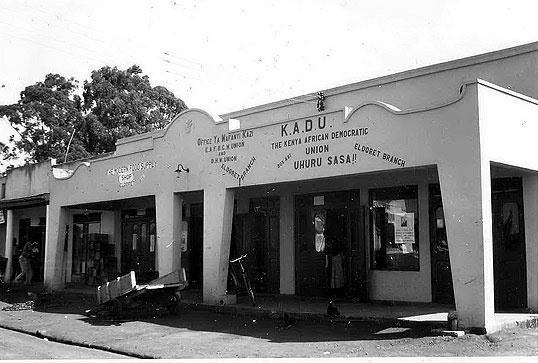
    Vergelyk hierdie beskrywing met dié van Christene Nicholls (Praag 4 Maart). Nicholls het deeglike en Taylor oppervlakkige navorsing gedoen. Afrikaners het voor 1908 en daarna in verskeie groepe gekom. Watter van daardie kinders was vuil en halfnaak, of is dit suiwere vooroordeel wat Taylor uitspreek? “The wagons, pulled by a span of sixteen oxen, passed through the Great Rift Valley … and climbed up the Mau escarpment. They trundled on across the Uasin Gishu plateau where their leader, Jansen van Rensburg, called a halt. A solitary hill named Sergoit broke the plain that ran from horizon to horizon and teemed with game. Here the wagons were outspanned and the men rode out to mark off their farms. After a time they called the place Eldoret, as if this were to be their Eldorado, a new promised land for the Boers” (2311). “El Dorado fabled city of gold believed by the 16th-century Spanish and other Europeans to exist somewhere [in South America] in the area of the Orinoco and Amazon rivers” (Collins World Encyclopedia, 2003, p 305).

    Taylor skryf hy was onder die indruk die Jansen van Rensburg-groep was “irreconcilables, bittereinders … who would not submit to Britain after defeat, and trekked away from their homes in the Transvaal just as their forefathers had once trekked from the Cape, and kept going for thousands of miles until they found a new Arcadia under the British yoke” (2316). “By the 1940s, Eldoret could have been a dorp on the platteland. The Dutch Reformed Church congregation alone was six hundred strong. The farmers held fêtes, with stalls selling melktert and koeksusters [koeksisters], and games of jukskei and the wheezy accordion dance known as tikkiedraai. They had their own schools, churches and clubs, and the Eldoret rugby side was the most feared in the country. Now they were all gone. Abandoned farms had been occupied by squatters, the Van Riebeeck School was Nakuru Secondary, and African gospellers had taken over the Dutch Reformed Church. The Boers’ Eldorado had suffered the fate they most feared” (2328). Toe Kenia in 1963 onafhanklik geword het, het die Afrikaners ‘n agterdeur gehad; hulle kon na Suid-Afrika uitwyk. Die blanke Suid-Afrikaners op hulle beurt “suffered the fate they most feared” weens die politieke dwaasheid van 1990/94.

    Taylor het ‘n taxi gehuur om Fanie Kruger, die laaste Afrikanerboer, buite Eldoret by Sergoit te besoek (2322). Kruger dink die Afrikaners het onnodig gevlug. “By the late 1960s, there were just a handful left. Now it’s just me” (2346). Taylor skryf: Kruger “had not endured without compromise and his situation was not without risk. The Kruger homestead was a military-style compound with guards and two-way radios. Fanie pulled his weight in the local community – he was a stalwart of Kanu, the ruling party” (2346). Kruger sê: “Look, this government was very good to my dad and me, hey?” Taylor skryf: “So what, I asked, if Biwott decided that he wanted the Kruger farm? Nicholas Biwott was the local MP, the most powerful man in Kenya after his mentor, President Daniel arap Moi [born 1924, president 1978-2002]. He was also the most feared, the thugish minister who acted as Moi’s enforcer … He was also Fanie Kruger’s neighbour. Fanie’s eye narrowed, and he spoke a little too fast. ‘Biwott could have had me out, no problem, but he’s been a very good neighbour and if I can help him I will. I don’t judge people …. I respect the guy’” (2352).

    Taylor skryf: “I asked him about Eldoret’s bittereinders, the heroes of Boer legend who gave up everything, joining Jansen van Rensburg to trek halfway across Africa in ox wagons to escape British rule. ‘Hell, man, they weren’t trying to get away from the Brits, they were trying to get away from their own people. The Brits had to move them – they were outcasts’” (2365). Taylor: “Britain had to provide a bolt-hole for them, far from the hand of vengeance. So Eldoret had been founded as a colony for pariahs. Not for the first time, the Afrikaners love of mythology cloaked a darker secret” (2377). Dit is ‘n skewe voorstelling. Soos ek in my vorige rubriek aangedui het, was al die Afrikaners wat hulle in Kenia gevestig het nie hanskakies nie.

    Taylor gee voor dat Kruger daarna nog ‘n Afrikanermite nekomdraai; dat Jansen van Rensburg se groep nie die hele ent van Suid-Afrika af na Kenia met ossewaens getrek het nie. Kruger sê: “They all came up by ship to Tanga and Mombasa … Then they went by train to the railhead at Londiani. If there was any trekking by wagon, it was no more than forty miles” (2377). Die verskil tussen Nicholls en Taylor se vertellings is dat Nicholls deeglike en Taylor oppervlakkige navorsing gedoen het. Dit is algemeen bekend dat Jansen van Rensburg en sy geselskap per skip gekom en in Kenia osse gekoop en van daar na die plato getrek het. Ek het die indruk dat Taylor gepoog het om sy storie interessanter te plooi en dat hy min toegeneentheid jeens Afrikaners het. “The Afrikaner fondness for a past embroidered with nostalgia and fantasy should not obscure a reality that was often just as compelling as the myth. The story of their diaspora – not the Great Trek of innumerable and interminable South African school history lessons, but the more gradual and individual dispersal of hunters, farmers and downright nomads, beyond the Vaal, and Zambezi and the Kafue, settling in small clan-based colonies far distant from their Cape origins – was the very stuff of frontier saga” (2377).

    Die oorblywende blanke boere in Kenia het groot las van diewe wat hulle vee en ander besittings steel. ‘n Ander plaag is brande wat opsetlik gestig word om die blankes te verdryf (2461). Daar is ‘n laaste groot landgoed in blanke besit wat onderhoud aan 5 000 mense verskaf en boorgatwater aan 50 000 (2467). Daar is ‘n Britse oud-offisier wat £500 000 nodig het om ‘n verwaarloosde plaas op te bou. Die Europese Beleggingsbank het die geld teen 5,5% rente via die Keniaanse Nasionale Bank beskikbaar gestel. “The Kenyan bank stated that it would charge 11 per cent. The farmer had no option but to accept this, but now, two months later, he had still not received the funds and, being committed to projects for the growing season, had been forced to take a bridging loan elsewhere at 28 per cent … This farmer employed about 100 full-time workers and another fifty as casual pickers. With dependants, however, the farm provided a livelihood for about 700 people. ‘If I go, we all go,’ the farmer said” (2538).

    “A nearby farm was one of many enterprises owned by Kenya’s richest man, Daniel arap Moi, the president. It was of similar size, and had employed a similar number of people until the previous year. Then the entire workforce was dismissed, losing their homes as well as their jobs. A skeleton staff now ran the farm. Those who had been full-time workers had become squatters. They were hanging on in the hope of casual picking work. The farmer spoke with icy fury. ‘We have state-sanctioned murder, legalised gangsterism and, now that Mobutu [Sese Seko, 1930-1997, president Zaire/DRC 1965-1997] is gone, corruption on a scale that puts us top of the league in Africa. You’re writing a book? Well, I think someone should do a book on Kenya – as a straightforward study in evil’” (2549).

    “Armed guards known as askaris were employed by virtually every farmer and resident of Nairobi’s better suburbs” (2692). Dominic Martin sê: “Here we have no macro freedoms at all – we can get shot one night or put away and that’s the end of it. He exploded: ‘Boy, do we have micro freedoms … There’s no one to fall back on, no welfare state, no dole’” (2823). Taylor: “I had hoped to visit the last old white savage himself, Wildred Thesiger, living with his extended family of Samburu [a black tribe] at Maralal in Kenya, where he had intended to die, then heard that he was back in London” (2908). Thesiger het uit Kenia vertrek nadat albei sy stiefkinders jonk aan vigs dood is (3021).

    Tanzanië

    Taylor is per minibus van Nairobi na Arusha in Tanzanië en van daar per pad na Dar es Salaam. “I intended to take a train on the Chinese-built Tazara line, alighting at Mbeya and crossing by road into Malawi” (2875). Kenmerkend van Tanzanië is “pot-holed roads, collapsed pavements and empty shops” (2891).

    Taylor vertel van ‘n Afrikaanssprekende blanke vrou, Katrina, wat in Tanganjika ‘n swart man as eggenoot gekies het (2382). Ek onthou dat ‘n artikel oor haar jare gelede in die Byvoegsel tot Die Burger gepubliseer is. “Katrina was among another colony of Afrikaner exiles, a small group who settled just north of here [Arusha] at a place they called Kampfontein in the western lee of Mount Meru, around the same time as their fellows went to Eldoret. The Boers of Meru lost their land when Nyerere nationalised the commercial farms, but whereas they had returned to South Africa, Katrina stayed, along with her dark secret. For she had violated a shibboleth of her people, stealing away from her family in the night to find love in the arms of a black man. They had two children, and Katrina became an outcast. When the Boers left, she stayed with her lover … living in a shamba [cultivated plot] with a handful of other peasants” (2926). “I have failed to find Katrina” (2920).

    “I had encountered enough ghosts. They betokened a kind of failure, testimony that once whites had been a part of Africa, but no longer; only the lost and the hardiest endured and they had all but died out” (3017). “Our roots in East Africa had been shallow, a trail mapped by explorers and adventurers leading to colonisation and then withdrawal, all in the space of seventy years, so that those who remained were but an appendix of Empire. Southern Africa … was different. There, generation after generation had given bones to the earth. There, if anywhere, we [whites] belonged” (3021).

    Taylor is per trein uit Dar es Salaam suidwaarts na Mbeya. Dit is die Tazara-spoorlyn, 1 162 myl lank, wat die Chinese binne vyf jaar (1970-1975) gebou het om lande in Suidelike Afrika, soos Zambië, Zimbabwe en Malawi, minder afhanklik van vervoer deur blankbeheerde Suid-Afrika te maak (3181). Vir die konstruksie is 25 000 Chinese na Tanzanië gebring (3197). Die Chinese werkers is nie toegelaat om met die plaaslike bevolking te meng nie. “They feared cultural contamination … the tendency of Chinese is to regard all other races as inferior, in much the same way that the British once did” (3203).

    Die Chinese het ook die hoofpad in Kenia herbou en hiervoor ook hulle eie werkers gebruik. Klaarblyklik besef hulle dat Chinese werkers meer koste-doeltreffend as swart werkers is. Vergelyk dit met die situasie in die nuwe Suid-Afrika waar (gewelddadig en stakend) daarop aangedring word dat plaaslike arbeid gebruik moet word. Die Britte en Duitsers het die spoorlyne gebou wat die binneland van Kenia en Tanzanië, asook Uganda, toeganklik gemaak het. Hoe sou hierdie lande daar uitgesien het sonder Chinese hulp en die voordele, bv infrastruktuur, wat kolonialisme gebring het?

    Malawi

    In Malawi “the roads were as bad as they had said, the poverty more dire than anything I had seen in Tanzania” (3269). “I was surprised by how few people of mixed race I saw” (3432). Naas verval sedert die eertydse koloniale glorie is daar min om te rapporteer. Taylor het so baie tyd in Oos-Afrika deurgebring dat hy hom moes haas om betyds in Kaapstad te kom. Die tweede deel van sy boek, oor Suidelike Afrika, is dus glad nie so informatief soos die eerste deel oor Oos-Afrika nie.

    Zambië

    Van die Malawiese hoofstad, Lilongwe, reis Taylor per bus na Chipata in Zambië. “The Zambian roads were far worse than Malawi’s” (3626). “Northern Rhodesia’s white population, never much more than 70 000, was more easygoing and integrated than Southern Rhodesia’s, which reached a peak of about 280 000. The two groups never seem to have liked each other much until Zambian independence [1964] and Ian Smith’s rebellion [unilateral declaration of independence] against the Crown a year later. In the next five years about 40 per cent of Zambia’s whites decamped across the Zambezi. For those who stayed, things got tougher as the economy declined” (3712). Die hoofstad, Lusaka, “had a reputation for violent crime” (3654). “Armed robberies … started after the economic collapse” (3723).

    “I loathed Africa and everything about it – the stoicism, the fatalism, but above all the fact that nobody ever complained, and so nothing ever got any better. Authority grew corrupt because it was unchallenged by a cowed citizenry” (3637). Onder swart bewind Zambië, “a country capable of producing enough to feed the entire continent became a food importer” (3690). “As elsewhere in Africa, game conservation and tourism were the two areas in which whites had remained a dominant force” (3758).

    Zimbabwe

    In Harare, die hoofstad van Zimbabwe, sê Taylor aan die swart taxibestuurder: “Zambia is a mess.” Hy antwoord: “Here also. It was better under Ian Smith” [1919-2007, eerste minister 1964-1979] (3876; ook 4247). ‘n Ander waarnemer sê: “What was better under Smith was honesty in administration. Now it is totally corrupt” (4453). Na onafhanklikheid het in Zimbabwe dieselfde as in die nuwe Suid-Afrika gebeur: “Integration of schools and medical facilities, the removal of statues of Cecil Rhodes, and the renaming of streets after so-called terrorists” (3968). Baie blankes het die land verlaat. “A black government was bound to make a priority of meeting black needs … The prevailing wisdom was that, having prospered off the sweat of black labour and done so little to integrate, whites were long overdue a bit of suffering” (3973). “Zimbabwe was racing towards economic ruin. Corruption and cronyism had plumbed depths greater than Kenya’s” (3990). “Harare was still a long way from the decay of Nairobi, Dar [es Salaam] or Lusaka, but the decline was unmistakable” (3996).

    Watter raad is daar vir ‘n blanke as hy in Zimbabwe wou boer? ‘n Blanke Zimbabwiese boer sê: “‘I look after my blokes – I treat them well, not just because they are worth it, but because I have to watch my back. I stay in with the local party people, I give to the local schools … But they could still carve me up, chuck us out, and then what have we got to show for four generations in Africa?’ He shook his head. ‘No, my friend, Stay where you are’” (4123). Taylor: “It struck me that the idea – a bit of land, coming back to Africa – was absurd, just another hopeless dream of finding home” (4129). “If there was one characteristic that defined Africa, it was the capacity of its people to endure, and when it came down to it our own sticking qualities had not been impressive” (4135).

    “The Roman Catholic Commission for Justice and Peace, the most vocal internal critic of Smith’s war,* issued a statement censuring ‘the frightful consequences’ of army brutality in Matabeleland. A spokesman admitted privately that they had been concerned about speaking out earlier in case it only inflamed the situation, which sounded like just another way of saying that it was actually less risky to denounce atrocities by whites than atrocities by blacks … While Sharpeville still had immense international resonance, the name Tjolotjo was quite unknown, although the scale of that crime was certainly far greater” (4214). In vergelyking met Sharpeville (1960) het die Marikana-slagting (2012) internasionaal skaars opslae gemaak. Selfs die uiters linkse Garfield Todd (1908-2002, eerste minister 1953-1958), anders as FW de Klerk, “was not an advocate of universal suffrage which, he once said, ‘would lead to universal chaos’” (4423). [* Waarom “Smith’s war” en nie Robert Mugabe en Joshua Nkomo se oorlog nie?]

    Suid-Afrika

    Uiteindelik kom Taylor in sy geboorteland, Suid-Afrika, aan. Hy regverdig sy emigrasie soos volg: “Racial tyranny had made it impossible for us to live in South Africa” (4226). ‘n Mens sou graag wou hê dat hy ‘n poging aanwend om die ou met die nuwe Suid-Afrika se vergelyk, maar hy doen dit glad nie. Taylor het sy jeug in Rivonia deurgebring. “Most of our neighbours were Afrikaners, and they were different” (3041). “Many white children had a degree of intimacy with Africans that no legislation could prohibit – or can now coerce” (3080). “My attitude towards Africans was, for one so young, remarkably condescending … I had the same attitude towards our white neighbours, the Afrikaners … I recognised even then that they and the Africans were both of this land in a way that we, the English, were not” (3148).

    “Our social superiority to Afrikaners was unquestioned by us” (3169). “My fear of Africans and Afrikaners went deeper, and I think was founded in an unconscious understanding even as a child that they were partners in seeing the nature of true power in this cruel, beautiful place. They shared a destiny in it. We were equivocal … our way of straddling two worlds with one foot in Africa and one in England” (3175). “It had begun to appear that the African environment, whether under white or black rule, was not one in which our values – a confused amalgam of colonial Englishness, modern Britain and, yes, something of Africa as well – could survive” (4232).

    “Forty years ago, with Kenya’s independence approaching, Elspeth Huxley [1907-1997] posed the question in a book, White Africans, whether black and white could ‘unite together to form a modern, reasonably well conducted state … In short, a multiracial state a possibility or a chimera?’ The prospects now looked a good deal gloomier than they did then. All the way south, the evidence had pointed to the eventual extinction of whites as a species capable of enduring in Africa. In Tanzania, Uganda, Malawi and Zambia they had all but died out. Although these were countries which never had large white populations, the problem was even more evident in the two places which had started off with significant numbers of whites and comparatively developed economies, Kenya and Zimbabwe. Neither could any longer claim to be a modern, reasonably well conducted state and in both the white populations had been so whittled away that there was now insuffient regeneration to ensure survival. Ultimately, it would all come down to South Africa” (4778).

    Tydens Taylor se 1997-besoek aan Suid-Afrika “virtually all those I spoke to had considered emigrating” (4755). Die blankes (eintlik FW de Klerk en ‘n klein groepie meelopers) “had negotiated themselves out of power, and for many the consequences had been traumatic. You saw them increasingly now, the poor whites who had shed their previous status like an old skin … Afrikaners had no bolt hole and they understood the cardinal rule – that to survive an African tribe must constantly adapt to new priorities” (4805).

    Laurens van der Post (1906-1996), gebore in Suid-Afrika, “once made the point that, while a great deal was written about the devastating effect that the European has had on the native of Africa, no one stopped to inquire into the effect of the native on the European” (3312). Samevattend kan ‘n mens seker sê: Afrikanisering is kultuurversterkend vir die swarte, die Afrikaan. Terselfdertyd is afrikanisering kultuurvernietigend vir die Afrikaner, die blanke, die Europeër, die Westerling.
  • Leon Lemmer: Die lot van Afrikaners en ander blankes in Kenia

    Leon Lemmer: Die lot van Afrikaners en ander blankes in Kenia

    Daar was voorheen twee groot koloniale gebiede in Oos-Afrika: Duits-Oos-Afrika en Brits-Oos-Afrika. Die Duitsers en Britte het kwaai meegeding om handel vanaf die ooskus met Sentraal-Afrika (veral Uganda, maar ook Rwanda, Burundi en die Kongo) te bedryf. In 1890 het die Duitsers en Britte ‘n wedersydse ooreenkoms gesluit. Albei het spoorlyne gebou om die binneland toeganklik te maak. Na die nederlaag van die Duitsers in die Eerste Wêreldoorlog het Duits-Oos-Afrika in 1919 (nadat dit sedert 1897 ‘n Duitse kolonie was) as Tanganjika ‘n mandaatgebied van Brittanje geword; tot onafhanklikheid in 1961. Eilande aan die ooskus, soos Zanzibar en Pemba, was sedert 1890 Britse gebiede. In 1964 is hierdie eilande by Tanganjika ingelyf en staan die land sedertdien as Tanzanië bekend, met Swahili en Engels as amptelike tale.

    Brits-Oos-Afrika het in 1895 ‘n Britse protektoraat en in 1920 die kolonie Kenia geword, met ooskus-eilande, soos Zanzibar en Pemba, aanvanklik administratief deel daarvan. In 1963 het Kenia onafhanklik geword, met Swahili as enigste amptelike taal. Hoewel die land se naam en spelling nie in 1963 verander het nie, word verwag dat Kenia voortaan met ‘n kort pleks van ‘n lang e uitgespreek moet word. Dit staan in CS (Christene) Nicholls se boek, Red strangers: The white tribe of Kenya, London: Timewell Press, 2011, 332p; Amazon Kindle $11,39): “The powers in Whitehall decided that the pronunciation should have a long e, and Keenya became the pronunciation until independence in 1963 when it reverted to Kenya with a short e” (Kindle 2679). My teks is op Nicholls se boek gebaseer.* “The Kikuyu people described the white men who came to their lands in the late nineteenth century as ‘red strangers’; hence the title of this book” (94).

    [* Ek het nie toegang tot Gerrit Groen se doktorale proefskrif nie: “The Afrikaners in Kenya, 1903-1969”; Michigan State University, 1974. Brian M du Toit se boek is beskikbaar maar onbetaalbaar duur: The Boers in East Africa: Ethnicity and identity, Westport: Bergin & Garvey, 1998, 224p; Amazon Kindle $142,96. Ek moet en wil nog Janet McIntosh se boek lees: Unsettled: Denial and belonging among white Kenyans (University of California Press, 2016, 307p; Amazon Kindle $23,93). Sy gebruik die frase “structural oblivion,” wat ten minste polities op Afrikaners in die nuwe Suid-Afrika van toepassing gemaak kan word.]

    Nicholls se onderwerp is die tydperk van bykans sewentig jaar (1895-1963) waartydens blankes Kenia ontwikkel het. Sy vind dit nodig om hieroor te skryf omdat dit byderwets geword het om blankes en kolonialisme sonder meer te verdoem. “The truth remains that there was a great deal of good, and few people are prepared to stress this. I try to do so” (57). In die teks skemer dit egter telkens deur dat sy liberalisties gesind is. Tog stel sy die alternatiewe en meer positiewe siening van Kenia se blankes op ‘n verdienstelike manier. Die boek getuig van deeglike navorsing, wat in sowel Kenia as Engeland gedoen is.

    Die outeur beklemtoon die harde werk wat dit van blankes in Kenia geverg het om die ongerepte natuur in plase te omskep. Groot ontberings moes verduur en talle gevare getrotseer word. Malaria en leeus het vir die pioniers groot probleme veroorsaak. “In Africa you can do nothing in a hurry, except it be to die” (314). Talle boeke en artikels is oor die Wanjohi of “Happy” Valley gepubliseer, bv Nicholas Best se Happy Valley: The story of the English in Kenya (2013, 235p; Amazon kindle $9,11) en Juliet Barnes se The Ghosts of Happy Valley (2013, 304p; Amazon Kindle $12,09). “The antics of this wealthy and un-representative coterie, notorious for its licentious and irresponsible behaviour, have attracted all too much attention, whereas the real creators of what became the flourishing British colony of Kenya have languished in relative obscurity. It is one of my purposes to redress that balance” (70; ook 3762).

    Die Britse bedrywighede in Kenia het in 1887 begin toe die British East African Association (vanaf 1888 bekend as die Imperial British East Africa Company – IBEAC) ‘n konsessie van die sultan van Zanzibar vir handel in Oos-Afrika noord van die Umba- en suid van die Kipini-rivier ontvang het. “Most of the territory seemed empty” (400). Oor die Eldoret-omgewing, waar Afrikaners hulle sedert 1903 op die hoogland gevestig het, word gesê: “No Africans seemed to live there in any numbers” (2183). In 1895 het die Britse regering die bates van die IBEAC oorgeneem (595). ‘n Ooreenkoms soortgelyk aan die Britse een het tussen die sultan van Zanzibar en die Duitsers vir handelsbedrywighede suid van die Umba-rivier bestaan (132). Arabiere en Indiërs was toe al lank aan die kus gevestig (152) vir handel in bv slawe en ivoor (171).

    Die groot probleem in handel met Uganda (sedert 1895 ‘n Britse gebied) was om die Taru-woestyn te oorbrug. Om te verhoed dat die draers van goedere uit ‘n konvooi dros en almal van dors sterf, of deur diere of swartes gedood word, is hulle vas aan mekaar geketting (184). Dit werp ‘n ietwat ander lig op hierdie saak as die een wat deesdae gewild is. Die opperhoofde deur wie se gebied gestap is, is beloon (199). Bowendien moes die handelaars hulle goedere voortdurend teen diefstal beskerm. Talle mense is in die konvooie en elders vermoor, bv ‘n konvooi van 600 mense in 1896 (500). “The continual strain and anxiety about the natives tells on one pretty heavily” (440). Lede van stamme soos die Kikoejoe en Maasai het groot probleme vir die blankes in die binneland veroorsaak (470). Aan die kus het Somaliërs ‘n oorlas van hulleself gemaak (852). Hierdie mense was “utterly different” van die blankes (666). Probleme met Somaliërs kom in die 21ste eeu steeds in Kenia en elders voor.

    Toe die spoorlyn van Mombasa tot aan die Victoria-meer gebou is (1896-1903), “land for one mile on each side of the track was bought by the railway” (759) van die swart stamme wat aanspraak op eiendomsreg gemaak het. “A telegraph line was built alongside the railway as it went inland … but Africans repeatedly stole the wire to adorn their bodies, for it was the height of fashion to wind it round one’s ankles, calves and arms” (877; ook 1767). In Suid-Afrika is kabeldiefstal in die 21ste eeu steeds ‘n groot probleem. Indiese arbeiders is vir die konstruksie van die spoorlyn gebruik. Oor hierdie onderwerp is daar JH Patterson se boek, The man eaters of Tsavo (1907; Amazon Kindle $1,13). Die Britse bewind het Indiërs dikwels ook as soldate en polisiemanne aangewend; soms ook Soedanese soldate. Dit verduidelik die ontstaan van die groot Indiese bevolking in Kenia.

    Sommige blankes wat die spoorlyn help bou het, het besluit om hulle in die land te vestig (1016). Blankes is aangemoedig om na Brits-Oos-Afrika te kom om die land te ontwikkel en die spoorweë lonend te maak (945). “The first settlers bought land from Africans” (704; ook 1022), “paying for it with cattle and trade goods” (725). Onder die swartes was daar nie so iets soos individuele eienaarskap van grond nie (719). “Confidence was high, the ambition to civilise seemed laudable and communications were vastly improved, with steamship and telegraph minimising the world’s distances” (962). Na die Anglo-Boere-oorlog (1899-1902) is immigrasie vanaf Suid-Afrika aangemoedig, “where many of the men who had fought in the Boer War had stayed on” (982), bv Australiërs (1022, 1252). Suid-Afrika is beskou as ‘n “reservoir of Afrophile Europeans” (989) wat tot die ontwikkeling van Oos-Afrika kon bydra.

    Aanvanklik is “a chequerboard policy of settlement, intermingling whites and Africans” gevolg, “to make it easier to obtain African labour and … to civilise the native peoples more swiftly” (1022). In die 21ste eeu het die ANC ‘n soortgelyke beleid in Suid-Afrika. Blankes mag nie monokulturele enklaves vorm nie. Swart woongebiede word in of naby tradisioneel blanke woongebiede ontwikkel, glo om arbeiders nader aan hulle werkplekke te vestig. In werklikheid is die doel gedwonge rasse-integrasie, wat meebring dat blankes toenemend onveilig voel. In 1905 is in Brits-Oos-Afrika van hierdie rassebeleid afgesien en is die swartes eerder in reservate gehuisves (1022). Dié nuwe beleid het blanke immigrasie gestimuleer. In 1902 was daar net 17 blanke landbouers, 70 in 1903 en 360 in 1904 (1041). Daarna het die blanke boere vinnig meer geword. In 1918 was daar 1 195 (1162, 1239). Na sowel die Eerste as die Tweede Wêreldoorlog het baie blanke oudgediendes hulle in Kenia gevestig.

    “The newcomers camped on their land in tents until they built grass huts (bandas) and rondavels of mud, wattle and grass thatch. These were whitewashed and floored with polished cowdung” (1062). Seekoeivet is vir beligting in lampe en vir die maak van kerse gebruik (1062, 2174). “The life was far from easy and most new farmers lost rather than made money” (1068). “The problem of acquiring African farm labour was perennial” (1075), want dit was in die na-slawerny era. Daarby het die Britse owerheid geredeneer: “their first loyalty was to Africans” (1081). Soos dit by geleentheid gestel is: “The natives had been licked into shape” (1363). “A hut tax was introduced by the government in 1901, mainly to persuade Africans to work for wages in order to pay it. It had limited success and by 1910, when the labour situation was critical, a poll tax was introduced to encourage into work those African males, mainly of the warrior class, who did not pay the hut tax” (1087). Sommige swartes het bv veediefstal bo werk verkies (1108); ‘n probleem wat steeds met ons is.

    “In order to control a few undesirable whites, who had come up from South Africa in 1903, the Foreign Office sanctioned the creation of ten new police officer and subordinate grade posts, which could be recruited locally. The men appointed succeeded in expelling the unwanted whites. Since settlers refused to submit to the authority of African policemen, a tiny contingent of white constables was appointed in 1908 to deal with settler matters” (1181).

    Hierdie “undesirable” of “unwanted whites” was moontlik Britte of ander Engelssprekende blankes, want onmiddellik hierna skryf die outeur: “The British South Africans were not the only immigrants from that part of the continent. Their former enemies, the Boers, also found their way from South Africa. To escape an economic depression in their own land, several went to German East Africa (GEA) from 1903 onwards, but finding life almost as harsh there, thirty-three of these families trekked into Kenya in 1906 … They were not quite the first Boers to arrive. One of the Van Breda brothers had come to the EAP [(British) East Africa Protectorate] in 1903; in 1904 the Arnoldi family, another Van Breda brother and John de Waal made the journey; in 1905 six families [and] in 1906 twelve more families (excluding those from GEA) appeared; and in 1907 a further seven families joined them” (1202). “W J (‘Bon’) Van Breda was murdered by two Elgeyo tribesmen on his farm in 1907” (1209). Die euwel van plaasmoorde is steeds met ons.

    “After no notice was taken of this crime by the authorities, six months later ten of the neighbouring farmers got together, met at Arnoldi’s Drift with arms and ponies, and staged an expedition to intimidate the DC [District Commissioner]. The Governer hurriedly sent KAR [King’s African Rifles] reinforcements up from Nairobi, the murderers were dealt with and the incipient rebellion fizzled out” (1209). Dit toon dat verset ‘n onverskillige owerheid tot optrede kan aanspoor.

    “The largest influx was yet to come. Jan Janse Van Rensburg, a prominent Transvaal farmer from the Bethal district, was a roikop [rooikop? hensopper, hanskakie], someone who had collaborated with the British in the Boer War. Such people were often ostracised in their home districts … [Van Rensburg] gathered together fifty-eight Boer families … sailed … to Mombasa, arriving on 12 July 1908. The party consisted of 247 people, forty-seven wagons and ninety horses. In Nakuru they bought oxen to pull their wagons and trekked up the other side of the Rift Valley, to Londiani and onward to the Uasin Gishu plateau, where they selected farming land near Sergoit rock. In 1911 another large group, sixty families led by CJ Cloete, a prominent farmer from the Bethlehem district of the Orange Free State, arrived on the Uasin Gishu plateau, which now housed 900 Boers, a quarter of the country’s white population. By 1916 there were 1 177” (1212). In 1913 het Charles en Edmund de la Harpe en J Bertram Steyn, “who had fought for the British in the Boer War,” op die plato plase gekoop (2181).

    Ek kon verstaan waarom Afrikaners na die Anglo-Boere-oorlog na Argentinië, Angola en Duits-Oos-Afrika uitgewyk het, want hulle wou nie onder Britse bewind wees nie. Afrikaners wat na Brits-Oos-Afrika geëmigreer het, het egter nie Britse onderdanigheid ontsnap nie. Die feit dat sommige van hulle hanskakies was, verduidelik waarom hulle na ‘n Britse gebied geëmigreer het. Maar nie alle Afrikaners wat in Kenia gewoon het, was verloopte Afrikaners nie. Byvoorbeeld, dit geld in die meeste gevalle waarskynlik nie diegene wat aanvanklik in Duits-Oos-Afrika ‘n bestaan probeer maak het en hulle daarna in Brits-Oos-Afrika gevestig het nie. Hierby kom die feit dat Afrikaners die Britte in Kenia van naderby leer ken het. Dit het veroorsaak dat Afrikaners saamgestaan en baie van hulle ware Afrikaners gebly of geword het, so hier onder blyk.

    Gedurende die Eerste Wêreldoorlog was daar kritiek op Afrikaners wat nie die wapen teen die Duitsers wou opneem nie. “But it was only a small minority of Afrikaners who refused to serve in the British forces. Conscription was introduced in December 1915, and in mid-1917 seven Afrikaners were brought to trial for not reporting for duty, and were given six-, nine-, and ten-month prison sentences” (2409). Na die Eerste Wêreldoorlog het talle Britse oudgediendes hulle in Brits-Oos-Afrika gevestig. “The South African influence in settler affairs was diminished, because many of the new farms were in the Uasin Gishu area” (2490).

    “The attitude of the British settlers towards the Boers was mixed. Oblivious of the roikop element, Lord [Bertram] Cranworth [1877-1964] voiced his disapproval of ‘the formation in our midst of a solid mass of utterly disloyal colonists, speaking their own language and having their own church.’ He was correct in thinking the newcomers were disinclined to mix with the British, for the Boers set up separate schools for their children and worshipped in their own churches. Their isolation was enhanced by the plateau’s remoteness from the rest of the country. In the rainy season it could take six weeks to travel from Londiani along the dreadful road to Eldoret, a new settlement in the midst of the Uasin Gishu farms. But the Boers were reluctantly accepted because they were crucially useful to the British farmers of the EAP during these years before tractors became available. Since they were the only ones who could train and handle teams of oxen, they undertook all the contract ploughing for other farmers. Many of them became hired hands on non-Boer farms, and they specialised in training oxen. Others ran transport … British settlers often castigated Boers for their poverty, while turning a blind eye to hardship among those of their own nationality” (1225). Die outeur voeg later by: “The European and Boer communities did not always mix well, for the British regarded some of the Boers as lazy and indigent, while the Boers disapproved of the farming methods of the British” (2160).

    Voor onafhanklikheid in 1963 was Kenia wat sosiale opset betref ‘n tipiese Britse kolonie. “The segregation of white and Indian living areas was established in these years, following the practice in India. Africans working as house servants began to live in huts beside their employers’ dwellings, and the rest lived in African areas. The three races did not mix socially. The whites considered themselves at the top of the social hierarchy” (1733). “Clubs in the EAP were an essential part of the social fabric, embracing and uniting as they did people of their own kind in an alien country” (1780). “As in India, the society created by the whites in Kenya was one in which sport and clubs played a prominent part. People wanted to socialize with others of their own kind, and clubs and hotel bars were natural meeting places for those who travelled into settlements over appalling roads to get supplies or conduct business” (3184).

    “Whites very rarely sought the friendship of Africans” (3683). In sommige kerke was daar rasseskeiding, bv, wat blankes betref, “to reserve some of the church furniture for themselves for reasons of hygiene” (1868). “The hospitals were firmly racially segregated” (1943). “Not until 1957 did the first multi-racial hospital open” (4677). “There was racial segregation in death as in life” (1868) met aparte begraafplase vir die rasse. “White women never took African lovers. There was a law against this – Ordinance no 7 of 1913” (3323). “Sexual assaults on white women by Africans were extremely rare” (3346). “Members of mixed marriages and their offspring – the 1931 census recorded 205 ‘half-castes’ – were ostracised and therefore kept very much to themselves” (3675). “Social stigma and ostracism were hard to bear, and immigrant whites with liberal ideas soon began to conform to the norms of Kenya’s European society” (3689). Teen die einde van die 1930’s was daar in City Park, Nairobi, “three sets of swings – for whites and Indians and Africans” (3626).

    “Private and public education systems emerged side by side in die EAP. As in India and South Africa, there was firm racial segregation. Segregation even occurred, though voluntarily, among whites, with Boer and Briton attending different schools on the Uasin Gishu plateau” (2015). Skoolonderrig het veel te wense oorgelaat. “Many people were now [1918] having to send their children to South Africa to be educated” (1979); ook na Brittanje. “Education on the [Uasin Gishu] plateau was contentious, because many Boers wanted their children taught in Afrikaans, whereas the government thought this would be divisive. And so the farmers of the Uasin Gishu had to provide their own education for their children – between 1911 and 1912 six farm schools were opened on the plateau. Three did not last long and were closed by 1915 though the farm school system lasted till 1939. The Revd MP Loubser, a Boer pastor who united the three Dutch Reformed churches around Eldoret and established a single place of worship, would not compromise on the language of instruction and started his own school, Broederstroom, in 1911, with all lessons in Afrikaans. He also began a second school at Sergoit” (2003). Wat taal betref behoort Loubser vir ‘n hedendaagse hanskakie soos Wim de Villiers as voorbeeld te dien. Loubser het die drie Afrikaanse kerke in Kenia verenig; iets wat die hedendaagse Afrikaanse kerkleiers steeds nie kan doen nie. Pleks daarvan word onsuksesvolle pogings aangewend om die blanke NG Kerk en die oorwegend nie-wit Verenigende Gereformeerde Kerk saam te snoer.

    Toe Brits-Oos-Afrika in 1920 die kolonie Kenia geword het, is die eerste algemene verkiesing gehou. Die Indiërs was meer as die blankes en hulle het hulle polities by die swartes geskaar (2517) en die swartes teen die blankes opgestook (2841). Alfred Milner (1854-1925), die Britse minister van kolonies (1919-1921), wou in geen opsig teen Indiërs diskrimineer nie. “The whites realised they would be outnumbered and overwhelmed if Indians were allowed to vote and to own land in the highlands, and their reaction to Milner’s pronouncement was to plan sedition … rebellion against the government seemed the only possible response” (2524). “The whites demanded complete segregation of Indians, no alienation of land in the highlands to Indians and the restriction of Indian representation in the Legislative Council” (2531). “The Kenya whites boycotted all Indian businesses” (2545). “It seems extraordinary that the whites engaged in sedition, but when the alternative is possible disaster, a man will gamble” (2553). “The settler force was put in a state of readiness” (2568). ‘n Afvaardiging van drie setlaars is na Londen vir samesprekings. “When the Governor and delegation reached London some weeks later, a compromise was worked out, and the rebellion died away. Essentially the settlers had got what they wanted” (2589). Dít toon: Weerstand teen politieke onreg kan die verlangde resultate lewer. Daar sonder sou die owerheid die blankes se regte al hoe meer geminag het.

    Na die Eerste Wêreldoorlog “Africans expelled from the missions … began to form their own independent churches and schools, which became foci of opposition to white rule” (2856). “African discontent at white rule, increasingly evident in the 1920s through the development of African political organisations (often thought to be due to the subversive influence of the missionaries and the Indians) served to consolidate the small settlers’ benevolent feelings towards Britain, because it was obvious that Kenya’s whites could not put down a large African rising, but would be dependent on the importation of imperial troops” (2947). In Suid-Afrika het sommige kerklike ampsdraers op ‘n soortgelyke manier die blanke bewind ondermyn.

    “Essentially the whites of Kenya became a society of landed gentry in the 1920s, with Africans representing the working class, and Indians comprising the lower middle class of clerks and traders. Among the whites … at the bottom of the heap were poor whites, many of them Afrikaners … Many locally educated white lads were working with Africans in the garages and railway workshops … Some of them were from Afrikaner families, but by 1931 the Afrikaners, who had formed such a large proportion of Kenya’s whites earlier in the century, had shrunk to only 7 per cent of the European population” (2952). In 1926 is twee diepwater-vasmeerplekke in Mombasa se hawe gebou en in 1929 nog twee. “The construction company imported some of the toughest of South Africa’s poor whites as workers” (3132). “Most Europeans were wary indeed of the potential appearance of ‘poor whites,’ a group much despised [?] in South Africa” (3705).

    “Settlers communicated with their African employees in a simplified version of Swahili, often called ‘kitchen Swahili’” (3034). Op ‘n soortgelyke manier word daar na proto- of aanvangs-Afrikaans as ‘n kombuistaal verwys. Dit is ‘n deursigtige, polities gemotiveerde poging om die oorsprong van Afrikaans te ontwit. “Life in Kenya was very comfortable until the newcomers were hit by the hard economic fact that farming in Kenya was usually unprofitable” (3034). “Kenya had more people from [the] social elite than Southern Rhodesia, with its [white] population of 30 000 to Kenya’s 9 651 in 1921” (3046).

    Teen die 1930’s het staats- en veral private skole dermate verbeter dat “very few children were now sent to Britain or South Africa for schooling” (3242; ook 3268). “The creation of schools gave the whites confidence in their future in Kenya, instilling in them a sense of permanence, however misguided” (3288). “The Central School in Eldoret, a government school, had better results than Nairobi European School. Establised in 1915, by 1916 it had fifty students, and by 1919 three-quarters of its students were from Boer families. Broederstroom, with its curriculum taught in Afrikaans, continued until 1939. During the 1930s the farm schools collapsed” (3275). My indruk is dat die hanskakies die Engelse Central School ondersteun het en die ware Afrikaners die Afrikaanse Broederstroom-skool. Maar vanaf 1940, dus na skaars meer as ‘n geslag (30 jaar), het al die Afrikanerkinders Engelse skole bygewoon. Dieselfde proses is besig om hom in die nuwe Suid-Afrika te voltrek.

    Die 1930’s was moeilike jare, gekenmerk deur ‘n resessie, droogte en springkaanplae (3378). “The debts of white entrepreneurs in Kenya exceeded £8 million in 1931, causing banks to take drastic measures and limit overdrafts. The farmers’ lot was eased by the establishment of a Land Bank that year, offering loans at very low interest rates, over a repayment period of thirty years. Most farmers took advantage of this and thus hung on to their land” (3458).”By 1939 … most white landowners in Kenya were drowned in debt” (3400). Die Britte het steeds nie danig baie van die Boere gehou nie. ‘n Engelsman het in 1935 geskryf: “I note that your last list of applicants for land is composed entirely of Dutchmen [Boers]. Do we want to convert Kenya into a Dutch colony? Any whites may be better than no whites, but I think we should try to get Englishmen as much as possible” (3487). Die ontvanger van hierdie boodskap het geantwoord “that it was important to increase the white population ‘in consideration of the undoubted menace which threatens from other quarters,’ and that the right kind of Afrikaner made a good colonist. The hypothetical menace was that posed by Indians, whose number, at 36 461, was double that of the whites … White immigration expanded … very slowly in the 1930s” (3486).

    Robert Brooke-Popham (1878-1953), goewerneur 1937-1939, wou nie Joodse immigrante hê nie: “With the Indians and the Goans and the Arabs and the Somalis, quite apart from the Dutch [Afrikaners], I feel that another community problem must be avoided” (3508). “Brooke-Popham found that Kenya’s white colonists did not speak with only one voice, except when it came to their dislike of Indians” (3599). Hy het ‘n brief aan sy opvolger geskryf, “stressing that the real object of white settlement was not merely the material development of the country, but the creation of a nucleus where British ideals and traditions could be preserved and whence they could spread. Kenya should look north to England for guidance and not south to the Afrikaans-speaking community, while the British element must be paramount in the highlands and not swamped by other European nations or the Jews” (4346). In 1934 het die Morris Carter Land Commission die beleid van “keeping the highlands white” herbevestig. “No African, Indian or coloured person could buy or lease land in the privileged area” (3551).

    “In 1934 the East African Women’s League discovered that there were 357 white children of school age receiving no education, and most of them were Afrikaners. Afrikanerdom was resilient and determined to retain its cultural integrity in the face of British domination, and the government’s plan to lift some of its children from ‘poor white’ status was unsuccessful. The more extreme whites advocated sterilisation and repatriation to South Africa of the Afrikaners they considered undesirable. Gradually, however, the Afrikaners became more reconciled to their children being educated in government schools, with English as the language of instruction, rather than at farm schools where pupils were taught in Afrikaans. The government made a concession in 1930 when it accepted that Afrikaans could be taught in schools as a foreign language if there was sufficient demand for it” (3717). Aan die Universiteit Stellenbosch klink ‘n soortgelyke refrein deesdae op: Klasse sal in Afrikaans aangebied word mits daar voldoende aanvraag daarvoor is.

    “Several Afrikaner families moved to Rumuruti and in 1932 their dominee, Revd MP Loubser, laid the foundation stone of a magnificent new Dutch Reformed church” (3782). “In 1935 there were 113 Afrikaner children in farm schools compared with 122 at the government Central School in Eldoret … When the Afrikaner Broederstroom School closed in 1939, most of its pupils transferred to the Central School. The [Afrikaans] school at Rumuruti, which had reopened, closed in 1937, and all 122 children of the district of primary-school age were forced to go to [the English] Nakuru School … The high cost of boarding … meant that many Afrikaners were denied secondary education” (3723)

    “Kenya’s white population was estimated as 22 808 in 1939” (4029). “By the close of 1940 Kenya’s [war] forces numbered 75 000, of whom 25 000 were South African” (4051). “Certainly a beneficial side-effect of the war was the tarring of some roads, such as a stretch north of Nanyuki … The South African troops brought with them road construction companies made up of civilian road engineers and in a few months the roads to Wijir and Marsabit were the best in the country. The troops also bored for water all over the Northern Frontier District” (4094). ‘n “Wartime tragedy was the loss of a South African Air Force flying boat and its thirty-five passengers on Lake Victoria” (4120). Italiaanse krygsgevangenes “tarmacked the road between Nairobi and Naivasha” (4305).

    Gedurende die Tweede Wêreldoorlog “the government conscripted African labour to work on farms, an enormous help to farmers … For the first time white farmers began to make substantial profits and became economically secure. The Afrikaner farmers shared in the prosperity and there is no further mention of a ‘poor white’ problem in Kenya” (4298). Pleks van ledigheid en parasitisme as onaantasbare menseregte te beskou, kan daar myns insiens ‘n sterk saak vir omsigtig ingestelde gedwonge arbeid uitgemaak word.

    “Towards the end of the war a new Governor, Sir Philip Mitchell, reminded the home government that … ‘there should be a vigorous and well established British settlement in these highlands, for without it there is no hope … of creating here a permanent structure of enlightenment and civilisation” (4374). “The settler elite … looked down upon the South African Lady Mitchell, with her lack of social skills and shyness and dislike of entertaining … ‘She was … without that veneer of manner that can ease encounters between strangers’” (4398).

    “In October 1944 the first African became a nominated member of the [Legislative] Council … Africans and Indians now united in opposition to European political hegemony and economic dominance” (4367). “Mitchell found it hard to hide that he considered most European elected members of the Legislative Council of low intellectual calibre, and that he wanted Indians, Africans and Arabs to join them, and on the front benches too – though he was in no doubt that colonial government would have to remain until there were far more educated Africans in the country” (4405). “Mitchell … moved towards a type of multi-racialism” (4412). Soos in Suid-Afrika was dit die begin van die einde van die blanke bewind in Kenia.

    “In 1948 a census was held, the first since 1931, and the figures that emerged from it showed that the country had 29 660 whites, 5 251 120 Africans and 97 697 Indians and Goans. This made whites 0.55 per cent of the population, compared with the 19.5 per cent (513 008) of the largest tribe, the Kikuyu. In 1953 it was estimated that there were 42 200 whites and in 1956 57 700. Despite their steady increase, the Kenyan whites were not as numerous in 1948 as those in either Northern Rhodesia (50 000) or Southern Rhodesia (160 000)” (4418). Demografiese verswelging deur nie-wittes, veral swartes, was ‘n deurslaggewende faktor in die ondergang van blanke politieke mag in Kenia, Zambië, Zimbabwe, Namibië en Suid-Afrika.

    “The social separation between the races was partly due to different patterns of living. Africans in villages and the countryside had ways of life and standards of hygiene so at variance with those of whites that the latter could not contemplate social intercourse. The common view of Africans by whites was described [in 1955] by a Medical Officer of Health: ‘The African labourer is regarded by the European farmer as being lazy, irresponsible and unreliable and there is certainly some excuse for this opinion as his output of work is low no matter what wages he receives. It is therefore uneconomical to pay good wages. Constant European supervision is required to maintain a reasonable standard of output of work, and so the farmer tends to employ no labour in excess of the number he can personally supervise. Consequently the available land on his farm is not fully developed’” (4571). “Even missionaries, usually the most enlightened of the whites, could be reluctant to invite Africans into their homes” (4584).

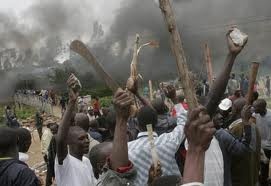
    “From 1948 a movement (called Mau Mau from 1951) began to hold oathing ceremonies … [It] began a campaign of violence and intimidation against Kikuyu headmen and chiefs in 1951 … People who refused to co-operate with the taking of oaths were punished or killed” (4808). “Capital flowed into the country until the outbreak of the anti-white Mau Mau movement in 1952, when it was reduced by 90 per cent as fear mounted for Kenya’s stability” (4462). “The standard of living and privileged position of the whites was bound to engender envy and resentment among Africans in the new, post-war, egalitarian world” (4591). Blankes se standpunt “arose from a fear of being swamped by the huge African majority and what the whites considered was a very inferior, even uncivilised way of life” (4599). “Mau Mau members usually went for soft targets and good employers, whose workforces were reluctant to co-operate with Mau Mau” (4884). “The Mau Mau rebellion left whites disillusioned and bitter” (5190). Soos in Kenia is ‘n terreurveldtog in Suid-Afrika teen blankes en nie-radikale swartes gevoer. Die “bevryders” het geen gedrag van hulle as te onbeskaaf beskou nie; hoe skokkender, hoe beter. In Afrika en Amerika is geweld ‘n beproefde manier waarop swartes kry wat hulle wil hê. Desnieteenstaande word dit van blankes, en net die blankes, verwag om herhaaldelik om verskoning vir beweerde immorele gedrag te vra.

    “The Kenya Regiment, previously regarded as a necessarily all-white body intended to counter black unrest, was ordered to become a multi-racial force. Only the Afrikaners put up much opposition … The Kenya Police Force … began to train large numbers of African officers towards the end of the 1950s. Many white officers left Kenya to seek their fortunes elsewhere” (4952). In die nuwe Suid-Afrika is die vertroue wat blankes tradisioneel in die weermag en polisiediens gehad het, op ‘n soortgelyke manier vernietig.

    “In the Eldoret region the longstanding tensions between the Afrikaner and British settlers continued in the education field. By 1945 the Central School in Eldoret had 96 per cent of Afrikaans-speakers. The whites of British origin, particularly those from families of officials in Uganda sending their children to Kenya for their education, put pressure on the government, which had in any case to finance a new school to take the increased number of white children in the area. The Hill School was opened in Eldoret in 1945 … The Central School was renamed the Highlands School. So the predominance of Afrikaners in the Highlands School continued – in 1951, of its 214 pupils, only thirty-nine were non-Afrikaners. Two years later, all 107 pupils from Uganda went to the Hill School. In 1956 the Highlands and Hill Schools were combined … Within the new Hill School differences between Afrikaner and British pupils continued, though the staff tried to counter any bullying” (4639).

    “The problem solved itself when all the Afrikaners but a handful left around the time of independence in 1963. Ten years after independence only a dozen families remained. In 1996 none but the Krugers and du Toits in Eldoret, the Steenkamps in Kitale, the Prinsloos in Nakuru and the Retiefs in Malindi were left” (4656).

    “There had been an abrupt change in British policy towards the colonies when Iain Macleod [1913-1970] became Colonial Secretary [1959-1961] … His predecessor Alan Lennox-Boyd had been thinking in terms of independence for Kenya in about fifteen years’ time, whereas Macleod wanted the time reduced to three years … He pulled Harold Macmillan, the Prime Minister, with him” (5024). “The whites were dismayed and the Africans had not expected to get as much as they did … Macleod had ridden roughshod over the settlers’ views and many of them felt utterly betrayed by both Britain and their own politicians” (5037). Macleod se dogter, Diana (gebore in 1944), is blykbaar wyser as haar pa, want sy is lid van die regse UK Independence Party (UKIP – Wikipedia). In Suid-Afrika is die verraad nie deur ‘n regering in ‘n ander land gepleeg nie, maar mandaatloos deur ‘n klein groepie plaaslike, Afrikaanssprekende, blanke politici. FW de Klerk wou radikale veranderings eensklaps deurdruk terwyl die begunstigde swartes, wat ook baie meer ontvang het as waarop hulle realisties kon gehoop het, geen ondervinding van regering gehad het nie. Swartes wat aan die bestuur van plaaslike regerings tydens die blanke bewind deelgeneem het en dus ‘n bietjie ondervinding gehad het, is deur die terroriste sistematies uitgemoor.

    ‘n Reaksie was “one of stunned shock that a British Government could act in such an unscrupulous manner towards those whom it had done all in its power to encourage to develop the country in the belief that we and our heirs would be secure under the Union Jack” (5044). Die son sou na bewering nooit oor die Britse Ryk gesak het nie. ‘n Ander reaksie was: “Lancaster House was a disaster and its decisions madness … Kenya Africans are at present quite incapable of managing the country … At best there will be widespread corruption and incompetence” (5044). Dit was ‘n geval van “bringing the jungle to town” (5062). In die nuwe Suid-Afrika vier korrupsie en onbekwaamheid ook hoogty. Jomo Kenyatta (1894-1978) “was released in 1961, an event profoundly shocking to some whites. He became Kenya’s first Prime Minister on 1 June 1963” (5062) en president in 1964. Nelson Mandela het op ‘n soortgelyke manier ‘n president en veelgeroemde ikoon geword.

    “The whites could not believe that the government refused to admit liability for their land titles, both leasehold from the Crown and freehold granted by the Crown, which they had believed to be sacrosanct. They felt they had made the highlands what they were, and that the advanced farming practised within them was a result of their investment and hard work, and they found these things very hard to give up. They reckoned they had earned a stake in the country, having put far more into it than they had taken out. They had tied up all their resources in the land, many of them commuting government pensions so to do, and were terrified of the future” (5077). “A small amount of money, £750 000, was made available to buy out farms of 240 compassionate cases” (5084). Die Britse regering het dieselfde laai na die vrystelling van die slawe uitgehaal deur minimale vergoeding aan eienaars te betaal. FW de Klerk het aan boere die versekering gegee: “Julle kaart en transport is veilig” (Louis Changuion en Bertus Steenkamp, Omstrede land, Pretoria: Protea Boekhuis, 2011, p 272). Desnieteenstaande is prosesse tans in Suid-Afrika aan die gang om die helfte van die eiendomsreg van blanke plase aan die werkers oor te dra en selfs om plase en ander eiendom van blankes sonder vergoeding te onteien.

    “The administrators were ordered to instruct Africans in methods of government and push forward as many of them as possible into positions of responsibility” (5084). In die nuwe Suid-Afrika is dit algemene praktyk om van blankes te verwag om swartes op te lei sodat swartes daardie poste kan beklee. Voor die 1992-referendum was een van De Klerk se plegtige beloftes egter dat geen blanke sy werk sou verloor nie.

    “Thousands of white settlers decided to leave. Some stayed and took Kenyan nationality, though by 1966 only 750 had done so. Those who stayed and did not take Kenyan nationality were gradually denied work permits over the course of the next fifteen years, and had to leave if they wanted to earn their living. Australia and South Africa welcomed whites who left Kenya. South Africa allowed them to import furniture, cars, farm machinery and household effects free from customs duties, and advanced money on generous terms to enable them to buy farms. It also gave those who needed them old-age pensions … the lowering of the British flag … ruined scores of lives. It left whites cynical and disillusioned, saddened and betrayed. Promises made had not been kept, land legally theirs had been compulsorily purchased, work contracts had been abrogated … Yet they could take comfort in the fact that much of what they had done was good” (5105). ‘n Blanke setlaar het gesê: “What we were doing was good and constructive and would last, and then our bitter disillusion when the evil in others broke out and swamped our efforts” (5153).

    “Almost all the Afrikaner farmers and most of the civil servants quit. A few white professionals remained in Kenya, though many travelled to South Africa or Australia to pursue their professions there” (5122). “The new position was that non-farming whites could stay in Kenya, despite retaining their passports from other countries, as long as there were no Africans capable of doing their jobs. Thus some whites managed to stay on for five, ten or even fifteen more years, while suffient numbers of Africans were trained to take up their positions” (5128). Daar was “no trouble between the Africans and whites” (5128). Soos in die nuwe Suid-Afrika was die blankes in Kenia tot apatie geneig. “The friction was between black and Asian, and large numbers of the latter left to go to England” (5135). In hierdie opsig het sowel die Asiate as die Britte hulle verdiende loon gekry.

    Die blankes in Kenia “built towns where only mud huts had existed before, constructed roads and bridges and hospitals and schools where all had been plain and bush, and had taught farmers how to improve stock and crops and introduce irrigation” (5166). “The whites made an enormous contribution to the economic development and wellbeing of Kenya” (5190). “They had been discriminated against because of the colour of their skin” (5184). Daar was nie apartheidswetgewing in Kenia nie, maar die swart bewind duld nie nie-Keniane as permanente inwoners nie. Blankes het destyds eiendom, bv plase, gekoop. Die Britse regering het baie geld aan infrastruktuur, bv die spoorstelsel, bestee en grond hiervoor van swartes gekoop, hoewel swartes nooit self grond gekoop het nie. In Kenia het alles in 1963 in die skoot van die swartes geval. In 1994 het dieselfde in Suid-Afrika gebeur. Bevrydingsteoloë noem dit regstellende geregtigheid.

  • Afrika ondermyn die geloofwaardigheid van IS, Den Haag

    Afrika ondermyn die geloofwaardigheid van IS, Den Haag

    iccAU-leiers dreig om uit die Internasionale Strafhof te onttrek, wat pogings om menseregte-vergrype en volksmoorde op die kontinent onder die soeklig te bring, sal striem.

    Alhoewel die onderskeie lidlande van die AU ondertekenare van die Roomse Verdrag is teen sulke vergrype, sal ‘n politieke besluit deur die AU die Verdrag erg knou.

    Die twee Keniaanse leiers wat aangekla is van misdade teen die mensdom, het egter reeds die skuiwergat gesien. Dit is naamlik dat slegs swart regerings tot dusver amptelik deur die hof ondersoek is, wat die aanklag van rassisme jeens Afrika laat opklink.

    Dat die VSA se swart president ook nie die IS ondersteun nie, is waarskynlik vir die AU ‘n verdere onderskraging.

    President Uhuru Kenyatta van Kenia, en sy adjunk William Ruto het sterker na vore getree na die Westgate Mall-terreuraanval, deur hulself te posisioneer as belangrike rolspelers in die wêreldwye stryd teen terreur. In Kenyatta se geval lyk sy waarskynlike maande-lange afwesigheid in Den Haag toenemend onhoudbaar.

    As die saak in duie stort, sal die Hof magteloos wees om getuies te beskerm, het aktiviste gewaarsku. Vir ‘n prominente menseregtekampvegter in Eldoret, Kenia, is die skrif reeds aan die muur.

    Onderhoude met getuies en bronne in Eldoret, ‘n bedrywige dorp vyf ure se ry van Nairobi in Kenia se Skeurvallei, dui daarop dat grootskaalse intimidasie posgevat het.

    Die Guardian het met een potensiële getuie gepraat wat erken het dat hy geld aanvaar het om van sy getuienis af te sien. Daar word ook beweer dat Keniaanse menseregtegroepe getuies afrig, en hulle aanmoedig om sekere weergawes van die gebeure te gee wat nie ooreenstem met die werklikheid nie.

    In Eldoret, waar sommige van die bloedigste voorvalle soos 30 vroue en kinders wat in ‘n kerk doodgebrand het aangeteken is, is die atmosfeer gespanne. Enige wit persoon wat die dorpie betree word verdink daarvan dat hy of sy in diens van die IS is, op soek na getuies wat onttrek het om hulle te oorreed om te terug te keer.

    Die Westerse aandrang op menseregte word, heel ironies, as ‘n bedreiging en nie ‘n uitkoms nie, beskou.

    Een inwoner beskryf hoe hy genader is deur kennisse om nie te gaan getuig nie. Hy het ‘n miljoen sjielings [R20 000] in kontant ontvang. Hy sê hy moes onttrek omdat hy ‘n gesin het om te versorg.

    Hy het eers na Nairobi in die geselskap van ondersoekbeamptes gereis waar hy gehelp het om die eufemismes te ontsyfer wat na bewering gebruik is deur Ruto se stam om geweld teen die Kikoejoe aan te hits, voor hy onttrek het.

    ‘n Ander bron het bevestig dat minstens 12 mense in die gebied omkoopgeld ontvang het van tussen 1 miljoen en 3 miljoen sjielings. Baie het nuwe motors ontvang, grond en beloftes van werk.

    Sommige getuies het in die openbaar gesê dat hulle onttrek het sodat dit nie versoeningspogings tussen Kenyatta en Ruto in gevaar stel nie. Oproepe na die regeringswoordvoerder het onbeantwoord gebly.

    Die Waki-kommissie, wat getaak was om die bloedvergieting te ondersoek, het Ruto en Kenyatta as die meesterbreine agter die geweld uitgewys, en hulle van die mobilisering van hul ondersteuners beskuldig om stamvyande aan te val, selfs voor die verkiesings.

    In taal wat mens herinner aan wat gedurende die Rwandavolksmoord in 1994 gebruik is, het Ruto na bewering ondersteuners aangemoedig om “die onkruid uit die veld te roei”, ‘n verwysing na die Kikoejoe.

    Buite Eldoret, op ‘n byna onbegaanbare grondpad tussen mielielande en piesangplantasies, staan ‘n blink nuwe motor – ‘n duur Toyota – geparkeer buite ‘n armoedige hut. Soos ‘n seer duim staan die ryding uit tussen die bokke en hoenders wat in die stof dwaal op soek na kos. Die deftige eienaar praat behendig op verskillende selfone.

    Twee bronne sê dat hy ‘n motor en kontant ontvang het om sy getuienis te laat vaar oor bewerings dat die geweld teen die Kikoejoe vooraf beplan was, maar dit is ‘n aanklag wat hy ontken. Hy sê hy was aan geen druk onderwerp nie en die motor het hy self gekoop.

    Die IS, sê hy, is besig om bewyse in te samel om ‘n vooropgestelde verhaal van georganiseerde geweld te pas. In die besonder, het hy ‘n plaaslike nie-regeringsorganisasie wat gehelp het om die potensiële getuies af te rig, daarvan beskuldig dat hulle ‘n eie agenda najaag. Hy het gesê hy is aangesê om te sê hy “sien” eerder as wat hy “hoor”.

    Die NRG, die Centre Against Torture het nie reageer op ‘n versoek vir kommentaar nie.

    Intussen verwys die Keniaanse media deur die bank na die “koloniale hof”. Sedert die aanvang van die verhoor teen Ruto en radio-aanbieder Josua Arap Sang, het koerante die identiteite van al die getuies laat uitlek, wat hofverrigtinge daarna noodgedwonge in camera laat voortgaan het.

    Die Keniaanse media is die instrument van propaganda teen die IS, die kolonialiste en wit rassiste. Enigiemand wat inligting oor die post-verkiesinggeweld rugbaar maak, het ‘n teiken geword omdat hy saamwerk met die witman.

  • Keniane vrees etniese geweld as leiers by Strafhof in Den Haag verskyn

    Keniane vrees etniese geweld as leiers by Strafhof in Den Haag verskyn

    ethnickenyaKenia se president en sy adjunk is onderweg na Den Haag terwyl kommer toeneem dat wrywing weer sal opvlam in gemeenskappe wat uitmekaar geskeur is deur ‘n post-verkiesingsbloedbad meer as vyf jaar gelede.

    Adjunkpresident William Ruto gaan die beskuldigdebank by die Internasionale Strafhof staan vir misdade teen die mensdom, gevolg deur President Uhuru Kenyatta in November, terwyl lede van hul twee onderskeie etniese groepe vrees dat dit ou wonde kan oopmaak .

    Hul oorwinning in vanjaar se vreedsame verkiesing onder die Jubilee Alliance het nog min gedoen om die etniese haat te genees op die grond tussen Kenyatta se Kikoejoe en Ruto se Kalenjin stamme, wat ná ‘n betwiste 2007-uitslag, die saak met geweld wou besleg.

    Dit laat Oos-Afrika se grootste ekonomie op hete kole, waar stamlojaliteite ‘n deurslaggewende rol in politiek speel en geweld dryf . Dit bekommer ook die Weste, wat ‘n stabiele Kenia as noodsaaklik vir die plaaslike veiligheid en die stryd teen militante Islam beskou.

    Vir die Internasionale Strafhof, is dit die eerste verhoor waarby ‘n sittende president aangekla word en sy grootste toets tot dusver as instelling wat in 1993 gestig is. Die ISH kry toenemende opposisie uit Afrika, waar dit gesien word as ‘n bevooroordeelde instelling wat slegs swartes uitsonder.

    Die alliansie tussen Kenyatta en Ruto het tyd gekoop sê inwoners van die westelike stad van Eldoret, naby die plek waar ongeveer 30 Kikoejoes tot die dood verbrand is in ‘n kerk deur ‘n Kalenjinbende aan die brand gesteek is.

    Ná ‘n parlementêre stemmery verlede week is geëis dat Kenia onttrek van die Den Haag-hof se jurisdiksie wat ontleders laat glo dat Nairobi politieke dekking bou vir die twee mans om hul deelname in die verhoor stop te sit, maar diplomate sien so ‘n skuif as onwaarskynlik.

    Kenyatta (51) ​​en Ruto (46) het lank belowe dat hulle sal voortgaan om saam te werk om aanklagte van misdade teen die mensdom te weerlê. Daarbenewens sal enige besluite in Kenia ‘n jaar neem om te implementeer en die komende hofsaak nie kan stuit nie.

    “Die twee glo hulle kan wen by die verhoor,” sê Macharia Munene , ‘n universiteitsdosent in Nairobi . “Die hof het ook ‘n swak rekord van skuldigbevindings, ” het hy gesê , met verwysing na die Kongolese krygsheer Thomas Lubanga . – Reuters